Ethereum Shows Tentative Recovery After Significant Price Drop, Exchange Data Suggests Strategic Accumulation
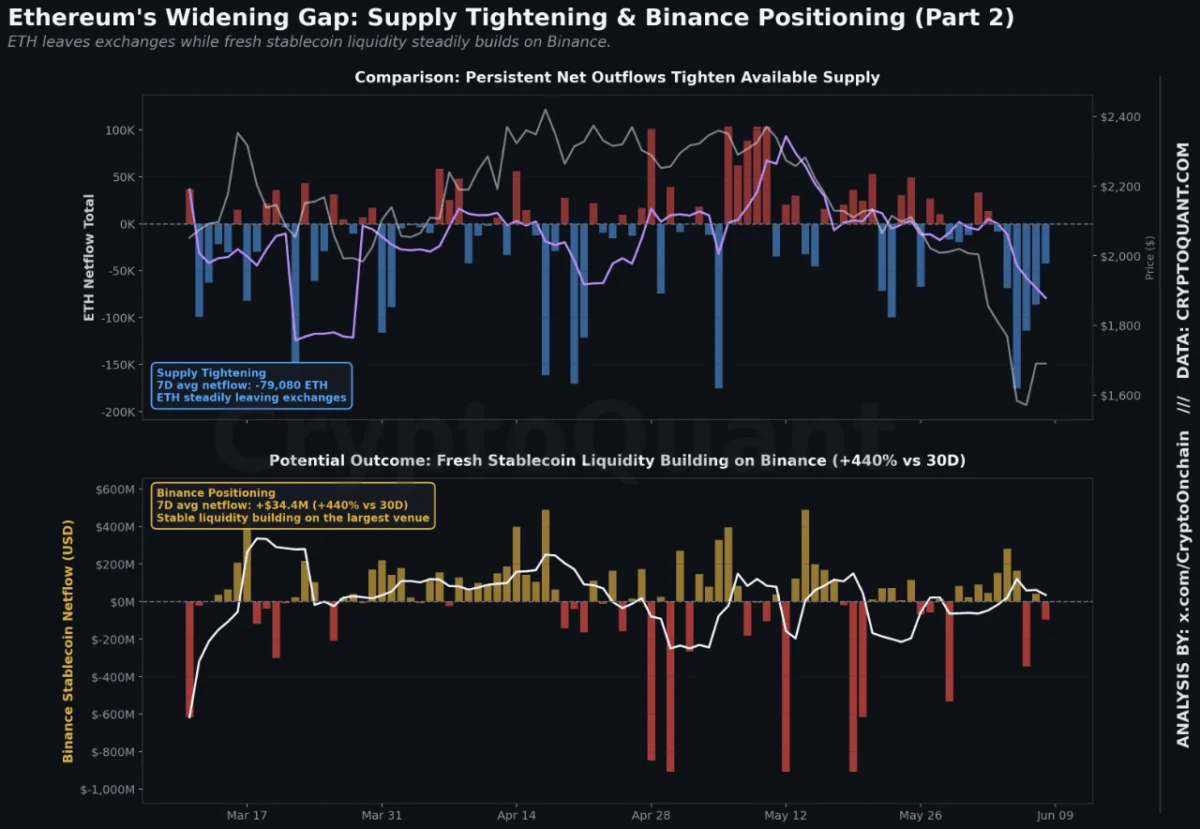
New York, NY – [Current Date] – Ethereum (ETH), the second-largest cryptocurrency by market capitalization, is demonstrating a cautious rebound above the critical $1,650 mark, following a precipitous drop that saw its price plummet to approximately $1,520. This recent downturn tested the resilience of holders across all investment horizons. While the recovery appears tentative, on-chain data from CryptoQuant offers a compelling narrative, revealing a significant outflow of ETH from major exchanges during the price slump, hinting at potential strategic accumulation by astute investors.
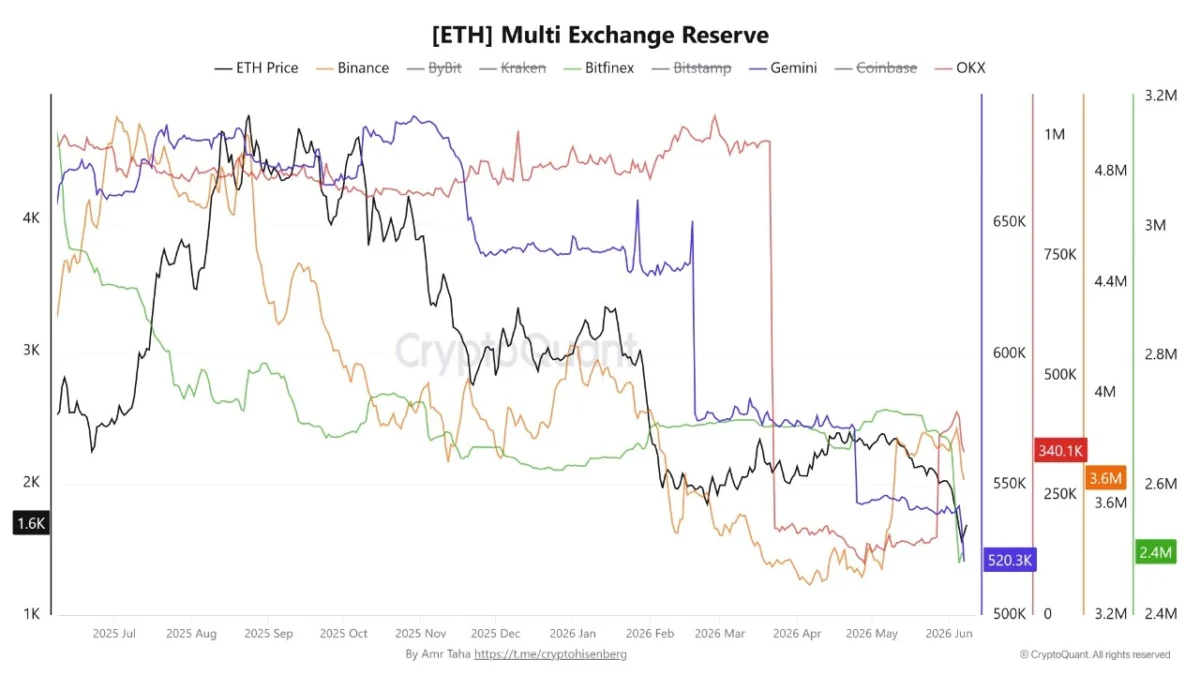
The period between June 4th and June 7th witnessed a synchronized exodus of approximately 475,000 ETH from the reserves of four prominent cryptocurrency exchanges: Binance, Bitfinex, OKX, and Gemini. This coordinated withdrawal occurred precisely as Ethereum’s price reached its recent nadir, a confluence of events that analysts believe could signal a pivotal moment for the digital asset.
The Price Plunge and the Test of Holder Conviction
Ethereum’s recent price action has been characterized by volatility, with the latest significant downturn wiping out recent gains and pushing the asset into territory not seen for months. The drop to $1,520 represented a critical test for a wide spectrum of investors. Long-term holders, often referred to as "HODLers," faced the psychological pressure of seeing their investments diminish significantly, while shorter-term traders and institutional players likely re-evaluated their positions.
The breakdown below the previously established support zone between $1,800 and $1,900, which had acted as a significant floor since February, is a particularly concerning development from a technical analysis standpoint. This breach invalidates a key structural level and signals a shift in market sentiment, potentially ushering in a period of further price discovery in lower territory. The surge in trading volume accompanying this sell-off confirms robust participation from sellers, indicating that the decline was not a result of thin liquidity but rather a decisive market movement.
Chronology of the Exchange Reserve Drain
The data meticulously compiled by CryptoQuant provides a granular look at the ETH outflows from major exchanges during this critical period. The synchronized nature of these withdrawals is what elevates them from mere operational adjustments to a potentially significant market signal.

- Binance: The largest cryptocurrency exchange by trading volume saw its ETH reserves decrease from 3.87 million ETH to 3.68 million ETH between June 4th and June 7th, a reduction of approximately 190,000 ETH.
- Bitfinex: This established exchange experienced a decline in its ETH holdings from 2.67 million ETH to 2.49 million ETH over the same three-day window, shedding another 180,000 ETH.
- OKX: While holding a smaller initial balance, OKX recorded the most substantial percentage decline in its ETH reserves. From June 4th to June 7th, its reserves dropped from 424,000 ETH to 340,000 ETH, representing a significant decrease of nearly 20%.
- Gemini: The cryptocurrency exchange founded by the Winklevoss twins also contributed to the overall trend, with its ETH reserves falling from 541,000 ETH to 520,000 ETH between June 5th and June 7th.
Cumulatively, these four major platforms saw a staggering 475,000 ETH removed from exchange custody within a compressed three-day period. This synchronized movement, occurring precisely when the price was under immense downward pressure, is the central thesis of the CryptoQuant analysis.
Supporting Data: The Significance of Synchronized Withdrawals
The core of the CryptoQuant analysis hinges on the interpretation of this synchronized exchange reserve decline. While individual exchanges might experience fluctuations in their ETH holdings due to routine portfolio management, internal transfers, or specific user activities, a coordinated reduction across multiple major platforms during a price downturn is far more indicative of a deliberate market strategy.
"A single exchange reducing reserves during a price drop can reflect routine portfolio management, custody migration, or any number of operational decisions specific to that venue," the analysis states. "Four exchanges declining simultaneously – Binance, OKX, Bitfinex, and Gemini – across the same three-day window while Ethereum was testing its lowest levels points toward something more deliberate and more directional."
The 475,000 ETH reduction effectively tightens the available liquidity on centralized exchanges, the primary venues for spot trading. This withdrawal occurred at a moment when the price dip historically presents an attractive entry point for accumulation. The analysis posits that these outflows could represent either coordinated institutional positioning, whereby large holders independently arrived at the same conclusion about the $1,520 level being a favorable accumulation zone, or a combination of both. Regardless of the precise motivation, the aggregate effect is a reduced immediate supply of ETH available for sale on these key trading platforms.
June 7th has been identified as a "key structural date" by the analysis. The concentration of reserve declines around this window provides a crucial before-and-after reference point for tracking whether this tightening of liquidity continues or reverses as Ethereum attempts to sustain its recovery above $1,650.

Implications for Ethereum’s Price Trajectory
The CryptoQuant data, while insightful, is presented with a degree of analytical caution. The article emphasizes that this is not an automatic bullish signal. For the observed supply tightness to translate into sustained price appreciation, it must be met with strengthening demand.
"If ETH reserves continue falling while spot demand improves, Ethereum enters a thinner exchange liquidity environment where the same buying pressure produces larger price responses than it would against a fully stocked order book," the analysis explains. "That combination has not yet been confirmed. But the structural foundation for it was quietly assembled between June 4 and June 7."
From a broader technical perspective, Ethereum’s recovery is occurring within a decisively bearish trend. The daily chart indicates that ETH is still trading below its 50-day, 100-day, and 200-day moving averages, all of which are exhibiting a downward slope. The immediate resistance lies around the $1,800 mark, with the former support zone between $1,900 serving as the next significant hurdle. Until these levels are reclaimed, the current bounce is likely to be characterized as a relief rally within a prevailing downtrend.
However, the concurrent reduction in selling volume during the current bounce offers a glimmer of optimism. This suggests that the most intense phase of the liquidation might be subsiding, creating a more favorable environment for buyers to step in.
Expert Editorial Review and Conclusion
This analysis, reviewed by leading industry experts and seasoned editors, adheres to a rigorous editorial process focused on delivering thoroughly researched, accurate, and unbiased content. Upholding strict sourcing standards, the integrity, relevance, and value of the information presented are paramount.

The recent price action of Ethereum, coupled with the significant and synchronized outflow of ETH from major exchanges, presents a complex but potentially bullish scenario. While the broader market trend remains bearish, the strategic removal of supply from liquid platforms at a price point that historically attracts accumulation could lay the groundwork for a more robust recovery. The coming days and weeks will be crucial in determining whether this "structural foundation" will indeed support a sustained upward price movement, contingent on the emergence of renewed buying interest and sustained demand. Investors and market observers will be closely watching to see if the tightened liquidity environment translates into amplified price responses as demand begins to outpace supply.
Disclaimer: This article is for informational purposes only and does not constitute financial advice. Cryptocurrency investments are inherently volatile and subject to significant risks. Always conduct your own research and consult with a qualified financial advisor before making any investment decisions.