France’s Sovereign AI Revolution: Building a European Powerhouse in the Age of Silicon
By Tony Kim
June 18, 2026
France is rapidly accelerating its transformation into the epicenter of European artificial intelligence. Through a multi-faceted strategy that blends heavy industrial infrastructure, strategic partnerships with global tech giants like NVIDIA, and a firm commitment to "sovereign" open-source models, Paris is positioning itself as the continent’s definitive leader in the global AI race. With a massive €109 billion investment envelope under the France 2030 framework, the nation is moving beyond experimental pilot programs into a phase of full-scale industrial deployment.
The Infrastructure Backbone: Computing at Scale
The cornerstone of France’s ambition lies in its massive investment in raw compute power. Recognizing that AI dominance is inextricably linked to hardware availability, the French government—in coordination with private sector champions—has embarked on an aggressive expansion of high-performance computing (HPC) facilities.
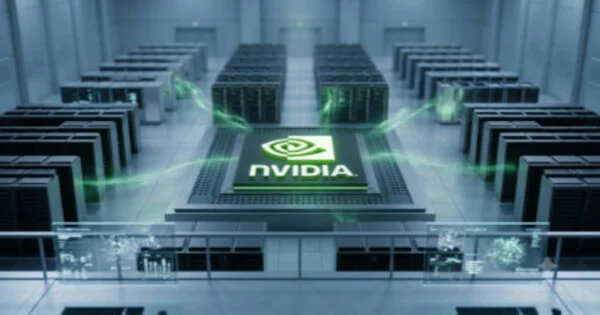
Central to this effort is the new Mistral data center located in Bruyères-le-Châtel. This facility represents a technological marvel, housing 18,000 NVIDIA GB200 systems. These units, powered by NVIDIA’s cutting-edge Blackwell architecture, are engineered to deliver unparalleled computational throughput while maintaining strict energy efficiency standards. This deployment is merely the vanguard of a broader roadmap: the country intends to bring 200 megawatts of compute capacity online across the European theater by 2027.
Beyond individual data centers, the "Campus AI" initiative—a collaborative venture involving Mistral, Bpifrance, and MGX—is architecting a 1.4-gigawatt AI factory network. Once fully operational, this infrastructure will rank among the largest AI-dedicated campuses in Europe, providing the necessary backbone for industrial-scale research and development that was previously only accessible to Silicon Valley incumbents.
Chronology: From 2018 to the Sovereign AI Era
The current wave of investment is the culmination of nearly a decade of strategic planning. To understand the momentum France has achieved, one must look at the timeline of its policy evolution:
- 2018: President Emmanuel Macron launches the National AI Plan, signaling France’s intent to become an AI-first nation. The plan focuses on talent attraction, research funding, and ethics.
- 2021: The France 2030 investment plan is announced, earmarking billions for transformative technologies, with AI identified as a "priority vertical."
- 2023: The emergence of Mistral AI as a European competitor to OpenAI shifts the narrative, proving that French talent can build frontier-level Large Language Models (LLMs).
- 2024–2025: Implementation of the EU AI Act necessitates a pivot toward compliant, transparent, and sovereign AI. France moves to replace foreign software (such as Palantir) with domestic alternatives like ChapsVision for national security operations.
- 2026: Full-scale industrial deployment begins. The launch of the Bruyères-le-Châtel data center marks the transition from conceptual planning to physical infrastructure domination.
Supporting Data: The Economic Engine
The scale of France’s commitment is unprecedented in European history. The €109 billion allocated to the France 2030 initiative serves as the primary driver for this technological leap. However, the investment is not purely state-funded; it is a catalyst designed to unlock private venture capital and corporate R&D spending.
The efficiency of these investments is underscored by the usage of the Jean Zay supercomputer. Currently one of Europe’s most energy-efficient AI engines, Jean Zay has become a training ground for local firms like LINAGORA. By utilizing existing, highly optimized hardware, French developers are proving that they can bridge the gap between "Western" power consumption models and "European" sustainability goals. Furthermore, the push for compact language models—championed by companies like Pleias—aims to reduce the training cost per token by orders of magnitude, providing a path toward profitability for European startups that cannot rely on the infinite capital reserves of American Big Tech.
Official Responses and Strategic Policy
The French government’s narrative has remained consistent: technological sovereignty is a prerequisite for national security and economic autonomy.
Ministerial briefings emphasize that the EU AI Act is not a hurdle, but a competitive advantage. By building systems that are natively compliant with European data privacy laws, France is creating a "Gold Standard" for AI that will be easier to export to other EU member states.
Regarding the pivot away from U.S.-based software providers, government officials have been clear: "Sovereign AI tools are a necessity when the data involves national intelligence and citizen privacy." The replacement of Palantir with the French firm ChapsVision is widely viewed as a signal to the market that the state will use its procurement power to foster a domestic "Silicon Valley" ecosystem. This strategy of dirigisme—where the state steers industrial policy—is once again at the heart of French economic success.
Implications for Industry: AI in the Real World
The French AI strategy is distinguished by its focus on "applied" rather than "theoretical" AI. Major French corporations are not waiting for the technology to mature; they are integrating it into their core operations:
- Pharmaceuticals: Sanofi is currently deploying AI agents to accelerate drug discovery pipelines, drastically shortening the time-to-market for complex molecular compounds.
- Manufacturing: Stellantis is utilizing AI-powered "digital twins" of their factories. By simulating production cycles in virtual environments, the company can optimize energy usage and assembly line throughput before a single robot is moved.
- Energy: TotalEnergies is constructing Pangea 5, a supercomputer tailored for geosciences and energy research, ensuring that the transition to renewables is backed by superior computational modeling.
- Telecom & Retail: Orange Business has successfully launched "Live Intelligence GenAI," a secure platform that allows for internal process automation without exposing data to external, non-compliant cloud providers. Simultaneously, L’Oréal is leveraging generative models to scale global marketing campaigns while enforcing strict brand consistency and ethical safety rails.
The Geopolitical and Economic Stakes
France’s rise in the AI sector is occurring against a backdrop of increasing global competition. As Washington and Beijing lock horns over semiconductor export controls and data dominance, Europe has often been viewed as a regulatory bystander. France is actively working to shed this image.
By positioning itself as the hub for NVIDIA-backed infrastructure and high-compliance open-source models, France is effectively creating a "third way" in global AI. This approach appeals to European enterprises that are wary of U.S. data surveillance but lack the internal capabilities to build their own models from scratch.
Looking Ahead: The 2027 Horizon
The roadmap for the next 18 months is ambitious. The completion of the 200-megawatt compute deployment will provide the necessary foundation for the next generation of Mistral models. Simultaneously, the integration of these systems into the broader European Union framework will determine whether France’s "sovereign" model can scale across borders.
If France succeeds, it will have created a self-sustaining ecosystem where the infrastructure (NVIDIA hardware), the intelligence (Mistral and LINAGORA models), and the capital (France 2030) are all aligned toward a common goal: ensuring that the future of artificial intelligence is not just designed in a laboratory, but is built and governed by European values.
The success of these initiatives will likely serve as the blueprint for the rest of the European Union, signaling that the continent is ready to move beyond its reputation as a regulatory power and reclaim its position as an industrial and technological force. As the 2027 deadline approaches, all eyes will be on the Bruyères-le-Châtel data center—the heartbeat of France’s AI future.