Shiba Inu Under Siege: Whale Activity Triggers Massive Liquidations Amid Market Volatility
The digital asset landscape is currently grappling with a potent mix of macro-economic uncertainty and localized volatility, with Shiba Inu (SHIB) finding itself at the epicenter of a turbulent shift. In a single, punishing day of trading, the memecoin ecosystem witnessed over $382,000 in futures liquidations, a move that disproportionately favored the bears. The carnage was concentrated heavily on bullish positions, with $365,660 in long bets wiped out, while short sellers escaped with a marginal $17,320 loss.
This sudden liquidity crunch occurred against a backdrop of chilling market sentiment, exacerbated by the reawakening of a dormant whale wallet that had remained silent for nearly ten months. As the token struggles to maintain its standing among the top 30 cryptocurrencies by market capitalization, the convergence of institutional-grade asset movement and retail liquidation has left analysts questioning whether this is a precursor to a further slide or a calculated redistribution of wealth.
A Chronology of the Whale’s Reawakening
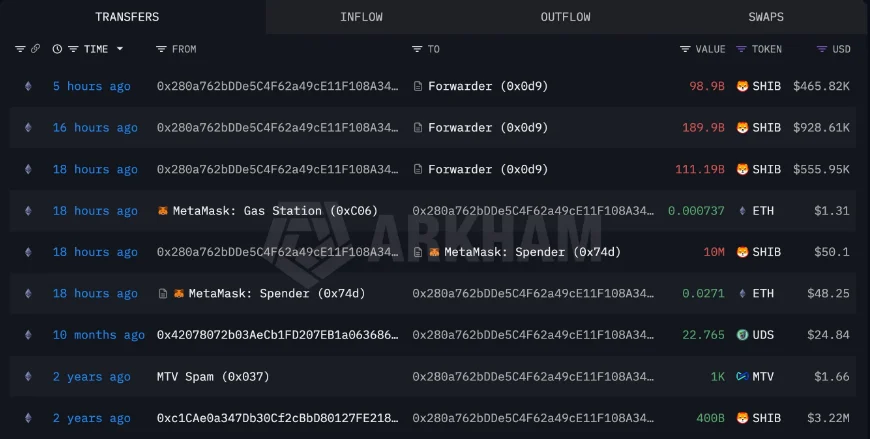
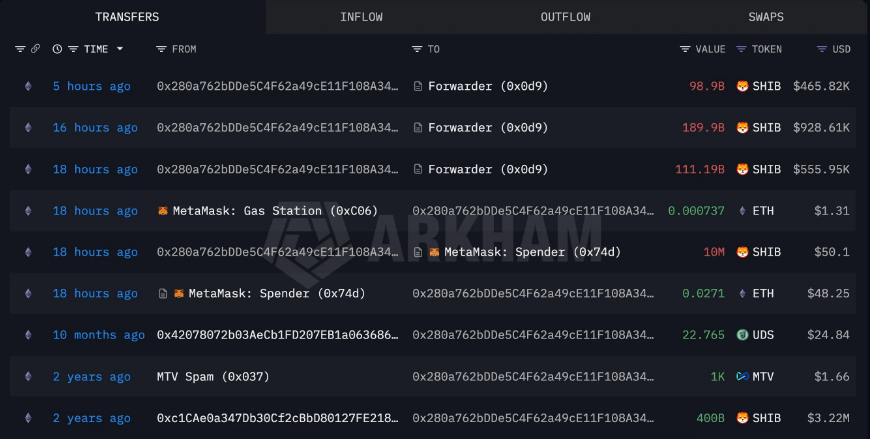
The movement of nearly 400 billion SHIB tokens did not happen in a vacuum, but rather as a carefully orchestrated series of transactions that caught blockchain sleuths off guard. According to on-chain data provided by Arkham Intelligence, the wallet—which had been inactive since August of the previous year—signaled its return with a cautious "test run."
Phase 1: The Initialization
The process began with a seemingly innocuous transaction involving the transfer of 10 million SHIB via a MetaMask swap. This initial movement acted as a "ping" to the network, testing the wallet’s connectivity and operational status after nearly a year of dormancy.
Phase 2: The Accelerated Exit
Once the test was successful, the entity behind the address moved with surprising speed. Utilizing BitGo’s Forwarder Smart Contract, the holder executed three distinct, high-volume transactions in rapid succession:
- Transaction 1: Approximately 112 billion SHIB.
- Transaction 2: Nearly 190 billion SHIB.
- Transaction 3: A final sweep of 99 billion SHIB.
By the conclusion of these maneuvers, the wallet was effectively drained, leaving behind a negligible dust balance of just 110 SHIB. In total, 399,989,999,938 tokens were relocated, a move that reverberated through the community as SHIB holders watched their positions crumble under the weight of the broader market selloff.
Deciphering the BitGo Infrastructure
The use of BitGo’s Forwarder Smart Contract adds a layer of complexity to the narrative. Unlike standard wallet-to-wallet transfers or exchange deposits, BitGo infrastructure is primarily utilized by institutional players, large-scale custodians, and entities managing OTC (Over-the-Counter) desks.
From a technical standpoint, this is a crucial distinction. When a wallet deposits funds into an exchange-linked address, it is a clear signal of intent to sell. However, by moving assets into BitGo’s institutional framework, the owner may be pursuing one of several strategies that do not involve immediate market liquidation:
- Cold Storage Migration: The holder may be moving assets to a more secure, institutionally-grade custody solution for long-term holding.
- OTC Settlement: The tokens could be part of a private, off-exchange deal, meaning the transaction volume will never hit the public order books of platforms like Binance or Coinbase.
- Institutional Rebalancing: Larger funds often cycle assets across various liquidity pools to optimize their balance sheets.
While the "sell" narrative is the most common interpretation in retail circles, the data remains inconclusive. Nevertheless, the psychological impact on the market—at a time when SHIB was already suffering from a 16% weekly decline—cannot be understated.
Supporting Data: The Anatomy of a Market Slide
The current state of SHIB is reflective of a wider trend in the memecoin sector, where high-beta assets are often the first to be liquidated during periods of macroeconomic fear.
The Breakdown of Support
SHIB has officially breached the critical psychological support level of $0.000005. As of the latest market data, the token is trading at $0.000004535, marking a 3.50% drop within a 24-hour window. This breach is significant because it confirms a bearish trend line that has been developing over the past quarter.
Market Cap and Ranking
With a market valuation hovering around $2.65 billion, SHIB is currently clinging to the 29th position in the global cryptocurrency rankings. The proximity to the edge of the "Top 30" list is a cause for concern for long-term holders. A drop out of this tier often leads to a decline in retail visibility, decreased exchange liquidity, and a loss of momentum that can trigger a "death spiral" if buy-side support does not materialize.
Futures Market Dynamics
The liquidation data highlights a stark imbalance in market positioning. The fact that $365,660 in long positions were liquidated compared to only $17,320 in short positions suggests that the market was heavily "long-biased" going into the crash. When the price began to dip, it triggered a cascading series of forced liquidations—a "long squeeze"—which further accelerated the downward price action.
Official Responses and Expert Commentary
While there has been no official statement from the Shiba Inu development team regarding the whale’s specific actions, the broader community sentiment has been one of anxiety. Industry analysts suggest that the whale’s move was likely opportunistic rather than reactive.
"When you see a wallet of this size move during a period of high volatility, it is almost never a coincidence," says one market strategist. "Institutional actors use market-wide panic as a shroud. By moving during a general selloff, they minimize the price impact of their own exit or redistribution, effectively masking their footprint within the broader noise of the market."
Other analysts point to the maturity of the SHIB ecosystem. Having moved from a simple "meme" token to a project with an active L2 (Shibarium) and ecosystem utility, the token is now subject to the same institutional scrutiny as more established assets. This means that large-scale holders—often referred to as "OGs" from the token’s inception—are now operating with professional-grade risk management tools.
Implications for the Future
The implications of this event are twofold:
1. The Risk of Institutional "Exit Liquidity"
If this whale was indeed selling into an OTC deal or an institutional sink, it signifies that early investors are continuing to rotate out of SHIB. For the project to maintain its current market standing, it must demonstrate consistent utility and ecosystem growth to replace this departing capital with new, sustainable inflows.
2. Market Sentiment and Price Recovery
The loss of the $0.000005 support level is a technical setback that will require significant volume to reclaim. Traders are now watching the $0.00000400 level as the next potential "floor." If the market continues to view SHIB as a high-risk, high-beta play, the token may remain range-bound until the broader crypto market—led by Bitcoin—shows signs of a definitive reversal.
In conclusion, while the identity of the wallet holder remains shrouded in anonymity, their actions have served as a catalyst for a painful but necessary correction in the SHIB market. As the dust settles, investors are left with a clear lesson: the days of speculative retail dominance are being challenged by the cold, calculated movements of institutional-grade participants. Whether Shiba Inu can reclaim its lost ground depends on its ability to transcend its memecoin origins and provide the structural value needed to withstand the scrutiny of the modern crypto market.
For real-time updates on Shiba Inu’s market performance and further analysis of on-chain whale activity, traders are encouraged to monitor live blockchain explorers and established market intelligence platforms.