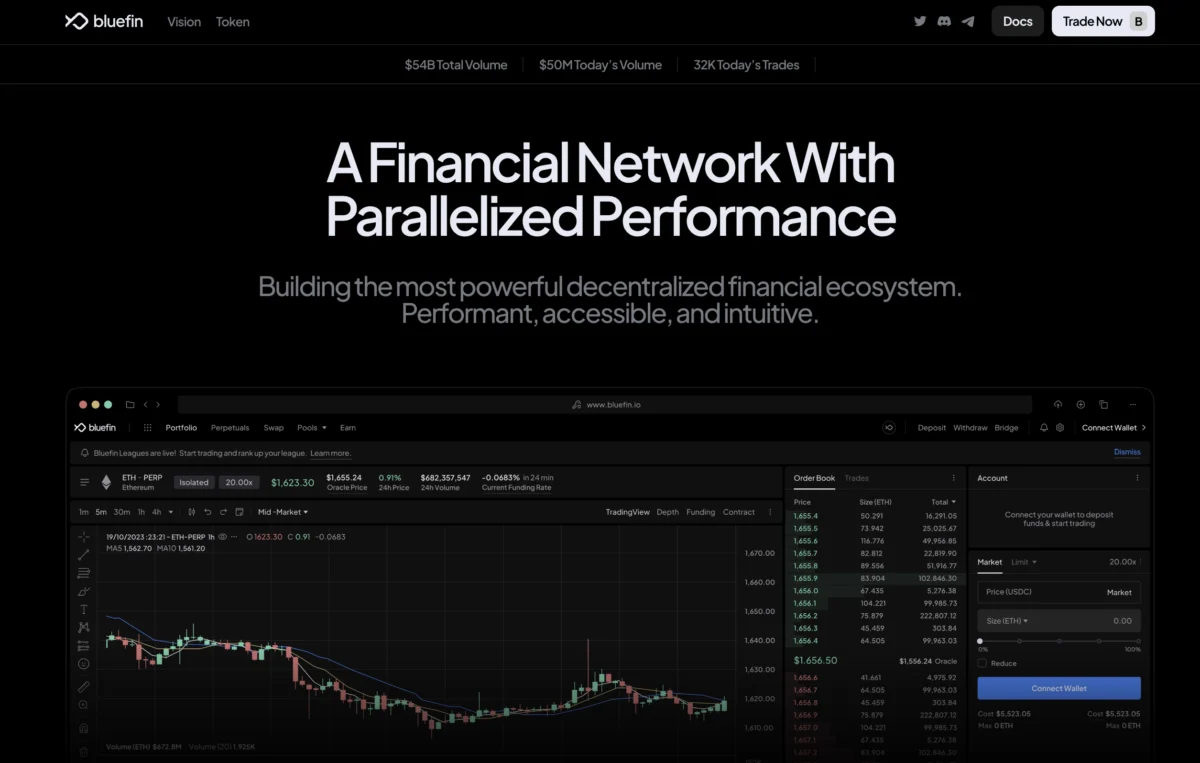
Corporate Capital in Web3: SUI Group Holdings Expands Bluefin Loan to 6 Million SUI to Finance Suilend Acquisition
In a significant move bridging public capital markets and decentralized finance (DeFi), Nasdaq-listed investment holding firm SUI Group Holdings Limited (ticker: SUIG) has officially amended and expanded its existing lending agreement with the decentralized exchange (DEX) platform Bluefin. Under the newly structured terms, SUI Group has increased its total outstanding loan allocation to 6 million SUI tokens.
This capital injection is directly earmarked to support Bluefin’s strategic participation in financing Bluewater Labs’ acquisition of Suilend, which stands as one of the largest lending and liquidity protocols operating within the Sui Layer-1 blockchain ecosystem.
This transaction highlights a growing trend of institutional and public-market capital flowing directly into decentralized financial infrastructure. It also represents a major consolidation of trading and lending primitives within the Sui network.
1. Main Facts: Structuring the 6 Million SUI Debt Facility
The updated financial arrangement between SUI Group Holdings Limited and Bluefin represents a substantial expansion of the initial credit facility. By adding 4 million SUI tokens to the existing agreement, SUI Group has raised its total capital exposure to Bluefin to 6 million SUI.
+------------------------------------------------------------------------+
|                      SUI GROUP HOLDINGS (SUIG)                         |
|                           (Nasdaq-Listed)                              |
+------------------------------------+-----------------------------------+
                                     |
                       Disburses 6 Million SUI Loan
                                     |
                                     v
+------------------------------------+-----------------------------------+
|                              BLUEFIN                                   |
|                      (Decentralized Exchange)                          |
+------------------------------------+-----------------------------------+
                                     |
                       Financing Contribution
                                     |
                                     v
+------------------------------------+-----------------------------------+
|                        BLUEWATER LABS ACQUISITION                      |
|                               of                                       |
|                             SUILEND                                    |
+------------------------------------------------------------------------+
Key Terms of the Amended Agreement:
- Total Loan Volume: 6 million SUI.
- Maturity Date: September 30, 2028.
- Adjusted Revenue Share: SUI Group’s revenue-share yield has been raised from 5% to 11%.
- Payment Denomination: All revenue-share yields are payable directly in native SUI tokens.
- Target Entity: Financing Bluewater Labs’ acquisition of the Suilend protocol.
This yield adjustment changes SUI Group’s role from a passive capital provider to an active stakeholder in Bluefin’s ecosystem. By securing an 11% revenue share paid directly in SUI, the Nasdaq-listed holding company is positioned to capture a larger portion of the transaction fees, liquidations, and borrow-lend spreads generated across Bluefin’s expanding DeFi footprint.
2. Chronology: The Road to the Suilend Acquisition
The expansion of the SUI Group-Bluefin lending facility is the result of several months of institutional planning, ecosystem expansion, and corporate restructuring. Tracing the timeline of these entities reveals how this deal came together:
Phase 1: The Emergence of Sui and Its Core DeFi Protocols
Following the mainnet launch of the Sui network—a high-throughput Layer-1 blockchain built on the Move programming language—two distinct platforms emerged as market leaders:
- Bluefin: Originally built as a decentralized order-book exchange focused on perpetual swaps and high-performance trading, Bluefin established itself as a key liquidity hub on Sui.
- Suilend: Developed to address the network’s need for native money markets, Suilend quickly grew into the ecosystem’s premier lending platform, allowing users to deposit assets, earn yield, and borrow against collateral.
Phase 2: The Initial SUI Group Debt Agreement
Recognizing the growth of the Sui network, SUI Group Holdings Limited (SUIG) sought direct exposure to the ecosystem’s underlying transactional yield. SUIG established an initial lending agreement with Bluefin, providing a 2 million SUI loan at a 5% revenue-share rate. This established a precedent for a publicly traded firm using its balance sheet to provide on-chain liquidity.
Phase 3: The Bluewater Labs Acquisition Strategy
As the Sui DeFi ecosystem matured, the strategic benefits of combining trading services (DEXs) with money markets (lending protocols) became clear. Bluewater Labs initiated a plan to acquire Suilend, seeking to unify these two core financial services. Bluefin joined the acquisition as a key financing partner, requiring a significant injection of native SUI capital to complete the transaction.
Phase 4: Restructuring and Deal Execution
To fund its portion of the acquisition, Bluefin renegotiated its debt facility with SUI Group Holdings. The resulting amendment, finalized in early 2025, increased the total loan to 6 million SUI, extended the maturity to September 30, 2028, and raised the revenue-share yield to 11%.
Following the acquisition, Suilend is structured to operate as an independent brand, maintaining its existing user base and product line. However, leadership will be integrated: Bluefin co-founder Zabi Mohebzada will step in as the new CEO of Suilend, aligning the strategic roadmaps of both platforms.
3. Supporting Data: Market Dynamics and Yield Mechanics
To understand the scale and risk-return profile of this transaction, it is helpful to look at the financial metrics of the Sui network and the mechanics of the SUI Group debt structure.
SUI Network Growth and TVL Metrics
The Sui network has seen a significant increase in Total Value Locked (TVL) over the past year, positioning it as a competitor among non-EVM Layer-1 blockchains.
Sui Ecosystem Metrics (Approx. Q1 2025 Estimates):
+---------------------------------------+--------------------------+
| Metric                                | Value                    |
+---------------------------------------+--------------------------+
| Sui Network Total Value Locked (TVL)  | $1.2 Billion - $1.6 B    |
| Suilend TVL Contribution              | ~$250 Million - $350 M   |
| Bluefin Daily Trading Volume Range    | $50 Million - $150 M     |
+---------------------------------------+--------------------------+
By acquiring Suilend, Bluefin gains direct access to a large pool of deposit collateral, while Suilend benefit from Bluefin’s trading volumes and liquidity routing.
The Mathematics of the 11% SUI-Denominated Revenue Share
For SUI Group Holdings, the decision to triple its loan size from 2 million to 6 million SUI is tied to the restructured 11% yield.
Traditional Debt Yield vs. On-Chain Revenue-Share Model:

  [Traditional Fixed-Income Debt]
  Company Loans Cash ---> Receives Fixed USD Interest (e.g., 6-8% APR)
  *Result: Protected upside, inflation risk, no network exposure.*

  [SUIG's On-Chain Revenue-Share Model]
  SUIG Loans 6M SUI ---> Receives 11% of Bluefin/Suilend Protocol Revenues (Paid in SUI)
  *Result: Direct exposure to Sui transaction volumes + SUI token price appreciation.*
This model offers two potential avenues for returns:
- Volume Growth: As trading volume on Bluefin and borrowing activity on Suilend increase, the total fees generated rise, expanding the dollar value of the 11% revenue share.
- Asset Appreciation: Because the revenue share is paid in SUI tokens, any increase in the market price of SUI directly boosts the yield for SUIG’s public shareholders.
Conversely, if on-chain activity declines or the price of the SUI token falls, the dollar-equivalent yield of the loan decreases, highlighting the risk profile of this digital asset strategy.
4. Official Responses and Corporate Distinctions
A key detail highlighted in the transaction documentation is the corporate identity of the lender.
Clarifying the Boundary: SUIG is Not the Sui Foundation
The transaction documentation emphasizes that SUI Group Holdings Limited (SUIG) is entirely separate from the Sui Foundation and Mysten Labs.
- The Sui Foundation: A non-profit organization dedicated to the advancement, decentralization, and governance of the Sui network.
- Mysten Labs: The initial development team and creators of the Sui blockchain protocol and Move language.
- SUI Group Holdings Limited (SUIG): A Nasdaq-listed investment holding company that allocates capital to maximize shareholder value.
This distinction is important for public market investors. The loan expansion is a commercial capital allocation decision by a regulated corporate entity, rather than an ecosystem grant or a protocol-level subsidy from the blockchain’s founders.
Corporate Rationale from the Parties Involved
While official press statements focus on ecosystem growth, the strategic goals of each participant can be outlined as follows:
- SUI Group Holdings (SUIG): Management aims to provide public equity investors with exposure to decentralized finance yields. By structuring the loan with a long-term maturity (September 30, 2028), SUIG is committing to the Sui network’s growth over a multi-year horizon.
- Bluefin and Bluewater Labs: For the developers and operators, securing a 6 million SUI credit facility from a Nasdaq-listed holding company provides non-dilutive capital to fund acquisitions, allowing them to scale without selling equity or issuing project tokens prematurely.
5. Implications: The Convergence of Public Equities and DeFi
The expanded loan agreement between SUI Group and Bluefin has broader implications for both the Sui ecosystem and the evolution of corporate treasury management.
Ecosystem Implications:
+-----------------------------------------------------------------------+
| 1. Vertical DeFi Integration                                          |
|    Unifies trading (Bluefin) and lending (Suilend) under shared       |
|    leadership to improve capital efficiency.                          |
+-----------------------------------------------------------------------+
                                   |
                                   v
+-----------------------------------------------------------------------+
| 2. New Corporate Treasury Playbook                                    |
|    Moves beyond passive holding (e.g., MicroStrategy) toward active   |
|    on-chain lending and revenue-sharing.                              |
+-----------------------------------------------------------------------+
                                   |
                                   v
+-----------------------------------------------------------------------+
| 3. Institutional Validation of Move L1s                               |
|    Demonstrates public market confidence in the security and long-    |
|    term viability of the Sui network.                                 |
+-----------------------------------------------------------------------+
1. Vertical Integration in Decentralized Finance
In traditional finance, commercial banks and investment brokerages often operate under the same corporate umbrella to maximize capital efficiency. The acquisition of Suilend by Bluewater Labs, financed in part by Bluefin, brings a similar structure to Web3.
By integrating a lending protocol (Suilend) with a decentralized exchange (Bluefin), the combined entity can offer features like:
- Cross-margining: Allowing users to use their interest-bearing deposited collateral on Suilend to back leveraged perpetual positions on Bluefin.
- Unified Liquidity Pools: Reducing slippage and capital fragmentation across the Sui ecosystem.
- Shared Governance and User Acquisition: Lowering marketing costs and onboarding friction for new DeFi users.
2. The Evolution of Publicly Traded Crypto Exposure
Historically, public market investors seeking exposure to digital assets were limited to purchasing shares in Bitcoin mining companies, companies holding spot assets on their balance sheets (such as MicroStrategy), or direct spot ETFs.
SUI Group Holdings’ strategy represents a different approach: active on-chain yield generation. Rather than letting assets sit idle in cold storage, SUIG is deploying its balance sheet directly into DeFi protocols to earn transactional revenue shares. This model could serve as a template for other small-to-mid-cap public holding companies looking to differentiate their treasury strategies.
3. Regulatory and Systemic Risks
While the potential returns are notable, this strategy carries several risks:
- Smart Contract Risk: If either Bluefin or Suilend experiences a security exploit, the underlying collateral and the revenue streams supporting the loan could be impacted.
- Regulatory Scrutiny: As a Nasdaq-listed company, SUIG is subject to SEC reporting requirements. The regulatory status of decentralized lending platforms and on-chain revenue sharing remains complex, and changes in compliance frameworks could affect the partnership.
- Counterparty and Volatility Risk: The valuation of the loan and its yield are tied to the SUI token. High market volatility could affect the asset’s dollar-equivalent value, impacting SUIG’s quarterly balance sheets.
Summary Outlook
The expansion of the SUI Group loan to 6 million SUI to support the Suilend acquisition shows how public market capital is increasingly interacting with on-chain financial systems. By combining a Nasdaq-listed capital structure, a decentralized derivatives exchange, and a leading money market protocol, this transaction highlights the ongoing integration of traditional corporate finance and decentralized networks.