Decentralized Settlement: Solana-Based Prediction Market ‘World’ Integrates Chainlink Price Feeds Within Phantom Ecosystem
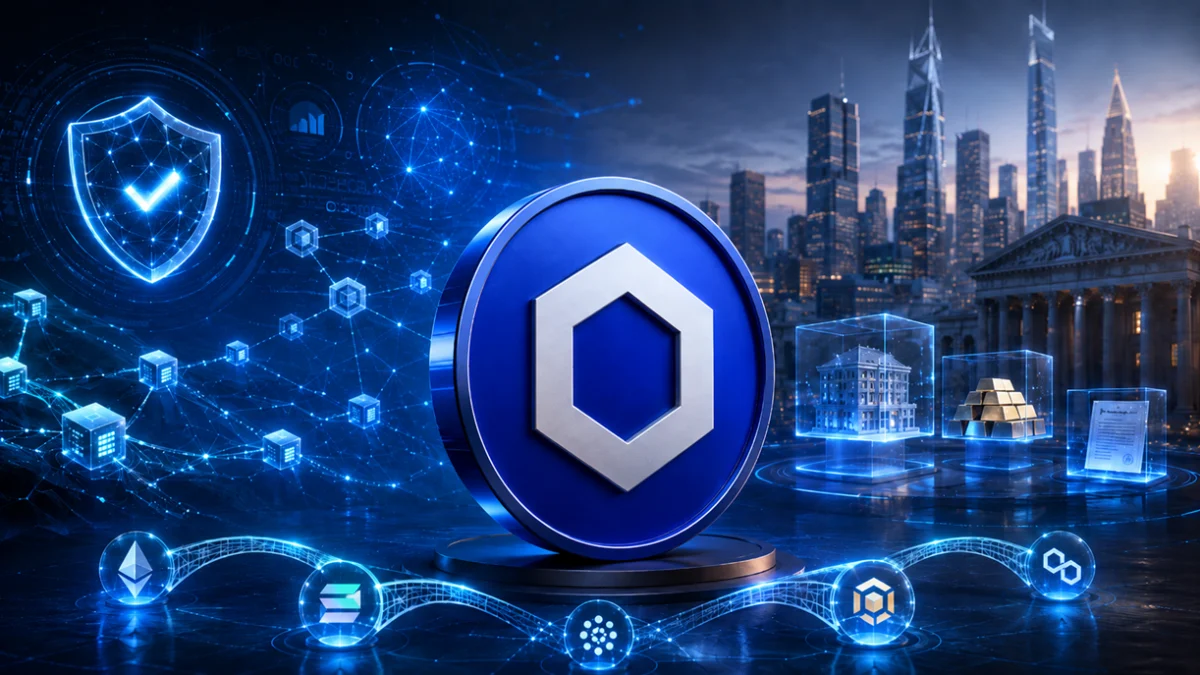
The landscape of decentralized prediction markets is undergoing a structural shift. As capital increasingly migrates toward platforms that offer real-time, high-throughput speculation on real-world events, the underlying infrastructure powering these platforms has become the ultimate differentiator. In a significant development for the Solana decentralized finance (DeFi) ecosystem, World (world.xyz), a prediction market application operating within the native environment of the Phantom wallet, has officially integrated Chainlink’s industry-standard decentralized oracle network.
This integration is designed to bring institutional-grade, tamper-resistant data feeds directly to World’s prediction markets, ensuring that contract settlements are executed with verified, high-fidelity price feeds. By embedding Chainlink’s Price Feeds, World aims to systematically mitigate oracle manipulation risks—a persistent vulnerability that has historically plagued decentralized prediction platforms.
Crucially, this development represents a technical integration between the application "World" and Chainlink, rather than a direct corporate partnership between Chainlink and Phantom. World operates as a third-party application running inside the Phantom wallet interface, utilizing Phantom’s in-wallet app browser and distribution network.
Main Facts: The Architecture of the Integration
To understand the impact of this integration, one must look at the specific roles played by the three distinct entities involved:
- World (world.xyz): A next-generation prediction market built natively on the Solana blockchain. It allows users to trade on the outcomes of diverse future events, ranging from macroeconomic indicators and asset prices to cultural milestones.
- Chainlink: The leading decentralized oracle network (DON). Chainlink provides secure, multi-source, and aggregated off-chain data to on-chain smart contracts, acting as the bridge between real-world events and blockchain-based execution.
- Phantom (phantom.app): The premier self-custody Web3 wallet on Solana. Phantom acts as the distribution vehicle and runtime environment for World, allowing users to access the prediction market directly from their wallet interface without navigating to external web browsers.
+-------------------------------------------------------------+
|                      PHANTOM WALLET                         |
|  +-------------------------------------------------------+  |
|  |                 WORLD (world.xyz)                     |  |
|  |  (Prediction Market App running inside Phantom)        |  |
|  |                                                       |  |
|  |            [Smart Contract Settlement Engine]         |  |
|  +----------------------------+--------------------------+  |
+-------------------------------|-----------------------------+
                                |
                   Secure Data  |  Decentralized
                   Settlement   |  Oracle Feeds
                                v
               +---------------------------------+
               |        CHAINLINK NETWORK        |
               |  (Decentralized Price Feeds)    |
               +---------------------------------+
Eliminating Settlement Vulnerabilities
Prediction markets rely entirely on the accuracy of the data used to resolve contracts. If a platform relies on a single, centralized data source or an easily manipulated on-chain pool (such as a low-liquidity decentralized exchange pool), malicious actors can manipulate the source data to force an artificial settlement in their favor. This is known as oracle manipulation.
By integrating Chainlink Price Feeds, World shifts its settlement mechanism to a decentralized network of independent, security-evaluated node operators. These nodes fetch data from multiple premium data aggregators, ensuring that the final price used to settle a prediction market is volume-weighted and immune to single-point-of-failure exploits or localized flash-loan attacks.
Chronology: From Private Testing to Public Launch
The integration of Chainlink’s oracles into World’s in-wallet application was executed through a structured, multi-phase technical roadmap designed to ensure network stability and user security.
2026
  |
  +-- June 1: Background Testing Phase Begins
  |     - Integration of Chainlink Price Feeds in sandboxed environment.
  |     - Security audits, latency testing, and vulnerability assessments.
  |     - Validation of Phantom's in-wallet runtime performance.
  |
  +-- July 1: Official Project Launch
        - World.xyz goes live to the public.
        - Production-ready Chainlink oracles handle real-money settlements.
        - Direct access opened within the Phantom wallet interface.
Phase 1: The Background Testing Initiative (June 1, 2026)
The groundwork for this integration began on June 1, 2026, with the initiation of Phantom’s background testing phase. During this period, developers from World and integration engineers conducted extensive simulation testing within a sandboxed environment. The primary objectives of this phase were:
- Latency Testing: Ensuring that Chainlink’s oracle updates could match the sub-second block times of the Solana network without causing state discrepancies.
- UI/UX Optimization: Refining how the Phantom wallet displays real-time price feeds sourced from Chainlink within the World application interface.
- Vulnerability Assessments: Stress-testing the settlement smart contracts against simulated oracle delays and extreme market volatility.
Phase 2: The Official Launch and Public Rollout (July 1, 2026)
Following a month of rigorous testing, the official launch of World.xyz took place on July 1, 2026. This milestone marked the public rollout of the platform, with Chainlink Price Feeds fully active on the mainnet. Upon launch, users accessing World via the Phantom wallet could open, trade, and settle prediction contracts with the assurance that all settlement data was being routed through Chainlink’s decentralized infrastructure.
Supporting Data: Why Oracle Security Dictates Capital Efficiency
The decision to implement Chainlink is backed by a wealth of empirical data regarding decentralized application security. In the broader DeFi ecosystem, oracle manipulation remains one of the most expensive vectors of capital loss.
According to historical security audits across the Web3 space, billions of dollars have been lost due to poorly secured oracles. Prediction markets are uniquely vulnerable to these vectors because they incentivize adversarial behavior; if a user stands to win a multi-million-dollar payout on an event outcome, the cost to manipulate an insecure oracle must be higher than the potential payout for the market to remain secure.
The Chainlink Security Model
Chainlink’s architecture addresses this vulnerability through three core layers of decentralization:
- Data Source Decentralization: Chainlink Price Feeds do not rely on a single API. Instead, they aggregate data from numerous independent commercial data providers, ensuring that localized exchange outages or malicious pricing data do not corrupt the feed.
- Node Operator Decentralization: The data is processed by a decentralized network of independent, Sybil-resistant oracle nodes run by professional DevOps teams and traditional telecom enterprises.
- Oracle Network Decentralization: The individual node responses are aggregated on-chain using Chainlink’s Off-Chain Reporting (OCR) protocol, which dramatically reduces gas costs while maintaining cryptographic proof of consensus.
For a high-performance blockchain like Solana, where low transaction fees allow for high-frequency updates, Chainlink’s OCR and push-based update models ensure that the World app can settle contracts almost instantaneously when an event concludes, without subjecting users to exorbitant network fees.
Official Responses and Strategic Perspectives
The integration has drawn significant attention from developers and ecosystem strategists who view this as a model for future decentralized application design.
World’s Development Team Perspective
According to documentation and official releases from the World development team at world.xyz, the primary motivation behind the integration was the preservation of user trust:
"Prediction markets live and die by the integrity of their settlement data. By integrating Chainlink Price Feeds, we are removing any ambiguity or centralization risks from our resolution process. Our users can trade with the confidence that the outcome of every contract is determined by transparent, tamper-proof, and cryptographically verified data."
Phantom’s Ecosystem Philosophy
While Phantom is not a direct partner in the oracle integration, the wallet’s developer blog (phantom.app/blog) highlights a broader strategic commitment to supporting high-utility, in-wallet mini-applications. Phantom’s leadership has repeatedly emphasized the importance of turning the self-custody wallet into an interactive portal:
"The evolution of Web3 wallets lies in reducing the friction between holding assets and using them. By hosting native, highly secure applications like World directly inside the Phantom interface, we are providing our users with a seamless, secure, and intuitive decentralized application experience."
Implications: The Evolution of Web3 Super-Apps and Prediction Markets
The integration of Chainlink oracles into a Solana-based prediction market operating inside Phantom has several profound implications for the wider cryptocurrency ecosystem.
+-------------------------------------------------------------------+
|                     BROADER MARKET IMPLICATIONS                   |
+-------------------------------------------------------------------+
|                                                                   |
|  1. THE WALLET AS A "SUPER-APP"                                   |
|     - Transition from passive storage to active dApp environment. |
|     - Minimizes user friction and front-end phishing risks.       |
|                                                                   |
|  2. SECURITY UPGRADE FOR SOLANA DEFI                              |
|     - Sets a new standard for decentralized data settlement.       |
|     - Discourages the use of vulnerable "homegrown" oracles.       |
|                                                                   |
|  3. INTENSE COMPETITION IN PREDICTION MARKETS                     |
|     - Challenges EVM-based dominance (e.g., Polymarket).          |
|     - Leverages Solana's speed and Phantom's massive user base.   |
|                                                                   |
+-------------------------------------------------------------------+
1. The Emergence of Wallets as "Super-Apps"
For years, Web3 wallets functioned primarily as passive storage systems and transaction signers. Users had to navigate to external websites, connect their wallets, and approve multiple pop-up prompts to interact with a dApp.
By running World natively inside Phantom, this integration highlights a paradigm shift toward "Super-Apps"—similar to Asia’s WeChat or Gojek, where financial services, social media, and marketplaces coexist in a single ecosystem. This model drastically lowers the barrier to entry for mainstream users, reduces the risk of phishing attacks (as users do not need to navigate to potentially compromised external URLs), and keeps user engagement entirely within the wallet ecosystem.
2. Heightened Competition in the Prediction Market Sector
The prediction market sector has seen explosive growth, largely dominated by Ethereum-adjacent layer-2 platforms. However, these platforms often suffer from latency issues and fragmented user experiences.
By leveraging Solana’s ultra-low latency and Phantom’s massive active user base, World is positioned as a formidable competitor. The addition of Chainlink’s secure infrastructure removes the "security deficit" that often deters larger institutional traders from participating in decentralized betting and hedging.
3. A New Standard for Consumer-Facing DeFi Security
This integration sets a precedent for other consumer-facing DeFi products on Solana. It demonstrates that user accessibility (via Phantom) does not have to come at the expense of robust security (via Chainlink). As regulatory scrutiny surrounding prediction markets and decentralized derivatives intensifies, platforms that utilize verifiable, third-party oracle networks like Chainlink will be far better positioned to demonstrate compliance, transparency, and operational integrity than those relying on proprietary or opaque settlement systems.
Ultimately, while the immediate market may view this as a routine technical update, the underlying reality points to a maturing industry. The convergence of native wallet distribution, high-performance blockchain infrastructure, and institutional-grade oracle networks is establishing the blueprint for the next generation of decentralized applications.