Crypto Markets Cool Off: Trading Volumes Plummet as Investor Sentiment Shifts in June
The cryptocurrency sector experienced a significant contraction in mid-2021, as trading activity across major global exchanges retreated by over 40% during the month of June. Following a period of hyper-volatility and record-breaking volume in May, the cooling of the market reflects a broader trend of investor caution amidst regulatory uncertainty and a sustained sideways price correction.
Data aggregated by the London-based market research firm CryptoCompare indicates that liquidity and retail interest, while still historically elevated, have receded from the frantic pace observed earlier in the year. This shift signals a transition from the speculative fervor of the spring to a more measured, consolidation-oriented phase for digital assets.
Main Facts: A Sharp Contraction in Market Activity
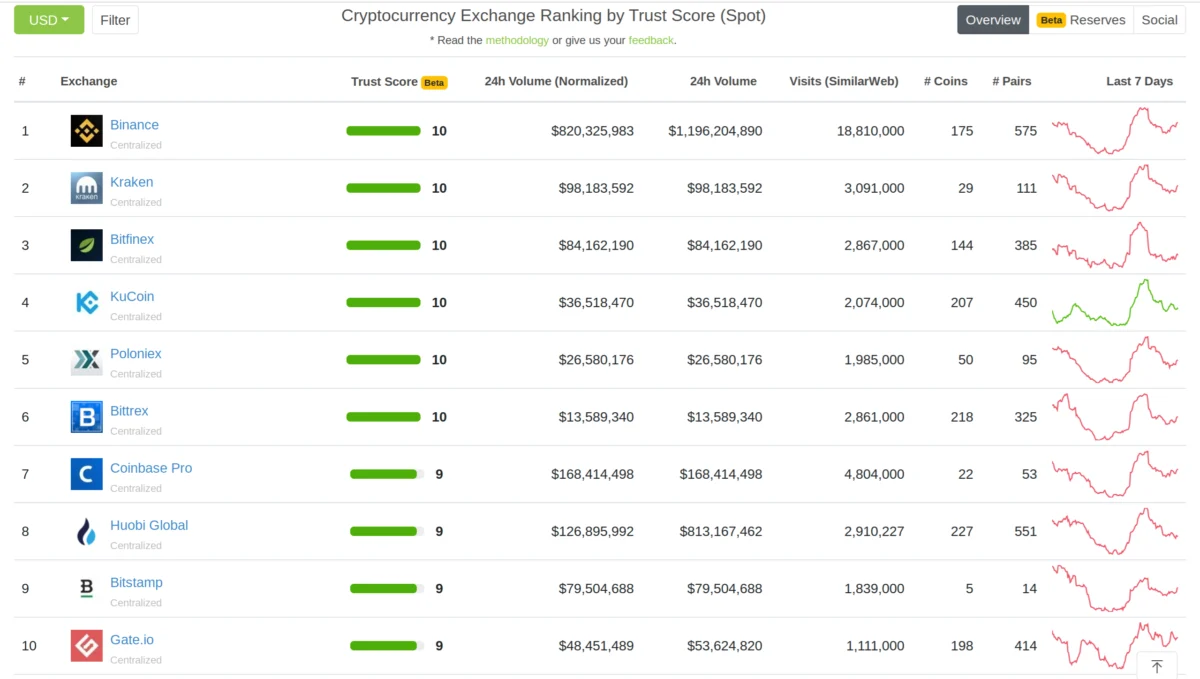
The decline in trading volume was not isolated to a single platform but was instead a systemic event affecting the largest exchanges in the industry, including Coinbase, Kraken, Bitstamp, and Binance. The primary driver of this trend was the exhaustion of market participants following the dramatic price swings of the preceding months.
According to the CryptoCompare report, spot market volumes experienced a precipitous drop of 42.7%, while the derivative markets—often a proxy for leveraged institutional and professional trading—saw a concurrent decrease of 40.7%. This dual-pronged decline highlights a withdrawal of capital across both the spot and futures landscapes.
Crucially, the "Open Interest" (OI) for Bitcoin (BTC) and Ethereum (ETH) futures—a metric that tracks the total number of outstanding contracts that have not been settled—fell by 31.8% and 29.3%, respectively. The reduction in open interest serves as a clear indicator that traders were not merely closing positions to take profits; many were actively de-risking their portfolios in response to persistent price stagnation.
Chronology: The Catalyst of the June Downturn
To understand the volume collapse, one must look at the preceding sequence of events that soured market sentiment.
May: The "Great Exodus"
The foundations for the June slowdown were laid in May 2021. The Chinese government, which had historically served as the epicenter of global Bitcoin mining, announced a comprehensive crackdown on mining operations. This policy shift was not merely a warning; it was a systematic dismantling of mining infrastructure that forced a mass migration of hardware and operators to regions like North America and Central Asia. The sudden displacement caused significant uncertainty, forcing many investors to liquidate their holdings as the network hash rate fluctuated.
June: A Month of Mixed Signals
As June began, the market attempted to find a floor. Bitcoin hit a monthly low of $28,908, representing a difficult period for those who had entered the market at the year’s peak. However, the news cycle was bifurcated:
- Regulatory Headwinds: The Chinese crackdown continued to dominate the headlines, keeping mining-related anxiety high.
- Institutional Milestones: On the positive side, El Salvador made history by becoming the first sovereign nation to adopt Bitcoin as legal tender. While this was a monumental milestone for crypto-adoption, it was insufficient to overcome the bearish sentiment generated by the mining exodus.
The combination of these factors led to a month of "sideways" movement, where the lack of a clear directional trend discouraged high-frequency trading and speculative volume.
Supporting Data: Analyzing the Exchange Landscape
Despite the industry-wide downturn, some entities managed to retain their market share. Binance, despite navigating a complex regulatory environment globally, maintained its dominance as the world’s largest exchange by volume. While its own trading volume dropped by approximately 56% to $668 billion in June, the sheer scale of its operations kept it at the forefront of the ecosystem.
The comparison between May and June is essential for context. May 2021 was an outlier; it recorded the highest trading volumes in the history of the asset class, fueled by massive liquidation events that forced traders to move in and out of positions rapidly to cover margins. Consequently, comparing June’s performance to May creates a skewed perspective.

Clara Medalie, research lead at the crypto market data provider Kaiko, noted that while the percentage drop seems alarming, it must be contextualized against the long-term growth of the industry. "Volumes plunged in June on pretty much every exchange, however, overall volumes are still magnitudes greater than they were one year ago today," Medalie stated. She emphasized that June’s volume, despite the decline, still ranks within the top five months ever recorded in the history of the market.
Official Responses and Expert Analysis
The consensus among market analysts is that the current decline is a "reversion to the mean" rather than a collapse of the industry. Following the parabolic growth of early 2021, a cooling-off period was widely expected by institutional observers.
The institutionalization of crypto—driven by the entry of hedge funds, family offices, and corporations—has changed the nature of market volatility. During previous cycles, a 40% drop in volume might have signaled the "death" of crypto. Today, market data providers view it as a consolidation phase. The fact that volumes have returned to levels comparable to the start of 2021 is viewed by many analysts as a sign of health, suggesting that the "tourist" or speculative capital that entered during the peak has been purged, leaving behind a more committed investor base.
Implications: What This Means for the Future
The decline in trading volume holds several key implications for the future of digital asset markets:
1. Market Maturity and Consolidation
The reduction in speculative volume indicates that the market is moving away from purely retail-driven "moonshot" chasing. As volumes normalize, prices are less likely to be influenced by sudden retail sentiment and more by long-term institutional accumulation strategies. This shift typically leads to lower short-term volatility and a more sustainable price discovery process.
2. The Geographic Shift of Mining
The "China crackdown" has forced the global Bitcoin network to become more decentralized. The exodus of miners to more politically stable jurisdictions with greener energy grids is a long-term net positive for the network. While this caused short-term pain in volume and hash rate, it effectively immunized the network against future regional regulatory shocks.
3. The "El Salvador Effect"
El Salvador’s move to adopt Bitcoin as legal tender marks the beginning of a new era. Regardless of short-term volume trends, the integration of crypto into sovereign monetary policy suggests that the industry is transitioning from a fringe financial experiment to a core component of the global monetary architecture. The lack of immediate price impact in June does not negate the significance of this shift; it merely highlights the time-lag between policy adoption and market realization.
4. Regulatory Vigilance
The drop in volume has also served as a window for regulators to catch up. With the "frenzy" of May behind them, global financial authorities have been using the quieter summer months to draft clearer frameworks for taxation, exchange licensing, and consumer protection. Investors should expect that as volume eventually returns, it will do so within a more defined regulatory perimeter.
Conclusion
The 40% decline in trading volume observed in June 2021 serves as a stark reminder of the cyclical nature of cryptocurrency markets. While the headline figures may appear daunting, they are, in reality, a reflection of a market finding its footing after an unprecedented period of volatility.
By filtering out the "noise" of the May liquidation events, it becomes clear that the fundamentals of the sector remain robust. The infrastructure continues to mature, institutional adoption is accelerating, and the network is becoming increasingly decentralized. For the long-term investor, periods of reduced volume are often viewed as necessary, if uncomfortable, intervals of transition—a time for the market to digest gains and prepare for the next phase of the digital asset evolution.
Disclaimer: The information provided in this article is for educational and informational purposes only and does not constitute financial, investment, or legal advice. Cryptocurrency investments carry high levels of risk. Readers should conduct their own due diligence and consult with a certified financial advisor before making any investment decisions. The Daily Hodl does not endorse the purchase or sale of any specific assets, and any losses incurred are the responsibility of the investor.