The Illusion of Liquidity: Why Wash Trading Remains the Crypto Industry’s Silent Crisis
The cryptocurrency landscape has long been touted as the future of global finance—a decentralized, transparent, and efficient alternative to traditional banking. Yet, beneath the veneer of high-frequency trading and multi-billion dollar daily volumes lies a pervasive, systemic issue that continues to threaten market integrity: wash trading.
Bobby Ong, co-founder of the prominent market data aggregator CoinGecko, recently issued a stark warning regarding this practice. In an industry that prides itself on blockchain-backed transparency, Ong suggests that the reality of reported trading volumes is far bleaker than most retail investors realize. According to Ong, the prevalence of wash trading is not only persistent but, in many corners of the unregulated market, is actually worsening.
The Mechanics of Manipulation
At its core, wash trading is a sophisticated form of market manipulation. It involves an entity simultaneously acting as both the buyer and the seller of a financial instrument. By moving assets back and forth between controlled accounts, the perpetrator creates the artificial appearance of high trading volume and liquidity.
For the unsuspecting retail trader, this manipulation is deceptive. High volume is often interpreted as a sign of a healthy, liquid, and trustworthy exchange. It suggests that entry and exit points are easy to navigate without slippage. When volume is fabricated, however, traders are lured into an environment that lacks genuine market depth, often falling victim to price manipulation and "pump-and-dump" schemes that thrive on the illusion of activity.
A Chronology of Deception: The Evolution of Crypto Volume
The struggle for accurate data has been a defining narrative of the crypto industry since its inception.
- The Early Days (2010–2014): In the nascent stages of Bitcoin and altcoin trading, volumes were relatively low, and exchanges were largely rudimentary. Wash trading existed, but its impact was negligible due to the small size of the total market.
- The 2017 ICO Boom: As interest in crypto exploded, hundreds of new exchanges emerged. During this period, listing fees and "volume competition" became standard. Exchanges began wash trading to attract new projects and to climb the rankings on data aggregators, effectively turning volume into a marketing tool.
- The 2018–2019 Transparency Crisis: Following the collapse of the 2017 bull market, academic researchers and data analysts—most notably Bitwise Asset Management—published reports alleging that upwards of 95% of reported Bitcoin trading volume on unregulated exchanges was fabricated. This served as a wake-up call for the industry.
- The Present Day: Despite increased scrutiny, the practice has proven resilient. As Ong notes, the proliferation of "non-regulated" platforms has made it nearly impossible for the average user to distinguish between genuine market demand and algorithmic deception.
The Regulatory Divide: Where to Find Truth
In his interview with BlockTV, Bobby Ong proposed a blunt solution: the industry must pivot away from aggregate data that includes unregulated entities and focus exclusively on licensed, regulated venues.
"I would say that the situation is actually getting worse," Ong stated. "The trading volume for the spot market is almost close to not being used as a trusted source anymore. There are so many exchanges that are just wash trading that it’s ridiculous."

Ong advocates for a flight to quality. He points to exchanges in the United States and Japan—jurisdictions with stringent licensing requirements and regular audits—as the only reliable sources of "clean" data. Platforms like Coinbase and Gemini, which operate under the oversight of bodies like the SEC or the New York Department of Financial Services (NYDFS), are incentivized to report accurate numbers. In contrast, platforms operating in offshore, regulatory gray zones lack the oversight necessary to prevent or even identify internal wash trading.
Supporting Data: The Quest for a ‘Trust Score’
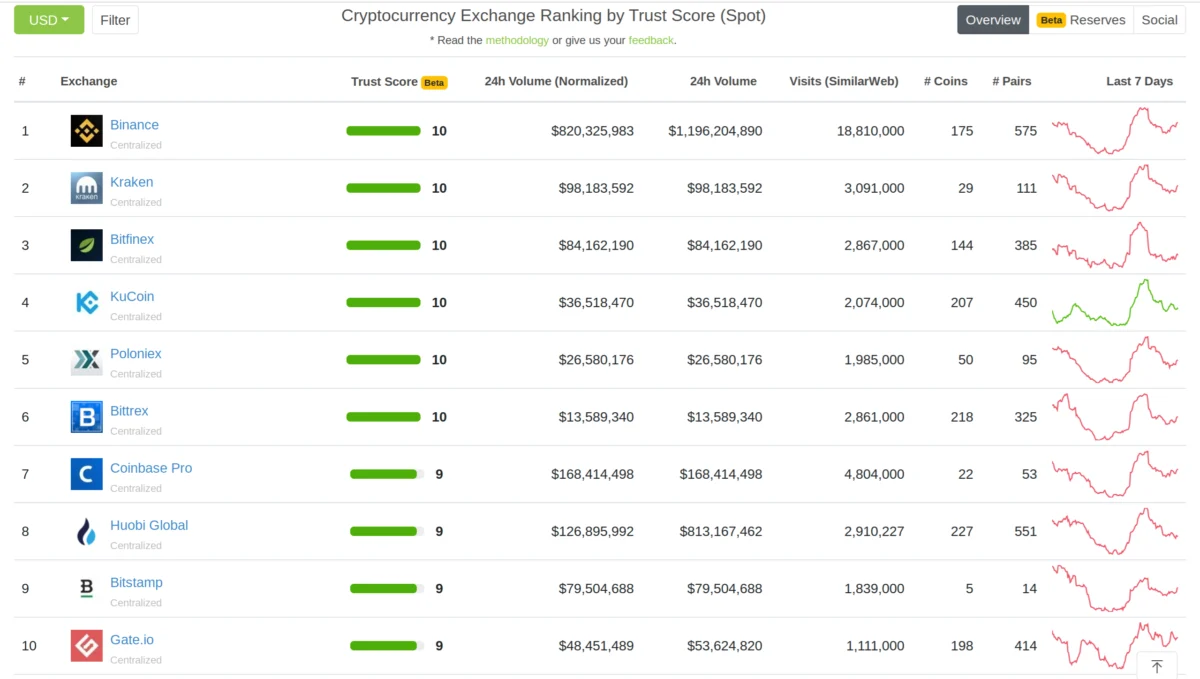
Recognizing the limitations of raw volume data, CoinGecko has attempted to change the paradigm with its proprietary "Trust Score." This metric moves beyond the simple "volume reported" figure, which has become a vanity metric easily gamed by bad actors.
The Trust Score algorithm incorporates three key pillars:
- Reported Trading Volume: The raw figure provided by the exchange, which is now treated with significant skepticism.
- Web Traffic: Using data to verify if the exchange’s activity matches its reported volume. A massive spike in trades without a corresponding spike in unique visitors is a red flag for automated bots.
- Order Book Depth: Analyzing the "bid-ask spread." Genuine liquidity is characterized by deep order books where large orders can be executed without significantly shifting the price. Wash-traded markets often exhibit high volume but shallow order books, indicating that the volume is synthetic.
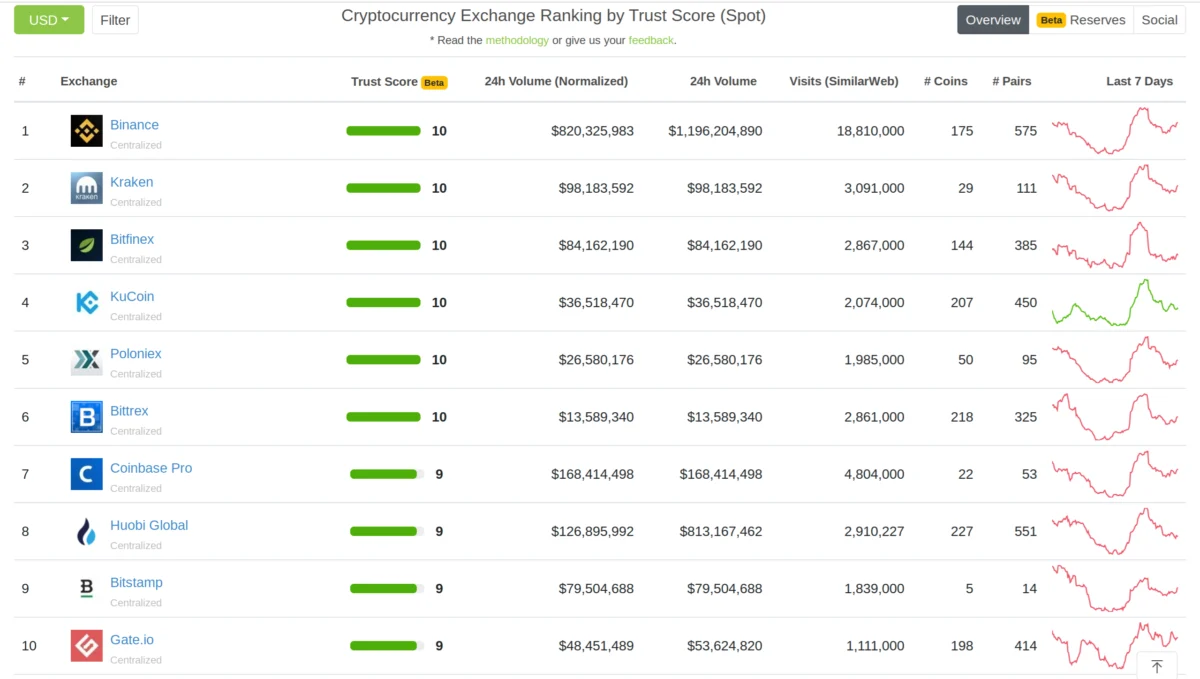
Current rankings indicate that while exchanges like Binance and Kraken maintain high rankings, they are increasingly scrutinized against these multi-factor metrics to ensure their volume is backed by real-world market participation.
Official Responses and Industry Pushback
The reaction from the exchange sector to the "wash trading" accusation is mixed. Major, regulated exchanges generally welcome the scrutiny, as it highlights their compliance efforts and differentiates them from "shadow" platforms. They argue that transparency is the key to institutional adoption.
However, many smaller or offshore exchanges remain silent. The lack of standardized global reporting requirements means there is little legal pressure for these platforms to clean up their books. Furthermore, some platforms argue that automated market makers (AMMs) and high-frequency trading bots are not necessarily "wash trading" in a malicious sense, but are merely providing liquidity. The difficulty, as Ong admits, lies in drawing the line between legitimate market-making activities and malicious, volume-padding deception.
Implications for the Future of Digital Assets
The persistence of wash trading has profound implications for the maturation of the crypto asset class.
1. The Institutional Barrier
Institutional investors—pension funds, hedge funds, and family offices—require verifiable data to fulfill their fiduciary duties. As long as the majority of crypto volume remains suspect, these entities will remain hesitant to deploy capital into anything other than the most heavily regulated venues.
2. Market Efficiency and Price Discovery
When volume is manipulated, price discovery is distorted. Traders may believe there is strong demand for an asset when, in reality, they are looking at a closed loop of automated transactions. This leads to increased volatility and "flash crashes," where the illusion of liquidity vanishes the moment a real seller enters the market.
3. Regulatory Pressure
The continued existence of rampant wash trading is serving as a primary justification for regulators to tighten the leash on the entire sector. If the industry cannot police itself, governments are increasingly likely to implement draconian reporting requirements that could stifle innovation and fragment the global liquidity pool.
Conclusion: A Call for Vigilance
The message from market analysts like Bobby Ong is clear: the era of blind trust in aggregate crypto volume is over. For investors, the takeaway is one of increased due diligence. Relying on a single number from a third-party aggregator is no longer sufficient.
Investors must look for exchanges that provide transparency, undergo regular independent audits, and operate within clear legal frameworks. As the industry continues to evolve, the distinction between "fake" and "real" volume will likely become the primary metric by which an exchange’s success—and legitimacy—is measured. Until then, the shadow of wash trading remains a significant obstacle to the maturation of the cryptocurrency market, serving as a reminder that in a decentralized world, the responsibility for truth ultimately lies with the user.
Disclaimer: Opinions expressed in this report are not investment advice. Investors should perform their own due diligence before making any high-risk investments in Bitcoin, cryptocurrency, or digital assets. Please be advised that all transfers and trades are at your own risk, and any losses incurred are the sole responsibility of the investor. This publication does not recommend the buying or selling of any specific assets.