The Grid Under Pressure: How a Historic Winter Storm Exposed the Resilience and Flexibility of Bitcoin Mining
The North American energy landscape faced a stern test this past weekend as a brutal winter storm barreled across the United States, plunging temperatures and spiking demand for heating. As regional power grids scrambled to maintain stability, a significant segment of the digital infrastructure powering the Bitcoin network—the industrial-scale mining fleet—voluntarily went dark. This mass curtailment, while causing a sharp, temporary contraction in the network’s total hashrate, provided a compelling case study for the role Bitcoin miners play as "flexible load" actors in modern utility management.
The Chronology of the Freeze: A Network in Flux
The disruption began in earnest on Friday, January 23, as the storm front intensified over the central and southern United States. With Texas—the undisputed heart of the American Bitcoin mining industry—bearing the brunt of the arctic blast, regional grid operators issued urgent calls for conservation.
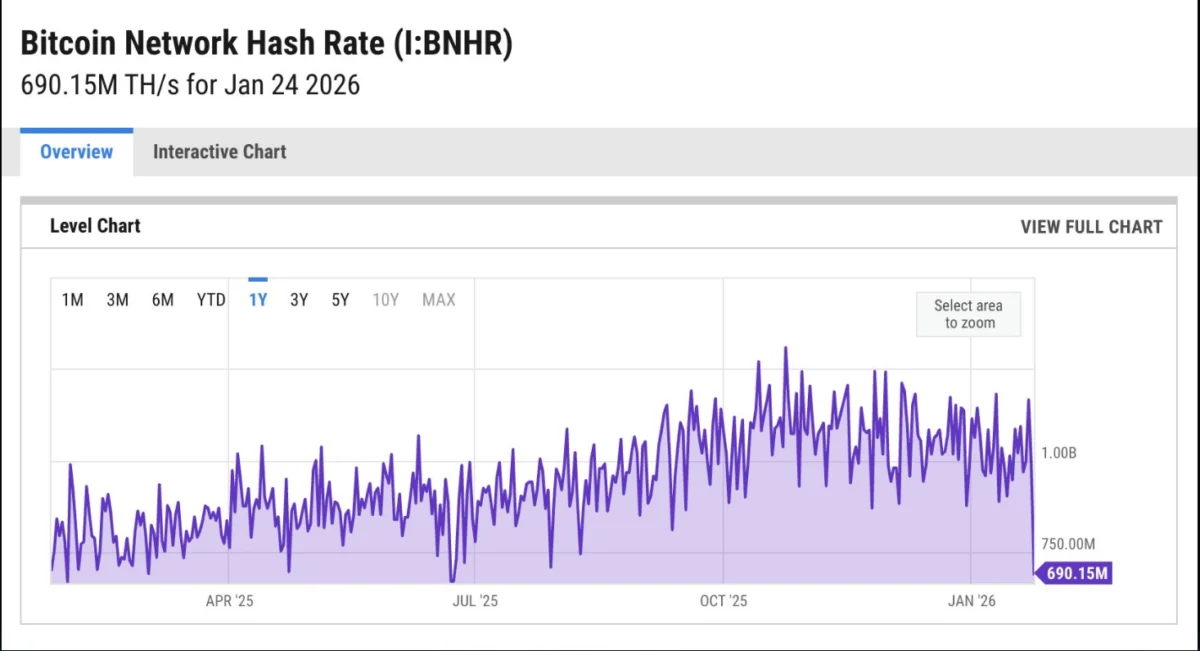
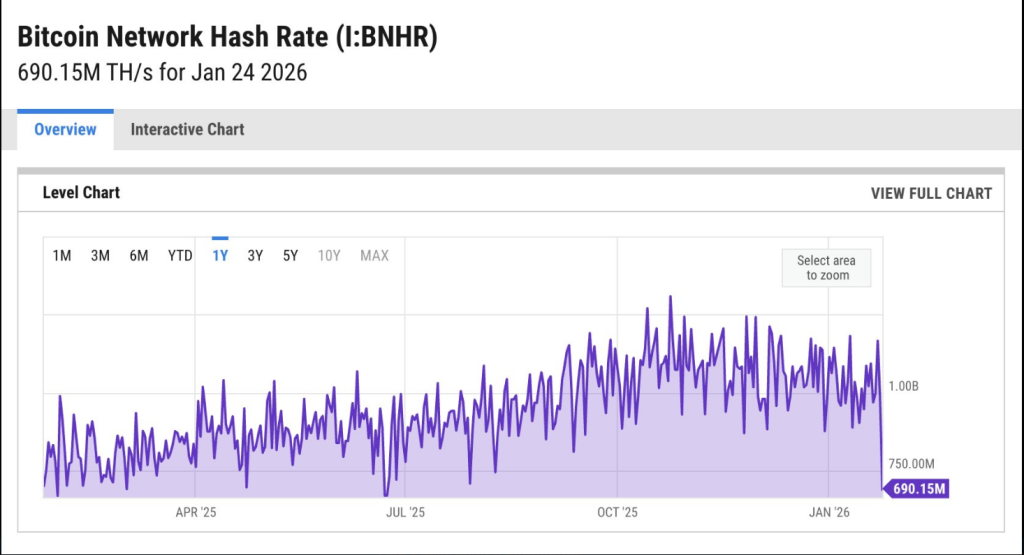
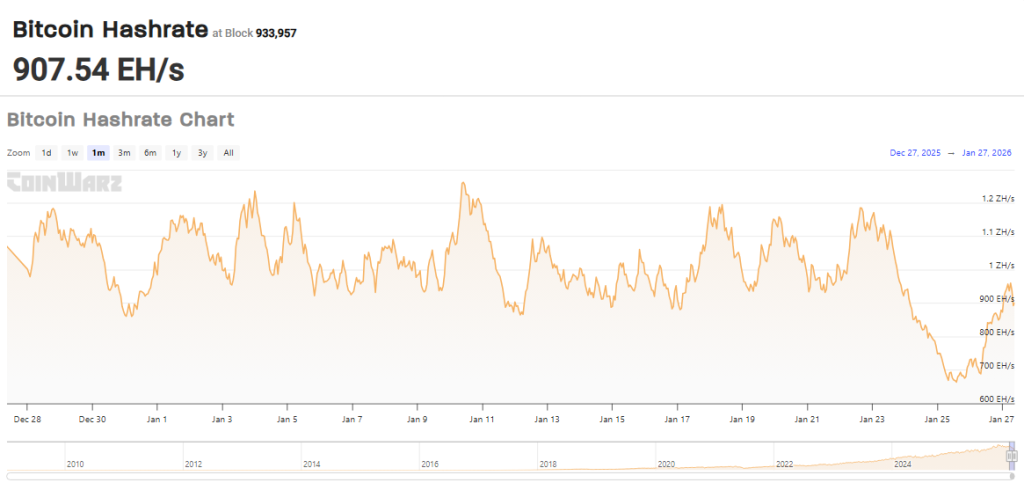
By Saturday, the impact on the blockchain was undeniable. Mining pools and analytical platforms began reporting a cascading drop in hashrate as major facilities, particularly those concentrated in the ERCOT (Electric Reliability Council of Texas) interconnection, powered down their ASIC rigs. The decline was swift. According to data tracked by various mining indexes, the global hashrate plummeted from its pre-storm equilibrium, bottoming out at approximately 663 EH/s (exahashes per second) by Sunday. This figure represented a seven-month low for the network.
However, the resilience of the Bitcoin network was equally on display. As the storm system began to dissipate and power supply stabilized, the recovery was as rapid as the decline. Within 24 hours of hitting the floor, the network hashrate staged a vigorous rebound, climbing back toward the 854 EH/s mark. This "V-shaped" recovery highlights the unique capability of Bitcoin mining hardware to be cycled off and on with precision, a stark contrast to traditional industrial operations that require lengthy restart protocols.
Supporting Data: The Magnitude of the Curtailment
The sheer scale of the disruption underscores the degree to which the United States has become the global center of Bitcoin production. According to Hashrate Index, the U.S. now accounts for roughly 38% of the world’s mining capacity. When a significant portion of this fleet—estimated by some operators to be as high as 40% of global capacity—goes offline simultaneously, the effect is immediately visible in network statistics.

The Federal Energy Information Administration (EIA) has identified over 130 dedicated cryptocurrency mining sites across the U.S. The geographic concentration of these facilities, particularly in energy-rich states like Texas, means that localized weather events have disproportionate effects on global mining statistics.
The impact on individual firm performance was particularly stark. CryptoQuant and other analytics providers tracked a dramatic decline in daily Bitcoin production across major public miners:
- Marathon Digital (MARA): Saw daily production crater from 45 BTC to just seven.
- Riot Platforms (RIOT): Experienced a decline from 16 BTC to three.
- CleanSpark (CLSK): Reported a drop from 22 BTC to 12.
These figures illustrate the high degree of responsiveness these companies now maintain. By sacrificing immediate revenue in the form of daily production, these firms prioritize their contracts with grid operators and their status as "good neighbors" within the energy ecosystem.
Grid Stability and the "Flexible Load" Paradigm
The decision to power down was not merely a reaction to technical failure; it was, in many cases, a calculated, proactive response. Industry participants have long argued that Bitcoin mining provides a "demand response" capability that is unmatched by other industrial consumers.
In times of extreme peak load—such as the recent winter storm—grid managers are often faced with a supply deficit. Bitcoin miners, by virtue of their ability to scale down power consumption in seconds, essentially act as a shock absorber for the electrical grid. When miners turn off their machines, they instantaneously release significant megawatts of capacity back to the grid, ensuring that households and hospitals retain power.
Abundant Mines, an Oregon-based firm, noted in a public statement that this rapid scaling is a structural feature of modern mining. Because mining is a commodity business driven by energy costs, operators are already incentivized to minimize consumption during peak pricing periods. When that economic incentive is aligned with the physical necessity of grid survival, the resulting "curtailment" becomes a critical tool for utility providers.
Market Implications: Bitcoin’s Price and Sentiment
Throughout the duration of the hash-power decline, the market price of Bitcoin remained caught in a wider tug-of-war between weather-related supply shocks and broader macroeconomic sentiment. Trading in the $88,300 range, Bitcoin showed resilience against the news of the hashrate drop.
While some market observers initially feared that a drop in hashrate might signal a decline in network security or mining profitability, the market reaction was largely muted. The consensus among analysts was that the drop was a temporary, voluntary event rather than a permanent loss of capacity. Consequently, the price action remained tied more closely to geopolitical tensions and global economic data rather than the short-term fluctuations in mining output.
The incident has, however, sparked a fresh round of discussion regarding the "hash price"—the revenue a miner earns per unit of hashrate. With production down, revenue for miners took a direct hit. Yet, because the difficulty adjustment mechanism of Bitcoin automatically compensates for hashrate changes over time, the network is designed to remain functional regardless of how many miners are online.
Future Outlook: Building a More Resilient Infrastructure
The events of this past weekend serve as a template for the future of industrial Bitcoin mining. As more jurisdictions look to integrate decentralized mining operations, the ability of these firms to act as flexible energy consumers is becoming a key value proposition.
Looking ahead, policymakers are likely to keep a closer eye on the relationship between crypto miners and regional utilities. The U.S. government’s increased focus on energy independence and grid security means that the "demand response" model, which was stress-tested during this storm, will likely be subject to further formalization.
For mining companies, the takeaway is clear: the path to longevity involves sophisticated energy management. Firms that can dynamically shift their power usage without compromising their long-term viability will be the ones that survive the inevitable volatility of both the energy markets and the Bitcoin network.
As the industry matures, the integration of mining with renewable energy and grid-stabilization technology appears to be the next logical step. By positioning themselves as essential partners to the grid, rather than merely power-hungry competitors, Bitcoin miners are carving out a role that is increasingly difficult to ignore. The storm has passed, the hashrate has returned, and the network continues to operate—a testament to the robustness of a decentralized system that thrives even when the weather turns, and the power lines groan under the weight of the winter cold.
Summary of Key Insights
- Operational Resilience: The Bitcoin network successfully navigated a 40% reduction in global capacity without experiencing any service interruptions or security breaches.
- Grid Partnership: Bitcoin miners acted as a critical safety valve for the U.S. power grid, proving the efficacy of demand-response models in extreme weather.
- Economic Impact: While individual mining firms saw significant dips in daily production, the market demonstrated maturity by not overreacting to the short-term hashrate volatility.
- The New Normal: The ability to rapidly cycle hardware is now a baseline expectation for industrial-scale mining, ensuring both economic survival and grid stability during peak energy demand.