The Rise of TON: Inside the $400 Million Capital Injection Fueling the Telegram-Linked Blockchain
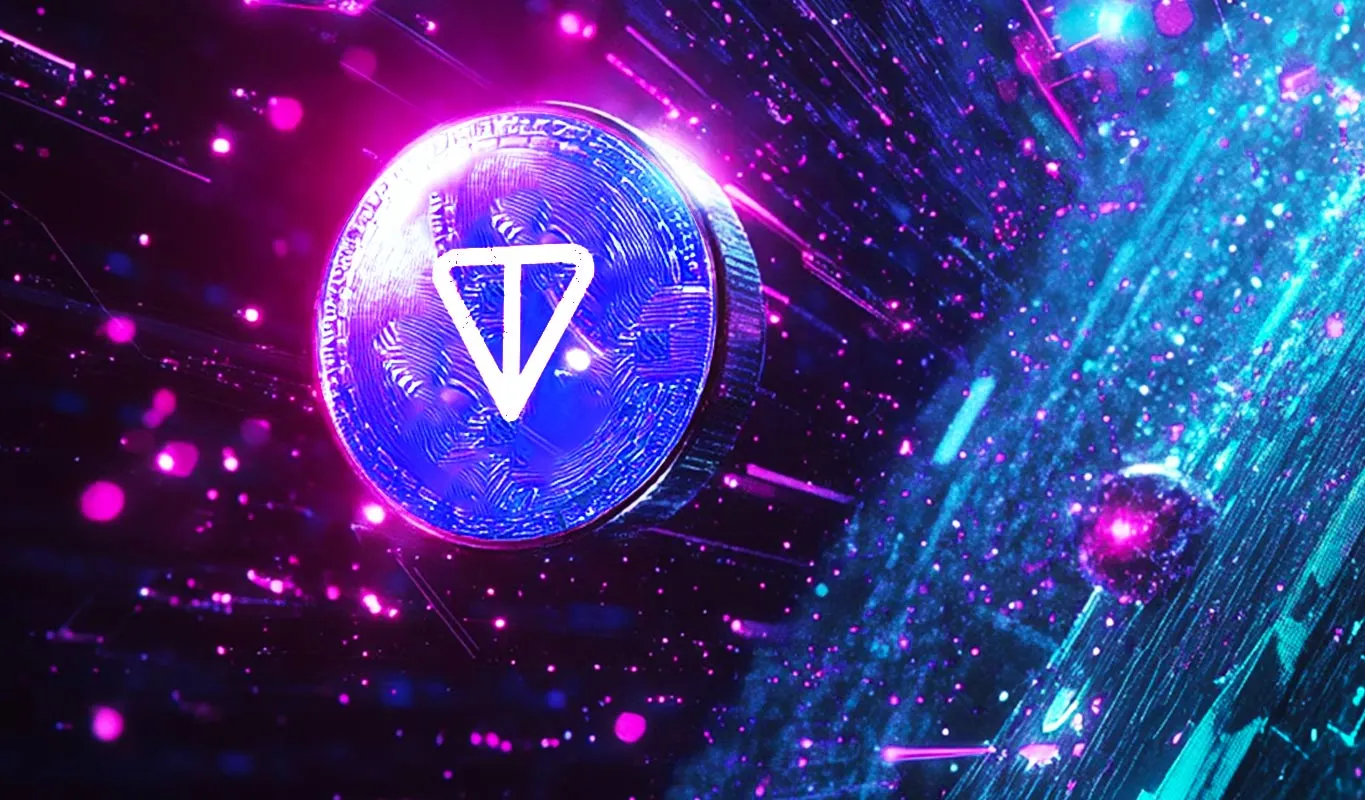
In a significant show of confidence for the decentralized finance (DeFi) and Web3 sectors, the Open Network (TON) has successfully secured over $400 million in investments from a powerhouse roster of venture capital firms. This capital injection marks a pivotal moment for the layer-1 blockchain, which has spent the last several years reinventing itself from a controversial project abandoned by its creators into a cornerstone of the world’s most expansive messaging ecosystem.
The influx of capital, announced by the TON Foundation, includes contributions from heavyweights such as Sequoia Capital, Ribbit Capital, Benchmark, Kingsway, Vy Capital, Draper Associates, Libertus Capital, CoinFund, Hypersphere, SkyBridge, and Karatage. This coalition of investors is not merely betting on a token; they are betting on the unique intersection of mass-market messaging and decentralized infrastructure.
A Turbulent Origin: The Telegram Saga
To understand the gravity of this investment, one must look at the tumultuous history of the project. Originally conceived as the "Telegram Open Network" by brothers Pavel and Nikolai Durov, the blockchain was designed to integrate seamlessly into the Telegram messaging platform. The vision was to create a borderless, decentralized economy for Telegram’s hundreds of millions of users.
However, the project hit a massive regulatory roadblock in 2020. The U.S. Securities and Exchange Commission (SEC) launched a legal battle, alleging that the initial coin offering (ICO) conducted by Telegram violated securities laws. Faced with the prospect of an protracted legal fight that would distract from the core messaging business, Telegram officially parted ways with the project in May 2020.
At that juncture, many observers declared the project dead. However, the open-source community proved resilient. A collective of independent developers and enthusiasts took the reins of the original code, rebranding it as "The Open Network" (TON) and ensuring its survival. Today, while Telegram is no longer the project’s formal developer, the two entities share an inseparable symbiotic relationship.
Chronology of a Blockchain Revival
- 2018–2019: Telegram raises $1.7 billion in a private token sale for its blockchain project, the Telegram Open Network.
- 2020: The SEC secures an injunction against the distribution of Gram tokens. Telegram settles, refunds investors, and shuts down its development of the project.
- 2020 (Late): The community-led "TON Foundation" is formed. Developers pick up the open-source code to continue the network’s evolution.
- 2023: TON sees a massive uptick in utility as Telegram begins integrating wallet features directly into the chat interface.
- January 2025: A landmark deal is reached, officially naming TON the "exclusive blockchain" for Telegram’s burgeoning Mini Apps Ecosystem.
- March 2025: The TON Foundation announces the $400 million investment round, signaling a new era of institutional backing.
Why Investors are Betting on TON
The $400 million investment is not an outlier in the current market, but rather a calculated move by venture capitalists to capture the "onboarding" advantage. The core value proposition of TON is its integration with Telegram’s 1 billion monthly active users.
Unlike traditional blockchains, which often require users to master complex private key management and long, alphanumeric wallet addresses, TON is designed for mass adoption. It allows users to send and receive digital assets directly within the Telegram interface—a feature that mimics the ease of sending a text message or a photo.
Shaun Maguire, a partner at Sequoia Capital, articulated the investment thesis during the announcement: "The TON team is the best in the world at the intersection of consumer product thinking and crypto infrastructure." For Maguire and his peers, the primary allure is the "distribution advantage." While other blockchains struggle to attract millions of users, TON already exists within an environment where those users are already active and engaged.
Official Perspectives: Bridging the Gap
The TON Foundation has been vocal about its mission to bridge the gap between complex blockchain technology and everyday utility. By providing a decentralized layer that supports "Mini Apps"—small, web-based applications that run inside the Telegram app—TON is effectively creating a "super-app" ecosystem similar to WeChat’s integration in China, but with the added benefits of decentralization, transparency, and censorship resistance.
The recent designation of TON as the exclusive blockchain for the Mini Apps ecosystem is arguably the most significant development since the project’s inception. It provides a massive pipeline for developers to build games, financial tools, and marketplaces that can reach a billion-strong audience without the friction usually associated with Web3.
Technical Implications: Scalability and Decentralization
From a technical standpoint, the influx of capital is expected to accelerate the development of TON’s infrastructure. The network utilizes a sharding mechanism that allows it to handle millions of transactions per second, theoretically making it one of the most scalable blockchains in existence.
Critics have previously pointed to the centralization of nodes as a potential point of failure. However, with the backing of firms like CoinFund and Hypersphere, the foundation is likely to focus on increasing validator distribution and enhancing the network’s security protocols. The goal is to move beyond the "Telegram dependency" and establish TON as a standalone, robust layer-1 chain that can support institutional-grade decentralized applications.
Market Analysis and Risk Factors
Despite the optimism, the market reality remains volatile. At the time of this report, TON is trading at approximately $3.61, experiencing the typical ebb and flow of a high-beta crypto asset. Investors should be aware that while the backing of top-tier VC firms is a positive signal, it does not guarantee future price appreciation.
The primary risks include:
- Regulatory Hurdles: Given the project’s history with the SEC, the regulatory environment in the United States remains a lingering threat. Any expansion of TON’s services into the US market will be subject to intense scrutiny.
- Platform Dependency: While the Telegram integration is a strength, it is also a single point of failure. If Telegram were to shift its strategic focus or face regulatory pressure, the TON ecosystem would be severely impacted.
- Market Competition: TON is competing with established giants like Ethereum, Solana, and Layer-2 scaling solutions. Sustaining the current momentum requires continuous innovation and a developer community that can build high-quality applications that keep users engaged.
The Road Ahead
The $400 million investment is a catalyst that moves TON from a "community project" into a major player in the global financial technology landscape. The focus for the next 18 months will likely be on expanding the Mini Apps ecosystem, improving on-ramps for fiat currency, and enhancing the privacy features that first made Telegram a global phenomenon.
As the lines between traditional social media and decentralized finance continue to blur, TON is positioning itself at the very center of the transition. Whether the project can leverage its massive user base to achieve long-term sustainability remains the billion-dollar question. For now, however, the backing of Silicon Valley’s most prominent firms suggests that the "Sleeping Giant" of the blockchain world has officially awakened.
Disclaimer: This report is for informational purposes only and does not constitute financial, investment, or legal advice. Cryptocurrency investments involve a high degree of risk. Readers should perform their own due diligence and consult with a certified financial advisor before making any investment decisions. The Daily Hodl does not endorse any specific asset or entity mentioned in this article.