
Institutional Exodus: Crypto Investment Products Face Major Liquidity Drain Amid Tariff Volatility
Executive Summary: The Institutional Retreat
The digital asset landscape has entered a period of profound uncertainty, characterized by a significant withdrawal of capital from institutional-grade investment vehicles. According to the latest Digital Asset Fund Flows Weekly Report from research firm CoinShares, institutional sentiment has soured in direct correlation with the aggressive tariff policies recently enacted by the Trump administration.
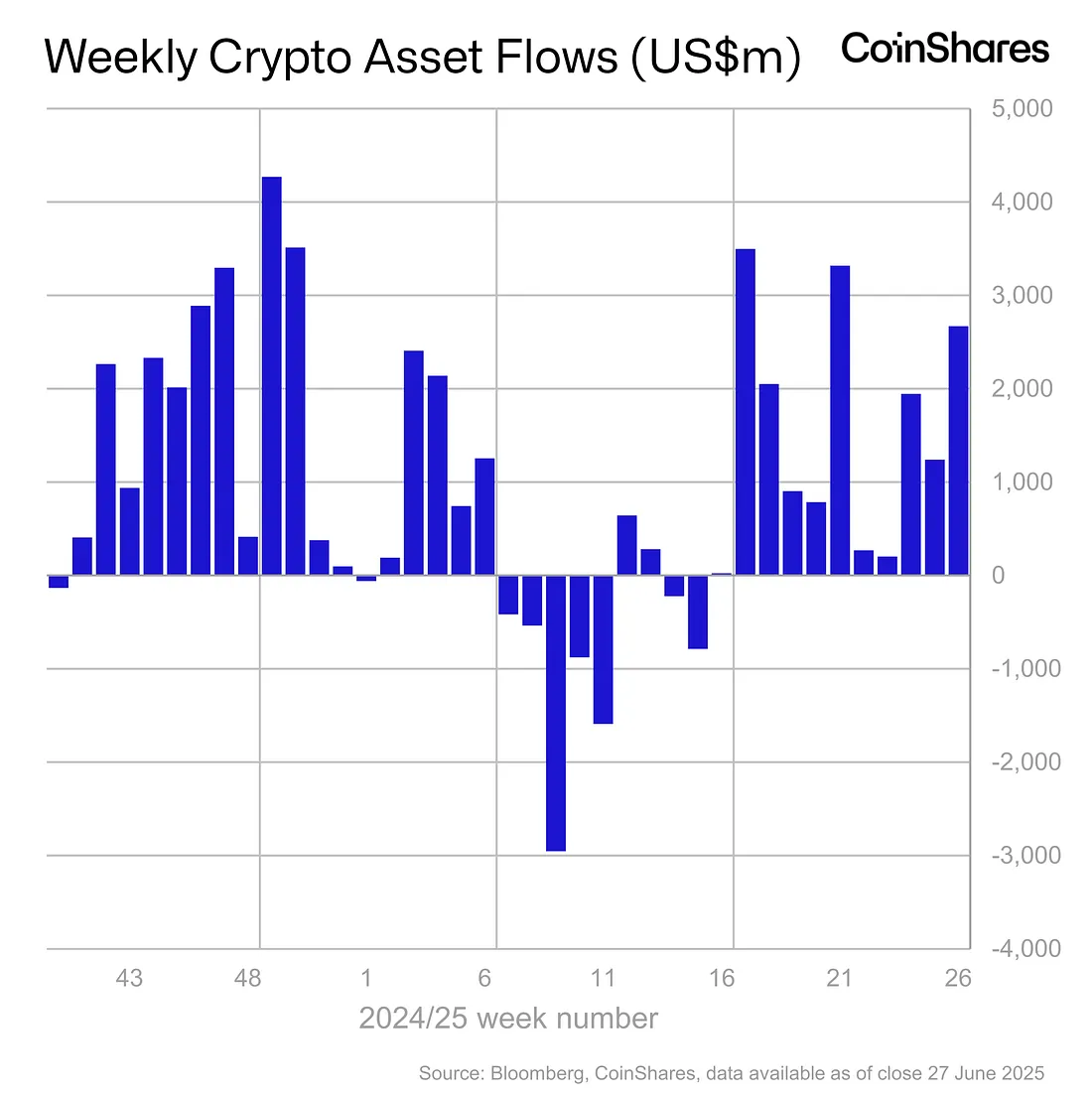
The data paints a sobering picture for the crypto sector: three consecutive weeks of heavy outflows have effectively wiped out the majority of the year-to-date (YTD) gains that the industry had celebrated earlier in the quarter. As global markets react to the "calamitous" tariff war, investors are opting for liquidity over exposure to high-risk digital assets, leading to a massive reshuffling of capital out of crypto-related funds and back into traditional safe-haven assets.
The Chronology of the Market Slide
The current trend of capital flight did not manifest overnight; it is the culmination of a deteriorating macroeconomic environment that began in early February.
The Initial Catalyst: February Sentiment Shift
At the start of the second month of the year, the market began to register signs of fatigue. Institutional investors, who had previously been aggressive buyers of Bitcoin and Ethereum ETFs, began to adopt a "wait-and-see" approach as rumors of incoming trade tariffs began to circulate. The uncertainty surrounding global trade policy created an environment where the speculative nature of cryptocurrency became a liability for institutional portfolio managers tasked with managing risk-averse capital.
The Mid-Quarter Capitulation
By mid-March, the sentiment had shifted from hesitation to active divestment. As the Trump administration moved forward with its tariff agenda, the "risk-on" appetite that characterized the first month of 2024 evaporated. CoinShares reports confirm that this period saw a consistent acceleration of outflows, culminating in a total of $7.2 billion in cumulative outflows since the onset of the negative sentiment cycle.
The April 8th Trough and Partial Recovery
The market reached a critical inflection point on April 8th, when total Assets under Management (AuM) hit their lowest levels since early November 2024. However, the market proved resilient. Following a temporary, strategic reversal of the most severe tariff measures by the administration, the market witnessed a late-week price rebound. This rally was sufficient to push total AuM back up to $130 billion—a notable 8% increase from the April lows—demonstrating how sensitive the crypto ecosystem remains to executive policy decisions.
Data Analysis: The Great Bleed
The breakdown of the fund flows reveals a widespread exodus across the most popular digital asset classes.
Bitcoin’s Dominance in Outflows
Bitcoin, as the primary asset for institutional exposure, bore the brunt of the sell-off. Last week alone, Bitcoin-based investment products saw $751 million in net outflows. This massive withdrawal underscores the fact that when institutional sentiment turns, Bitcoin is often the first asset to be liquidated to meet liquidity requirements or to rebalance portfolios in anticipation of market volatility.
Ethereum and Layer-1 Contraction
Ethereum, the second-largest digital asset, also suffered, recording $37.6 million in outflows. The contagion extended to high-performance Layer-1 networks as well:
- Solana (SOL): $5.1 million in outflows.
- AAVE: $0.78 million in outflows.
- SUI: $0.58 million in outflows.
These figures indicate a broad-based withdrawal rather than a specific rejection of one asset, suggesting that institutional players are de-risking their portfolios entirely rather than rotating capital between different blockchain ecosystems.
The "Altcoin" Exception
Despite the heavy outflow, a sliver of optimism remained for specific niche assets. Small-cap and specialized altcoins managed to attract minor inflows, suggesting that certain investors continue to look for value in specific projects regardless of the macro-economic headwinds.

- XRP: Led the pack with $3.5 million in inflows.
- Ondo, Algorand, and Avalanche: Each saw marginal inflows ranging between $0.25 million and $0.46 million.
Implications of Trade Policy on Digital Assets
The recent volatility serves as a stark reminder of the "policy-linked" nature of digital assets in the current financial era. While crypto proponents often argue that Bitcoin is a hedge against inflation and government overreach, the recent data suggests that in the short term, digital assets are still treated as "high-beta" risk assets that fluctuate in tandem with trade wars and interest rate anxieties.
The Institutional Dilemma
Institutional investors—such as pension funds, hedge funds, and family offices—operate under strict risk management mandates. When the government introduces policies that threaten global supply chains and economic growth (like the current tariff war), the cost of holding volatile digital assets increases. The current outflows represent a move toward capital preservation, as these firms look to protect their balance sheets against the fallout of a potentially protracted trade dispute.
The Impact on Market Liquidity
The $7.2 billion in outflows represents a significant reduction in the "dry powder" currently available within crypto-focused investment products. As liquidity tightens, the market becomes more prone to flash crashes and increased volatility. For the broader crypto market, this implies that until trade policies stabilize, institutional investors may refrain from re-entering the market, leaving price discovery largely to retail traders and high-frequency algorithms.
Expert Perspectives and Market Outlook
While the current outlook is grim, analysts remain divided on the long-term impact of these policy decisions.
Some market observers argue that the "calamitous" nature of the tariffs will ultimately force the Federal Reserve to intervene or the government to pivot, which could trigger a massive influx of capital back into digital assets. Others, however, believe that the current outflows signify a fundamental shift in how institutional investors view the crypto space—not as a permanent hedge, but as a tactical instrument that can be discarded when the macro-environment darkens.
CoinShares’ report highlights that the 8% recovery in AuM following the tariff reversal is a "bullish signal" of underlying demand. It suggests that institutional interest is not dead; it is simply latent, waiting for a more predictable policy environment.
Conclusion: The Path Forward
The crypto market finds itself at a crossroads. The correlation between trade policy and digital asset performance has never been more apparent. As investors digest the impact of the current tariff regime, the next several weeks will be crucial.
If the administration maintains its current course, the industry may see continued stagnation or further outflows as capital seeks shelter in traditional bond markets or cash equivalents. Conversely, if the recent "temporary reversal" of tariffs becomes a permanent policy shift, the liquidity that left the market in March and April could return with equal speed.
For now, the message from the institutional sector is clear: stability is the prerequisite for investment. Until the threat of a trade-war-induced recession subsides, the "digital asset winter" in institutional flows is likely to persist, leaving the market to navigate a period of heightened sensitivity and increased price variance.
Disclaimer: This article is for informational purposes only and does not constitute financial or investment advice. Investors are encouraged to conduct their own thorough research and consult with professional advisors before making any decisions regarding high-risk assets, including cryptocurrencies. The Daily Hodl is not responsible for any financial losses incurred from market activity.