
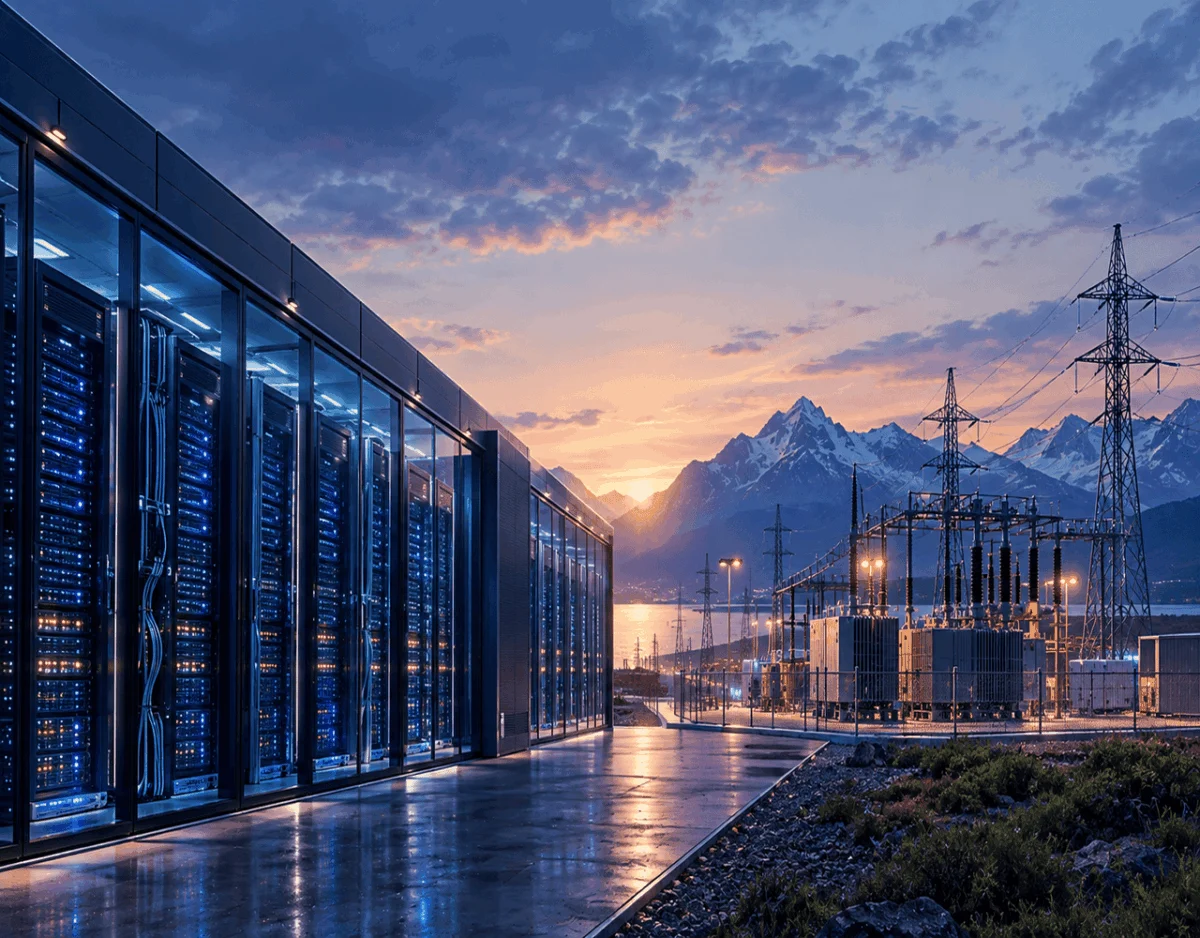
Beyond the GPU Rush: Inside Clichmont’s Strategy to Own the Physical Foundations of AI Compute
By Global Tech & Infrastructure Desk
Published: October 2023
Main Facts
As the global artificial intelligence boom accelerates, the conversation surrounding compute infrastructure is undergoing a radical shift. While much of the tech sector remains locked in a high-stakes race to secure short-term access to increasingly powerful Graphics Processing Units (GPUs), a deeper, more structural bottleneck is emerging. The true limitation to scaling artificial intelligence is no longer just manufacturing chips; it is the physical capacity to power, cool, and connect them.
Enter Clichmont. Led by CEO Alexis Cathalifaud, the company is spearheading an unconventional approach within the AI infrastructure landscape. Rather than relying on a capital-light, rental-heavy model that simply leases GPU capacity from hyperscalers or specialized cloud providers, Clichmont is committing heavily to owning and controlling the underlying physical assets. This includes securing land, developing power-ready data centers, engineering advanced cooling systems, and integrating localized energy sources—such as solar facilities in Alicante, Spain, and high-efficiency builds in Bodø, Norway.
Furthermore, the company operates an ecosystem token, $CLAI, designed to act as a digital economic layer for governance, treasury operations, and on-chain community participation. In an industry defined by software speed and rapid hardware obsolescence, Clichmont’s bet is that long-term control over megawatts, grid connections, and real estate will ultimately trump fleeting access to specific generations of silicon.
Chronology of the AI Infrastructure Squeeze
The evolution of the AI compute market has occurred in distinct waves, moving from experimental software development to massive industrial-scale deployment:
- The Early Cloud Era (Pre-2023): Artificial intelligence workloads were predominantly run on standard cloud infrastructure. General-purpose CPUs and early-generation GPUs handled the modest demands of foundational models and machine learning research.
- The Great GPU Gold Rush (2023–2024): Following the widespread commercialization of generative AI, demand for specialized accelerators skyrocketed. Companies like OpenAI, Anthropic, and various enterprise firms began hoarding chips. Specialized cloud providers—such as CoreWeave, Crusoe, and Lambda—emerged to build massive GPU rental fleets, driving a market obsessed with silicon acquisition.
- The Power Wall and Grid Bottlenecks (Late 2024–Present): As cluster sizes expanded from hundreds of GPUs to tens of thousands per training run, data centers began hitting physical limits. Power grids proved incapable of delivering swift multi-megawatt allocations. Real estate permitting, specialized liquid cooling requirements, and electrical equipment shortages (such as transformers and switchgear) transformed energy and real estate into the primary choke points for the industry.
- Clichmont’s Structural Pivot: Recognizing that hardware depreciates while power-ready real estate appreciates, Clichmont positioned itself as an independent owner-operator of foundational AI infrastructure. By bypassing pure rental dependencies, the company began strategically developing geographically diverse sites tailored to local energy and cooling advantages.
Supporting Data and Comparative Analysis
To understand Clichmont’s market positioning, one must examine the economic trade-offs between a capital-light rental model and a capital-intensive physical ownership model.
The Depreciation vs. Longevity Equation
- Silicon Lifespan: A typical high-performance AI accelerator experiences economic depreciation within two to three years as newer generations (yielding exponential performance gains) hit the market.
- Infrastructure Lifespan: Land, high-voltage grid connections, substations, fiber-optic pathways, and shell structures can remain strategically valuable and operational across multiple generations of computing hardware—often spanning decades.
Geographical Strategy: The Clichmont Footprint
Clichmont’s site selection criteria relies on localized resource mapping rather than uniform, cookie-cutter data center designs:
- Bodø, Norway: Capitalizes on a cold northern climate that drastically reduces mechanical cooling overhead while leveraging a robust, stable renewable energy grid.
- Alicante, Spain: Integrates solar energy directly into the infrastructure strategy, tapping into southern Europe’s high solar irradiance profile to secure a distinct energy mix.
The $CLAI Token Framework
In parallel with its physical builds, Clichmont has integrated a digital asset, $CLAI. While market skeptics often question the necessity of combining physical data centers with cryptographic tokens, company leadership maintains that $CLAI is structured to serve as an on-chain coordination, treasury, and governance layer. It is explicitly decoupled from the physical assets themselves, which must stand on their own economic merits independent of token speculation.
Official Responses: An Interview with CEO Alexis Cathalifaud
To shed light on the company’s philosophy, Clichmont CEO Alexis Cathalifaud addressed the core dilemmas facing AI infrastructure developers today in an exclusive interview.
1. Ownership vs. Access
“Because GPU access gives you compute; infrastructure ownership gives you control over the economics of compute,” Cathalifaud explains.
When organizations rent capacity from a hyperscaler, they inherit external pricing models, availability constraints, and rigid networking architectures. By owning the facility, Clichmont retains the autonomy to dictate which chips to deploy, the density of installation, cooling innovations, and upgrade timelines.
"A GPU generation may become economically less competitive within a few years, whereas land, grid connections, substations, cooling infrastructure, fiber connectivity and permitted megawatts can remain valuable across multiple generations of accelerators."
2. Differentiating from Market Peers
Addressing comparisons to established players like CoreWeave, Crusoe, and Nebius, Cathalifaud clarifies that those companies validated a massive market rather than executing a flawed strategy. However, their primary focus remains heavy fleet-rental models.
"In a market where everyone is chasing chips, we’d rather own the place where the chips have to live. The durable bottleneck is the infrastructure required to run them—power, land, cooling and connectivity."
3. The Energy Bottleneck
Energy dictates nearly every strategic maneuver Clichmont executes. Cathalifaud notes that chips can be packaged and shipped globally via freight, but 100 megawatts of electrical capacity cannot.
"A GPU without reliable power is just expensive hardware sitting in a rack… When Clichmont evaluates a site, we don’t start by asking where we can find the cheapest building. We ask: where can we secure reliable power, at the right economics, with the ability to scale?"
4. Site Selection Metrics
Explaining the rationale behind facilities in Alicante and Bodø, Cathalifaud emphasizes that raw land holds zero intrinsic value without scalable power and connectivity.
"We don’t choose a location because one variable looks attractive. We choose it because the entire infrastructure equation works. Power is the first filter… Bodø and Alicante are interesting precisely because they represent different strengths."
5. The Role of the $CLAI Token
Acknowledging deep skepticism regarding token-integrated tech firms, Cathalifaud draws a strict line between the underlying corporate business and the digital asset.
"The skeptical view is completely fair. A token shouldn’t exist just because a company operates in AI… The physical infrastructure has to exist independently of the token, and the token has to demonstrate real utility independently of speculation. If we can’t show both, then the skepticism is justified."
6. Software Speed vs. Physical Reality
For professionals transitioning from pure software engineering to physical infrastructure development, the greatest shock is the velocity of deployment.
"In software, if demand doubles, you can often provision more capacity quickly. In a data center, every additional megawatt has a physical dependency behind it—grid capacity, transformers, switchgear, cooling, fiber, permits, construction… You can’t patch a badly designed 50-megawatt electrical system overnight."
7. Assessing the Risks
Admitting that capital intensity paired with poor timing represents the greatest hazard to Clichmont’s model, Cathalifaud highlights the danger of committing heavy capital years in advance.
"The biggest danger therefore isn’t simply spending too much—it’s building the wrong capacity, in the wrong place, at the wrong time. If you build ahead of demand, capital sits idle. If you build too slowly, you miss the market."
8. A Three-Year Horizon
Looking ahead, Cathalifaud does not project Clichmont to outscale industry giants like CoreWeave or Nebius. Instead, the ambition is precision and efficiency.
"I want Clichmont to be recognized as one of the most efficient independent AI infrastructure operators in Europe—with real operating assets, secured power, high-density GPU capacity and a track record of bringing new compute online quickly."
Implications for the Broader AI Industry
Clichmont’s strategic positioning highlights a maturing artificial intelligence sector. As foundational model providers consolidate and enterprise adoption deepens, the era of easy, abundant, and cheap cloud compute is giving way to localized energy constraints and capital rationing.
If Cathalifaud’s thesis holds true, the winners of the next decade of AI development will not necessarily be the companies that hold the largest short-term leases on current-generation silicon. Rather, they will be the entities that successfully navigate permitting delays, secure scarce multi-megawatt electrical allocations, and future-proof their physical real estate against rapid technological obsolescence.
By tying its growth to power-ready land, diversified European climates, and disciplined capital sequencing, Clichmont is offering an alternative blueprint for the foundations of machine intelligence—one where mastering the grid is just as critical as mastering the algorithm.