
Bridging Models and Machines: How B.AI’s Full-Stack Infrastructure is Redefining the Global AI and Agent Economy
SINGAPORE — In the rapidly evolving landscape of artificial intelligence, a fundamental structural shift is underway. The industry is moving past the phase of isolated foundation models and stepping aggressively into the era of autonomous AI agents. Positioned squarely at this critical intersection is B.AI, a next-generation AI infrastructure platform that has quickly established itself as an undisputed industry leader.
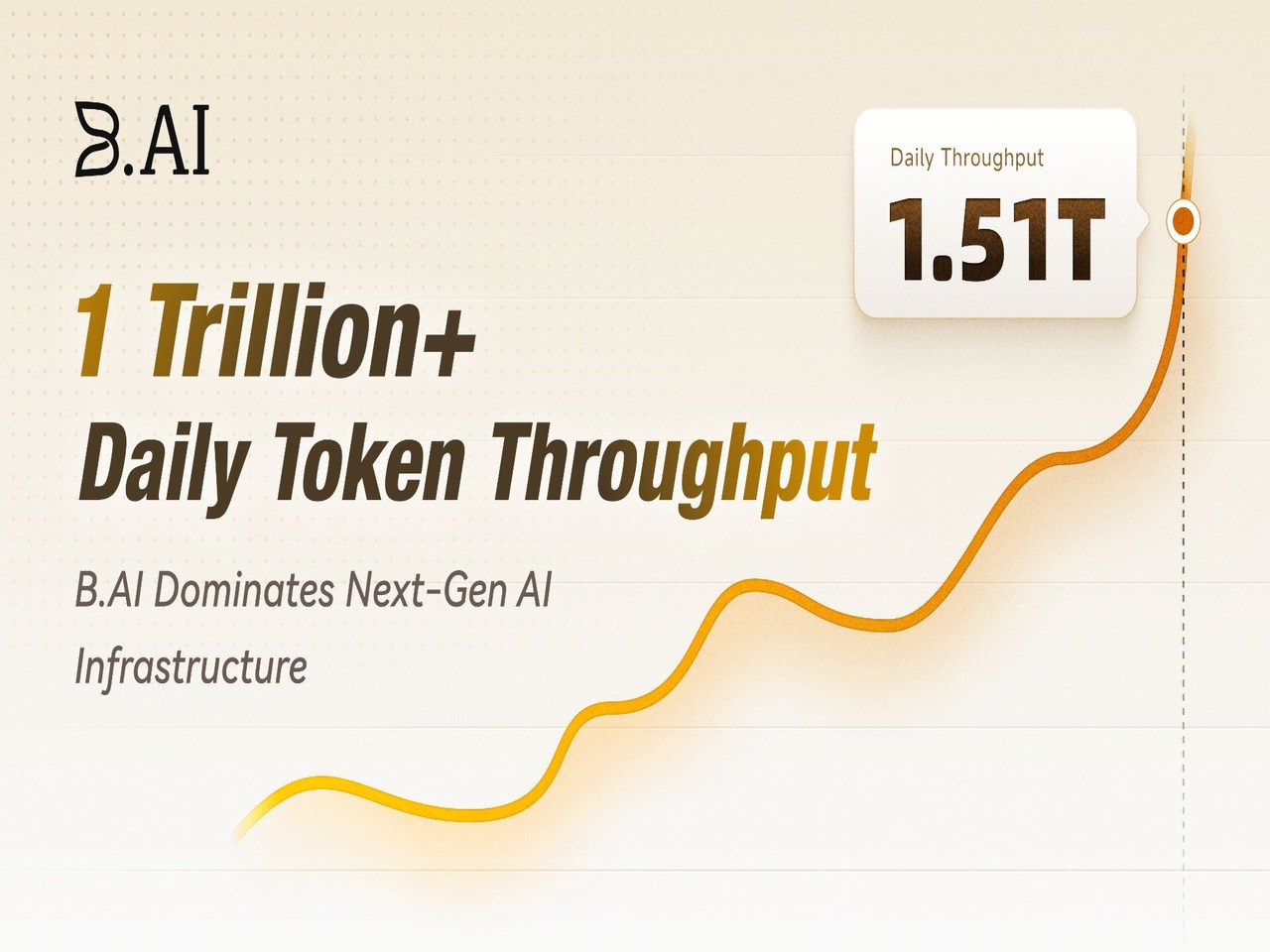
Just five months after its official launch, B.AI has shattered previous industry growth benchmarks, recording a daily throughput of over 1.51 trillion tokens. This represents a staggering 71,500-fold increase since the platform’s inception. By achieving in roughly 100 days what took early API aggregation pioneers like OpenRouter nearly two years to accomplish, B.AI has proved the viability of its full-stack commercial strategy.
By integrating high-performance compute routing, decentralized settlement networks, and native agent runtimes, B.AI is moving beyond simple traffic distribution. It is building the foundational financial and technical plumbing required for the trillion-dollar agent economy of tomorrow.
Main Facts: The Rise of B.AI’s Trillion-Token Infrastructure
At its core, B.AI operates as a dual-engine platform combining intelligent compute distribution with decentralized financial settlement. While early AI middleware platforms focused purely on model aggregation—routing developer queries to various large language models (LLMs)—B.AI recognized that the next paradigm shift requires an underlying economic layer capable of supporting autonomous machine-to-machine transactions.
Key pillars defining B.AI’s market dominance include:
- Explosive Throughput: Daily token processing has surpassed 1.51 trillion, scaling over 71,500 times since launch.
- Global Model Aggregation: The platform bridges Western foundational giants (such as GPT and Claude) with high-efficiency, cost-effective Chinese LLMs (including DeepSeek, Qwen, Kimi, and GLM).
- Dual-Track Payment Network: Seamlessly bridges traditional Web2 payment gateways (WeChat Pay, Alipay, Visa) with Web3 decentralized settlement rails.
- TRON Ecosystem Integration: Leverages the deep liquidity and high-throughput capabilities of the TRON network and its massive USDT supply to facilitate instant, frictionless micropayments.
- Full-Stack Agent Runtime: Deploys a comprehensive suite of tools—including native agent wallets, execution environments, and standardized protocols like x402 and 8004—to power autonomous Agent-to-Agent (A2A) commerce.
Chronology: From Concept to Trillion-Token Dominance
The trajectory of B.AI highlights the blistering pace at which modern AI infrastructure must scale to keep up with global demand.
- Inception and Incubation: Co-incubated by TRON and YZi Labs, B.AI was conceptualized to solve a glaring bottleneck in the AI deployment pipeline: the friction between fragmented AI models and the lack of a cohesive global payment and execution layer for automated agents.
- The First 100 Days: Upon launch, the platform capitalized on the massive global demand for cost-effective, high-performance Asian LLMs. By onboarding developers and offering aggressive pricing incentives—such as tiered API structures with discounts of up to 90%—the platform saw immediate organic adoption.
- Ecosystem Acceleration via YZi Labs: With ecosystem partner YZi Labs acting as a core distribution engine, B.AI rapidly onboarded early-stage projects and developer communities, driving a steady influx of commercial demand and real-world use cases.
- The 1.51 Trillion Milestone: Within just five months, B.AI vaulted past legacy aggregation timelines, cementing its status as a primary global conduit for high-concurrency AI workloads. By bridging advanced models with native settlement systems, the platform transitioned from a simple traffic router into a central master ledger for the emerging agent economy.
Supporting Data: Capitalizing on the Cost-Performance Paradigm Shift
B.AI’s meteoric rise is not merely the result of clever marketing; it is deeply rooted in macro-level shifts within the global AI market. Over the past year, Chinese LLM developers have drastically reduced API costs while matching—and occasionally outperforming—top global benchmarks. Models such as DeepSeek-V4-Flash, Qwen3.8-Flash, and GLM-5.3 Flash have emerged as some of the most heavily utilized models on the B.AI platform.
To convert these inherent model cost efficiencies into usable global throughput, B.AI established strategic partnerships with elite market players including Tencent, Alibaba, ByteDance, DeepSeek, Zhipu AI, Kimi, and MiniMax. This all-star model portfolio provides international developers with an effortless gateway to alternative foundation models.

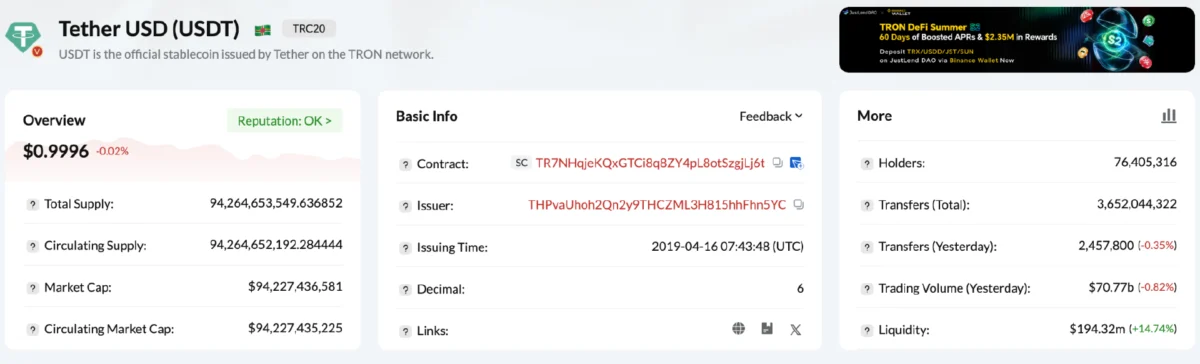
Furthermore, B.AI’s integration with TRON provides the financial backbone necessary to handle massive transaction volumes. As of September, the total TRC-20 USDT supply surpassed 94.2 billion, setting continuous records. By plugging directly into the world’s largest stablecoin transfer network, B.AI ensures that cross-border compute scheduling and high-frequency automated micro-transactions can occur with minimal friction and maximum liquidity.
Official Responses and Strategic Architecture
The overarching vision of B.AI’s leadership and its incubating partners is to build a closed-loop infrastructure capable of sustaining autonomous agent workflows. According to the B.AI core team, front-end compute routing is insufficient for an economy driven by machine intelligence.
To bridge this gap, B.AI has systematically engineered a three-tier technical architecture:
- The Scheduling Layer: B.AI drives fine-grained compute allocation through structured invocation plans. This allows developers to precisely match specific operational demands with the most cost-effective and capable compute resources available across global clusters.
- The Execution Layer: Moving beyond simple text generation, B.AI equips agents with direct operational capabilities. Through embedded toolchains such as Skills and Agent Wallet, alongside natively integrated AI assistants like BAIclaw and BAI code, the platform transforms static models into fully fledged digital workers capable of autonomous data acquisition and task execution.
- The Protocol Layer: In what may be its most strategically profound move, B.AI has established foundational transaction standards for A2A commerce. By natively integrating the x402 payment protocol and the 8004 identity authentication protocol, the platform paves a standardized path for mutual trust, verifiable identity, and high-frequency automated settlement between distinct AI agents.
Implications: Reshaping the Global Flow of Compute and Capital
The implications of B.AI’s development extend far beyond the realm of developer tooling. As artificial intelligence transitions from human-prompted chat interfaces to autonomous multi-agent systems, the requirement for machine-native financial rails becomes absolute.

Traditional payment rails—reliant on manual invoicing, high interchange fees, and legacy banking hours—are fundamentally incompatible with an agent economy where thousands of micro-transactions occur in fractions of a second. By fusing a Web3 smart settlement network with backward-compatible Web2 payment gateways, B.AI has created a unified integration point for global capital flow.
For foundation model providers, B.AI offers an immediate pipeline to high-value global workloads, scaling their commercial reach across international borders. For developers and enterprises, the platform eliminates the complexity of managing multiple API subscriptions and fragmented payment methods.
Crossing the trillion-token threshold is, by all accounts, merely a starting point for B.AI. By positioning itself at the convergence of intelligence distribution and automated value exchange, the platform is not just participating in the next-generation AI infrastructure stack—it is actively defining the rules by which machine intelligence will transact, collaborate, and scale in the years to come.
Contact Information:
- Organization: B.AI Team
- Location: Singapore
- Website: b.ai
- Email: [email protected]