Institutional Capital Shifts: Bitcoin Sees Record Outflows as Markets Digest Hawkish Fed Signaling
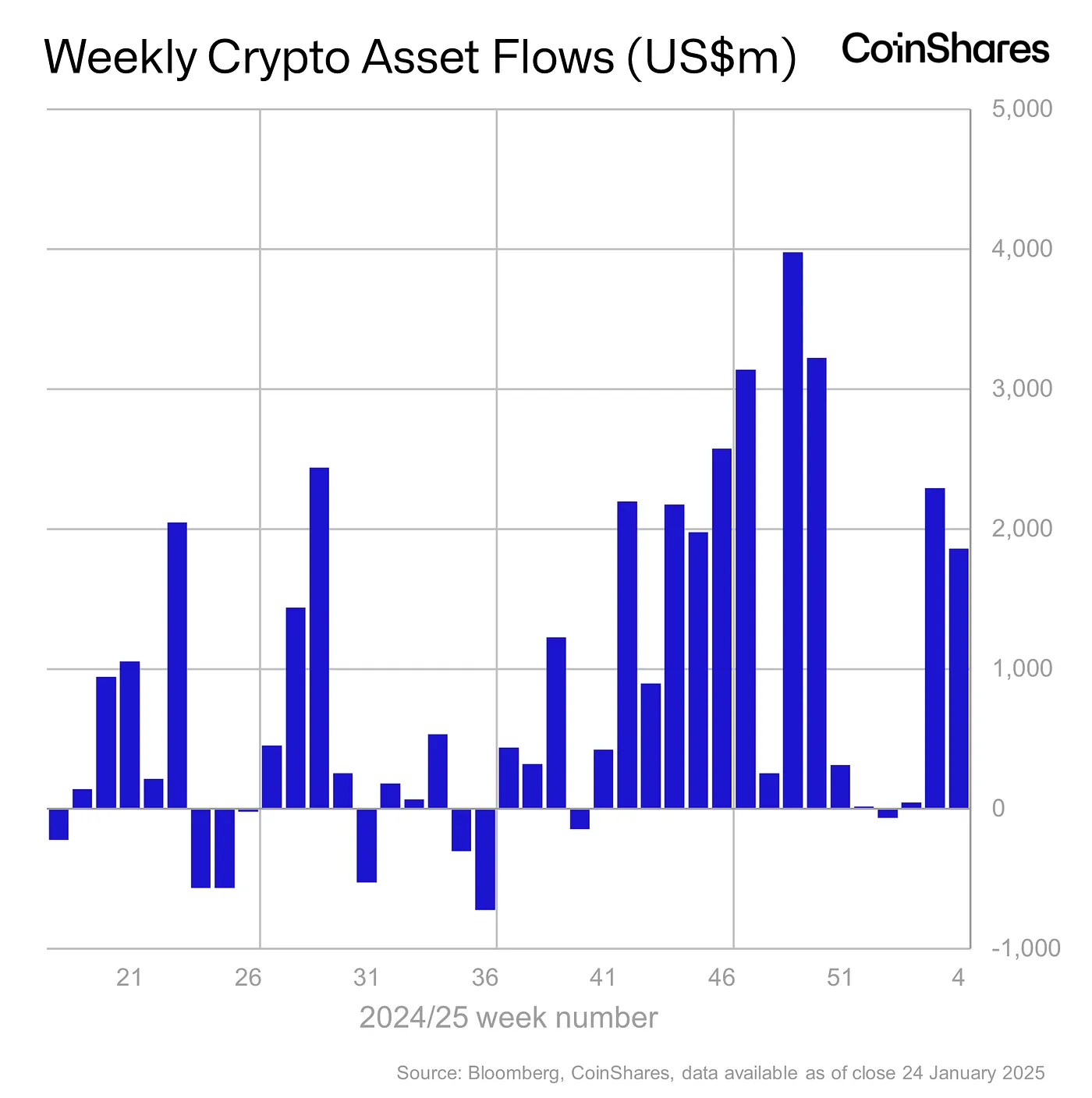
In a turbulent week for digital asset markets, institutional investors have signaled a significant cooling toward the flagship cryptocurrency, Bitcoin. According to the latest weekly fund flow report from CoinShares, institutional sentiment shifted sharply, resulting in a staggering $945.89 million exit from Bitcoin-focused investment products. This mass exodus, largely attributed to evolving monetary policy expectations, has sent shockwaves through the crypto ecosystem, prompting analysts to re-evaluate the near-term outlook for digital assets.
Despite a broader market environment that saw a fresh interest rate cut in the United States, total crypto-related investment products suffered a net outflow of $360 million. This paradoxical reaction—where a loose monetary policy failed to buoy institutional appetite for Bitcoin—underscores the growing sensitivity of high-risk assets to the rhetoric emanating from the Federal Reserve.
The Catalyst: Jerome Powell and the Hawkish Pivot
The primary driver behind the sudden liquidation of Bitcoin positions appears to be the recent commentary from Federal Reserve Chair Jerome Powell. In a series of statements that caught many market participants off guard, Powell adopted a notably hawkish tone, casting doubt on the trajectory of further interest rate cuts as the year draws to a close.
For months, the market had priced in a steady path toward lower interest rates, a scenario traditionally bullish for risk-on assets like Bitcoin. However, Powell’s signaling that the Federal Open Market Committee (FOMC) may hit the pause button on easing in December has effectively recalibrated investor expectations. The uncertainty surrounding future rate cuts has forced institutional portfolio managers to hedge their bets, leading to a "risk-off" environment that disproportionately impacted Bitcoin, the most liquid and institutionalized asset in the space.
Chronology of the Shift
The week began with optimistic sentiment fueled by the Fed’s headline interest rate cut. However, the mood soured mid-week as the implications of the accompanying press conference became clear.
- Early Week: Bitcoin and broader crypto markets initially held steady, anticipating that the rate cut would provide a tailwind for institutional inflows.
- Mid-Week: The publication of the FOMC minutes and subsequent remarks by Chair Powell introduced a hawkish tone. Investors began to digest the possibility that the central bank’s inflationary concerns outweighed the perceived need for further stimulus.
- Late Week: Institutional desk data began to show heavy liquidation. CoinShares reported that by Friday, the net outflow from Bitcoin ETFs reached nearly $1 billion, effectively erasing weeks of positive accumulation.
- Weekend Consolidation: As trading activity slowed, analysts began to parse the geographical discrepancies in the flow data, noting that while the U.S. led the selling, European markets were moving in the opposite direction.
Supporting Data: A Tale of Two Regions and Diverse Assets
The data provided by CoinShares reveals a complex, multi-layered narrative. While the aggregate number points to a bearish trend, the underlying asset flows suggest that institutional investors are not abandoning crypto entirely; rather, they are rotating their capital.
Geographical Disparities
The United States was the epicenter of the sell-off, recording $439 million in total outflows. This aggressive move highlights how deeply intertwined US-based institutional desks are with the Federal Reserve’s policy decisions. Conversely, Europe demonstrated resilience. Germany saw $32 million in net inflows, while Switzerland added $30.8 million, suggesting that European institutional players may be viewing the current price dip as an entry point rather than a signal to exit.
Asset Class Rotation
The most striking revelation in the report is the divergence between Bitcoin and the broader "altcoin" market. While Bitcoin suffered nearly $1 billion in outflows, Solana (SOL) experienced a remarkable surge, recording $421.11 million in inflows. This represents the second-largest weekly haul in the asset’s history, signaling that institutional capital is increasingly favoring high-throughput, smart-contract-capable blockchains.
Furthermore, Ethereum (ETH) and XRP also saw positive momentum, with inflows of $57.59 million and $43.18 million, respectively. This movement indicates that institutional investors are diversifying their portfolios, moving away from a "Bitcoin-only" approach and seeking exposure to ecosystems that offer utility beyond store-of-value applications.
Institutional Implications: What Happens Next?
The recent outflows represent a critical juncture for the crypto market. The pivot from a unified, bullish sentiment toward Bitcoin to a fragmented, asset-specific strategy has several long-term implications for the industry.
1. The End of the "Rising Tide" Era
For much of the past year, the influx of capital into Bitcoin ETFs created a "rising tide that lifts all boats" scenario. The recent data suggests that the easy money phase may be over. Institutional investors are becoming more discerning, requiring stronger fundamental catalysts to justify continued allocation. As the macro environment tightens, assets with clear use-cases—such as Solana’s DeFi ecosystem or XRP’s cross-border payment utility—may continue to outperform Bitcoin in terms of sentiment.
2. Sensitivity to Central Bank Policy
The market’s reaction to Powell’s comments serves as a stark reminder that Bitcoin’s maturation into a mainstream asset class comes with a trade-off: it is no longer immune to the standard levers of global macroeconomics. As Bitcoin becomes a core component of institutional portfolios, its price action will increasingly mirror that of high-growth tech stocks, reacting with high elasticity to interest rate announcements and inflationary data.
3. The Flight to Utility
The massive inflow into Solana suggests that institutional "smart money" is looking for performance. Investors are betting that as the macro environment stabilizes, the next wave of growth will be driven by decentralized applications (dApps), high-speed settlement layers, and real-world asset (RWA) tokenization. Bitcoin’s status as "digital gold" is undisputed, but it is currently losing out to more dynamic protocols in the competition for active investment capital.
Expert Perspectives and Market Outlook
While the headlines focus on the nearly $1 billion outflow from Bitcoin, seasoned analysts warn against reading too much into a single week of data. "Market sentiment is often reactive to short-term news cycles," notes one lead analyst at a boutique crypto-consultancy. "The Fed’s hawkishness is a concern, but it does not change the long-term supply-demand dynamics of Bitcoin, specifically the programmed scarcity. The rotation into Solana and XRP is simply a reflection of portfolio rebalancing, not necessarily a vote of no-confidence in the market at large."
However, others caution that if the Fed maintains its hawkish stance through the end of the year, we could see a continued "de-risking" phase. The lack of a clear, stimulative path for the U.S. economy may keep Bitcoin under pressure until at least Q1 of the following year.
Conclusion: Navigating the Uncertainty
The current market climate is defined by a tug-of-war between the macroeconomic reality of a cautious Federal Reserve and the microeconomic reality of growing utility within the blockchain sector. The $945 million outflow from Bitcoin is a significant data point, but it should be viewed in the context of a wider, more sophisticated institutional strategy that is beginning to prioritize performance-driven assets over passive store-of-value holdings.
Investors are advised to exercise caution and maintain a long-term perspective. As the dust settles from Powell’s latest policy signals, the market will likely undergo a period of consolidation. The coming weeks will be crucial in determining whether the interest in alternative assets like Solana and Ethereum is a temporary hedge or a fundamental shift in how institutions allocate their digital asset exposure.
As always, in the volatile landscape of cryptocurrency, diversification and thorough due diligence remain the best defenses against market turbulence. The institutional exodus from Bitcoin may be the headline, but the underlying rotation of capital suggests that the story of this bull cycle is far from over—it is simply evolving.
Disclaimer: The information provided in this article is for educational and informational purposes only and does not constitute financial, investment, or legal advice. Cryptocurrency investments carry a high level of risk and may not be suitable for all investors. The Daily Hodl is not an investment advisor and does not recommend the buying or selling of any specific digital assets. Always conduct your own research and consult with a professional financial advisor before making any investment decisions.