The Illusion of Liquidity: Why Wash Trading Continues to Plague the Crypto Ecosystem
The cryptocurrency industry, despite its rapid maturation and the entry of institutional giants, continues to grapple with a persistent, shadowy adversary: wash trading. According to Bobby Ong, co-founder of the prominent market data aggregator CoinGecko, the practice of inflating trading volumes through deceptive means is not only prevalent but appears to be intensifying. As the industry strives for mainstream legitimacy, the prevalence of "fake" volume remains one of the most significant barriers to accurate price discovery and investor protection.
Understanding the Mechanics of Wash Trading
Wash trading is a sophisticated form of market manipulation that involves an investor—or an automated bot—simultaneously buying and selling the same financial instrument. By doing so, the perpetrator creates the illusion of high market activity and liquidity without ever changing the beneficial ownership of the asset.
In the context of cryptocurrency exchanges, this practice is often employed to artificially inflate an exchange’s reported 24-hour trading volume. High volume is a critical metric for exchanges; it signals to potential users that a platform is liquid, efficient, and popular. For many retail investors, volume is a proxy for trustworthiness. Consequently, exchanges that engage in wash trading can attract unsuspecting users who believe they are participating in a bustling, high-volume marketplace, when in reality, they are often trading against themselves or the exchange’s own internal algorithms.
Chronology of a Growing Crisis
The history of wash trading in crypto is inextricably linked to the rise of unregulated exchanges. While the issue was less visible during the early days of Bitcoin, the proliferation of thousands of alternative tokens (altcoins) between 2017 and 2019 created a fertile ground for manipulative tactics.
- 2017–2018 (The ICO Boom): The initial coin offering (ICO) craze incentivized exchanges to list as many tokens as possible. To attract developers who wanted their tokens listed, exchanges promised high volume to entice liquidity. This era saw the birth of "zero-fee" exchanges, which inadvertently made wash trading essentially cost-free.
- 2019 (The Wake-up Call): By 2019, various industry reports began surfacing, with some suggesting that upwards of 90% of reported trading volume on many exchanges was entirely fabricated. This period marked a turning point where data aggregators like CoinGecko and CoinMarketCap began to face immense pressure to sanitize their data.
- 2020–2023 (Institutional Integration): As platforms like Coinbase went public and firms like BlackRock began exploring crypto, the demand for "clean" data became paramount. However, despite increased regulatory oversight in jurisdictions like the US and Japan, the practice persisted in offshore, less-regulated venues.
- 2024–Present: The landscape has evolved into a "two-tier" market. Regulated, compliant exchanges operate under strict transparency mandates, while a significant portion of the global crypto market continues to operate in a gray zone, where volume metrics remain highly suspect.
The Verdict from CoinGecko
In a recent interview with BlockTV, Bobby Ong provided a sobering assessment of the current state of the market. He noted that the situation has become increasingly difficult for average retail traders to navigate.
"I would say that the situation is actually getting worse," Ong stated. "The trading volume for the spot market is almost close to not being used as a trusted source anymore. There are so many exchanges that are just wash trading that it’s ridiculous."
Ong emphasized that the data provided by the vast majority of non-regulated exchanges is fundamentally unreliable. When asked how investors can distinguish between legitimate platforms and those engaging in manipulation, his advice was stark: "If you really want to get real 24-hour trading volume, I think the only real way is to look at volume from regulated exchanges such as those in the US, in Japan—those licensed exchanges."

He specifically pointed to entities like Coinbase and Gemini, as well as exchanges operating under the strict regulatory frameworks of Japan, as the only reliable sources of truth in a market otherwise clouded by artificial metrics.
Supporting Data: The Quest for Transparency
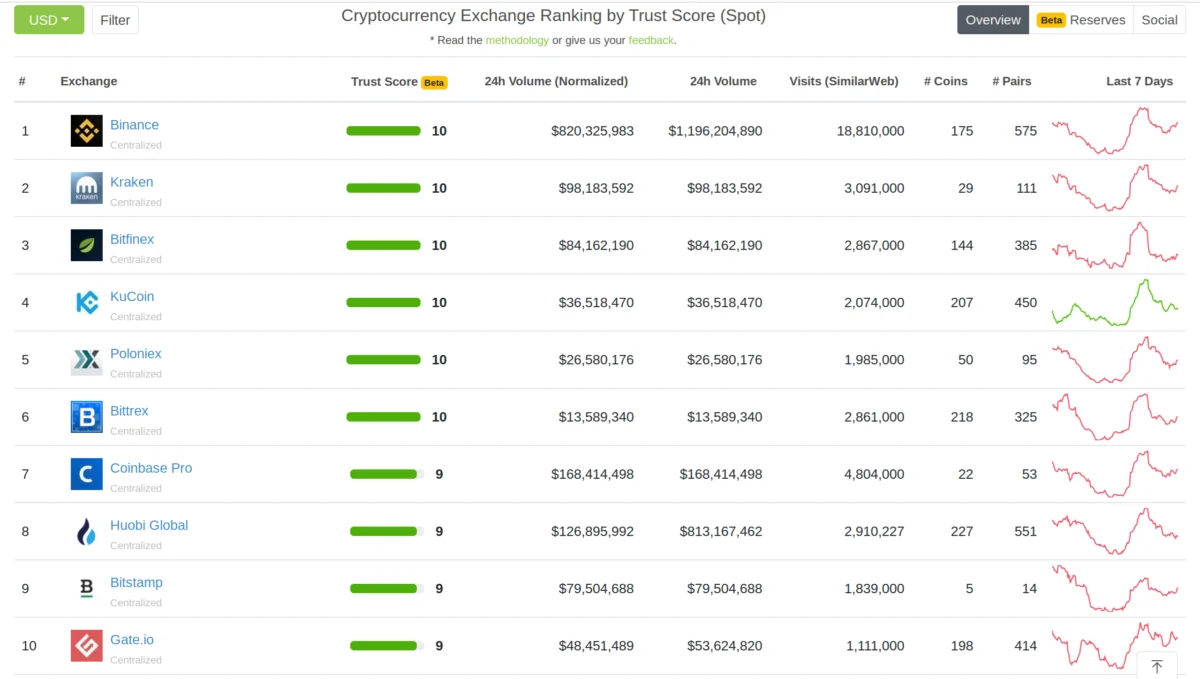
To combat the prevalence of fabricated metrics, CoinGecko introduced the "Trust Score" algorithm. This metric represents a shift away from the traditional, volume-only ranking system that historically allowed manipulative exchanges to claim top-tier status.
The Trust Score utilizes a multifaceted approach to evaluate exchanges:
- Reported Trading Volume: While still a factor, it is no longer the sole determinant of an exchange’s ranking.
- Web Traffic: By analyzing the quality and quantity of site visitors, CoinGecko can cross-reference whether an exchange’s reported volume matches its actual user engagement.
- Order Book Depth: This is a crucial metric. A legitimate exchange should have a thick order book, meaning there is significant liquidity at various price levels. Exchanges that claim high volume but have "thin" order books are often red-flagged for wash trading.
- API Quality and Security: An exchange’s technical infrastructure is also audited as part of the trust scoring process.
Current rankings, which favor platforms like Binance and Kraken, suggest that while wash trading is rampant, there is a clear distinction between top-tier global platforms that prioritize liquidity and the "long tail" of smaller, opaque exchanges that continue to game the system.
Implications for the Global Crypto Market
The persistence of wash trading has profound implications for the maturation of the digital asset space.
1. Distorted Price Discovery
When volume is artificially inflated, it misleads investors regarding the actual demand for a specific asset. This can lead to "pump and dump" schemes where tokens are artificially propped up to lure retail investors, only for the price to collapse once the liquidity disappears.
2. Regulatory Hurdles
Regulators, such as the U.S. Securities and Exchange Commission (SEC) and the Commodity Futures Trading Commission (CFTC), have cited market manipulation as a primary reason for denying various crypto-based financial products. As long as wash trading remains unchecked, the industry struggles to make a convincing case for the integrity of its spot markets.
3. Institutional Hesitancy
While institutional interest in Bitcoin and Ethereum has reached an all-time high, firms that manage billions in assets require audited, verifiable data. The lack of standardized reporting in the broader crypto exchange ecosystem remains a significant deterrent for traditional hedge funds and asset managers who demand the same level of transparency they enjoy in equity and bond markets.
4. Investor Vulnerability
Retail investors are the most susceptible to wash trading. By relying on outdated metrics found on obscure price trackers, they may choose to deposit funds into an exchange with a high risk of insolvency or one that is actively manipulating the order book against them.
Conclusion: The Path Forward
The warning from CoinGecko’s Bobby Ong serves as a necessary reality check for the industry. As the crypto ecosystem seeks to transition from a speculative frontier to a recognized pillar of the global financial system, the "wild west" era of unregulated, manipulative exchanges must come to an end.
The solution lies in a three-pronged approach:
- Enhanced Reporting Standards: Data aggregators must continue to refine algorithms like the Trust Score, prioritizing order book depth and actual user engagement over raw volume reports.
- Regulatory Compliance: Exchanges that seek to operate in a global capacity must pursue licensing in jurisdictions with robust consumer protection laws.
- Investor Education: Perhaps most importantly, the average trader must be educated to look beyond headline-grabbing volume numbers. Understanding how to analyze market depth and recognizing the signs of suspicious, repetitive trading patterns is essential for survival in today’s volatile market.
Until such a time that the industry adopts universal transparency standards, investors would do well to heed the advice of industry experts: prioritize regulated venues and remain skeptical of any platform that claims astronomical volume without the backing of verifiable, deep-liquidity order books. The illusion of liquidity is a dangerous trap, and in the world of decentralized finance, skepticism is the best defense.
Disclaimer: Opinions expressed in this analysis are for informational purposes only and do not constitute investment advice. Investors should perform their own due diligence before engaging in any high-risk investments in digital assets. Market participation carries inherent risks, and losses can occur due to market volatility or the actions of unregulated entities. Always trade with caution.