The Convergence Era: MEXC and Payward Chart the Future of Crypto and TradFi at TOKEN2049 Singapore
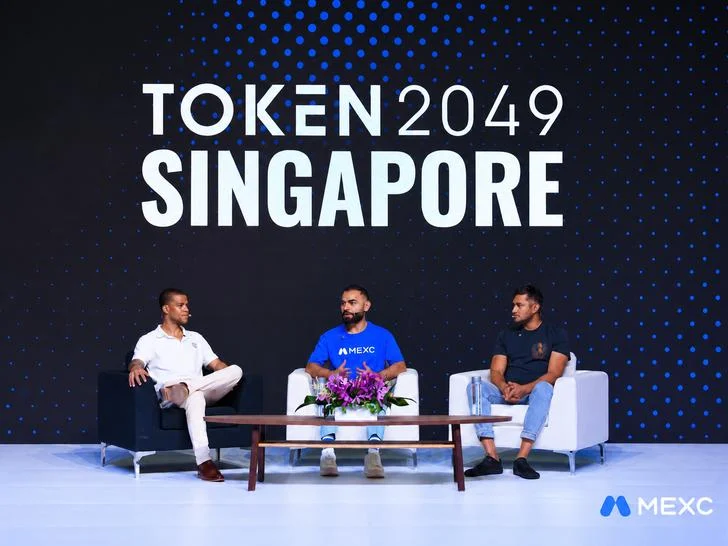
October 9, 2026 — In an era where the lines separating decentralized digital assets from legacy financial systems are increasingly blurred, leadership figures from across the global fintech ecosystem gathered in Singapore for TOKEN2049. Among the most closely watched discussions was a high-profile panel featuring Vugar Usi Zade, Chief Executive Officer of MEXC, and Arjun Sethi, Co-CEO of Payward—the parent company of cryptocurrency giant Kraken.
The dialogue between these two industry figureheads centered on a transformative thesis: the impending convergence of cryptocurrency and traditional finance (TradFi) is no longer a distant theoretical concept. Instead, it is an active market evolution driven by shifting retail demands, round-the-clock liquidity requirements, and an unprecedented pivot toward cross-platform collaboration.
As digital asset exchanges look beyond insular ecosystem growth, partnerships between crypto-native innovators and institutional infrastructure providers are laying the foundation for a unified global trading architecture.
Main Facts: Unifying Global Liquidity and Market Access
The TOKEN2049 panel underscored several pivotal developments currently reshaping the global financial landscape:
- The 24/7 Imperative: Blockchain infrastructure is fundamentally disrupting traditional market frameworks constrained by fixed operating hours, time zones, and legacy clearing settlements.
- Retail-Led Convergence: Both MEXC CEO Vugar Usi Zade and Payward Co-CEO Arjun Sethi agreed that retail investors will act as the primary catalyst pushing financial markets toward an integrated, single-platform experience over the next half-decade.
- Strategic Synergy Over Cutthroat Competition: Rather than operating in isolated silos, leading digital asset platforms are increasingly recognizing the necessity of strategic alliances. By combining strengths—such as MEXC’s retail-first approach and perpetual market depth with Payward’s robust U.S. market experience and institutional financial architecture—exchanges can scale more efficiently.
- Focus on Core Pillars: The leadership teams identified infrastructure modernization, frictionless market access, asset distribution, and absolute transparency as the baseline requirements for future financial ecosystems.
Chronology of the Shift: From Divergence to Convergence
To understand the significance of the MEXC and Payward dialogue at TOKEN2049, it is essential to examine the historical trajectory of the relationship between digital assets and traditional financial markets.
Phase 1: The Isolation Era (2009–2018)
In the decade following the inception of Bitcoin, the cryptocurrency sector operated largely on the periphery of global finance. Digital assets were viewed by legacy institutions as speculative instruments, completely divorced from traditional equities, commodities, and foreign exchange markets. During this period, crypto exchanges built proprietary, isolated technological stacks designed exclusively for crypto-to-crypto trading pairs.
Phase 2: Institutional Influx and Infrastructure Building (2019–2024)
As digital asset adoption matured, institutional capital began flowing into the space. Custody solutions emerged, regulatory frameworks began to take shape (albeit slowly), and derivatives markets expanded exponentially. Platforms like MEXC optimized their offerings for high-performance retail participation, while institutional gateways like Kraken built compliance-heavy bridges for corporate and high-net-worth investors. However, trading operations remained largely fragmented between TradFi brokerage accounts and digital asset exchanges.
Phase 3: The Convergence Paradigm (2025–Present)
By 2026, the demand for friction-free movement between asset classes reached a tipping point. Investors no longer wanted to juggle multiple accounts across disparate ecosystems to manage a diversified portfolio containing equities, crypto, tokenized assets, and derivatives.
The TOKEN2049 panel in Singapore marked a symbolic and operational turning point for this third phase. By publicly discussing cross-platform cooperation, MEXC and Payward signaled that the future of global trading relies on consolidation, interoperability, and shared infrastructure rather than zero-sum competition.
Supporting Data: The Mechanics of 24/7 Markets and Unified Collateral
The structural argument presented by Zade and Sethi is rooted in fundamental economic shifts regarding how capital moves, settles, and is utilized across international borders.
The Challenge of Fragmented Liquidity
In traditional financial markets, liquidity is compartmentalized across regional exchanges (e.g., NYSE, London Stock Exchange, Tokyo Stock Exchange) operating within rigid time windows. Weekend risk remains unmanaged or heavily constrained by delayed settlement times (such as T+1 or T+2 settlement cycles).
Conversely, cryptocurrency markets operate continuously, processing billions of dollars in volume every second without interruption. According to recent macroeconomic data, retail investors increasingly demand the ability to rebalance portfolios dynamically—moving capital from equities or tokenized real-world assets (RWAs) into digital assets at any given hour.
Collateral Mobility
As Arjun Sethi pointed out during the panel, 24/7 trading is not merely about keeping servers online over the weekend; it is fundamentally an engineering challenge concerning collateral.
- Unified Pools: Bringing global assets and collateral into a single, highly connected environment requires sophisticated backend infrastructure.
- Risk Management: Seamless cross-asset trading necessitates real-time margin calculations, instantaneous clearing, and robust risk engines capable of handling volatility across both tokenized traditional instruments and native cryptocurrencies.
MEXC’s Market Footprint
Serving a diverse user base across more than 170 global markets, MEXC has positioned itself at the forefront of this multi-asset shift. By offering zero trading fees, deep liquidity pools, and comprehensive coverage spanning crypto-native tokens, stocks, derivatives, and tokenized assets, the platform handles high-frequency retail flows designed to test the limits of legacy financial infrastructure.
Official Responses: Insights from Industry Leadership
The dialogue between Vugar Usi Zade and Arjun Sethi provided deep strategic insights into how top-tier executives view the operational roadmap for the next five years.
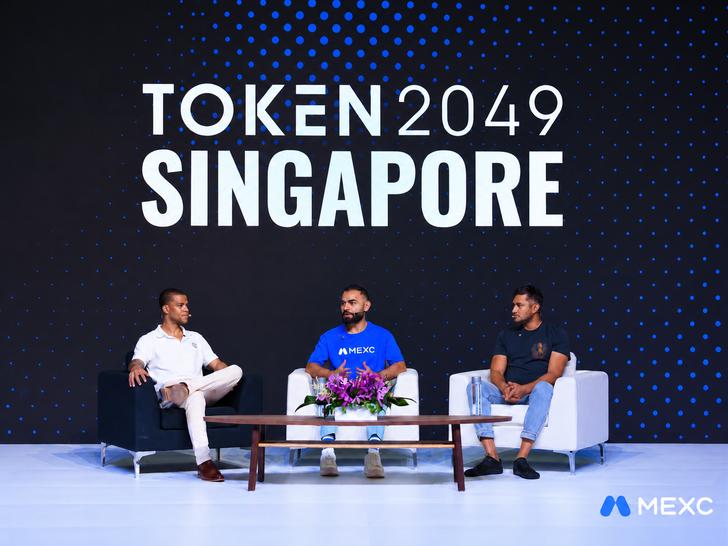
Vugar Usi Zade (CEO, MEXC) on Retail-Driven Evolution
Vugar Usi Zade emphasized that the future of finance will inevitably be shaped by the end-user’s desire for simplicity, speed, and access.
"Over the next five years, we’ll see a convergence toward a singular platform where asset classes and investments can move quickly and smoothly," stated Zade during the TOKEN2049 panel. "Retail will be the main driver."
Zade further elaborated that building resilient future platforms requires an uncompromising commitment to two fundamental pillars: trust and access. As platforms aggregate disparate asset classes under single-account sign-ons, maintaining absolute transparency and removing administrative barriers become critical for sustained growth.
Arjun Sethi (Co-CEO, Payward / Kraken) on Infrastructure and Collaboration
Addressing the engineering hurdles of a unified financial future, Arjun Sethi highlighted that scaling global operations is an impossible feat for any single entity working in isolation.
"24/7 trading really means: how do you bring all that collateral into one place?" noted Sethi.
Sethi explicitly pointed to strategic partnerships as the primary vehicle for regional and global expansion, identifying MEXC as a key benchmark for success in specific high-growth core markets.
"The only way to do that is to partner with folks, including MEXC, to be able to help succeed in their core markets," Sethi added.
Implications: What the MEXC and Payward Alignment Means for the Future of Finance
The public alignment between MEXC and Payward at TOKEN2049 carries significant implications for traders, regulators, and fintech competitors alike.
1. The Death of the Siloed Exchange
For years, digital asset exchanges attempted to build "super apps" entirely in-house, trying to master everything from regional regulatory compliance to niche derivatives trading and legacy stock tokenization. The insights shared in Singapore suggest a maturing industry moving toward an ecosystem model. By leaning into complementary strengths—such as MEXC’s unmatched retail liquidity and perpetual market expertise paired with Payward’s institutional pedigree and U.S. regulatory navigation—platforms can deliver superior products faster.
2. Redefining Global Retail Trading
The retail investor of today is vastly different from the retail investor of a decade ago. Armed with smartphones, instant messaging networks, and global news feeds, users expect instant execution across all asset types. The convergence of TradFi and crypto means that retail users will soon interact with tokenized equities, commodities, and digital currencies through unified gateways—all without incurring punitive transaction fees or dealing with cumbersome legacy banking delays.
3. Regulatory and Transparency Pressures
As platforms bridge the gap between traditional finance and decentralized assets, regulatory scrutiny will inevitably intensify. Both Zade and Sethi stressed that transparency and trust are non-negotiable foundations for this new era. As cross-platform connectivity increases, exchanges will need to adopt rigorous auditing standards, enhanced compliance protocols, and clear communication channels to protect retail participants while maintaining open market access.
About MEXC
Founded in 2018, MEXC is recognized globally as a leading multi-asset trading platform engineered as a zero-fee gateway to infinite financial opportunities. Serving millions of active users across more than 170 international markets, MEXC provides simple, high-performance, and efficient access to a broad spectrum of financial instruments.
The platform’s comprehensive ecosystem covers:
- Cryptocurrencies and digital tokens
- Traditional equities and stocks
- Tokenized real-world assets (RWAs)
- Advanced derivatives and perpetual markets
Driven by a commitment to zero trading fees, industry-leading liquidity, and an expansive asset catalog, MEXC empowers retail users to discover emerging opportunities earlier, execute trades faster, and navigate the financial markets with minimal friction. As the boundaries between crypto and traditional finance continue to dissolve, MEXC remains dedicated to democratizing global financial access and helping users maximize every market opportunity.
- Official Website: mexc.com
- X (Twitter): @MEXC
- Telegram: MEXCEnglish
- Media Inquiries: [email protected]
Risk Disclaimer
This content is provided for informational purposes only and does not constitute financial, investment, or legal advice. Financial markets—including digital assets, tokenized instruments, and traditional financial products—are inherently volatile and subject to substantial risk. Investors and traders should conduct independent research, carefully evaluate underlying asset fundamentals, and assess their personal risk tolerance before executing any trades or financial commitments.