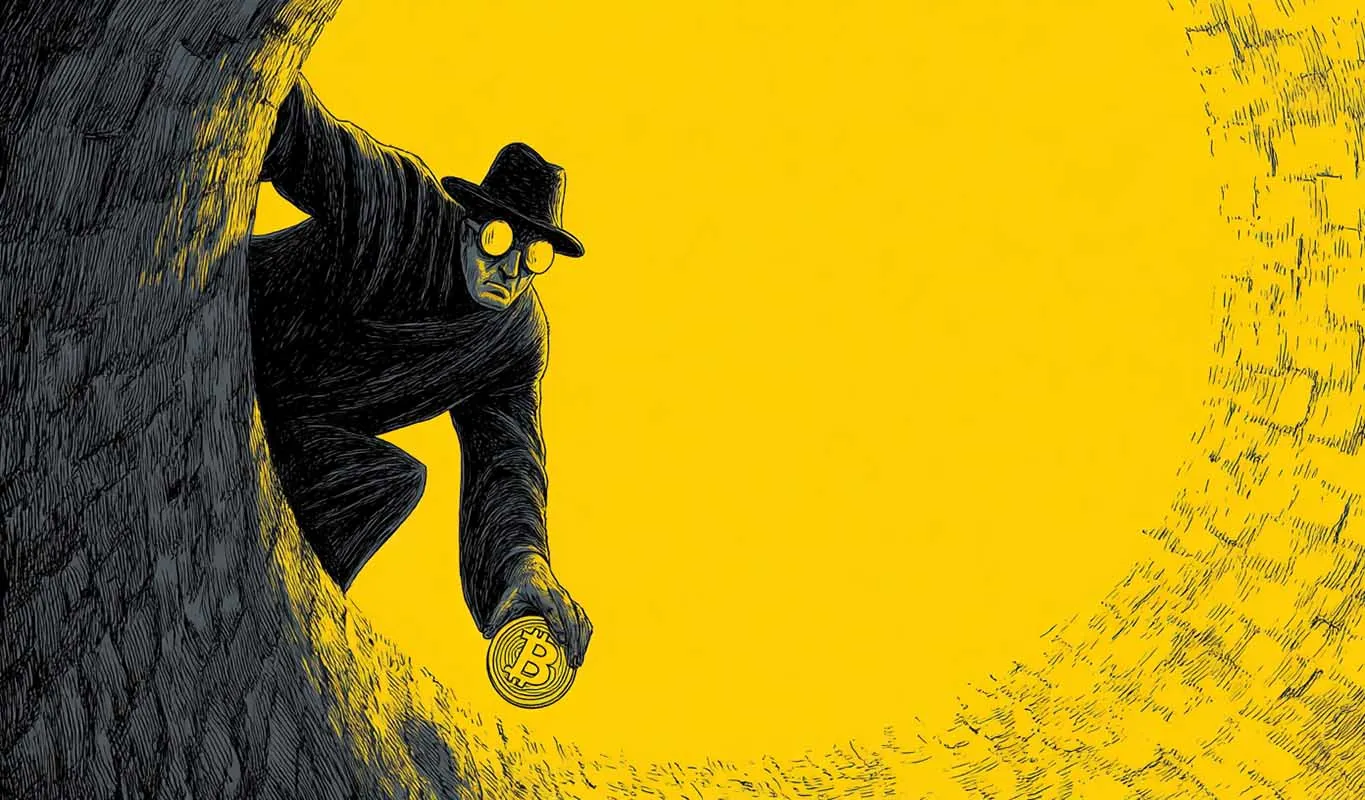
Beyond the Wild West: Why Trust, Not Just Innovation, Will Define Crypto’s Multi-Billion-Dollar Future
By Valentina Drofa
Founder and CEO at Drofa Comms
Main Facts: The Trust Deficit in a Maturing Market
Cryptocurrency has never suffered from a shortage of attention, yet it has stubbornly and consistently struggled with a foundational asset for years: trust.
By 2026, the global cryptocurrency market stands as a multi-billion-dollar juggernaut, projected to double in valuation over the next four to five years. Institutional players are integrating digital assets into their portfolios at an unprecedented rate, and global regulatory bodies are accelerating efforts to corral, understand, and supervise the sector.
Adoption is happening. Capital is flowing. Yet, confidence remains profoundly fragile.
With every high-profile hack, smart-contract exploit, or sudden project collapse, the industry instantly regresses to a familiar, damaging narrative: "Crypto is the Wild West." While financial failures and bad actors are not exclusive to blockchain technology—every traditional financial market experiences its share of corporate malfeasance and systemic failures—the way these incidents shape market perception in crypto is uniquely acute.
The digital asset industry is now large enough to demand serious macroeconomic attention, but it remains young enough to be vulnerable to emotional leaps of judgment. For the sector to transition into its next phase of maturity, stakeholders must recognize a fundamental reality: trust is not a peripheral marketing asset; it is an operational requirement.
Chronology: The Evolution of Reputation in Digital Assets
The Early Era: Lower Barriers and Flexible Reputations
To understand why the crypto market faces its current trust deficit, one must examine its origins. For nearly two decades, financial markets have operated on two vastly different spectrums regarding reputation.
In Traditional Finance (TradFi), reputation functions akin to physical infrastructure. It is slow to build, expensive to maintain, and losing it triggers a loud, devastating, and irreversible process.
In contrast, the cryptocurrency industry developed with a far more flexible approach to reputation. In its formative years, digital asset ventures could easily redesign, polish, and relaunch their public images following a crisis. Because the industry was new and defining its identity, consumers and early adopters were willing to grant project founders multiple chances.
However, this low barrier to entry—while serving as a phenomenal engine for permissionless innovation—also created severe governance vacuums. It welcomed opportunists alongside honest builders. Over time, the actions of dishonest or incompetent participants dragged the entire ecosystem down, leaving users and investors asking a persistent, gnawing question: Who can actually be relied upon?
The Regulatory Awakening (Present to 2026)
As the industry scales toward 2026, the era of the "second chance" is drawing to a close. Regulatory frameworks such as the European Union’s Markets in Crypto-Assets (MiCA) regulation and the Directive on Administrative Cooperation (DAC8) are signaling a permanent shift.
Expectations for crypto enterprises are stabilizing. Accountability, mandatory disclosures, and rigorous operational compliance are replacing the decentralized laissez-faire ethos of the past. This regulatory normalization mirrors the historical trajectories of all maturing financial markets, signaling that crypto is finally graduating from its adolescent phase.
Supporting Data and Market Dynamics: The Mechanics of Credibility
The maturation of the digital asset market is heavily underpinned by institutional inflows and quantitative growth projections. According to recent market reports, the global cryptocurrency valuation is expected to expand dramatically through the late 2020s. Yet, this capital expansion exposes a paradox: market size does not equal market stability.

When assessing the mechanics of credibility, industry leaders often stumble over an overused and fatigued buzzword: transparency.
Redefining Transparency in the Digital Age
Almost every modern crypto startup claims to champion transparency. Yet, a deep consumer fatigue has developed around the term because few companies apply it convincingly in practice. In an era where digital information can be easily fabricated, selectively presented, or heavily spun, superficial dashboards and open-source codebases are no longer enough to win over skeptical capital.
For transparency to matter in 2026, information must be consistent, verifiable, and deeply integrated into corporate governance. Market participants evaluate trustworthiness through several straightforward, concrete lenses:
- Financial Stability: Clear, regular attestations of reserves and auditable balance sheets.
- Operational Predictability: Coherent, repeatable business behavior rather than abrupt pivots or opaque strategic shifts.
- Communication Consistency: Direct, honest messaging that remains stable over time, even during market downturns.
Trust grows when an organization proves it can behave predictably. In the long run, adopting these structural mechanisms will have a far more profound impact on the industry than launching yet another "innovative" token designed to wipe the slate clean of past failures.
Official Responses and Crisis Management: The Trust Triggers of 2026
Vulnerabilities and security incidents will never completely disappear from financial markets. Reasonable market participants understand that absolute zero-risk is an illusion. However, what separates a mature enterprise from a fly-by-night operation is how it responds when a crisis inevitably strikes.
The Anatomy of Crisis Response
When an exploit or market shock occurs, the immediate actions of leadership serve as critical trust triggers:
- Speed of Acknowledgment: How quickly does the company openly address the incident without attempting to obfuscate the facts?
- Clarity of Updates: Are technical updates precise, regular, and easy for the average user to understand?
- Demonstrated Control: Does the leadership team project operational competence, or do their reactions reek of improvised damage control?
Industry data consistently shows that corporate silence and a failure to reassure stakeholders during a crisis can destroy a business far more reliably than the technical exploit itself.
The Return of Visible Leadership
A central tenet of early crypto ideology was radical decentralization—the idea of trustless systems where code is law. While decentralized code remains the technological backbone of the industry, broader consumer and institutional confidence inevitably flows toward entities with identifiable, accountable leadership.
People do not merely trust systems; they trust the human beings behind those systems. When markets turn bearish or systemic crises hit, users need the reassurance that identifiable leaders are legally and morally accountable for fixing the problem, rather than leaving retail investors to flounder in uncertainty.
Implications: Building a Predictable Future
The ultimate evolution of the cryptocurrency market will be defined less by breakneck, chaotic innovation and more by boring, reliable predictability.
As governance models improve, regulatory frameworks stabilize, and institutional capital demands higher standards of operational hygiene, the foundational fragility of the digital asset sector will decline. Consequently, systemic trust will rise.
In financial structures, trust is not a luxury feature—it is synonymous with survival. By learning the lessons of traditional finance regarding governance, disclosures, and accountable leadership, the cryptocurrency industry can finally shake off the "Wild West" stigma and secure its place as a permanent, trusted pillar of global finance.
Valentina Drofa is the founder and CEO of Drofa Comms, a global financial communications agency representing leading fintech and blockchain brands. She is a financial market consultant, international entrepreneur, and business leader with over 15 years of experience.