The Illusion of Liquidity: Why Wash Trading Remains the Crypto Industry’s "Open Secret"
In the fast-paced world of digital assets, volume is the lifeblood of credibility. It signals liquidity, adoption, and institutional interest. However, behind the flashy dashboards of many cryptocurrency exchanges lies a troubling reality: a significant portion of reported trading volume is entirely fabricated. Bobby Ong, co-founder of the leading market data aggregator CoinGecko, recently issued a stark warning that wash trading—a manipulative practice designed to artificially inflate activity—is not only persisting but appears to be worsening across the global exchange landscape.
Understanding the Mechanics of Market Manipulation
Wash trading is a sophisticated form of market abuse that has plagued financial markets for decades, from the early days of the New York Stock Exchange to the modern decentralized digital asset space. At its core, wash trading occurs when an entity simultaneously buys and sells the same financial instrument. By executing these "mirror" trades, the actor creates a false appearance of high market activity without ever changing their actual beneficial ownership of the asset.
For a crypto exchange, the incentive is clear: top-tier ranking on market aggregators. Investors and traders frequently filter exchanges by 24-hour volume, assuming that higher volume equates to a more robust, liquid, and trustworthy platform. By automating fake trades, unscrupulous exchanges lure unsuspecting users into their ecosystem, generating transaction fees and creating a facade of legitimacy that can facilitate "pump and dump" schemes for smaller, less liquid tokens.
Chronology of a Growing Crisis
The concern surrounding fabricated volume is not new, but it has evolved in its intensity.
- The 2018-2019 Awakening: Following the massive market correction of 2018, researchers and analysts began to notice a growing disparity between exchange-reported volumes and on-chain reality. Reports from firms like Bitwise Asset Management and the Blockchain Transparency Institute (BTI) highlighted that upwards of 90% of reported volume on many exchanges was likely non-existent.
- The Regulatory Scrutiny: As Bitcoin and Ethereum gained broader mainstream acceptance, the lack of data integrity became a focal point for regulatory bodies like the U.S. Securities and Exchange Commission (SEC) and the Commodity Futures Trading Commission (CFTC). These agencies argued that the lack of transparent, verifiable volume was a primary barrier to the approval of a Bitcoin Exchange-Traded Fund (ETF).
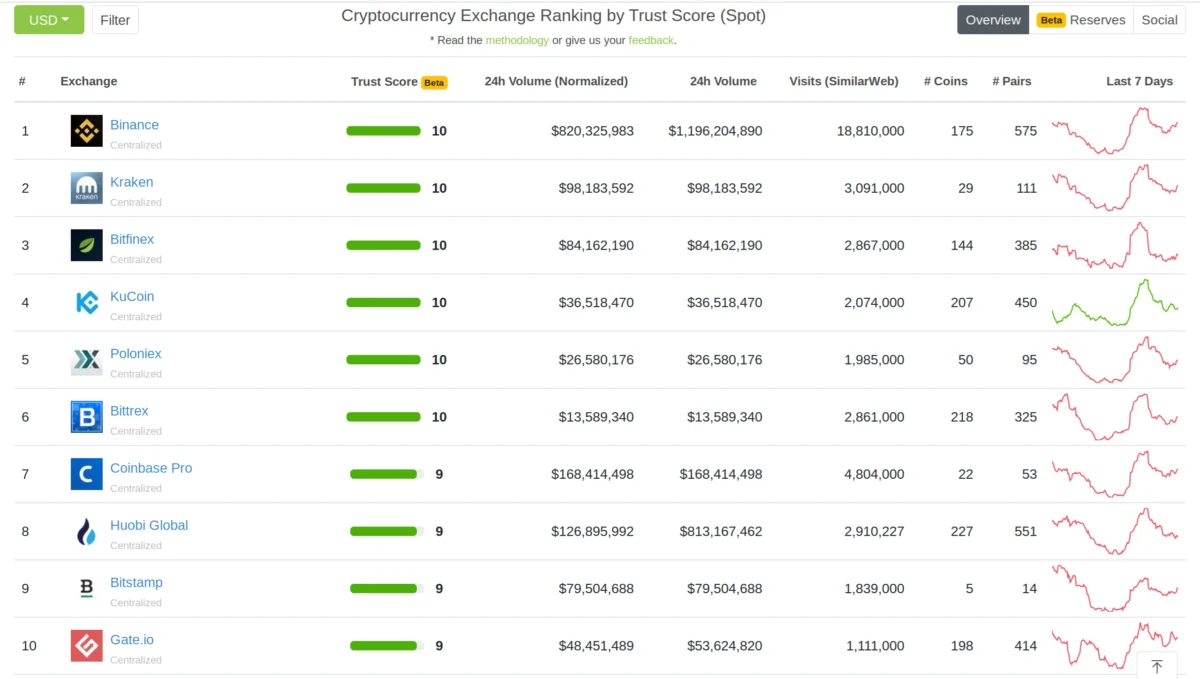
- The "Trust Score" Innovation: In late 2019, recognizing that traditional volume metrics were being gamed, CoinGecko introduced its "Trust Score" algorithm. This marked a paradigm shift in how market data was aggregated, moving away from a single metric—volume—toward a holistic view of exchange health.
- The Current Landscape: Despite increased awareness and the implementation of better tracking tools, Ong’s recent assessment suggests that the problem remains endemic. As the industry has matured, so too have the tactics of bad actors, making the distinction between legitimate market makers and wash-trading bots increasingly difficult to discern.
The Data Dilemma: Why Volume is No Longer a Trusted Metric
In his interview with BlockTV, Bobby Ong was unequivocal: "The trading volume for the spot market is almost close to not being used as a trusted source anymore." This statement represents a sobering admission for an industry built on the premise of public, immutable ledgers.
The difficulty in identifying wash trading stems from the lack of standardized reporting. While decentralized finance (DeFi) offers on-chain transparency, centralized exchanges (CEXs) operate in "black boxes." When an exchange reports $500 million in daily volume, external observers have no way to verify if those trades involved two independent parties or a single entity playing both sides.

Supporting Data and Methodology
To combat this, data aggregators have moved toward multi-faceted analytical models. CoinGecko’s Trust Score, for example, evaluates exchanges based on three primary pillars:
- Reported Trading Volume: The raw data provided by the exchange API.
- Web Traffic Analysis: Using third-party data to verify if an exchange’s visitor count correlates with its reported trade volume. (e.g., if an exchange claims billions in volume but receives fewer than 10,000 monthly visitors, it is a red flag).
- Order Book Depth: Measuring how much liquidity exists at various price points. Real market makers typically provide "tight" spreads, whereas wash-trading bots often create "hollow" order books.
The Regulatory Divide: Licensed vs. Unregulated
One of the most critical takeaways from Ong’s assessment is the widening chasm between regulated and non-regulated entities. According to Ong, if investors seek genuine liquidity, they must look toward jurisdictions with stringent oversight, such as the United States and Japan.
"If you really want to get real 24-hour trading volume, I think the only real way is to look at volume from regulated exchanges such as those in the US, in Japan—those licensed exchanges," Ong noted. "Coinbase, Gemini and Japanese regulated exchanges… those regulated exchanges will likely have legit volumes."
This recommendation highlights the trade-off inherent in the crypto market: regulated exchanges often have stricter Know Your Customer (KYC) requirements and a more limited selection of altcoins, but they offer a higher degree of data integrity. In contrast, the "Wild West" of the offshore, unregulated space offers access to a wider variety of assets and higher leverage, but with the hidden cost of potential manipulation.
Implications for the Global Crypto Economy
The persistence of wash trading has profound implications for the industry’s future.
1. Institutional Hesitation
Large-scale institutional investors—pension funds, hedge funds, and family offices—require rigorous data to satisfy compliance and risk management protocols. When market data is viewed as fundamentally unreliable, it discourages these massive capital inflows, effectively capping the total addressable market for digital assets.
2. Retail Victimization
Individual investors are the most common victims of wash trading. By mistaking manipulated volume for genuine market demand, retail traders often buy into assets at the peak of an artificial "pump," only to be left holding devalued assets once the wash-trading bots cease their activity.
3. The Need for Transparency Standards
The industry is currently at a crossroads. Either it adopts a self-regulatory framework that mandates proof-of-reserves and independent auditing of trading data, or it risks further crackdowns from global regulators. The emergence of Proof-of-Reserves (PoR) protocols, which allow exchanges to cryptographically prove they hold the assets they claim to manage, is a positive step, but it does not address the issue of transactional volume integrity.
Conclusion: A Call for Vigilance
The warning from industry leaders like Bobby Ong serves as a necessary reminder: in the digital asset space, skepticism is a virtue. While the technology underlying cryptocurrencies is inherently transparent, the interfaces through which we interact with them—the exchanges—remain prone to the age-old vices of finance.
As the industry moves forward, the "Trust Score" model serves as a template for how data aggregators can protect users. By de-prioritizing raw volume and elevating metrics like order book depth and web traffic, platforms are creating a more transparent ecosystem. However, the ultimate responsibility rests with the investor. In an era where information can be as easily manufactured as a digital token, conducting deep due diligence, prioritizing regulated venues, and maintaining a healthy dose of skepticism toward "top-performing" exchanges remains the most effective defense against the pervasive, invisible trap of wash trading.