Institutional Exodus: $414 Million Exits Crypto Market Amid Geopolitical and Economic Uncertainty
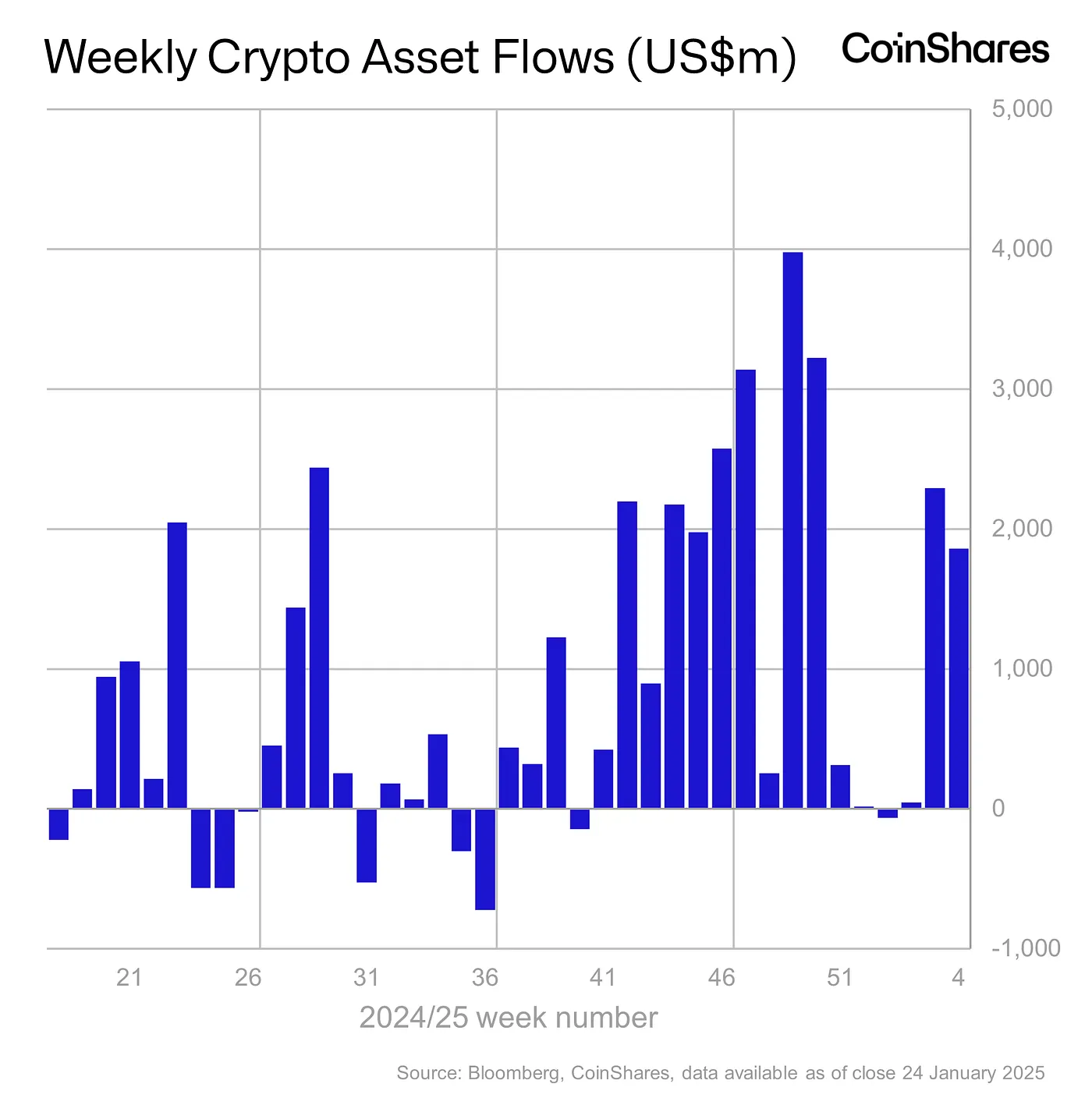
The digital asset landscape witnessed a sharp reversal in sentiment this week, as institutional investors pulled a staggering $414 million from cryptocurrency investment products. This significant withdrawal, detailed in the latest fund flow report from CoinShares, marks the first time in five weeks that the market has experienced a net outflow.
As global markets grapple with the compounding pressures of a volatile geopolitical climate—specifically the ongoing conflict involving Iran—and persistent concerns over stubbornly high inflation, the "smart money" appears to be retreating to the sidelines. This move signals a tactical shift, as institutional players prioritize liquidity and risk mitigation over speculative exposure in the current macroeconomic environment.
Main Facts: The Anatomy of the Selloff
The $414 million withdrawal represents a decisive change in institutional posture. For weeks, the market had enjoyed consistent inflows, fueled by optimism surrounding spot ETFs and broader institutional adoption. However, this week’s data suggests that the momentum has been temporarily stifled.
Key Highlights:
- Total Outflows: $414 million globally.
- Primary Drivers: Geopolitical tensions and inflationary pressure.
- US Dominance: The United States accounted for the vast majority of the selloff, recording $445 million in outflows.
- Regional Divergence: While the US led the exit, Germany and Canada took a contrarian approach, choosing to "buy the dip" with inflows of $21.2 million and $15.9 million, respectively.
- Asset Performance: Ethereum bore the brunt of the bearish sentiment, while Bitcoin saw significant outflows but remains positive on a year-to-date basis.
Chronology: A Week of Market Retreat
The trajectory of the crypto market over the past seven days was heavily dictated by the shifting geopolitical news cycle.
Early Week: Heightened Tension
As news of the escalation in the Middle East intensified, equity markets and risk-on assets globally reacted with heightened volatility. Institutional desks, which manage crypto exposure as part of broader multi-asset portfolios, were forced to adjust their risk parameters. By mid-week, the outflow trend had solidified, with the US market becoming the epicenter of the selling pressure.
Mid-Week: The Divergence
While institutional sentiment turned sour, some secondary markets showed resilience. Data from Germany and Canada indicated that not all institutional participants were looking for an exit. By purchasing $37.1 million combined, these regions demonstrated that some long-term holders still view the current price suppression as an entry opportunity rather than a signal to liquidate.
Late Week: Stabilization
By the end of the trading week, the total assets under management (AUM) for the sector settled at approximately $129 billion. Despite the $414 million exodus, the total AUM remains substantial, suggesting that the industry has reached a level of maturity where even large-scale withdrawals do not necessarily trigger a systemic collapse.
Supporting Data: Dissecting the Asset Breakdown
The internal mechanics of these flows reveal a nuanced picture. Not all digital assets were treated equally by institutional investors.
Ethereum (ETH)
Ethereum suffered the most significant blow, recording $222 million in outflows. This performance pushed Ethereum’s year-to-date (YTD) net flows into negative territory, sitting at a deficit of $273 million. This reflects a growing skepticism among institutional investors regarding the short-term performance of the second-largest cryptocurrency, possibly linked to uncertainty surrounding regulatory developments and network utility.
Bitcoin (BTC)
Bitcoin, the sector’s bellwether, saw $194 million in outflows. While this figure is substantial, it is crucial to place it in context: Bitcoin still maintains a robust $964 million in YTD inflows. The market remains net-positive for the year, indicating that the recent selloff is being viewed by many as a consolidation phase rather than a trend reversal. Interestingly, "Short-Bitcoin" products—designed to profit from price declines—saw an additional $4 million in inflows, highlighting that some institutional traders are actively betting on further downside.
Altcoins: A Mixed Bag
The altcoin market showed a divergence in performance:
- Solana (SOL): Recorded $12.3 million in outflows, reflecting a cooling period for the asset after a period of intense growth.
- XRP: bucked the trend, attracting $15.8 million in inflows. This resilience suggests that institutional interest in XRP remains insulated from the broader market volatility, likely driven by specific developments in the ongoing regulatory clarity surrounding the asset.
Official Responses and Market Perspectives
Financial analysts and market observers have noted that this behavior is typical of institutional risk-off cycles. When inflation data—such as the Consumer Price Index (CPI)—remains elevated, institutional capital tends to rotate out of high-beta assets like cryptocurrencies and into more stable, yield-bearing instruments or cash equivalents.
"The correlation between crypto assets and risk-sensitive traditional markets has tightened," notes one market analyst. "When the threat of conflict looms, the immediate reaction of a hedge fund or institutional desk is to reduce exposure to non-essential assets. The $414 million figure is not necessarily a vote of no-confidence in blockchain technology; it is a vote of caution against global instability."
While there have been no official "policy statements" from the institutions behind these flows, the data itself serves as the most accurate statement of their current risk appetite. The divergence between the US, where capital is fleeing, and Europe/Canada, where capital is entering, suggests that domestic monetary policy and local regulatory environments are playing a larger role in decision-making than ever before.
Implications: What Comes Next?
The recent outflows present several critical implications for the crypto industry as it moves into the next quarter.
1. The "Risk-On" Correlation
The crypto market is no longer an isolated ecosystem. As institutional participation grows, Bitcoin and Ethereum have become increasingly sensitive to the same macroeconomic factors as tech stocks and commodities. Investors must now pay closer attention to the "macro narrative"—inflation, interest rates, and geopolitical stability—as these are now the primary drivers of institutional crypto flows.
2. The Resilience of Long-Term Conviction
Despite the $414 million exit, the fact that Bitcoin maintains nearly $1 billion in YTD inflows is a testament to the shift in institutional perception. Five years ago, a move of this magnitude might have triggered a massive price crash. Today, the market absorbed the selling pressure with far more stability, suggesting that the base of institutional support is wider and deeper than it has been in previous cycles.
3. Regional Regulatory Arbitrage
The fact that Germany and Canada added inflows while the US divested is a warning sign for US policymakers. Regulatory clarity and tax-efficient structures in European and North American neighbors are beginning to attract capital that might otherwise have stayed in the US. If the US continues to foster an environment of regulatory ambiguity, it risks losing its status as the primary hub for institutional crypto activity.
4. A Potential Rebound?
History suggests that institutional selloffs of this nature are often cyclical. Once the geopolitical landscape settles or inflation data shows signs of cooling, these same institutional players often re-enter the market to regain their exposure. Traders and investors should watch for a return to net-positive inflows as a signal that the "risk-off" phase has concluded.
Final Thoughts
While the headlines regarding the $414 million outflow may seem alarming, a professional analysis reveals a more complex reality. The market is maturing, and the participants within it are becoming more sophisticated in their approach to risk management. The next few weeks will be crucial: if the outflows continue, it may indicate a deeper, more structural pivot away from digital assets. However, if these numbers stabilize or flip back to positive, it will confirm that the current volatility is merely a momentary pause in the ongoing institutionalization of the crypto-asset class.
Disclaimer: Opinions expressed in this report are for informational purposes only and do not constitute financial, investment, or legal advice. Cryptocurrency investments involve a high degree of risk, including the total loss of principal. Investors should conduct their own thorough due diligence and consult with a licensed financial advisor before making any investment decisions. The Daily Hodl does not recommend the buying or selling of any specific asset.