Institutional Exodus: Bitcoin Sees Record Weekly Outflows as Fed Uncertainty Jolts Crypto Markets
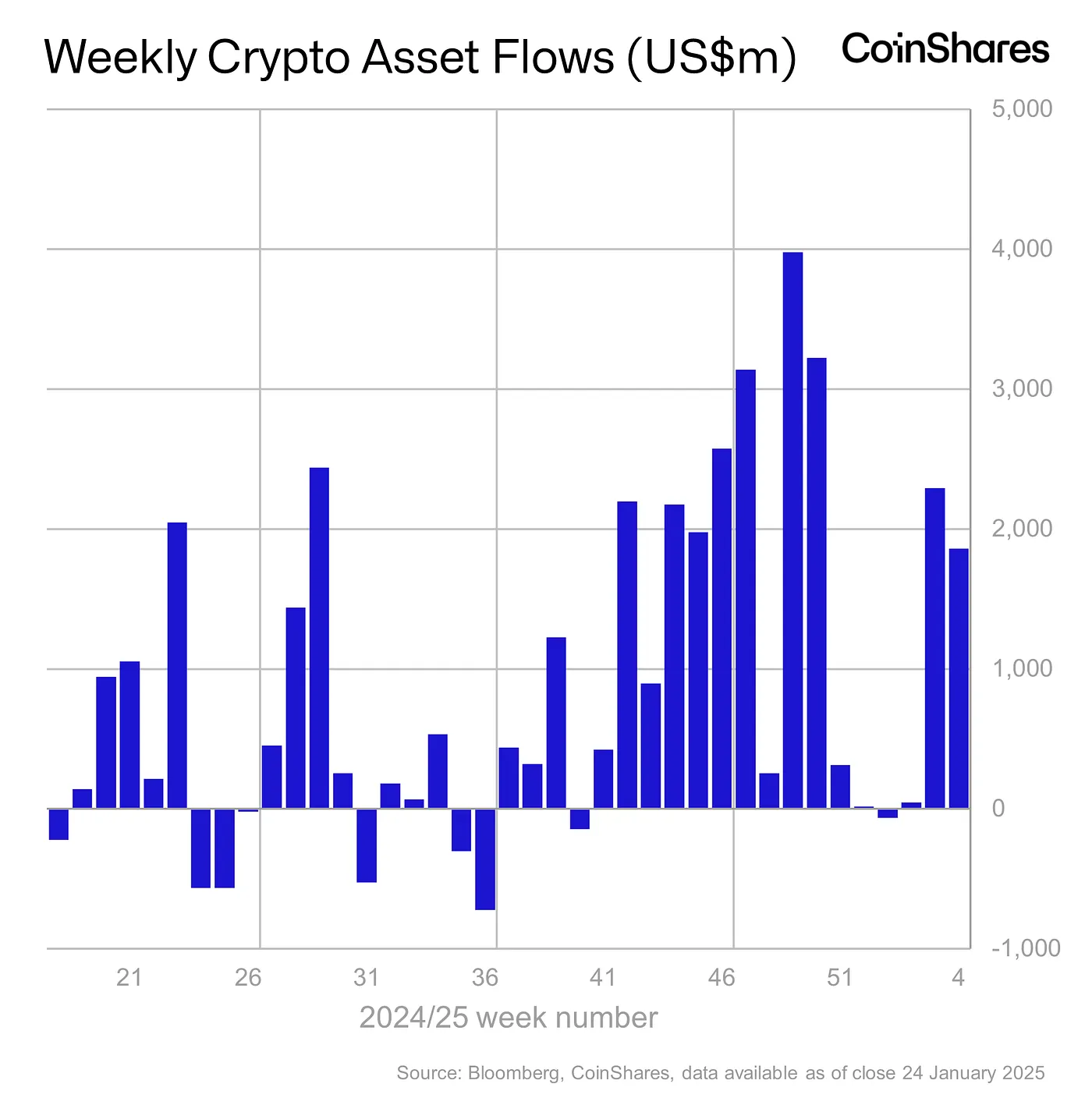
In a stark reversal of the bullish momentum that has characterized much of the final quarter of 2024, institutional investors have moved to shed digital assets at a rapid pace. According to the latest data from CoinShares, a leading digital asset investment firm, the cryptocurrency market experienced a significant wave of capital flight last week, totaling $360 million in net outflows.
The primary catalyst for this shift appears to be a recalibration of market expectations regarding U.S. monetary policy. Following comments from Federal Reserve Chair Jerome Powell, which many market analysts interpreted as unexpectedly "hawkish," institutional appetite for risk-on assets—specifically Bitcoin—has cooled significantly.
Main Facts: A Shift in Institutional Sentiment
The headline figure of $360 million in aggregate outflows obscures a more nuanced story of capital rotation within the digital asset ecosystem. While Bitcoin suffered a massive blow, the institutional exodus was not uniform across all assets.
The total outflow from crypto investment products represents one of the largest weekly corrections in recent months. This retreat was primarily driven by massive liquidations in Bitcoin exchange-traded funds (ETFs). Institutional investors, who had previously been the primary drivers of Bitcoin’s price appreciation throughout the year, effectively hit the "sell" button.
Conversely, the data reveals a sophisticated bifurcation in the market. While Bitcoin was being offloaded, alternative assets—specifically Solana, Ethereum, and XRP—saw substantial capital inflows. This suggests that while institutional sentiment toward the "digital gold" narrative of Bitcoin has softened in the face of macroeconomic headwinds, the broader interest in blockchain infrastructure and smart-contract platforms remains resilient.
Chronology of the Market Turbulence
The events of the past week were dictated largely by the communication strategy of the Federal Reserve.
- Mid-Week Policy Remarks: The timeline began with Federal Reserve Chair Jerome Powell’s public address, which signaled that the Federal Open Market Committee (FOMC) may be less aggressive with interest rate cuts than previously anticipated. The market, which had priced in a near-certainty of a December rate cut, was forced to adjust its projections.
- The Reaction: Almost immediately following these remarks, institutional trading desks began reallocating portfolios. The "certainty" of cheaper capital, which had buoyed risk assets, evaporated.
- The Sell-Off: By the end of the trading week, the cumulative impact resulted in $945.89 million in outflows from Bitcoin-specific investment products alone.
- Regional Divergence: While the U.S. served as the epicenter of the selling pressure, international markets showed a contrasting behavior. As American investors liquidated, European markets—notably Germany and Switzerland—recorded net inflows, suggesting that the "hawkish" reaction was primarily a domestic phenomenon driven by U.S. interest rate sensitivity.
Supporting Data: Dissecting the Capital Flow
To understand the scale of this move, it is necessary to look at the granular breakdown provided by the CoinShares report.
Bitcoin vs. The Altcoin Surge
The divergence between Bitcoin and the rest of the market is the defining feature of this report. The $945.89 million exit from Bitcoin ETFs indicates that the largest digital asset is currently serving as the primary liquidity source for institutional rebalancing.
However, the "Altcoin" sector told a different story:
- Solana (SOL): Surged with $421.11 million in inflows. This marks one of the strongest weekly performances for Solana in recent history, indicating that institutional players are increasingly viewing Solana as a viable, high-performance alternative to Ethereum.
- Ethereum (ETH): Recorded $57.59 million in inflows, demonstrating that despite ongoing debates regarding its long-term scalability, institutional confidence in the leading smart-contract platform remains intact.
- XRP: Captured $43.18 million, likely bolstered by ongoing developments in the legal and regulatory landscape surrounding the asset.
Regional Breakdown
The geography of these flows highlights the sensitivity of different financial hubs to the U.S. Federal Reserve’s influence. The United States led global outflows with a staggering $439 million. This underscores how deeply integrated the U.S. crypto-ETF market has become with traditional macroeconomic indicators.
In contrast, the European landscape appeared to be operating on a different wavelength:
- Germany: Recorded $32 million in inflows.
- Switzerland: Added $30.8 million in net inflows.
These regions, perhaps buffered by different regulatory environments or distinct investor demographics, chose to accumulate rather than liquidate, providing a vital counterweight to the U.S. sell-off.
Official Responses and Macroeconomic Context
The "hawkish" turn of Jerome Powell has left the market in a state of high alert. Historically, the crypto market thrives on liquidity; when the Fed signals that it might hold rates higher for longer, the cost of borrowing increases, and the incentive to hold non-yielding, volatile assets like Bitcoin decreases.
Market analysts from CoinShares noted that the uncertainty regarding the December rate cut has caused a "wait-and-see" approach among institutional desk managers. The market is no longer pricing in a guaranteed path of easing. This creates a volatile environment where any further hawkish signals from the Fed could lead to additional outflows.
Furthermore, the sentiment among Wall Street investors has become increasingly bifurcated. Traditional institutional players who prioritize macro-correlation are currently retreating from Bitcoin. Meanwhile, "crypto-native" institutional funds are pivoting toward assets like Solana, which they perceive to have distinct, fundamental growth drivers independent of interest rate fluctuations.
Implications: What This Means for the Future of Crypto
The recent outflow cycle serves as a critical stress test for the institutionalization of the cryptocurrency market.
1. The Maturity of the Altcoin Market
The fact that Solana and Ethereum could record significant inflows while Bitcoin plummeted is a major development. It suggests that institutional investors are becoming more sophisticated, moving away from a "Bitcoin-only" approach toward a more diversified digital asset strategy. The correlation between Bitcoin and the rest of the market is showing signs of decoupling.
2. The Fed as the Primary Driver
Investors are reminded that the crypto market is not an island. The sensitivity shown to Jerome Powell’s comments proves that institutional crypto investment is now deeply tied to the broader U.S. monetary ecosystem. For the remainder of the year, every FOMC meeting and every comment from a Fed governor will carry massive weight for the price action of major digital assets.
3. The Need for Hedging
The regional divergence—with Europe acting as a buyer while the U.S. acts as a seller—suggests that institutional portfolios are becoming more global in their approach to hedging. We may see more institutions seeking exposure in jurisdictions with more predictable regulatory or monetary outlooks, potentially leading to a more decentralized global distribution of digital asset holdings.
Conclusion
The latest report from CoinShares paints a picture of a market in transition. While the $945.89 million exit from Bitcoin is a significant headline, the underlying strength in Solana and Ethereum signals that the institutional appetite for digital assets is not dying—it is merely shifting.
As we approach the end of the year, the primary factor to watch remains the Federal Reserve. The market is currently grappling with the reality that the "easy money" era is not returning as quickly as hoped. Investors, both institutional and retail, should prepare for continued volatility as the market navigates this period of macroeconomic recalibration.
Disclaimer: The information provided in this article is for educational and informational purposes only and does not constitute financial, investment, or legal advice. The Daily Hodl is not an investment advisor. Digital asset investments carry a high level of risk. Investors are strongly encouraged to conduct their own due diligence and consult with a professional financial advisor before making any investment decisions. The Daily Hodl participates in affiliate marketing and may receive commissions for certain links.