Institutional Appetite for Crypto Resurges: A Deep Dive into the 2026 Inflow Trends
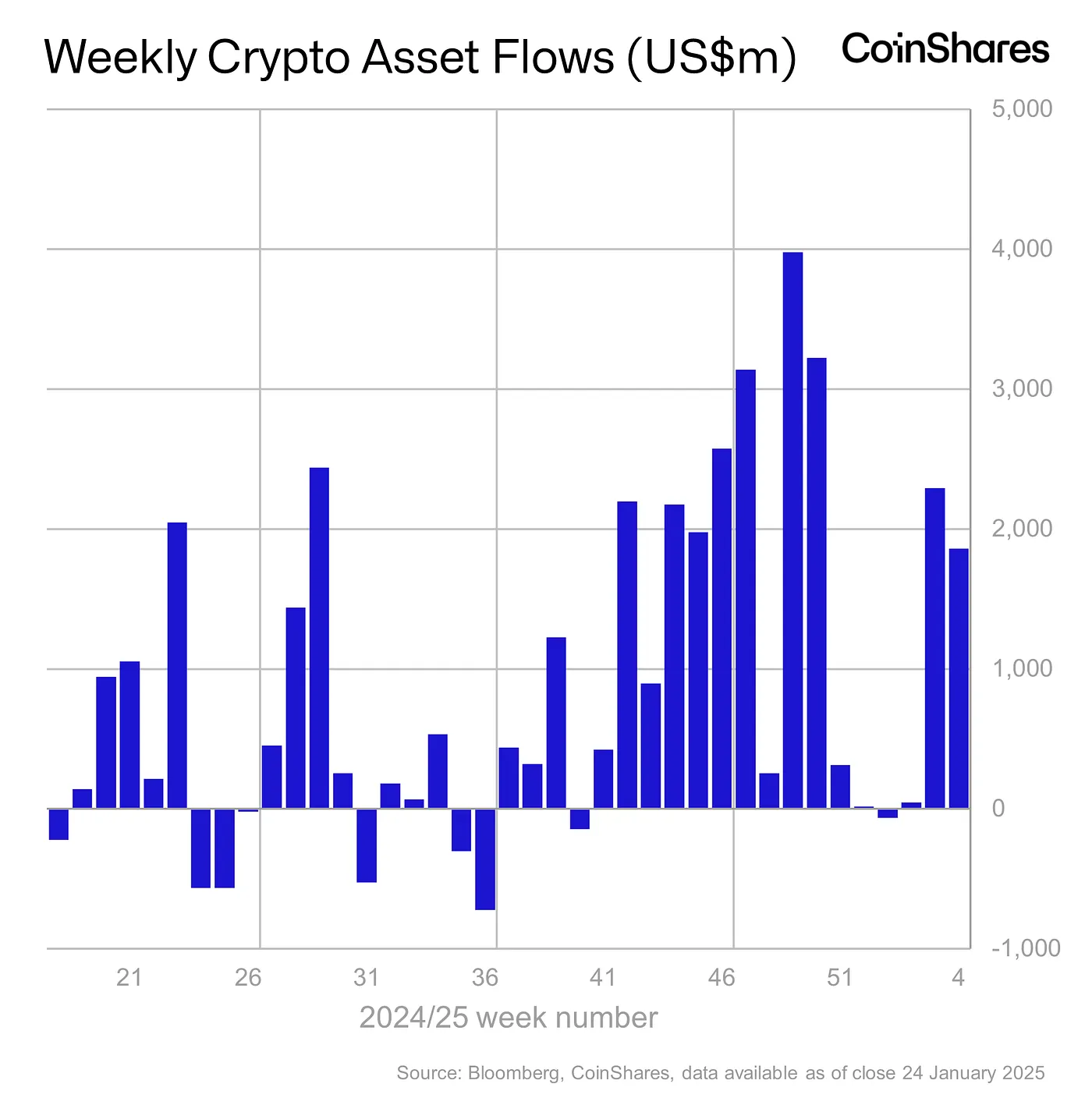
The dawn of 2026 has brought with it a renewed wave of optimism within the digital asset sector. According to the latest data from CoinShares, institutional investors have wasted no time in diversifying their portfolios, signaling a robust start to the year. Despite experiencing minor volatility in the opening days of the week, the broader trend has shifted decisively toward capital accumulation, with institutional investment products recording a net inflow of $582 million.
This surge follows a transformative year in 2025, which served as a testament to the maturation of cryptocurrency as a legitimate asset class. As the industry moves into the new calendar year, the primary question for analysts and investors alike is whether this momentum represents a sustained "bullish" shift or merely a reaction to short-term market conditions.
The Core Data: A Strong Start to 2026
The institutional landscape began the year with a stark contrast between the early week’s outflows and a powerful end-of-week rally. CoinShares reported that by last Friday, the market had attracted $671 million in fresh capital, which effectively offset earlier selling pressure and brought the net weekly total to $582 million.
The Breakdown by Asset
Institutional interest remains concentrated on the "blue-chip" digital assets, though the appetite for altcoins is showing signs of divergence:
- Bitcoin (BTC): Maintaining its dominance, Bitcoin attracted $512 million in new capital, underscoring its role as the primary vehicle for institutional crypto exposure.
- Ethereum (ETH): Ethereum saw a significant boost with $119 million in net inflows, suggesting that investor confidence in the network’s utility and ecosystem growth remains elevated.
- XRP: XRP continues to gain traction, capturing $10.7 million in fresh institutional investment.
- Solana (SOL): Interestingly, Solana faced a minor correction, recording $30 million in outflows. This stands in contrast to its stellar performance in 2025, highlighting that even high-growth assets are subject to cyclical profit-taking.
2025: A Year of Historic Accumulation
To understand the significance of this week’s numbers, one must examine the landscape of 2025. Last year saw a monumental $47.2 billion in global digital asset product inflows. While this figure fell just shy of the 2024 all-time high of $48.7 billion, it solidified the permanent presence of institutional players in the crypto space.
Regional Shifts in Global Capital
The United States maintained its position as the epicenter of crypto institutional investment, accounting for $44.5 billion of the annual total. However, the 12% decline from 2024 levels indicates a maturation of the U.S. market, where investors are becoming more selective.
In contrast, Europe witnessed a significant geographic pivot. Germany staged an impressive turnaround, moving from net outflows in 2024 to an impressive $2.5 billion in inflows in 2025. Canada and Switzerland also remained vital hubs, adding $1.1 billion and $775 million, respectively, to their digital asset balances.
Asset Performance: Winners and Losers of 2025
The 2025 performance data reveals a shift in investor focus, moving from broad market exposure to specific, high-conviction assets.
Bitcoin and the "Short" Market
Bitcoin ended 2025 with $26.9 billion in total inflows. While "short-Bitcoin" products (designed to profit from price declines) saw $105 million in activity, these instruments remain a niche segment of the overall market. This suggests that the prevailing institutional sentiment remains fundamentally long-term and bullish.
The Altcoin Resurgence
Ethereum, XRP, and Solana demonstrated remarkable growth in institutional favor throughout 2025:
- Ethereum: Posted $12.7 billion in inflows, a 138% year-over-year increase.
- XRP: Attracted $3.7 billion, representing a staggering 500% gain in interest compared to the previous year.
- Solana: Led the pack in percentage growth, with $3.6 billion in inflows, marking a 1,000% surge in demand.
Conversely, "other" altcoins faced a 30% decline in sentiment, indicating that institutions are increasingly consolidating their positions in established, high-liquidity projects rather than speculative smaller-cap tokens.
Implications for the Market
The influx of nearly $600 million in the first week of 2026 carries profound implications for the digital asset ecosystem.
1. Increased Liquidity and Market Depth
Institutional inflows provide a layer of stability to the crypto market. Unlike retail investors, who may react impulsively to volatility, institutional capital is typically managed by algorithms or long-term investment strategies. This shift helps reduce extreme price volatility, making crypto assets more palatable for traditional financial institutions and pension funds.
2. The Maturation of Regulatory Confidence
The heavy investment from the U.S. and European markets suggests that institutional entities have developed a comfort level with the current regulatory environment. Whether through ETFs, trusts, or managed funds, the bridge between legacy finance and decentralized assets is becoming increasingly seamless.
3. Divergence in Altcoin Sentiment
The disparity between the inflows for Ethereum/XRP and the outflows for Solana serves as a warning sign. Institutional investors are becoming more discerning. Projects that lack a clear roadmap or face increased competition may see capital flee toward assets with more proven track records or clearer regulatory paths.
The Road Ahead: What Investors Should Watch
As we move deeper into Q1 2026, market observers should monitor three critical indicators:
- Macroeconomic Policy: As central banks continue to navigate inflationary pressures, Bitcoin’s role as "digital gold" will be tested. Any deviation from the current interest rate trajectory will likely have a magnified effect on institutional flows.
- ETF Performance: The success of the current digital asset investment vehicles will dictate future product launches. If inflows remain consistent, expect financial service providers to introduce more complex, derivative-based crypto products.
- Institutional Sentiment Shifts: The 30% decline in "other" altcoin sentiment in 2025 is a trend to watch. If this continues, we may see a "flight to quality," where smaller projects struggle to attract institutional capital, leading to a consolidation of the market share among the top five or six assets.
Conclusion: A New Era of Professionalism
The latest data from CoinShares confirms that the cryptocurrency market has entered a new era of professionalization. The days of wild, sentiment-driven retail speculation are being replaced by data-backed institutional strategy.
While the volatility of the first week of 2026 served as a reminder that the crypto market is never entirely without risk, the resilience shown by the inflows suggests that institutional capital is here to stay. As investors continue to balance their portfolios between the stability of Bitcoin and the growth potential of Ethereum, XRP, and others, the digital asset class is positioning itself for another year of significant, albeit more mature, growth.
Disclaimer: The opinions expressed in this article are for informational purposes only and do not constitute financial or investment advice. Investors are encouraged to conduct their own independent research and consult with a qualified financial advisor before making any investment decisions. Digital assets are inherently high-risk, and capital loss is possible.