The Crisis of Credibility: Why Wash Trading Continues to Plague Cryptocurrency Markets
The promise of cryptocurrency has always been rooted in transparency, decentralization, and the democratization of finance. Yet, beneath the veneer of high-speed digital innovation lies a persistent, shadowy practice that threatens to undermine the integrity of the entire ecosystem: wash trading.
Bobby Ong, co-founder of the prominent market data aggregator CoinGecko, recently issued a sobering assessment of the state of crypto markets. According to Ong, the prevalence of wash trading—a manipulative practice designed to artificially inflate trading volumes—is not only present but appears to be worsening. As institutional investors and retail traders alike look to market data to inform their decisions, the reliability of that data has become a critical point of failure for the industry.
The Mechanics of Manipulation: Understanding Wash Trading
At its core, wash trading is a form of market abuse. It occurs when an entity simultaneously buys and sells the same financial instrument, creating a false impression of market activity. By executing these "circular" trades, exchanges or bad actors can make a specific token or platform appear significantly more liquid and popular than it actually is.
For an unsuspecting investor, high trading volume is often a proxy for legitimacy and interest. When a token shows massive 24-hour volume, it signals that there is a healthy market for buying and selling. However, when that volume is fabricated, investors are lured into a trap, often buying assets that lack true liquidity. When they eventually attempt to sell, they find that the "market" they witnessed was a mirage, leading to significant financial losses.
A Chronology of the Transparency Crisis
The issue of manipulated volume is not a new phenomenon, but its evolution has been marked by several distinct phases in the crypto timeline:
- The "Wild West" Era (2013–2017): As Bitcoin gained mainstream attention, a proliferation of unregulated exchanges emerged globally. During this period, reporting inflated volume became a competitive advantage, as smaller exchanges sought to rank higher on early data aggregators.
- The Transparency Wake-Up Call (2018–2019): Research reports from firms like Bitwise Asset Management and various academic institutions began to surface, suggesting that up to 95% of reported trading volume on unregulated exchanges was potentially fake. This led to a public outcry for better data standards.
- The Rise of Algorithmic Filtering (2019–Present): Data aggregators like CoinGecko and CoinMarketCap recognized that simple volume reporting was no longer sufficient. This period marked the introduction of "Trust Scores" and sophisticated analytical models designed to penalize exchanges that exhibit patterns consistent with wash trading.
The Data Dilemma: Why Regulatory Compliance Matters
In his recent interview with BlockTV, Bobby Ong emphasized that the industry has reached a breaking point where traditional volume metrics are no longer trustworthy. "I would say that the situation is actually getting worse," Ong noted, pointing to the saturation of non-regulated exchanges that prioritize volume metrics over honest reporting.
Ong argues that the divergence between regulated and non-regulated platforms is stark. According to his assessment, the only path to reliable market data lies within the perimeter of regulatory oversight.
"If you really want to get real 24-hour trading volume, I think the only real way is to look at volume from regulated exchanges such as those in the US, in Japan—those licensed exchanges," Ong stated. He explicitly cited platforms like Coinbase and Gemini, as well as Japanese-regulated entities, as the gold standard for honest reporting.

The rationale is clear: regulated exchanges are subject to audits, KYC/AML (Know Your Customer/Anti-Money Laundering) requirements, and legal repercussions for market manipulation. These institutions have a fiduciary and legal obligation to report accurate data, whereas offshore, non-regulated platforms operate in a legal grey area where the incentive structure favors the appearance of growth over actual transparency.
Supporting Data and the CoinGecko "Trust Score"
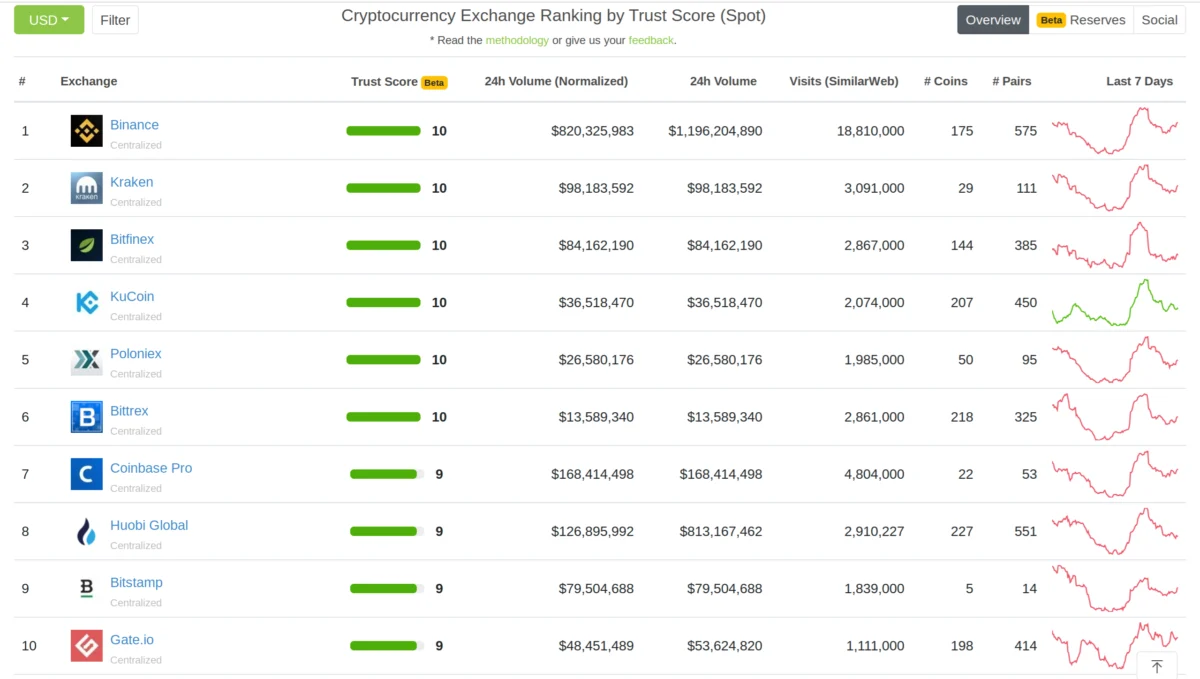
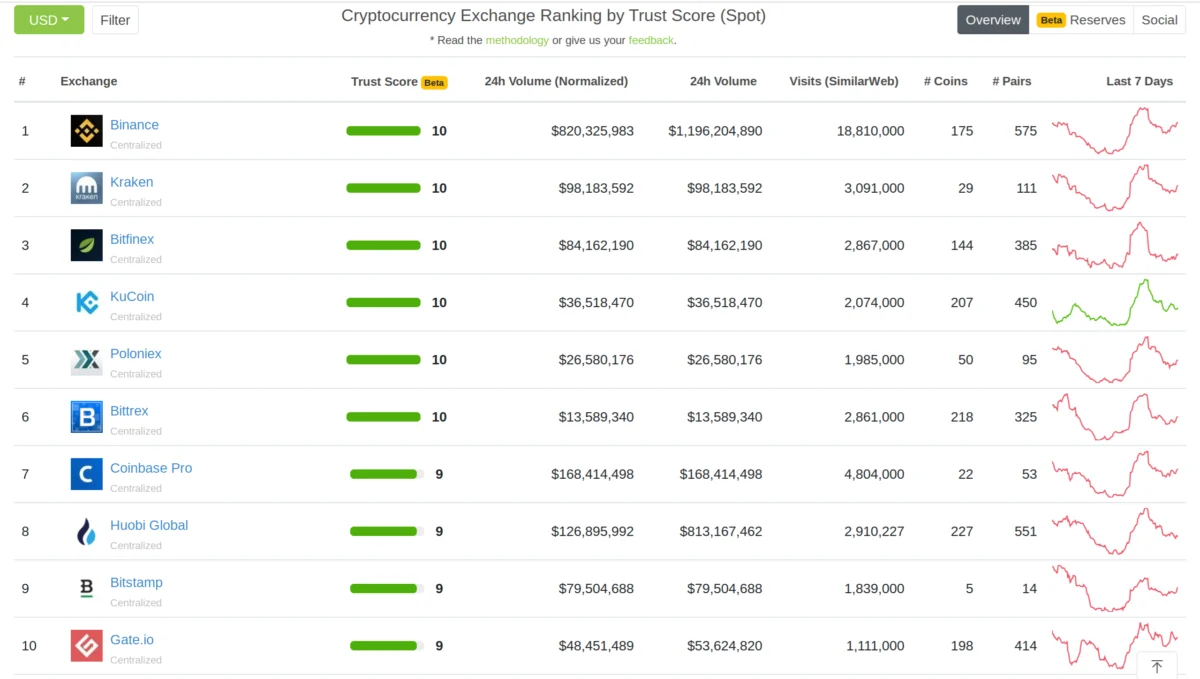
To combat the fog of fake volume, CoinGecko implemented a "Trust Score" metric. This multi-layered algorithm moves beyond simple, easily manipulated volume numbers. Instead, it incorporates:
- Web Traffic Analysis: Comparing reported volume against the actual number of visitors to an exchange’s website. If an exchange claims billions in volume but has negligible web traffic, it raises a red flag.
- Order Book Depth: Analyzing the "bid-ask spread" and the amount of liquidity actually available at various price points. High volume with shallow order books is a classic indicator of wash trading.
- API and Technical Integrity: Evaluating the quality and consistency of the data provided by the exchange to third-party aggregators.
While major players like Binance and Kraken have maintained high rankings under these new, more rigorous criteria, the list of top-performing exchanges has shifted significantly as the new metrics penalize those relying on fake activity. This shift illustrates that while the industry is currently plagued by manipulation, the tools to expose it are becoming increasingly sophisticated.
Official Responses and Industry Perspectives
The industry response to the wash trading crisis has been fragmented. Regulated exchanges often lean into the conversation, using their compliance status as a marketing tool to distinguish themselves from "shadow" exchanges. Conversely, many smaller or offshore exchanges remain silent on the matter, as their business models are often fundamentally tied to the perception of high volume to attract new users.
Regulators, meanwhile, have intensified their scrutiny. The U.S. Securities and Exchange Commission (SEC) and the Commodity Futures Trading Commission (CFTC) have increasingly targeted crypto platforms for inadequate surveillance and failure to prevent market manipulation. However, the global, decentralized nature of crypto trading makes enforcement a Herculean task.
The Broader Implications for the Crypto Economy
The persistence of wash trading has profound implications for the future of digital assets:
1. The Institutional Barrier
Institutional investors, such as pension funds and hedge funds, require clean, verifiable data before deploying capital. As long as the market is perceived as rife with manipulation, large-scale institutional adoption will be hindered. Trust is the currency of the financial world, and wash trading erodes that trust.
2. Market Distortions
Wash trading creates artificial price floors and ceilings. When bots trade against themselves, they can prevent a token’s price from falling to its true market-clearing level, trapping retail investors in "zombie" projects that have no real-world utility or demand.
3. The Need for Industry Standardization
The reliance on data aggregators like CoinGecko highlights a need for a unified standard of reporting. Without a globally accepted set of metrics for "legitimate volume," the industry will remain bifurcated between the "clean" regulated space and the "opaque" unregulated space.
4. The Path Forward: Self-Regulation vs. Oversight
The industry is currently caught in a debate over whether it can self-regulate or if it requires heavy-handed government intervention. While innovators prefer the former, the sheer scale of the wash trading problem suggests that without a regulatory framework, the "race to the bottom" in volume reporting may continue, potentially leading to more catastrophic exchange failures.
Conclusion: A Call for Investor Due Diligence
As Bobby Ong and other industry leaders have highlighted, the burden of truth currently falls on the user. In an ecosystem where numbers can be easily forged, the "caveat emptor" (buyer beware) principle is more relevant than ever.
Investors should move away from relying on single-metric volume charts and instead look toward exchanges that provide transparency, maintain regulatory licenses, and demonstrate consistent order book depth. While the crypto industry continues to evolve, the fight against wash trading remains a necessary struggle to ensure that the technology matures into a legitimate, robust, and reliable financial system.
For now, the advice remains clear: look past the headlines, scrutinize the data, and prioritize platforms that value transparency over the deceptive allure of inflated numbers. The integrity of the market depends on it.
Disclaimer: Opinions expressed at The Daily Hodl are not investment advice. Investors should do their due diligence before making any high-risk investments in Bitcoin, cryptocurrency, or digital assets. Please be advised that your transfers and trades are at your own risk, and any losses you may incur are your responsibility. The Daily Hodl does not recommend the buying or selling of any assets, nor is it an investment advisor. Please note that The Daily Hodl participates in affiliate marketing.