Institutional Exodus: How Geopolitical Tariff Volatility is Reshaping the Crypto Landscape
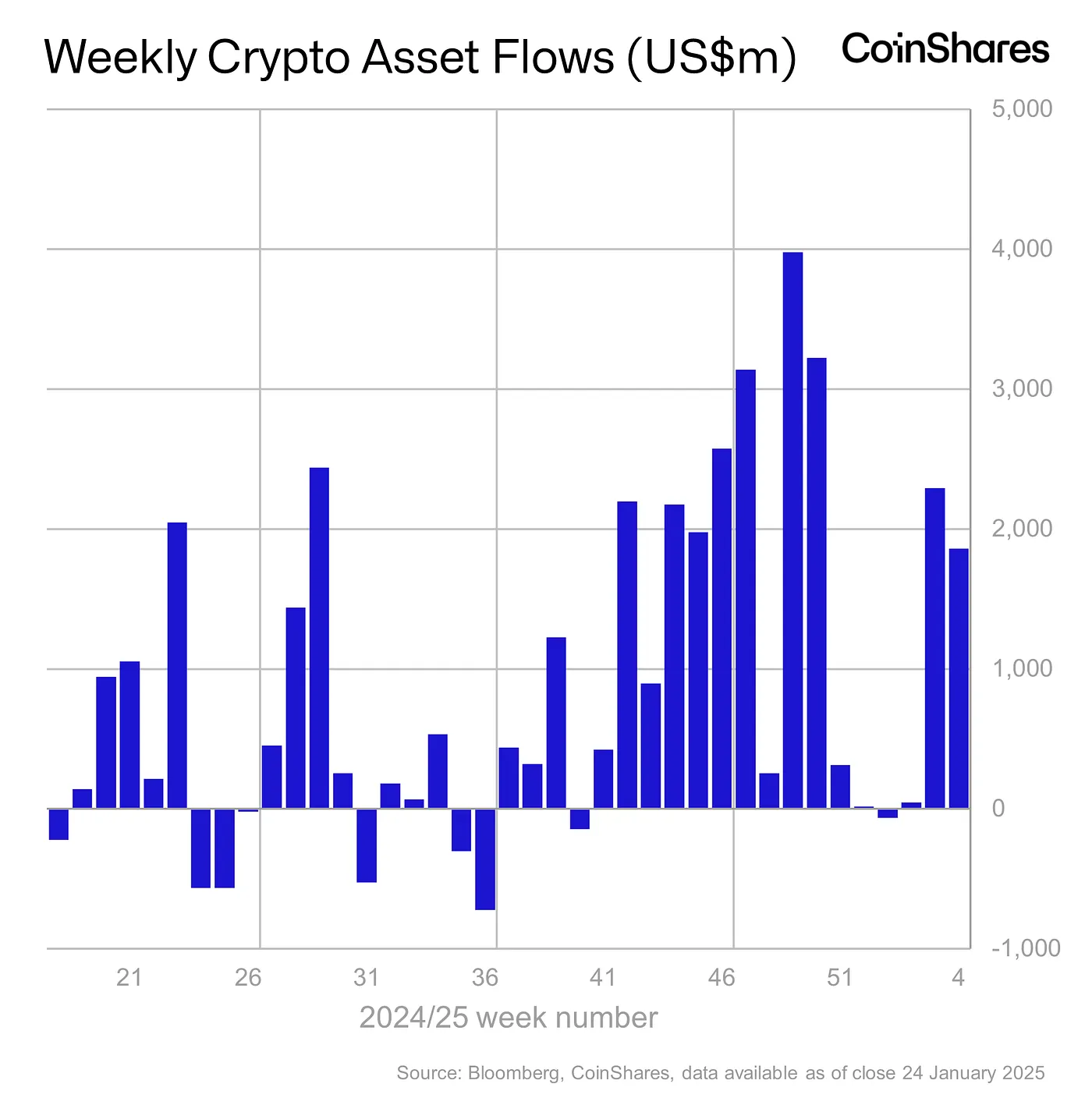
In a dramatic shift that has sent shockwaves through the digital asset markets, institutional investors have aggressively pulled capital from cryptocurrency investment products. According to the latest "Digital Asset Fund Flows Weekly Report" from industry-leading research firm CoinShares, the recent geopolitical climate—specifically the imposition of aggressive tariffs by the Trump administration—has triggered a massive flight to safety, effectively neutralizing months of growth in the sector.
The data reveals a stark reality: the once-robust appetite for institutional crypto exposure has been curtailed by macroeconomic uncertainty. As trade tensions escalate, the correlation between traditional fiscal policy and digital asset performance has become impossible for investors to ignore.
The Core Data: A Multi-Billion Dollar Retreat
The most recent CoinShares report outlines a grim trajectory for the sector. For the third consecutive week, digital asset investment products have seen significant outflows, totaling $795 million. This recent hemorrhage is not an isolated event but rather the culmination of a broader, more ominous trend that began in early February.
The Erosion of Year-to-Date Gains
Perhaps most concerning for market analysts is the impact on yearly performance. The wave of negative sentiment, which has intensified over the last two months, has resulted in record cumulative outflows of $7.2 billion. This figure is staggering, as it has effectively erased nearly all year-to-date (YTD) inflows, leaving the net figure at a meager $165 million. For a market that saw explosive interest during the early months of 2024, this represents a near-total wipeout of institutional enthusiasm.
Bitcoin and Ethereum: The Primary Targets
As is often the case during market contractions, the largest assets bore the brunt of the sell-off. Bitcoin (BTC), the perennial benchmark for the industry, saw $751 million in outflows last week alone. Ethereum (ETH) products followed suit, shedding $37.6 million. Smaller-cap assets were not spared either, with Solana (SOL), AAVE, and SUI recording outflows of $5.1 million, $0.78 million, and $0.58 million, respectively.
Chronology of the Tariff Crisis: A Timeline of Volatility
To understand the current state of the market, one must look at the timeline of events that catalyzed this shift. The connection between the White House’s trade policy and crypto fund flows has been direct and reactive.
- Early February: The initial onset of negative sentiment begins as the market prices in the potential for a "calamitous" trade war. Institutional investors begin a slow but steady pivot away from high-risk digital assets.
- Late March: Tariff announcements intensify. Uncertainty regarding global supply chains and inflationary pressure leads to an acceleration in outflows, as institutions look to de-risk portfolios in favor of cash and traditional safe-haven assets.
- April 8: Assets under management (AuM) hit a local floor, reaching their lowest point since early November 2024. The total value locked in these products plummeted as panic selling set in across major investment vehicles.
- Mid-April: A temporary reversal or softening of the stance on specific tariffs by President Trump provides a momentary reprieve. This policy pivot sparked a late-week price rebound, allowing total AuM to climb back to $130 billion—a modest 8% increase from the April 8 low.
Analyzing the Macroeconomic Implications
The "calamitous" nature of the tariff war, as described by analysts, stems from its impact on investor psychology. When major economies engage in protectionist trade policies, the resulting friction usually leads to a strengthening of the US Dollar and increased volatility in risk-on assets.
The Institutional Flight to Safety
Institutional investors, governed by strict risk-management mandates, are often the first to exit when macroeconomic signals turn negative. By pulling billions from crypto funds, these institutions are signaling a desire for liquidity and a hedge against the unpredictability of trade-related inflation. The fact that BTC—often touted as "digital gold"—suffered the most significant outflows suggests that in times of extreme trade instability, even hedge assets are being liquidated to cover margin calls or to exit the volatility of the crypto space entirely.
The Resilience of Altcoins
Interestingly, the report highlights a divergence in investor behavior. While the major assets were heavily sold, a niche group of smaller altcoins saw minor inflows. XRP led this movement with $3.5 million in inflows, while Ondo, Algorand, and Avalanche saw smaller, yet positive, interest. This suggests that while institutions are retreating from the "macro" bets (BTC/ETH), there remains a degree of speculative interest in specific ecosystems that are viewed as having unique utility or decoupling potential from general market trends.

The Path Forward: Can Institutional Confidence Return?
The recovery of AuM to $130 billion following the reversal of certain tariffs is a signal of the market’s underlying resilience, yet it remains fragile. The question for the remainder of the year is whether this sector can regain its momentum in a political climate defined by "tariff-first" diplomacy.
The Role of Market Sentiment
The CoinShares report underscores that sentiment is the primary driver of current flow data. Until there is greater clarity regarding the long-term trade relationship between the US and its major trading partners, institutional investors are likely to maintain a "wait-and-see" approach. The volatility experienced in April serves as a case study for how sensitive the digital asset class remains to centralized government decision-making.
Expert Perspectives and Forecasts
Financial analysts are divided on the long-term impact of these tariffs. Some argue that the volatility provides a "buy the dip" opportunity for long-term institutional holders who believe the trade war is a temporary political maneuver. Others caution that if tariffs remain a permanent fixture of the current administration’s economic strategy, the crypto sector may face a prolonged winter of institutional apathy, characterized by low volume and stagnant inflows.
Implications for the Broader Crypto Ecosystem
The current outflows have broader implications for the crypto industry, extending beyond simple price action.
- Product Development: Asset managers may pause the launch of new investment products if the appetite for existing ones remains low.
- Market Structure: As liquidity leaves institutional funds, the market may become more reliant on retail trading, which is historically more prone to volatility and "panic selling."
- Regulatory Scrutiny: Periods of high outflow and price instability often invite renewed scrutiny from regulators, who may use market downturns to argue for stricter oversight of digital asset funds.
Conclusion: A Market in Transition
The recent activity reported by CoinShares serves as a sobering reminder of the interconnectedness between crypto-assets and the global economy. While the digital asset sector has grown significantly in maturity and institutional adoption, it remains tethered to the whims of geopolitical policy.
The "calamitous" tariff war has served as a stress test for the institutional crypto market. While the total loss of year-to-date gains is a significant blow, the bounce-back in AuM suggests that the sector has not lost its fundamental appeal. However, for institutional confidence to return to the levels seen earlier this year, the market requires a period of macroeconomic stability—or, failing that, a clear demonstration that crypto can act as a reliable hedge against trade-induced volatility.
As the year progresses, investors will be watching not just the price charts, but the halls of government. In this new era of trade protectionism, the performance of Bitcoin and its counterparts will be as much a reflection of international diplomacy as it is of technical innovation. For now, the message from the institutions is clear: caution is the order of the day.
Disclaimer: The information provided in this article is for educational and informational purposes only and does not constitute financial, investment, or legal advice. Cryptocurrency investments are highly volatile and carry a significant risk of loss. The Daily Hodl is not an investment advisor, and readers are encouraged to conduct their own due diligence and consult with a certified financial planner before making any investment decisions. All trades and transfers are at the user’s sole discretion and risk.