Institutional Crypto Retreat: How Tariff Volatility Triggered a $7.2 Billion Market Correction
The institutional landscape for digital assets is currently undergoing a period of intense turbulence, as recent macroeconomic policy shifts—specifically those surrounding international trade tariffs—have prompted a massive capital flight from crypto investment products. According to the latest Digital Asset Fund Flows Weekly Report from the prominent research firm CoinShares, the global appetite for crypto-exposure has been severely dampened, resulting in a wave of outflows that has effectively neutralized the gains accumulated throughout the year.
The Core Data: A Multi-Billion Dollar Exodus
The primary driver behind this volatility, as identified by market analysts, is the economic policy climate surrounding President Trump’s recent tariff strategies. Described by CoinShares as "calamitous," these trade policies have created a climate of uncertainty that has rattled institutional confidence, leading to the third consecutive week of significant outflows.
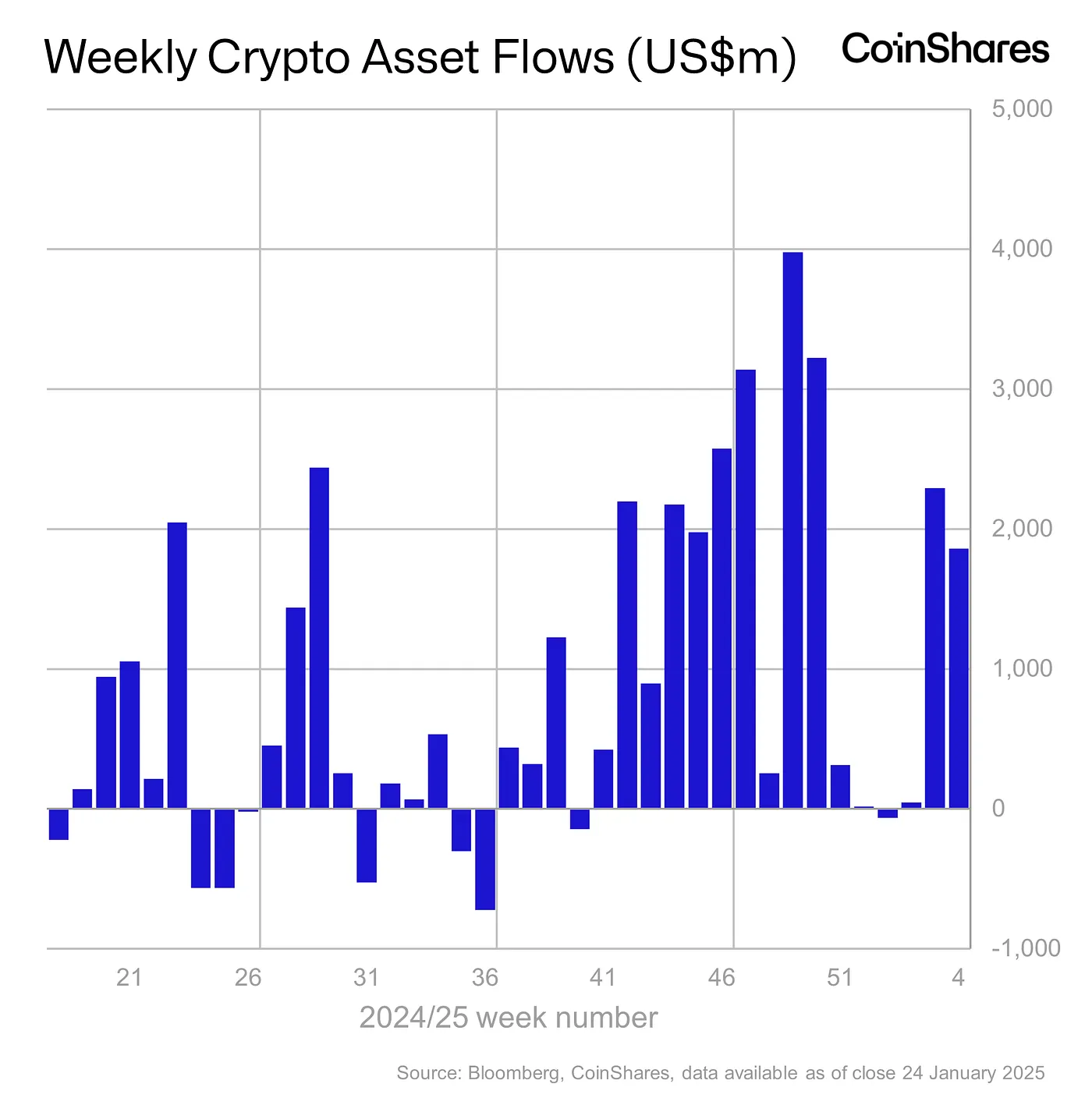
Last week alone, the crypto market witnessed an exodus of $795 million. When viewed in the broader context of the recent downturn that began in early February, the numbers are staggering: a cumulative $7.2 billion has been withdrawn from digital asset investment vehicles. This massive liquidation has stripped away nearly the entirety of the year-to-date (YTD) inflows, leaving the sector with a precarious net inflow of just $165 million.
The sudden shift in sentiment underscores the fragility of institutional crypto holdings when confronted with broader macroeconomic headwinds. Investors who once flocked to Bitcoin and Ethereum as "digital gold" or hedge assets are now prioritizing liquidity and capital preservation in the face of escalating trade tensions.
A Chronology of the Market Contraction
To understand the current state of the market, one must look at the progression of this capital flight over the last three months.
Early February: The Trigger
The downturn began in early February, coinciding with the initial announcement and subsequent implementation of aggressive tariff measures. As the rhetoric regarding trade protectionism intensified, institutional investors began to re-evaluate their risk exposure. The initial outflows were relatively modest, but they signaled a shift in sentiment that would eventually snowball into a multi-billion dollar trend.
Mid-March: The Acceleration
By mid-March, the "tariff war" narrative had firmly taken hold of the market. Institutional investors, typically characterized by their long-term horizon, began aggressively trimming their digital asset allocations. During this period, the velocity of outflows increased, as market participants sought to hedge against the potential for a global trade slowdown—a scenario that historically leads to a "risk-off" environment for speculative assets like cryptocurrencies.
April 8: The Nadir
The market reached a breaking point on April 8, which marked the lowest point for total assets under management (AuM) since early November 2024. The sentiment was overwhelmingly bearish, with fear spreading across institutional desks regarding the long-term impact of tariff-induced inflation and supply chain disruption.
Post-April 8: The Temporary Reversal
The narrative took a slight turn in the days following April 8, when President Trump signaled a temporary reversal of the most severe tariff measures. This cooling of trade rhetoric provided a much-needed relief rally. Consequently, the total AuM surged from its April lows, climbing to $130 billion—a notable 8% increase in a matter of days. However, analysts caution that while this recovery is encouraging, the institutional appetite for risk remains significantly lower than it was at the beginning of the year.
Asset-Specific Breakdown: Who Took the Biggest Hit?
The institutional retreat was not uniform, but it was pervasive across the most popular digital assets.
The Bitcoin Bleed
As the bellwether of the industry, Bitcoin (BTC) naturally bore the brunt of the institutional liquidation. Last week, Bitcoin products recorded outflows totaling $751 million. This movement suggests that large-scale investors—such as hedge funds, asset managers, and family offices—are liquidating their primary digital holdings to rebalance portfolios or move into safer-haven assets, such as U.S. Treasuries or cash equivalents.

Ethereum and Layer-1 Contraction
Ethereum (ETH), despite its utility in decentralized finance (DeFi), did not escape the trend. ETH-based investment products saw $37.6 million in outflows. Other prominent altcoins, including Solana (SOL), AAVE, and SUI, also saw capital drain, with losses of $5.1 million, $0.78 million, and $0.58 million respectively.
The Outliers: Niche Inflows
Interestingly, while the giants of the crypto space suffered, certain smaller or more specialized altcoins bucked the trend. XRP led the pack with $3.5 million in new inflows, suggesting that some investors are repositioning into assets with specific use-cases or legal developments that provide a buffer against macro-driven volatility. Other tokens, including Ondo, Algorand, and Avalanche, saw minor inflows of $0.46 million, $0.25 million, and $0.25 million respectively. This "flight to quality" or "flight to specific utility" is a common theme in market downturns, where investors look for idiosyncratic stories that might decouple from the broader market trend.
Implications for the Future of Institutional Crypto
The current situation presents several profound implications for the digital asset industry.
The Sensitivity to Geopolitics
The most striking takeaway is how sensitive digital assets have become to traditional macroeconomic triggers. For years, the crypto community argued that Bitcoin was "uncorrelated" to traditional markets. The recent outflows prove that as institutional adoption increases, so too does the correlation between crypto and broader economic policy. Institutional investors treat crypto as a high-beta asset, meaning that when trade wars threaten economic stability, crypto is often the first to be sold to cover margin calls or to reduce overall portfolio volatility.
The "Tariff War" Risk Premium
Investors are now effectively pricing in a "tariff risk premium." As long as the current administration maintains a policy of aggressive protectionism, the cost of holding volatile assets will likely remain high. The temporary reversal of tariffs demonstrated that the market is waiting for a signal of policy stability. If such stability is not achieved, we can expect institutional inflows to remain muted for the foreseeable future.
The Resilience of AuM
Despite the $7.2 billion in outflows, the fact that assets under management (AuM) managed to bounce back to $130 billion is a testament to the underlying demand for digital assets. The infrastructure for crypto investment—ETFs, trusts, and institutional-grade custody solutions—is more robust than it has ever been. The market is not "dead"; rather, it is in a state of high-intensity rebalancing.
Conclusion: Navigating the Uncertainty
The current environment is one of extreme caution. While the recovery in AuM following the tariff reversal offers a glimmer of hope, the sheer volume of capital that exited the market over the past three months suggests that institutional confidence has been deeply shaken.
For individual investors, the takeaway from the CoinShares report is clear: digital assets are currently held hostage by global trade politics. Until there is a sustained period of macroeconomic clarity, volatility will likely remain the defining characteristic of the sector. Investors should remain cognizant that institutional flow data is a powerful barometer for market sentiment; as long as the institutional "smart money" is opting for the sidelines, the path of least resistance for Bitcoin and its peers may continue to be marked by caution.
As the industry moves forward, the focus will likely shift to how these platforms adapt to a world where their primary value proposition—decentralization—must exist within a framework of tightening regulatory and trade policies. Whether this current contraction is a permanent shift or merely a temporary correction will depend heavily on the evolution of trade policies in the coming months.
Disclaimer: The information provided in this article is for educational and informational purposes only and does not constitute financial, investment, or legal advice. The Daily Hodl is not an investment advisor. Digital assets carry high levels of risk, and individuals should conduct their own thorough research and consult with a professional financial advisor before making any investment decisions. All trading activities involve risk, and any losses incurred are the sole responsibility of the investor.