Decoupling Fundamentals from Sentiment: Why Chainlink’s Record Network Growth Amid a Market Correction Is a Litmus Test for Crypto
By the News Desk | Edited by Samuel Rae
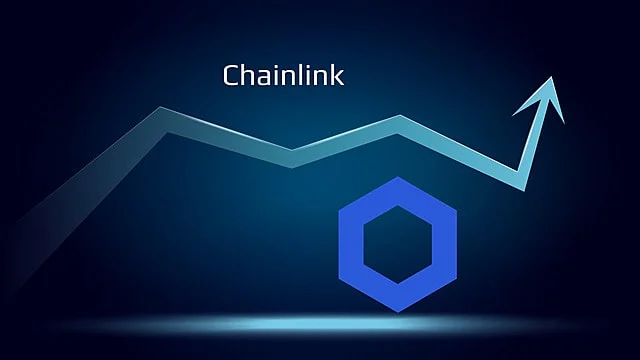
In the volatile ecosystem of digital assets, the divergence between price action and network utility is often where the most significant market insights are forged. This weekend, Chainlink (LINK) provided a compelling case study in this phenomenon. As the broader cryptocurrency market grappled with a significant price drawdown, Chainlink recorded its two highest daily network growth figures for 2026.
This development has become the weekend’s defining narrative, acting as a crucial pivot point for analysts attempting to decipher whether current market conditions are fueled by speculative exhaustion or a quiet, foundational build-out of blockchain infrastructure.
Main Facts: A Divergence in Data
The core of the story lies in on-chain metrics provided by market intelligence firm Santiment. While the price of LINK—and the wider altcoin sector—faced downward pressure consistent with the broader Bitcoin-led correction, Chainlink’s "Network Growth" metric spiked to levels unseen throughout the entirety of 2026.
In technical terms, "Network Growth" tracks the number of new addresses being created on a network daily. This is a vital indicator of user adoption and ecosystem expansion. An increase in this metric suggests that despite the fear, uncertainty, and doubt (FUD) permeating the market, new participants are actively engaging with the Chainlink protocol.
However, a critical distinction must be made: high network growth does not guarantee an immediate price rally. In the complex machinery of crypto markets, price is often a lagging indicator of utility. While network growth suggests that the "pipes" of the network are being utilized by a broader base of users, the translation of this activity into buy-side pressure depends on macro liquidity, market sentiment, and the overall risk-on appetite of global investors.
Chronology: The Sequence of the Weekend Shift
The narrative unfolded over a 72-hour period that saw crypto markets testing local support levels.
- Friday: The Initial Correction. As Bitcoin struggled to hold key psychological support, the altcoin market experienced a sympathetic drop. Liquidity began to rotate out of high-beta assets, and open interest in perpetual futures began to unwind.
- Saturday: The Data Disconnect. As prices continued to oscillate in a bearish range, on-chain data began to show an anomaly. Santiment’s analytics tools flagged a sudden surge in the creation of new Chainlink wallets. This was not a minor tick; it represented a year-to-date peak.
- Sunday: Market Consolidation. By the close of the weekend, the narrative had crystallized. Traders and analysts began to weigh the implications: was this a "buy the dip" accumulation phase by retail or institutional whales, or was it a response to a specific technical update or project-related announcement?
- Monday: The Outlook. As traditional markets opened, the focus shifted toward whether this growth would sustain. Market participants are now monitoring for "follow-through"—a term used to describe whether initial bursts of activity translate into a floor for the token’s price.
Supporting Data: Understanding Network Growth
To understand why this metric matters, one must look at what it represents in the context of Chainlink’s architecture. Unlike meme-coins, which are often driven by social sentiment, Chainlink operates as the industry’s leading decentralized oracle network. Its value proposition is tied to the movement of data from the off-chain world to the on-chain world.
The Santiment Perspective
Santiment’s data suggests that the surge in address creation is a primary indicator of "sticky" user adoption. When new addresses are created during a price drawdown, it often suggests that sophisticated participants are positioning themselves for the next cycle. They are not chasing pumps; they are accumulating during periods of maximum pessimism.
Liquidity and Market Structure
The current market structure is characterized by a "wait-and-see" approach. Traders are hesitant to deploy significant capital until there is a clear directional trend from Bitcoin. However, the Chainlink data provides a counter-narrative. It suggests that even when Bitcoin is "stuck," the fundamental utility of decentralized finance (DeFi) infrastructure continues to grow. This is the definition of "decoupling"—where an asset’s internal health starts to move independently of the broader market’s malaise.
Official Responses and Ecosystem Context
While the Chainlink Foundation often maintains a focus on long-term development rather than short-term price movements, the ecosystem’s response has been consistent with their strategy of "building through the noise."
Recent updates regarding the Cross-Chain Interoperability Protocol (CCIP) and expanded integration with traditional financial institutions have been cited by market observers as potential catalysts for the new address growth. When institutional players begin testing or integrating Chainlink, it often requires the creation of new, dedicated infrastructure—which, in turn, reflects as "new address growth" on the blockchain.
Industry analysts emphasize that this is not necessarily a reflection of retail "FOMO" (fear of missing out), but rather a sign of institutional or developer-led onboarding. As the project continues to serve as the connective tissue for tokenized real-world assets (RWAs), the network growth may well be the first sign of a larger, long-term trend in institutional adoption.
Implications: What This Means for the Investor
For those watching the market, this story serves as a lesson in separating signal from noise.
The Risk of Short-Termism
The primary trap for traders is assuming that high network growth equals an immediate vertical price move. History is littered with examples of "fundamental" growth failing to materialize into price action because of broader macro-economic headwinds, such as interest rate uncertainty or regulatory shifts.
The Bullish Case for Fundamentals
If the network growth trend proves durable, it positions LINK as a "flight to quality" asset. In bear markets or sideways markets, capital tends to move away from speculative, utility-less tokens and toward projects with verifiable usage. If Chainlink maintains this high level of address creation, it signals that the project is successfully insulating itself from the volatility of the wider market.
What to Watch Next: The Dashboard Metrics
Investors should monitor the following in the coming weeks:
- Exchange Balances: Are the new addresses moving tokens to exchanges (selling) or off exchanges (holding)?
- Governance Activity: Does this increase in addresses translate into higher participation in governance votes?
- Cross-Chain Volume: Is the usage of CCIP scaling in tandem with the number of new addresses?
- Liquidity Pools: Are there new deposits in the liquidity pools linked to the Chainlink ecosystem?
Conclusion: A Barometer for the Industry
The surge in Chainlink’s network growth during a period of market contraction is a significant signal, but it is not a standalone guarantee of profit. It is a reminder that in the world of decentralized finance, the underlying architecture is constantly evolving, often regardless of the price tickers on a screen.
As the crypto market continues to define its path for 2026, Chainlink’s performance will serve as a crucial barometer. If this growth is the start of a broader, sustained trend, it could fundamentally shift the narrative from "altcoin speculation" to "infrastructure utility." If it fades, it will be categorized as a momentary spike in activity.
Ultimately, investors should remain cautious, treating this development as one piece of a much larger puzzle. The market is currently in a state of recalibration, and the smartest participants will be those who look beyond the daily price fluctuations to identify the projects that are actually being used to build the future of the decentralized economy.
Disclaimer: This report is based on information provided by Santiment. Crypto investments involve significant risk. Always conduct your own research before making financial decisions.