Securing the Agentic Web: Mysten Labs Launches Sui Seal MPC to Solve the AI Private Key Dilemma
The convergence of artificial intelligence and blockchain technology has transitioned from a theoretical concept to an active infrastructure race. As autonomous AI agents move beyond simple data retrieval and begin engaging in complex, on-chain economic activities, they face a fundamental security bottleneck: the management of private keys.
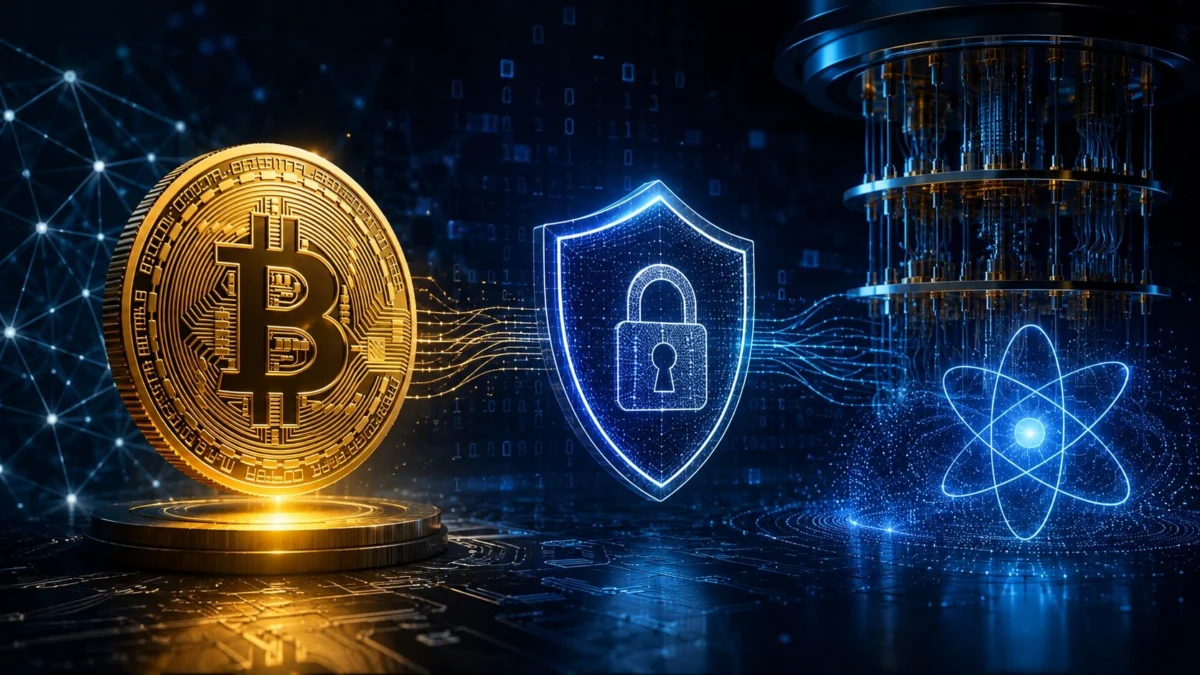
To address this critical vulnerability, Mysten Labs has officially launched Sui Seal MPC on the Sui mainnet. This cryptographic infrastructure is designed to allow autonomous software agents to execute smart contract transactions and manage on-chain assets without directly holding, storing, or controlling full private keys. By combining multi-party computation (MPC), distributed threshold cryptography, and the native safety policies of the Move programming language, Sui Seal MPC aims to establish a secure execution environment for the emerging "agentic web."
Main Facts: Inside Sui Seal MPC and the Agent Key Problem
At the core of the Web3-AI integration lies the Agent Key Problem. For an AI agent to be truly autonomous, it must have the capacity to transact—whether to purchase computational resources, execute decentralized finance (DeFi) trades, rebalance portfolios, or interact with on-chain marketplaces. Traditionally, this required provisioning the agent with a standard cryptographic private key (a "hot key").
However, storing a raw private key within an AI agent’s software environment introduces severe security vulnerabilities:
- Code Exploitation: If the underlying LLM (Large Language Model) or agent framework is compromised via prompt injection or dependency exploits, the private key can be extracted instantly.
- Irreversibility: Once a private key is exposed, malicious actors can drain all associated assets immediately, with no recourse for recovery.
- Logic Failures: Unchecked algorithmic loops or software bugs could cause an agent to unintentionally deplete its treasury through rapid, erroneous transactions.
Traditional Model:
[ AI Agent ] ---> Holds [ Single Private Key ] ---> Controls [ All On-Chain Assets ] (High Risk)

Sui Seal MPC Model:
[ AI Agent ] ---> Requests Transaction
                     |
                     v
             [ Move Smart Contract Policies ] (Enforces daily caps, whitelists)
                     |
                     v
             [ Sui Seal MPC Node Network ] ---> Distributes [ Key Shares ] (No single node holds the full key)
                     |
                     v
             [ Secure On-Chain Transaction Execution ] (Low Risk)
Sui Seal MPC mitigates these risks by removing the single point of failure. Instead of relying on a single, exposed private key, the infrastructure leverages Multi-Party Computation (MPC).
How Sui Seal MPC Works
- Distributed Key Generation (DKG): The private key is never generated or stored in its entirety. Instead, cryptographic "key shares" are distributed across a decentralized network of independent nodes.
- Threshold Signing: To sign and broadcast a transaction, a predefined threshold of these nodes must collaboratively perform cryptographic calculations. No single node or entity ever gains access to the complete private key.
- Policy-Driven Guardrails: The system integrates directly with Sui’s Move smart contracts to enforce customized spending limits, whitelisted counterparties, and operational boundaries before any transaction can be signed.
Chronology: The Evolution of Agentic Workflows on Sui
The launch of Sui Seal MPC on the mainnet represents the culmination of several developmental phases at the intersection of cryptography, decentralized systems, and artificial intelligence.
- Late 2023 – Mid 2024: The Rise of Early AI Bots. Decentralized applications (dApps) began experimenting with basic AI integrations. However, these systems were largely restricted to read-only operations or relied on highly centralized custody solutions where human operators executed trades on behalf of the AI.
- Q3 2024: The Vulnerability Epidemic. As "AI agent" frameworks gained popularity, security researchers highlighted widespread vulnerabilities in agent architectures. Promising AI agents lost funds due to simple prompt injection attacks, wherein malicious users manipulated the AI’s natural language interface to transfer assets to unauthorized addresses.
- Q4 2024: Conceptualization of Sui Seal. Mysten Labs recognized that the unique architecture of the Move programming language—specifically its object-centric data model—could be combined with advanced cryptographic primitives to create a native agent-security framework. Development began on integrating MPC protocols directly into the Sui network’s consensus and execution layers.
- January 2025: Testnet Validation. Mysten Labs conducted rigorous testnet validation of the Seal MPC framework. Developers tested edge cases, including node failures, simulated prompt-injection exploits, and high-frequency trading scenarios to ensure the threshold signature scheme remained robust under stress.
- February 2025: Mainnet Deployment. Mysten Labs officially deployed Sui Seal MPC on the Sui mainnet. The launch introduced the core MPC infrastructure, developer SDKs, and initial support for Move-based smart contract policy enforcement, signaling the transition of agentic crypto infrastructure from experimental research to live production.
Supporting Data & Technical Deep-Dive
To understand the operational advantages of Sui Seal MPC, it is necessary to examine how it contrasts with existing key management solutions and how it utilizes the unique features of the Sui blockchain.
Comparative Infrastructure Analysis
| Feature | Standard Hot Wallet | Multi-Signature (Multisig) | Trusted Execution Environment (TEE) | Sui Seal MPC |
|---|---|---|---|---|
| Private Key Exposure | High (Stored in memory/file) | Medium (Individual keys exposed) | Low (Isolated in hardware) | None (Key exists only as distributed shares) |
| Latency | Low | High (Requires multiple manual transactions) | Low to Medium | Low (Optimized for on-chain execution) |
| Policy Flexibility | Low (All-or-nothing access) | Medium (On-chain smart contract rules) | High (Enclaved code) | Very High (Native Move smart contract policies) |
| Hardware Dependency | None | None | High (Intel SGX, AMD SEV) | None (Purely cryptographic) |
The Role of Move Smart Contracts as Programmable Guardrails
While cryptographic signing security is vital, it represents only half of the solution. An agent with secure keys can still make poor economic decisions or be tricked into sending funds to a malicious smart contract.
Sui Seal MPC addresses this by routing transaction requests through custom Move smart contracts before triggering the MPC signing process. Move’s object-centric model treats assets as distinct, type-safe objects with explicit ownership rules. This allows developers to hardcode immutable constraints directly into the agent’s account structure, including:
- Whitelisted Counterparties: The agent can only interact with verified protocols (e.g., specific decentralized exchanges or oracle feeds).
- Velocity Limits: Hard caps on the volume or value of transactions allowed within a specific timeframe (e.g., maximum 100 SUI per 24 hours).
- Co-signing Requirements: Transactions exceeding a certain threshold may require a secondary signature from a human administrator or an external security oracle.
"Hidden Bids" and Front-Running Protection
Beyond basic transaction signing, Sui Seal MPC introduces support for hidden bids in on-chain markets. In traditional decentralized finance, transaction details are visible in the public mempool before they are finalized. This exposure allows searchers and MEV (Maximal Extractable Value) bots to front-run transactions, increasing slippage and degrading execution quality for automated agents.
Using the MPC infrastructure, AI agents can submit encrypted bids to decentralized auctions or order books. The bids remain cryptographically sealed until a pre-specified coordination condition is met (such as the close of the bidding window), at which point the MPC nodes cooperatively decrypt and reveal the bids simultaneously. This mechanism neutralizes front-running risks and ensures fair play in highly competitive automated markets.

Official Responses and Industry Perspectives
The launch of Sui Seal MPC has drawn significant attention from blockchain security researchers, cryptographic engineers, and developers within the Web3-AI ecosystem.
In documentation validating the release, Mysten Labs emphasized the importance of building robust foundational infrastructure rather than relying on short-term workarounds:
"AI agents can only become useful in on-chain markets if they can take actions. But giving an autonomous system full access to a private key is risky. If the agent is compromised, misconfigured, or manipulated, funds can move instantly and irreversibly. Sui Seal MPC is positioned as an answer to that problem."
Independent security auditors have also weighed in on the development. Analysts point out that while MPC technology is mathematically sound, its practical security depends heavily on the decentralization of the node network performing the computations. If the key shares are held by too few closely-related nodes, the security guarantees of threshold cryptography could be compromised.
Furthermore, industry commentators caution against overhyping the immediate capabilities of AI agents. Cryptographic infrastructure like Sui Seal MPC provides the "rails" for secure execution, but the intelligence, reasoning, and reliability of the agents themselves still depend on external machine learning models.
Strategic Implications: Sui and the "Agentic Web"
The introduction of Sui Seal MPC is a strategic move to position the Sui network as the primary layer-1 blockchain for AI-driven commerce.
                       [ The Agentic Web Landscape ]
                                     |
         +---------------------------+---------------------------+
         |                                                       |
[ The Solana Approach ]                                 [ The Sui Approach ]
  Focus: Low latency, high throughput                     Focus: Structural security, Move safety
  Risk: Hot-key exposure in agent environments           Solution: Sui Seal MPC (Distributed keys)
Many competing blockchains, such as Solana and various Ethereum Layer-2 networks, have attracted AI agent projects due to their low transaction fees and high throughput. However, these ecosystems often rely on traditional key management setups or off-chain custodial services, leaving agents vulnerable to exploits.
Sui’s counter-argument is that speed without safety is a structural liability for automated capital. By offering a native, developer-friendly MPC framework integrated with the Move programming language, Sui hopes to attract enterprise-grade AI applications that require strict compliance, risk management, and security guarantees.
Future Outlook
As autonomous agents become more sophisticated, they will increasingly transition from executing simple, single-step swaps to managing complex multi-chain strategies, automated supply chains, and decentralized physical infrastructure networks (DePIN).
By solving the fundamental cryptographic bottleneck of secure, non-custodial transaction signing, Sui Seal MPC provides a concrete blueprint for how blockchains can safely onboard autonomous software as first-class economic citizens. The success of this initiative will ultimately depend on developer adoption and the real-world resilience of the MPC node network under the demands of active on-chain commerce.