Ethereum Navigates Bearish Currents Amidst Record Network Activity and Shifting Investor Sentiment
[City, Date] – Despite persistent bearish pressure that has seen Ethereum’s price teetering on the edge of significant support levels, the underlying health and activity of its network are experiencing a remarkable resurgence, reaching historic highs. While the cryptocurrency market grapples with broader macroeconomic headwinds, the Ethereum ecosystem is demonstrating robust engagement, signaling a growing demand for its foundational technology and a potential divergence between price action and fundamental utility.
Recent analyses, bolstered by expert observations and on-chain data, suggest that Ethereum’s price may retest the crucial $1,500 support level sooner than anticipated. However, this potential price correction is occurring against a backdrop of unprecedented network activity, with daily active addresses surging to levels that surpass those seen during previous bull market cycles. This dichotomy between a struggling asset price and a flourishing network presents a complex narrative for investors and observers of the decentralized finance (DeFi) landscape.
The Unseen Strength: Ethereum’s Network Activity Surges
While the cryptocurrency market has been characterized by a general downturn, with Ethereum’s price showing instability, the network itself has maintained a steady upward trajectory in terms of user engagement and transactional volume. Even as ETH has been tested at key price points like $1,600, the activity across the blockchain has shown no signs of deceleration.
This sustained growth in network activity has been a focal point for industry experts. Leon Waidmann, Head of Research at Lisk and a recognized market authority, has highlighted a powerful resurgence in Ethereum’s network activity, pushing it to record levels. Waidmann’s findings indicate that the blockchain’s activity is currently sitting at all-time high levels, a strong indicator of increasing engagement across the entire Ethereum ecosystem.
This surge in activity is not an isolated phenomenon; it reflects the growing importance of Ethereum as a foundational layer for a wide array of decentralized applications and services. From decentralized finance (DeFi) protocols and non-fungible token (NFT) marketplaces to the burgeoning world of tokenization and blockchain-based gaming, Ethereum continues to serve as the primary infrastructure. The rising demand from individual users, developers, and increasingly, institutional players, underscores the network’s vital role and its position as one of the most active and influential blockchains in the cryptocurrency sector.
Data Unveils a Resilient Network
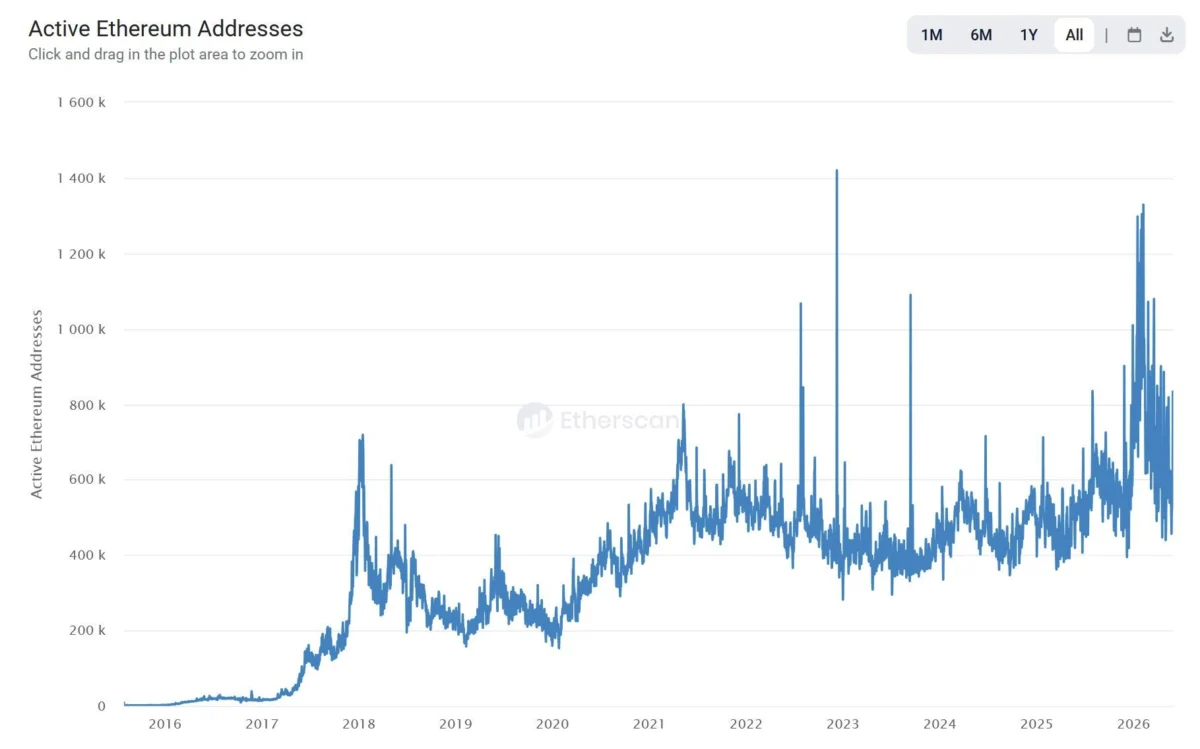
Despite the often-cited narrative of ETH’s "dead" price, comprehensive data paints a different picture of the network’s vitality. Daily active addresses on the Ethereum network are consistently hovering near historical peaks. To put this into perspective, in 2018, during a previous market cycle, active wallet addresses on the network reached a high of approximately 720,000. This figure was surpassed during the 2021 bull market, when addresses topped out at around 800,000.

In the current market cycle, spanning 2025 and 2026, Ethereum has witnessed a remarkable surge in daily active addresses, with figures frequently surpassing the 1 million mark and peaking above 1.3 million. This suggests that the network is currently processing more real-world transactions and user interactions than it did even at the zenith of the last bull market. This sustained high level of activity is a testament to the ongoing development and adoption of decentralized applications and services built on the Ethereum platform.
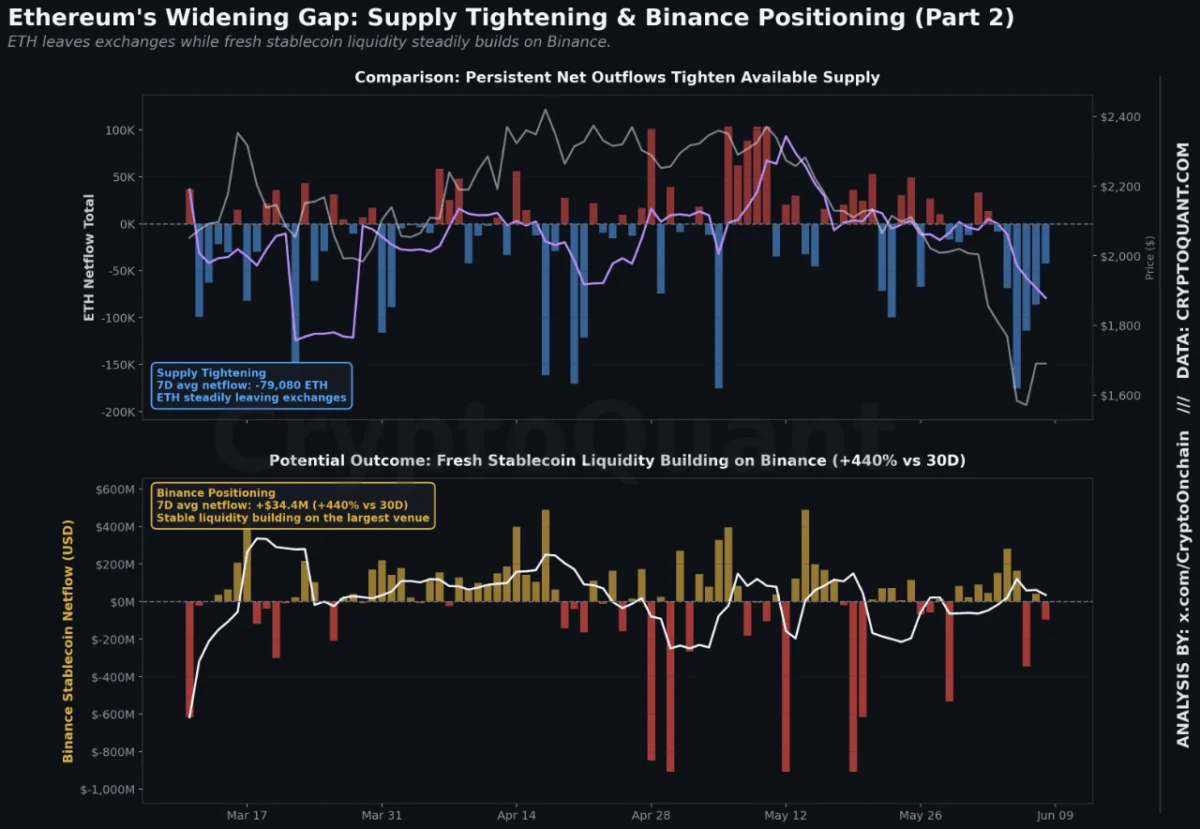
Furthermore, a significant indicator of growing interest in Ethereum is the substantial withdrawal of ETH from cryptocurrency exchanges. As of a recent report, the total amount of ETH held on crypto exchanges has fallen to approximately 14.5 million ETH. This represents a historic low, and notably, this decline occurred during a period of market correction, rather than preceding it. This contrasts sharply with previous market downturns where exchanges typically saw an influx of assets as investors sought to liquidate their holdings.
In October 2023, the ETH exchange balance stood at a significantly higher 21 million ETH. Over the past two and a half years, a cumulative total of over 6 million ETH has been moved off exchanges. This persistent outflow of ETH from trading platforms indicates a strong conviction among holders, suggesting they are either accumulating the asset with the intention of holding it long-term or actively utilizing it within the burgeoning DeFi ecosystem. As Waidmann aptly observed, "Whoever is buying here isn’t selling back," underscoring a sentiment of strong, committed ownership.
The Foundation for Decentralized Finance
Ethereum’s role as the backbone of decentralized finance cannot be overstated. Its smart contract capabilities have enabled the creation of a vast ecosystem of financial applications that operate without traditional intermediaries. This includes decentralized exchanges (DEXs), lending and borrowing protocols, stablecoin issuance, and yield farming opportunities, all of which contribute to the network’s robust activity.
The increasing adoption of DeFi services, despite the volatile nature of cryptocurrency prices, points to a growing recognition of the benefits offered by these decentralized alternatives, such as greater transparency, accessibility, and user control. As more users and institutions engage with these applications, the demand for the underlying Ethereum network naturally increases, driving up transaction volumes and active user metrics.
Moreover, the ongoing development and implementation of Ethereum’s scaling solutions, such as layer-2 rollups, are further enhancing the network’s capacity and reducing transaction costs. These advancements are crucial for accommodating the growing demand and ensuring a seamless user experience, further contributing to the sustained network activity.

Identifying the Potential Price Bottom: A Glimpse into Future Trends
While the network’s performance paints a positive picture, the price of ETH remains a critical concern for investors. In this context, the analysis of price prediction models and market indicators becomes paramount.
A recent insightful analysis from Ali Charts, a seasoned cryptocurrency analyst, has offered a potential outlook on Ethereum’s price bottom. This analysis is primarily anchored on the Ethereum Delta Price metric, a tool that has historically proven effective in identifying the last two market bottoms for ETH.
The Delta Price metric is significant because it reflects the intricate connection between the cost basis of investors and the production cost of miners. By consistently highlighting deep accumulation zones, this metric plays a crucial role in signaling potential price bottoms. After a thorough examination of this indicator, Ali Charts has suggested that Ethereum’s potential price bottom could be situated near the $700 mark.
According to this analysis, if historical patterns hold true, Ethereum might experience a retest of the $700 level before embarking on a sustained upward trend. This projection, while speculative, provides a data-driven perspective on where the market might find its footing. The implication is that despite current bearish sentiment, there could be a significant accumulation opportunity at these lower price points, followed by a substantial recovery.
The visual representation of ETH’s trading activity on a 1-day chart further contextualizes its current position. While trading at approximately $1,657 on the depicted chart (as of the time of the original report), the historical data and analyst projections suggest a potential for further downside before a significant rebound. This highlights the divergence between the current market price and the potential long-term value proposition indicated by network activity and analytical models.
Supporting Data and Expert Opinions
The narrative of a robust Ethereum network amidst price volatility is supported by a confluence of data points and expert commentary:
- Record Active Addresses: The consistent surge in daily active addresses, surpassing 1 million and peaking above 1.3 million in the current cycle, directly contrasts with historical highs during previous bull markets. This indicates a fundamental increase in user engagement and utility.
- Decreasing Exchange Balances: The historical low of approximately 14.5 million ETH on exchanges, a significant drop from 21 million ETH in late 2023, signifies a strong ‘hodling’ sentiment and a lack of selling pressure, even during price declines.
- Institutional Interest: While not explicitly detailed in the provided text, the underlying demand driving network activity often includes participation from institutional investors who are increasingly allocating capital to digital assets and blockchain infrastructure. The growth of Ethereum-based investment products and services further supports this.
- Developer Activity: The continued development and deployment of new dApps and protocols on Ethereum, often reflected in metrics like GitHub commit activity, are a crucial, albeit less publicly visible, indicator of network health and future potential.
The expert opinions cited, particularly from Leon Waidmann and Ali Charts, lend significant weight to these observations. Waidmann’s focus on the resurgence of network activity as a signal of growing engagement, and Ali Charts’ data-driven approach to identifying potential price bottoms, provide complementary perspectives that strengthen the overall analysis.
Implications for the Future of Ethereum
The current situation presents a multifaceted outlook for Ethereum:
- Resilience of the Ecosystem: The sustained high network activity demonstrates the underlying resilience and intrinsic value of the Ethereum ecosystem, independent of short-term price fluctuations. This suggests that the demand for Ethereum’s technological capabilities remains strong.
- Potential for a Strong Rebound: If the network’s fundamental strength continues to be a driving force, a potential retest of lower price levels could be followed by a significant rebound, as suggested by the Delta Price analysis. Investors who believe in the long-term vision of Ethereum may see current price levels as an attractive entry point.
- The "Merge" and Beyond: The successful transition of Ethereum to a Proof-of-Stake (PoS) consensus mechanism, often referred to as "The Merge," has been a pivotal moment, reducing energy consumption and setting the stage for future scalability upgrades. This fundamental change continues to underpin the network’s long-term viability.
- Navigating Market Volatility: The cryptocurrency market remains inherently volatile. While network activity is a strong indicator of fundamental health, external factors, regulatory changes, and macroeconomic conditions can still significantly impact ETH’s price in the short to medium term.
In conclusion, Ethereum is currently navigating a complex market environment. While its price may be under pressure, the robust and historically high levels of network activity signal a deeply engaged and growing ecosystem. This fundamental strength, coupled with expert analysis suggesting potential price bottoms, paints a picture of a resilient platform poised for future growth, even as it weathers current bearish storms. The divergence between price and utility serves as a critical point of observation for investors seeking to understand the true value proposition of the world’s leading smart contract platform.