Ethereum’s Resilient Network Activity Defies Bearish Price Pressure, Analysts Eye Potential $700 Bottom
London, UK – February 15, 2025 – While the broader cryptocurrency market grapples with persistent bearish sentiment, casting a shadow over the price trajectory of Ethereum (ETH) and its ecosystem, the underlying network has continued to demonstrate remarkable strength and consistent growth. Despite indications that ETH could retest the critical $1,500 support level sooner than anticipated, on-chain activity is surging to historic highs, signaling robust and sustained demand for the world’s second-largest cryptocurrency by market capitalization.
This divergence between price action and network fundamentals presents a complex narrative for investors and observers alike. While the market grapples with macroeconomic headwinds and shifting investor sentiment, the Ethereum blockchain is proving its enduring utility and appeal as a foundational layer for a burgeoning decentralized economy.
A Tale of Two Trends: Price vs. Network Activity
The current market environment has seen Ethereum’s price struggle for stability, with significant retests of key psychological levels, including $1,600. This price weakness has fueled concerns about a potential downward spiral towards the $1,500 support. However, beneath the surface of these price fluctuations, a powerful counter-narrative is unfolding.
Reports from prominent industry figures highlight a significant and sustained resurgence in Ethereum network activity. Leon Waidmann, Head of Research at Lisk and a respected market expert, has indicated that activity across the Ethereum blockchain is reaching all-time high levels. This surge is not merely a fleeting spike but represents a consistent upward trend, underscoring a deepening engagement with the entire Ethereum ecosystem.
This robust growth in network activity is a testament to Ethereum’s multifaceted role as a crucial infrastructure for decentralized finance (DeFi), non-fungible tokens (NFTs), tokenization, and a wide array of blockchain-based applications. The increasing demand from users, developers, and even institutional players is reinforcing Ethereum’s position as a dominant and influential network within the cryptocurrency sector.

On-Chain Data Paints a Picture of Unprecedented Engagement
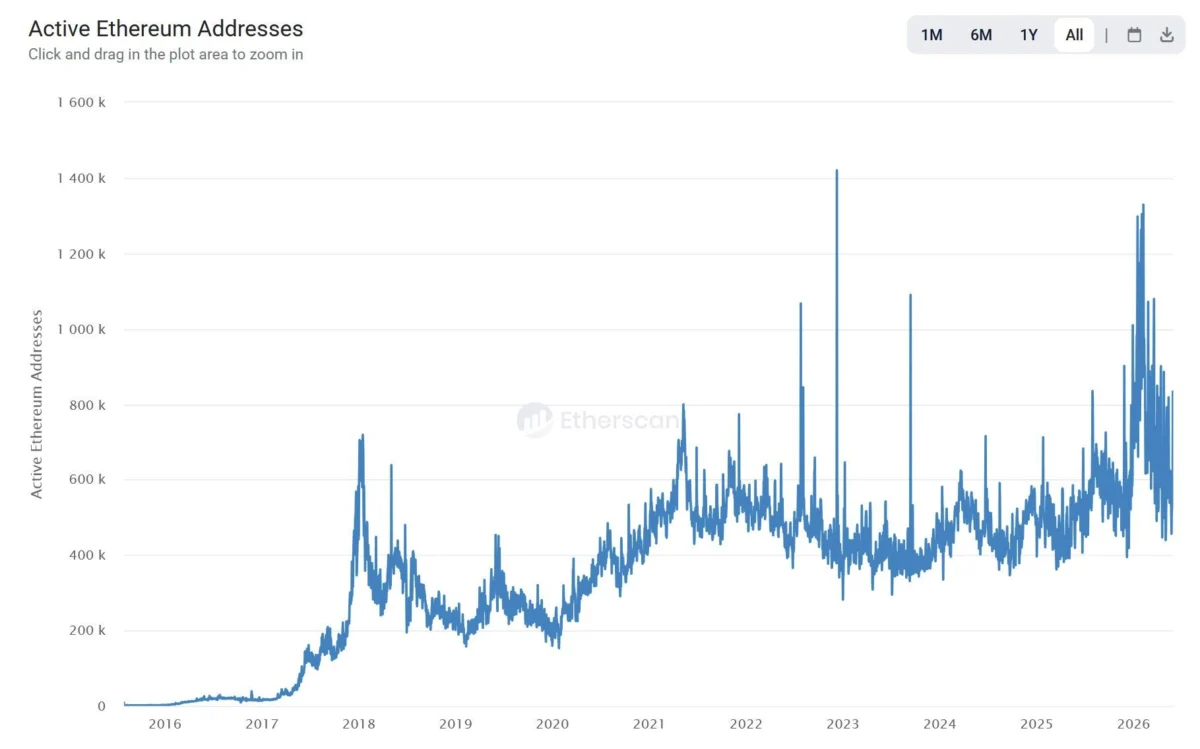
The assertion of "historic levels" of network activity is supported by compelling on-chain data. While ETH’s price may appear stagnant or in decline, the number of daily active addresses on the network is consistently hovering near its highest historical ranges. To contextualize this, in 2018, during a previous market cycle, active wallet addresses on the network peaked at approximately 720,000. This figure rose to around 800,000 during the height of the 2021 bull market.
However, the current market cycle, spanning from 2025 into early 2026, has witnessed daily active addresses not only surpass previous peaks but consistently push beyond the 1 million mark, with some periods exceeding 1.3 million. This data strongly suggests that the network is currently processing a greater volume of genuine user activity than it did even at the apex of the last bull run. This sustained engagement, irrespective of short-term price movements, points to a maturing and increasingly integrated user base.
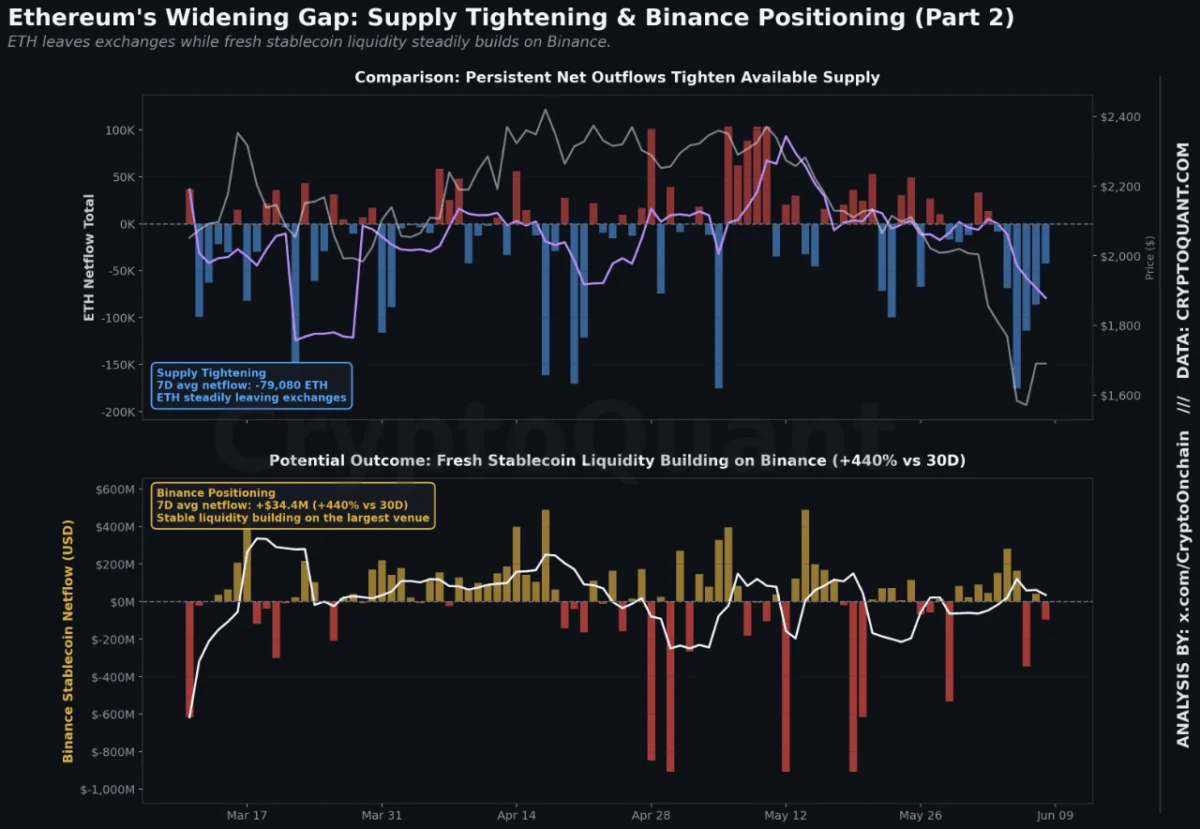
Further reinforcing the narrative of growing interest and conviction in Ethereum is the significant withdrawal of ETH from cryptocurrency exchanges. Data compiled by Waidmann indicates that as of Wednesday, the total amount of ETH held on exchanges has dwindled to approximately 14.5 million ETH. This represents a historic low, a figure that is particularly noteworthy as it was reached during a period of market downturn, rather than preceding it.
This trend is a stark contrast to historical patterns, where exchanges typically experience inflows during periods of heightened volatility as traders seek to liquidate assets. In October 2023, the ETH exchange balance stood at a considerably higher 21 million ETH. Over the past two and a half years, an impressive figure of over 6 million ETH has been systematically removed from centralized exchanges. This steady outflow, especially during volatile times, suggests that a significant portion of market participants are choosing to hold their ETH long-term, indicating a strong belief in the asset’s future value and a reluctance to sell into the current market weakness. "Whoever is buying here isn’t selling back," Waidmann commented, underscoring the conviction of these market participants.
Identifying the Potential Price Bottom: A Deep Dive into Analytical Models
While the network metrics paint a picture of underlying strength, the question of Ethereum’s price floor remains a critical concern for investors. In this regard, recent analysis from Ali Charts, a well-regarded cryptocurrency analyst, offers a potential insight into where ETH’s price bottom might lie.

Ali Charts’ analysis is primarily anchored on the Ethereum Delta Price metric. This sophisticated metric, which quantifies the relationship between investors’ cost basis and the production costs incurred by miners, has a proven track record of accurately identifying the last two market bottoms for Ethereum. By consistently highlighting deep accumulation zones, the Delta Price metric serves as a crucial indicator for determining potential price floors.
After meticulously examining the Delta Price metric, Ali Charts has posited that Ethereum’s potential price bottom is situated near the $700 mark. This projection suggests that if historical patterns hold true, the altcoin could experience a final retest of this significant support level before embarking on its next sustained upward trend. While this figure may seem alarmingly low to some, it is important to consider the analytical framework and the historical accuracy of the metric employed.
The implications of such a price floor, should it materialize, are multifaceted. For long-term investors, it could represent a final opportunity for substantial accumulation at historically low valuations, particularly given the ongoing strength in network activity. For those with shorter-term horizons, it underscores the need for caution and risk management as the market navigates these potentially volatile periods.
Chronology of Events and Market Sentiment
The current bearish pressure on Ethereum’s price is not an isolated event but rather a continuation of broader cryptocurrency market trends influenced by various macroeconomic factors and regulatory uncertainties.
- Late 2023: Amidst a period of relative stability, Ethereum’s exchange balance reached a notable low of 21 million ETH in October, signaling early signs of strong holding sentiment.
- Early 2024: The Ethereum network continued to experience consistent growth in daily active addresses, steadily climbing towards and then surpassing the 1 million mark. This period also saw the commencement of a significant outflow of ETH from exchanges.
- Mid-2024 to Early 2025: Despite ongoing price consolidation and occasional sharp declines that tested key support levels like $1,600, the network activity metrics, particularly daily active addresses, remained exceptionally high, often exceeding 1.3 million.
- Present Day (February 2025): The bearish pressure intensifies, leading to projections of a potential retest of the $1,500 support level. Simultaneously, exchange balances hit historic lows of around 14.5 million ETH, reinforcing the narrative of conviction among long-term holders. Analytical models, such as Ali Charts’ Delta Price, suggest a potential price bottom near $700, pending a final market capitulation.
The prevailing market sentiment, as reflected in price action, is one of caution and uncertainty. However, the on-chain data provides a counterpoint, suggesting underlying resilience and growing utility that could form the bedrock for future price appreciation.
Supporting Data and Expert Insights
The analysis presented is bolstered by data from reputable sources and the insights of industry experts.
- Leon Waidmann’s Research: The data on rising network activity and declining exchange balances directly from Waidmann’s research provides a quantitative foundation for the argument of sustained Ethereum engagement. His observation that "Whoever is buying here isn’t selling back" is a qualitative indicator of strong holder conviction.
- Ali Charts’ Delta Price Analysis: The historical accuracy of the Delta Price metric in identifying market bottoms lends significant weight to the projection of a potential $700 floor. This analytical approach offers a data-driven perspective on potential price discovery.
- Exchange Data: The consistent trend of ETH withdrawals from exchanges, documented over the past 2.5 years, provides tangible evidence of a shift towards self-custody and long-term holding strategies.
These data points, when viewed in conjunction, create a compelling picture of a network that is not only surviving but thriving in a challenging market. The divergence between price and network fundamentals suggests that the market may be undervaluing the fundamental growth and utility of the Ethereum ecosystem.
Implications for the Future of Ethereum
The current market scenario, characterized by bearish price action juxtaposed with robust network activity, carries significant implications for the future of Ethereum.
- Validation of Utility: The sustained high level of network activity serves as a powerful validation of Ethereum’s intrinsic value and its role as the premier platform for decentralized applications. This resilience in the face of price downturns suggests that the demand for its services is driven by fundamental utility rather than speculative fervor alone.
- Investor Confidence: The significant withdrawal of ETH from exchanges indicates a growing confidence among investors in the long-term prospects of the Ethereum network. This behavior is characteristic of a market that is maturing, with a greater emphasis on holding assets for their utility and potential future appreciation.
- Potential for a Stronger Recovery: Should Ethereum indeed bottom out near the projected $700 level and then embark on a new upward trend, the underlying strength in network activity could provide a solid foundation for a more sustainable and robust recovery compared to previous cycles. The network’s ability to absorb and process a high volume of transactions, even during bear markets, positions it well for future growth.
- The Decentralized Economy’s Foundation: Ethereum’s continued expansion as a foundational layer for decentralized banking, tokenization, and various blockchain-based innovations underscores its critical role in the ongoing evolution of the digital economy. The current network performance suggests that this evolution is progressing, irrespective of short-term market fluctuations.
While the price of Ethereum may be facing headwinds, the underlying health and vibrancy of its network are undeniable. The data points towards a strong and engaged user base, a growing ecosystem of applications, and a cohort of investors with long-term conviction. As the market navigates its current challenges, the resilience of the Ethereum network offers a compelling narrative of underlying strength and a promising outlook for its future. The potential retest of the $700 level, as suggested by analytical models, may represent not a sign of weakness, but a final opportunity for accumulation before the network’s fundamental strength translates into renewed price appreciation.