Institutional Exodus: Bitcoin Sees $945M Outflow as Market Sentiment Shifts Following Fed Commentary
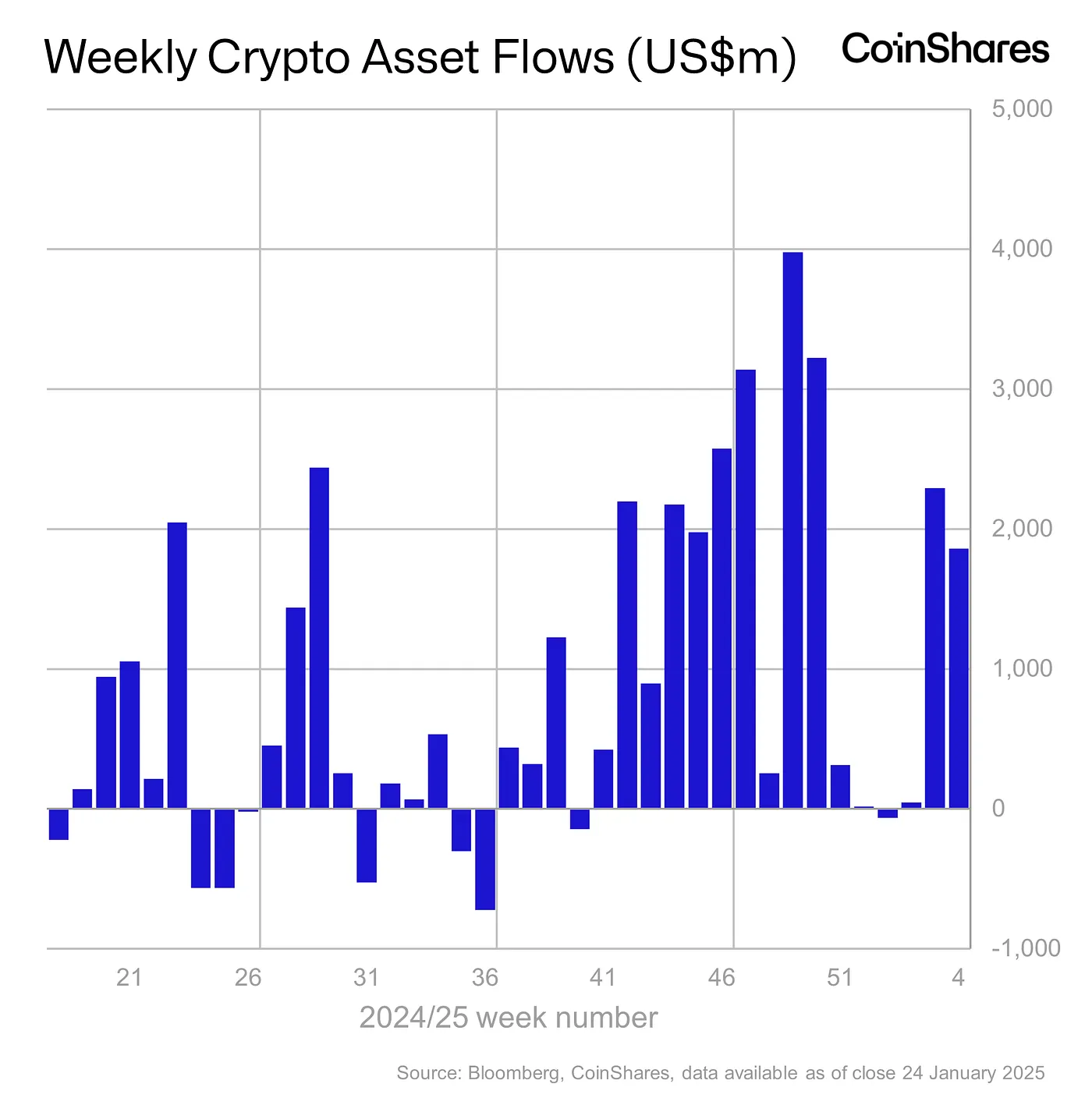
The global cryptocurrency landscape is experiencing a period of profound recalibration as institutional investors retreat from the flagship digital asset, Bitcoin, in a move that has sent ripples through the broader financial markets. According to the latest weekly fund flow report from digital asset management firm CoinShares, institutional sentiment has soured significantly, culminating in a net outflow of $360 million across the crypto-asset sector.
The primary driver of this capital flight appears to be a sudden shift in macroeconomic expectations, triggered by recent rhetoric from Federal Reserve Chair Jerome Powell. While the US central bank recently enacted a widely anticipated interest rate cut, the market’s enthusiasm was quickly dampened by Powell’s hawkish tone regarding the path of future monetary policy.
The Catalyst: Powell’s Rhetoric and the December Uncertainty
The central narrative currently gripping Wall Street is the pivot from "guaranteed" easing to "conditional" caution. For months, the digital asset market had priced in a steady trajectory of interest rate reductions, which generally favors risk-on assets like Bitcoin. However, the latest commentary from Jerome Powell has injected a new degree of volatility into the market’s long-term planning.
The Hawkish Turn
In recent appearances, Powell signaled that the Federal Reserve is not on a "pre-set" course regarding interest rates. He emphasized that the central bank remains data-dependent and will proceed with caution as it monitors inflation targets and labor market strength. For institutional investors—who rely heavily on predictable macroeconomic environments—this lack of clarity regarding a potential December rate cut has become a primary source of anxiety.
The market has reacted accordingly. By moving capital out of digital asset investment vehicles, institutional players are effectively hedging against the risk that the Fed may pause its easing cycle sooner than expected. This "wait-and-see" approach has resulted in a marked reduction in exposure to the most volatile segments of the crypto market.
Chronology of the Capital Flight
The week in question saw a sharp divergence between regional sentiment and asset-specific performance. To understand the scale of the exit, one must analyze the timeline of institutional reaction to the Fed’s messaging.
- Mid-Week Policy Announcement: Following the interest rate cut, initial optimism was visible, but it was quickly overshadowed by the subsequent press conference where the Fed Chair’s hawkish nuances were highlighted by analysts.
- The Mid-Week Sell-Off: Between Tuesday and Thursday, institutional inflows turned into a sustained, heavy sell-off. Bitcoin investment products bore the brunt of this transition, with nearly $1 billion in capital removed from the market.
- End-of-Week Stabilization: As the trading week concluded, the rate of outflows slowed, though the net figure for the week remained decisively negative. Meanwhile, alternative assets began to see "bottom-fishing" activity, as investors rotated capital into specific Layer-1 blockchains.
Regional Divergence: A Global Snapshot
The data provided by CoinShares highlights a distinct geographical divide in how institutional investors are viewing the current climate.
The US: The Epicenter of Outflows
The United States recorded a staggering $439 million in net outflows, confirming that the epicenter of the market’s anxiety is tied directly to domestic monetary policy. The US market, which is the most sensitive to Fed interest rate changes, saw institutional funds moving into cash or less volatile traditional assets, shedding crypto exposure in favor of safety.
Europe: The Contrarian View
Conversely, European markets appeared to buck the trend. Germany, a market that has been historically cautious, recorded $32 million in inflows, while Switzerland added $30.8 million. This suggests that while the American institutional view is heavily tethered to the Federal Reserve’s immediate decisions, European investors may be looking at the longer-term structural potential of digital assets, or perhaps utilizing these instruments as a hedge against European-specific macroeconomic pressures.
Asset Breakdown: Bitcoin’s Loss, Altcoins’ Gain
The most striking aspect of the latest report is not merely the total volume of outflows, but the stark contrast in how individual assets performed. The market is clearly moving away from a "Bitcoin-only" institutional strategy toward a more nuanced, multi-asset allocation.
Bitcoin: Under Pressure
Bitcoin ETFs, which have served as the primary vehicle for institutional entry into the crypto space this year, faced intense liquidation. With nearly $945.89 million pulled from these products, it is evident that Bitcoin is currently being used as a liquidity lever by large-scale managers. When the macro outlook turns sour, Bitcoin is the first asset to be trimmed to rebalance portfolios.
The Rise of Solana and Ethereum
While Bitcoin suffered, the "altcoin" sector saw surprising resilience.
- Solana (SOL): The high-performance blockchain saw a massive $421.11 million in inflows—its second-largest weekly haul on record. This suggests that institutions are increasingly viewing Solana as a primary utility competitor to Ethereum, rather than just a speculative asset.
- Ethereum (ETH): Ethereum managed to attract $57.59 million in new capital, signaling that despite the volatility, the institutional appetite for smart-contract platforms remains intact.
- XRP: Ripple’s XRP also saw notable inflows of $43.18 million. This indicates a growing institutional interest in assets that have specific use cases in cross-border settlements and payment infrastructure, potentially independent of the wider market’s macro-driven fluctuations.
Implications for the Future of Crypto-Institutionalism
The latest CoinShares data serves as a critical case study in the "maturation" of the cryptocurrency market. It is no longer a monolith that moves entirely in one direction; rather, it is becoming a diverse ecosystem where institutional capital is applied with increasing sophistication.
The Shift Toward Utility
The fact that Solana and Ethereum saw inflows while Bitcoin saw massive outflows suggests a transition in the institutional narrative. Investors are beginning to differentiate between digital assets that function primarily as a "store of value" (Bitcoin) and those that function as "infrastructure" (Ethereum, Solana).
The Macroeconomic Ceiling
Until the Federal Reserve provides definitive clarity on its policy trajectory for 2025, it is likely that the crypto market will continue to experience "whipsaw" volatility. Institutional investors are currently constrained by the "higher-for-longer" interest rate environment. Should the Fed maintain a hawkish stance, we may see further consolidation in the crypto market as speculative capital is squeezed out.
However, if the market begins to see the interest rate environment stabilize, or if inflation data begins to cool, the recent inflows into Ethereum and Solana may prove to be the start of a new, more sustainable cycle of accumulation.
Final Analysis: Due Diligence Remains Essential
As the market navigates this complex intersection of central banking and digital asset innovation, the importance of independent research cannot be overstated. The recent outflow figures underscore that institutional investors are not immune to fear, uncertainty, and doubt. They are reacting to global signals just as retail investors are, albeit with significantly more capital at stake.
For those watching the markets, the current data serves as a reminder that the path to widespread institutional adoption is rarely linear. While the $945 million exit from Bitcoin is a significant headline, the concurrent interest in high-utility protocols like Solana and XRP indicates that the long-term thesis for blockchain technology remains robust.
Disclaimer: The information provided in this article is for educational and informational purposes only and does not constitute financial, investment, or legal advice. Cryptocurrency investments involve significant risk, and investors should perform their own due diligence or consult with a qualified financial advisor before making any decisions. The Daily Hodl is not responsible for any financial losses or damages resulting from the use of this information. Please be aware that The Daily Hodl may participate in affiliate marketing programs.