Crypto Market Liquidity Dries Up: A Comprehensive Analysis of June’s Massive Volume Plunge
The cryptocurrency landscape, which had spent the first half of 2021 in a state of euphoric expansion and record-breaking activity, hit a significant wall in June. As tokens entered a period of stagnant, sideways price action, trading activity across major global exchanges plummeted. Data provided by the London-based research firm CryptoCompare reveals a staggering contraction in market participation, with trading volumes across leading platforms—including Coinbase, Kraken, Bitstamp, and Binance—falling by more than 40% in a single month.
This retreat from the markets underscores a broader narrative of cooling investor sentiment following a tumultuous period of regulatory scrutiny, environmental debates, and extreme price volatility. As the market enters a cooling-off phase, analysts are left to determine whether this drop represents a structural shift or a temporary pause in the evolution of digital assets.
The State of the Market: Key Facts Behind the Plunge
The decline in June was not merely a localized event but a systemic reduction in liquidity across the entire crypto-asset ecosystem. According to the CryptoCompare report, spot market volumes experienced a precipitous drop of 42.7%, while the derivative markets—often the engine of high-leverage speculation—fared no better, with a total volume decrease of 40.7%.
This reduction in trading intensity was mirrored by a contraction in open interest. Futures contracts for Bitcoin (BTC) and Ethereum (ETH), which act as proxies for market sentiment and institutional engagement, saw open interest fall by 31.8% and 29.3%, respectively.
Bitcoin, the primary barometer for the asset class, struggled throughout the month, hitting a monthly low of $28,908 and concluding the period with a 6.0% deficit. The combination of falling prices and a significant decline in volatility created a "perfect storm" that discouraged both high-frequency traders and retail participants from engaging with the market at previous levels.
Chronology: A Storm of Headwinds and Catalysts
To understand the sudden evaporation of volume, one must look at the sequence of events that defined the second quarter of 2021.
The May Liquidation Crisis
The seeds of June’s inactivity were sown in May. During that period, the market experienced one of the most volatile months in its history, characterized by massive liquidation events as prices swung wildly. Because May recorded the highest trading volumes ever observed in the history of the crypto markets, any subsequent month would inevitably appear weak by comparison. The "steep" drop in June is, in many ways, a regression to the mean following the unsustainable chaos of the preceding month.
The China Mining Crackdown
The most significant exogenous shock came from China. In May, the Chinese government announced a comprehensive, nation-wide takedown of Bitcoin mining operations. This move triggered a mass exodus of miners, forcing them to relocate hardware and operations to more favorable jurisdictions like the United States and Kazakhstan. This regulatory crackdown created an atmosphere of uncertainty, causing new investors who had entered the market during the bull run to retreat as their portfolios faced sustained downward pressure.
Regulatory and Macroeconomic Mixed Signals
June was characterized by a tug-of-war between institutional adoption and regulatory resistance. On the positive side, El Salvador made history by formally adopting Bitcoin as legal tender—a move that provided a glimmer of hope for long-term proponents of the asset. Conversely, the persistent regulatory "headwinds" in China and increased scrutiny from financial regulators in the West dampened enthusiasm, leading to a "wait-and-see" approach among major market participants.
Supporting Data: Dissecting the Exchange Landscape
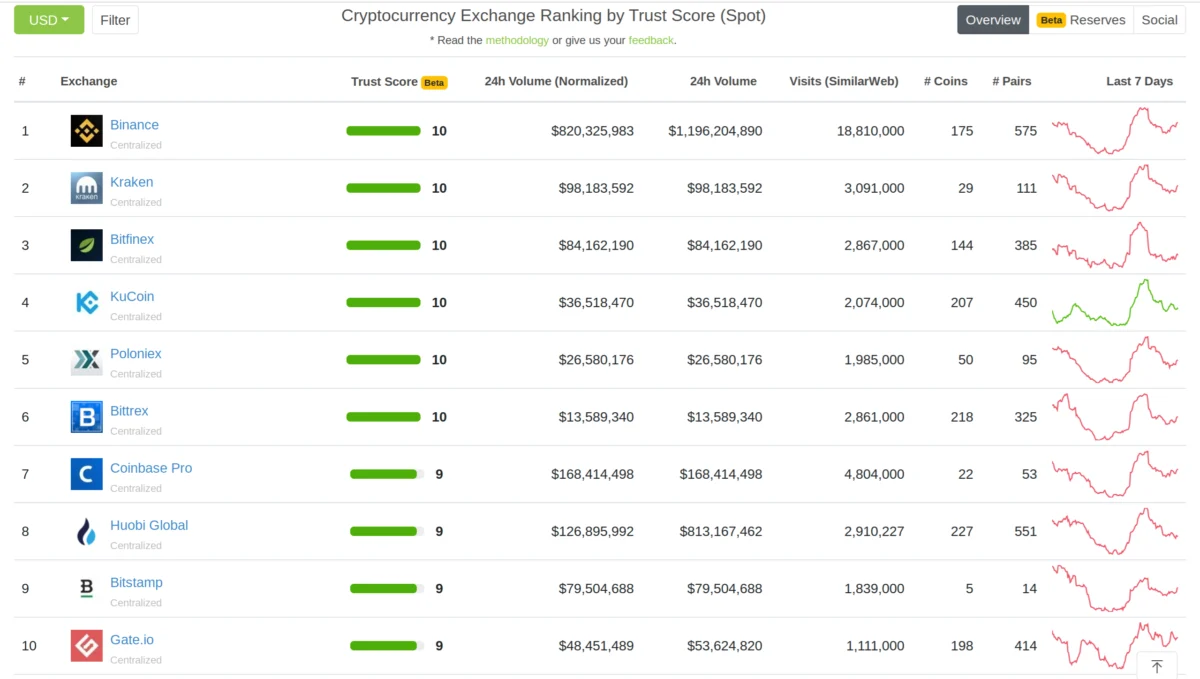
Despite the industry-wide downturn, some entities managed to retain their dominant market share. Binance, currently the world’s largest cryptocurrency exchange by volume, remained at the top of the leaderboard throughout June. However, even the industry titan was not immune to the cooling climate; Binance recorded a 56% drop in trading volume, bringing its monthly total to $668 billion.
The data provided by CryptoCompare highlights that this contraction was not limited to niche exchanges but was a broad-based phenomenon affecting the "blue-chip" platforms. The following table summarizes the market conditions:
- Spot Market Volume: Down 42.7%
- Derivative Market Volume: Down 40.7%
- BTC Futures Open Interest: Down 31.8%
- ETH Futures Open Interest: Down 29.3%
These figures illustrate that the decline was consistent across both the spot and derivative sectors, indicating that the lack of interest was not confined to one type of trader, but rather reflected a macro-level shift in risk appetite.

Official Responses and Expert Analysis: Is the Sky Falling?
While the raw percentages paint a bleak picture, industry experts caution against interpreting the June data as a sign of industry collapse. Clara Medalie, the research lead at crypto market data provider Kaiko, offered a more nuanced perspective in an interview with CNBC.
"Volumes plunged in June on pretty much every exchange; however, overall volumes are still magnitudes greater than they were one year ago today," Medalie noted. Her analysis emphasizes that context is critical. While June’s performance appeared lackluster when placed alongside the record-breaking activity of May, it remains firmly within the top five months of volume ever recorded in the history of the crypto industry.
Medalie suggests that market activity has simply reverted to levels seen in early 2021. The "massive" growth observed in the first half of the year means that even a 40% decline leaves the industry in a fundamentally stronger position than it occupied in 2020. The current period, therefore, should be viewed as a consolidation phase rather than a departure from the long-term trend of growth.
Implications for the Future of Digital Assets
The decline in trading volume carries several implications for the future trajectory of the crypto market:
1. The Maturation of the Investor Base
The exodus of short-term speculative traders following the China mining ban suggests that the market is shedding "weak hands." While this results in lower volume in the short term, it often leads to a more stable market foundation in the long term, characterized by holders who are less reactive to regulatory news cycles.
2. A Shift in Focus Toward Utility
With the cooling of speculative fervor, the market’s focus is shifting toward institutional adoption and infrastructure development. The news of El Salvador’s legal tender status serves as a reminder that the utility of Bitcoin and blockchain technology is being tested on a sovereign level. The decline in trading volume may provide the necessary "quiet time" for developers to build out the protocols that will sustain the next wave of institutional integration.
3. The Need for Better Regulation
The volatility and subsequent volume collapse highlight the industry’s ongoing struggle with regulatory uncertainty. For volume to return to the levels seen in early 2021, participants require clarity. As countries continue to formulate their respective frameworks for digital asset oversight, the market will likely continue to exhibit caution.
4. Resilience Amidst Volatility
Ultimately, the resilience of the market is evidenced by the fact that despite a massive 56% drop in volume for top-tier exchanges, the infrastructure remains fully operational and highly liquid by historical standards. The crypto ecosystem has demonstrated that it can weather extreme regulatory shocks and price corrections without losing its essential functionality.
Conclusion
The 40% plunge in cryptocurrency trading volume throughout June 2021 serves as a stark reminder of the volatile nature of digital assets. Driven by a combination of regional regulatory crackdowns, environmental concerns regarding mining, and a natural correction following a record-breaking May, the decline reflects a cooling-off period for the market.
However, when viewed through a wider lens, the data suggests that the industry is far from a terminal decline. With volumes remaining significantly higher than the previous year and the technology finding new, high-level applications in sovereign finance, the current slump appears to be a consolidation phase. For investors and market observers, the lesson is clear: while speculative interest may wax and wane with the headlines, the underlying growth of the crypto economy remains a force to be reckoned with. As the market digests these developments, the focus will undoubtedly shift toward the long-term fundamentals that will define the next chapter of the digital asset era.
Disclaimer: The information provided in this article is for informational purposes only and does not constitute financial, investment, or legal advice. Cryptocurrency investments involve significant risk. Always conduct your own due diligence before making any financial decisions. The Daily Hodl does not endorse or recommend the buying or selling of any specific digital assets.