Grid Under Pressure: How a Historic Winter Storm Exposed the Flexibility and Vulnerability of Bitcoin Mining
The North American energy landscape faced a stern test this past weekend as a brutal winter storm swept across the United States, plunging temperatures to historic lows and putting regional electrical grids under unprecedented strain. Amidst the chaos of frozen infrastructure and soaring demand for heating, the Bitcoin mining industry—a sector frequently scrutinized for its massive energy consumption—found itself at the center of a strategic operational pivot.
As the storm intensified, a significant portion of the U.S. Bitcoin mining fleet went dark. This was not merely a consequence of power outages; in many cases, it was a deliberate, calculated response by industrial-scale miners to support grid stability. The resulting volatility in the network’s hashrate provided a real-time stress test for the Bitcoin ecosystem, highlighting both the vulnerability of centralized mining hubs and the unique utility of miners as a flexible, “interruptible” load on the modern power grid.
The Chronology of a Network Freeze
The disruption began in earnest on Friday, January 23, 2026. As the storm system moved into the heart of the U.S. mining industry—particularly Texas and the Southeast—weather-related outages began to propagate. By Saturday, the impact was undeniable.
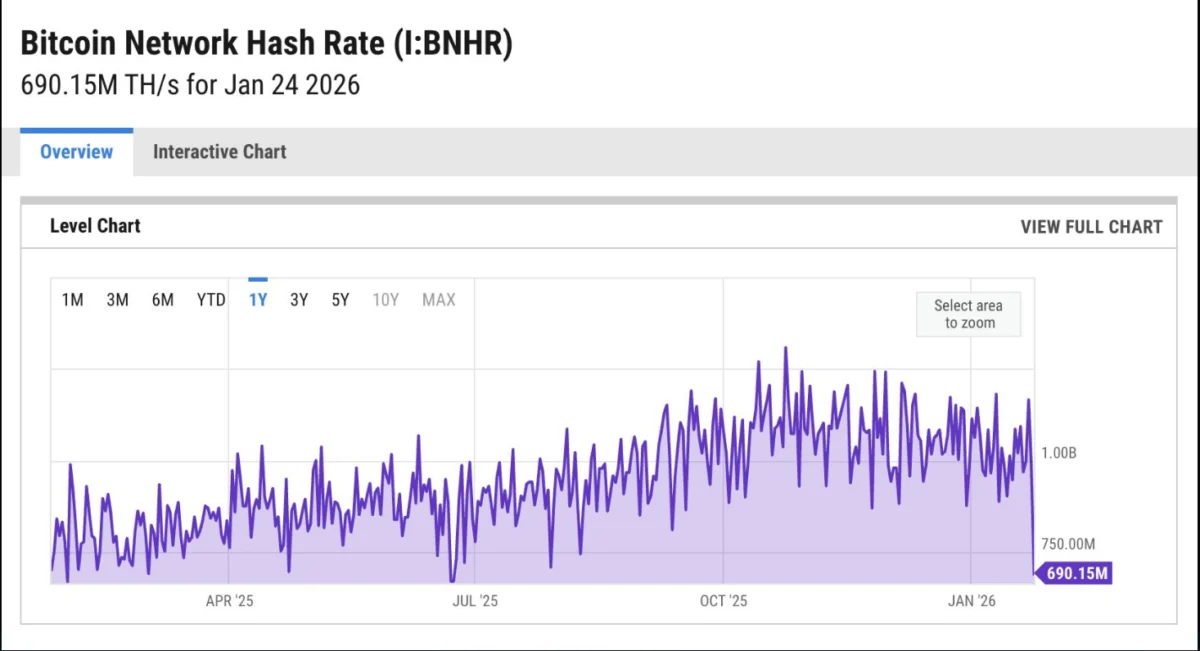
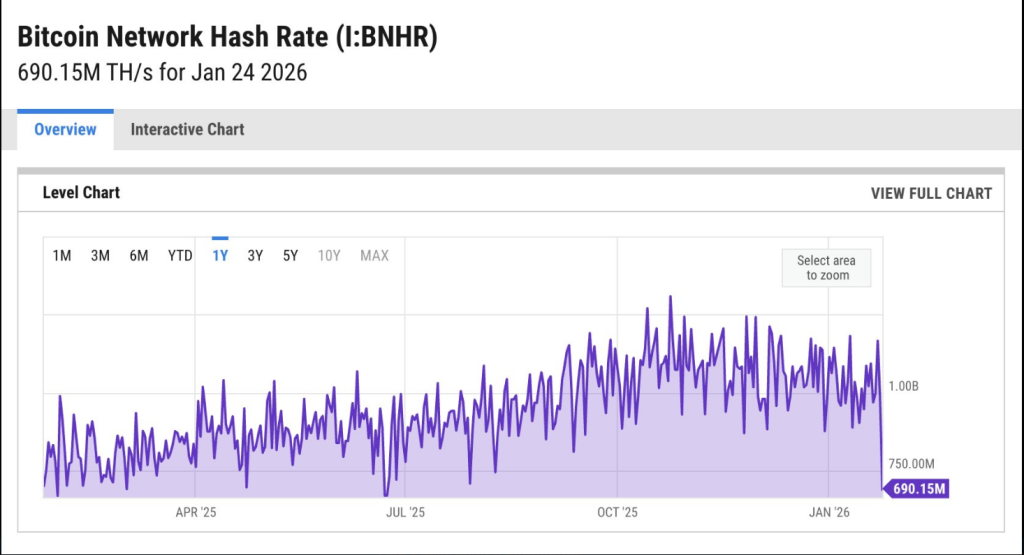
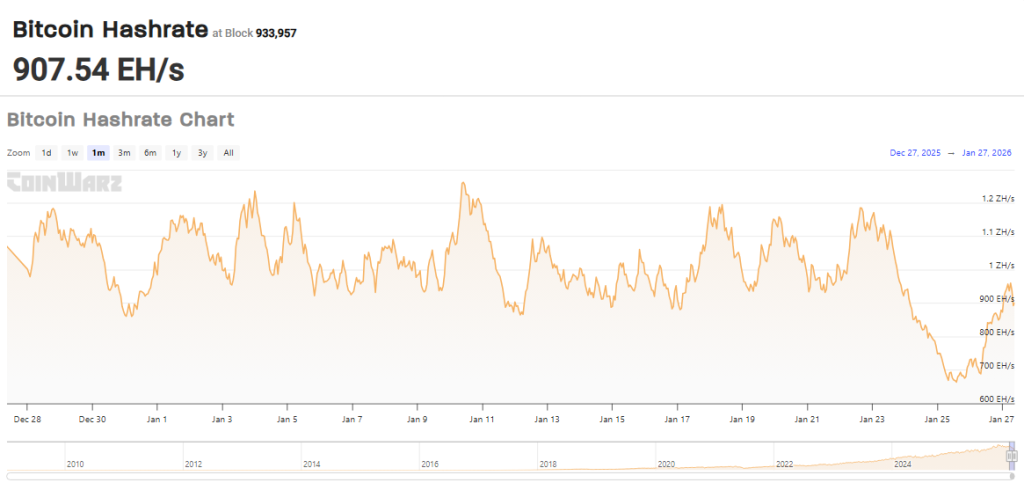
According to data from major mining trackers, the total network hashrate began a precipitous decline. By Sunday morning, the Bitcoin network had recorded a hashrate drop to approximately 663 EH/s (exahashes per second), a level not observed in the previous seven months. This represented a dramatic withdrawal of computing power from the blockchain, signaling that nearly 40% of global mining capacity had been effectively deactivated within a 24-hour window.
The recovery, however, was as swift as the decline. As the weather systems pushed eastward and maintenance crews worked to restore power, the network began to recalibrate. By Monday, January 26, the hashrate had rebounded significantly, climbing back toward the 854 EH/s mark. This “V-shaped” recovery served as a testament to the agility of modern mining hardware, which can be remotely shut down and restarted with surgical precision, allowing firms to return to full operational capacity as soon as grid conditions normalized.

Supporting Data: The Magnitude of the Shift
The scale of the disruption is best illustrated by the output reports from some of the industry’s largest publicly traded mining firms. Market analysts and blockchain intelligence firms, including CryptoQuant, monitored the daily production metrics of these companies as the storm hit. The data painted a sobering picture of temporary productivity loss:
- Marathon Digital (MARA): One of the industry’s giants, Marathon saw its daily Bitcoin production plummet from 45 BTC to a mere 7 BTC during the peak of the curtailment.
- Riot Platforms (RIOT): Daily output for the firm dropped from 16 BTC to 3 BTC.
- CleanSpark (CLSK): Production for the firm fell from 22 BTC to 12 BTC.
- IREN: Data indicated a sharp contraction, with daily production falling from 18 BTC to 6 BTC.
These figures underscore the sensitivity of the mining industry to localized energy events. With the U.S. Energy Information Administration (EIA) identifying over 130 dedicated, large-scale crypto mining sites across the country, the industry has become a dominant player in the energy markets of states like Texas. Given that the U.S. currently accounts for an estimated 38% of the global Bitcoin mining hashrate, domestic weather events are no longer just local news—they are global events that influence the security and stability of the entire Bitcoin network.
Official Responses and Strategic Curtailment
The decision by mining firms to power down was not solely a defensive reaction to infrastructure failure. Industry leaders and regional power authorities have increasingly viewed Bitcoin mining as a "demand response" tool.
Abundant Mines, an Oregon-based firm, was among the first to address the situation publicly, emphasizing that the pause was an intentional effort to assist regional utilities. By intentionally throttling their operations, these companies reduced the total load on the grid, preventing potential rolling blackouts that could have affected residential consumers during the sub-zero temperatures.
“The ability to scale back rapidly is a feature, not a bug, of our operational model,” a spokesperson for a regional mining cooperative noted. “When the grid hits a critical threshold, we are often the first to be signaled to power down. This prevents the grid from hitting a breaking point, and in return, we are often part of pre-negotiated energy contracts that recognize the value of this flexibility.”
This sentiment was echoed by grid operators in Texas, where the relationship between the Electric Reliability Council of Texas (ERCOT) and mining firms has become a subject of intense policy debate. In previous years, critics argued that miners strained the grid; however, this latest event demonstrated that miners can function as a "battery" of sorts, providing the grid with the necessary breathing room during extreme peak demand.
Implications for the Bitcoin Ecosystem
The events of this weekend have triggered a broader discussion regarding the future of decentralized mining and its relationship with legacy energy systems.
1. Revenue Volatility vs. Network Security
While the temporary hashrate drop raised concerns regarding the short-term revenue of mining firms, the Bitcoin network itself remained fundamentally secure. Bitcoin’s inherent difficulty adjustment mechanism ensures that regardless of the total hashrate, the protocol will continue to produce blocks at a steady cadence. The event served as a stress test for the network’s resilience, proving that even a massive, sudden withdrawal of power cannot compromise the integrity of the ledger.
2. Market Reaction and Price Action
Financial markets reacted with characteristic volatility. Bitcoin, which had been trading in the $88,300 range, saw price fluctuations linked to the combination of the mining news and wider geopolitical tensions. Earlier in the month, Bitcoin had tested resistance near $96,000, driven by global macro-uncertainty. As the storm hit, traders were forced to reconcile the temporary dip in miner revenue with the broader, long-term thesis for the asset. Despite the sharp decline in hashrate, there was no catastrophic liquidation, suggesting that investors have become increasingly comfortable with the cyclical nature of energy-related mining disruptions.
3. The Future of Energy-Intensive Computing
The reliance on industrial-scale mining in regions prone to extreme weather (such as the Texas panhandle) poses a strategic question for the industry: should miners diversify their geographic footprint further to avoid “concentration risk”? While the current model offers significant economic benefits through cheap energy, the risk of regional weather events acting as a "kill switch" for a large percentage of the network is a variable that institutional investors will likely account for in future risk models.
Conclusion: A Mature Relationship with the Grid
The winter storm of 2026 serves as a definitive case study in the evolution of Bitcoin mining. It has transitioned from a fringe activity to a massive, energy-integrated industry that is inextricably linked to the health of national power grids.
The fact that the network lost 40% of its power and yet continued to function without a hitch is perhaps the most significant takeaway for market observers. As the U.S. continues to solidify its role as the global hub for Bitcoin production, the symbiotic—and occasionally antagonistic—relationship between miners and energy providers will continue to define the industry’s growth.
For now, the mining fleet has roared back to life, the hashrate has stabilized, and the industry is already looking ahead to the next cycle. The event was a sharp reminder of the power of nature, but more importantly, it highlighted the robust, adaptive nature of the technology that powers the world’s most decentralized financial network. Whether through voluntary curtailment or forced outages, the Bitcoin network has proven once again that it is designed to endure even the harshest of winters.