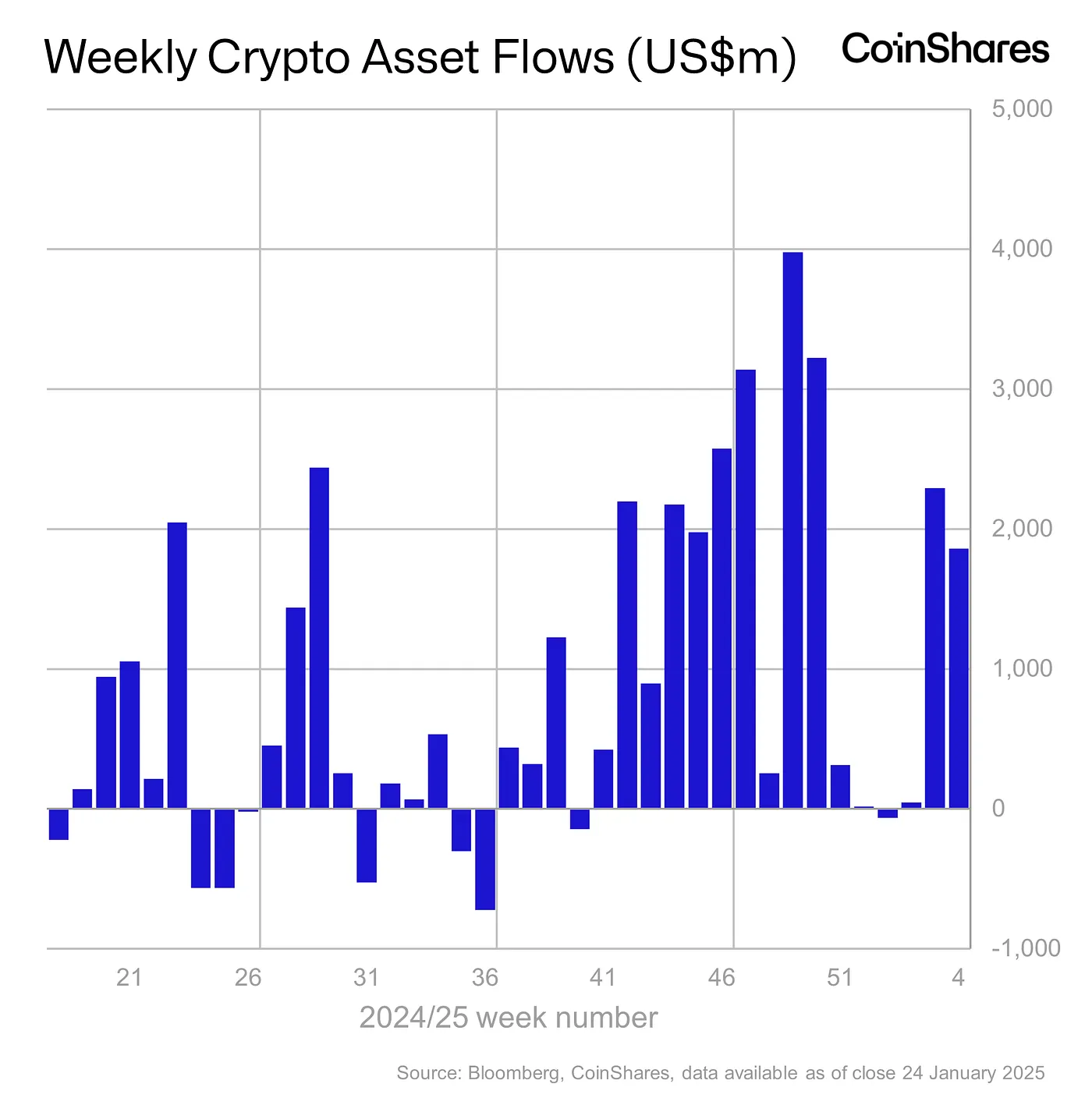
Institutional Crypto Exodus: Assessing the Impact of a $414 Million Weekly Liquidation
The landscape of digital asset investment witnessed a significant shift this week as institutional sentiment took a decidedly bearish turn. According to the latest comprehensive market intelligence report from CoinShares, institutional investors offloaded a staggering $414 million in Bitcoin and broader cryptocurrency assets. This movement marks the first major selloff in five weeks, signaling a tactical retreat as macroeconomic pressures and geopolitical anxieties converge to temper the optimism that has defined the early months of 2024.
As the industry grapples with this sudden liquidity drain, market analysts are scrutinizing whether this represents a temporary correction or the beginning of a sustained trend of capital flight.
The Main Facts: A Global Liquidation Event
The latest data from CoinShares highlights a stark contrast in regional sentiment. The $414 million in net outflows indicates that institutional players—ranging from hedge funds to asset managers—are moving to hedge against heightened risk.
The United States remains the primary epicenter of this capital exodus, recording a total of $445 million in outflows. This figure suggests that American institutional sentiment is currently the most sensitive to shifting Federal Reserve policies and inflationary data. In contrast, European and North American markets outside of the U.S. showed mixed results. While Switzerland recorded minor outflows of $4 million, there was a notable "buy-the-dip" strategy employed by institutional investors in Germany and Canada, which saw inflows of $21.2 million and $15.9 million, respectively.
This divergence suggests that while the broader market is experiencing a "risk-off" environment, pockets of institutional capital remain committed to long-term digital asset exposure, viewing current price volatility as a potential entry point rather than a signal to exit.
Chronology of Market Sentiment
To understand the current $414 million selloff, one must look at the preceding four weeks of aggressive accumulation. For nearly a month, the crypto market enjoyed a period of sustained institutional inflows, fueled by the launch of spot ETFs and a general belief that inflation was being adequately contained.
However, the tide began to turn as geopolitical tensions in the Middle East intensified. The fear of a prolonged conflict involving Iran served as a catalyst for a "flight to safety," with capital moving toward traditional assets like gold and U.S. Treasuries, often at the expense of more volatile asset classes like Bitcoin.
- Weeks 1-4: Sustained momentum characterized by high-volume inflows into Bitcoin ETFs and institutional product suites.
- The Inflection Point: Rising concerns over the Iran-Israel geopolitical friction, coupled with persistent CPI data suggesting inflation is stickier than initially anticipated.
- The Current Week: A decisive reversal in flows, characterized by the $414 million net outflow, marking a sharp pivot from the bullish sentiment of the prior month.
Supporting Data: Dissecting the Asset Breakdown
The distribution of the $414 million outflow reveals a targeted retreat from the industry’s two largest assets, though the impact was not uniform across the board.
Ethereum’s Weakness
Ethereum faced the most severe repercussions during this period, suffering $222 million in outflows. This represents a significant blow to the asset’s momentum, pushing its year-to-date flows into a net negative territory of $273 million. Market observers suggest that Ethereum’s underperformance relative to Bitcoin may be tied to ongoing regulatory uncertainty and the competitive pressure from other Layer-1 blockchains.
Bitcoin’s Resilience
Bitcoin, despite facing $194 million in outflows, remains in a much stronger year-to-date position than its counterparts, maintaining a cumulative inflow of $964 million for the year. This suggests that while institutional sentiment toward crypto as a whole has cooled, the conviction behind Bitcoin as a distinct asset class remains relatively robust. Interestingly, "Short-Bitcoin" products—designed to profit from price declines—saw an additional $4 million in inflows, confirming that some institutional participants are actively hedging their long positions.
Altcoin Variance
The altcoin market experienced a mixed reaction. Solana, often seen as a high-beta play, recorded $12.3 million in outflows, suggesting that institutional investors are currently prioritizing capital preservation over speculative growth. Conversely, XRP stood out as a clear outlier, attracting $15.8 million in inflows. This bucking of the trend suggests that specific regulatory developments or institutional interest in XRP’s cross-border payment utility may be decoupling it from the broader market’s downward pressure.
Official Responses and Analytical Perspectives
The investment community is currently divided on how to interpret these figures. CoinShares analysts have pointed toward the "prolonged Iran conflict" and "higher inflation" as the two primary drivers of the recent volatility.
"The correlation between geopolitical uncertainty and digital asset outflows is becoming increasingly pronounced," notes one senior market analyst. "Institutional investors, particularly those in the United States, have a low tolerance for volatility when the macroeconomic backdrop appears to be deteriorating."
However, others argue that the $414 million figure, while large, must be viewed in the context of the $129 billion in total assets under management (AUM). "When you consider that the total AUM sits at over $120 billion, this selloff represents a reduction of less than 0.5% of total institutional holdings," says a portfolio manager at a digital asset hedge fund. "This is a tactical rebalancing, not a capitulation."
Implications: What Comes Next?
The recent outflows present several critical implications for the crypto market moving into the next fiscal quarter.
1. The Sensitivity to Macroeconomics
The primary takeaway is that the crypto market has become inextricably linked to the traditional financial system. When U.S. markets react to CPI data or geopolitical news, digital assets are no longer shielded by their "digital gold" narrative. Institutional investors are treating crypto as a high-growth tech stock, which means it will likely remain sensitive to interest rate hikes and geopolitical instability in the near term.
2. The Geographic Divergence
The fact that Germany and Canada recorded inflows while the U.S. saw significant outflows suggests a potential fragmentation in market sentiment. If European institutional investors continue to buy the dip while U.S. investors remain skittish, we may see a shift in the primary liquidity centers for digital assets.
3. Regulatory and Structural Hurdles
The continued outflows from Ethereum suggest that the market is waiting for clearer signals regarding the regulatory status of smart-contract platforms. Without a definitive shift in the regulatory environment, large-scale capital may remain sidelined or focused exclusively on Bitcoin as a singular "safe haven" within the crypto ecosystem.
Conclusion
The $414 million institutional selloff serves as a sobering reminder of the volatility inherent in the digital asset space. While the year-to-date figures remain largely positive, the recent shift underscores the reality that institutional capital is highly reactive to the broader geopolitical and inflationary environment.
As we look toward the remainder of the year, market participants will be watching the next few weeks of data closely. Will the "buy the dip" sentiment seen in Canada and Germany spread back to the U.S., or will the current outflows evolve into a more sustained retreat? For now, the crypto market is in a period of consolidation, waiting for the next catalyst to determine whether the path of least resistance is back toward record highs or further toward the downside.
Disclaimer: The information provided in this article is for educational and informational purposes only and does not constitute financial, investment, or legal advice. The Daily Hodl is not an investment advisor, and the opinions expressed here are not recommendations to buy or sell any digital assets. Investors should conduct their own thorough due diligence and consult with a professional advisor before making any high-risk investments. All trading activities involve risk, and any losses incurred are the sole responsibility of the investor.