
The Great Capitulation: Why Bitcoin Miners Are Liquidating at Record Rates in 2026
The Bitcoin mining industry, once a bastion of long-term "HODLing," is facing its most existential crisis of the decade. As of early 2026, approximately 20% of the entire global mining sector is operating at a persistent loss. This staggering statistic serves as the primary catalyst for a massive, industry-wide sell-off that has seen publicly traded mining giants offloading their digital reserves at a pace unseen in the history of the asset class.
What was once a strategic reserve is now being treated as a desperate source of operational liquidity. For the titans of the industry—including MARA, CleanSpark, Riot, Cango, Core Scientific, and Bitdeer—the mission has shifted from growth and accumulation to basic survival: keeping the lights on in an increasingly unforgiving economic climate.
The Economics of Exhaustion: Profits Squeezed to the Bone
The central metric governing the health of the mining industry is "hashprice"—the daily revenue a miner generates per unit of computing power (petahash per second). Since July 2025, this figure has been in a steady, agonizing decline. According to data from Hashrate Index, the hashprice has plummeted to approximately $33 per petahash per second per day.
For many miners, the breakeven threshold sits at roughly $35. This $2 discrepancy may appear negligible to the casual observer, but in an industry defined by massive economies of scale and razor-thin margins, it is catastrophic. Older hardware, which lacks the power efficiency of the latest ASIC (Application-Specific Integrated Circuit) models, has been rendered effectively obsolete, forced to power down or operate at a deficit that drains the balance sheets of even the most well-capitalized firms.
A Historic Sell-Off
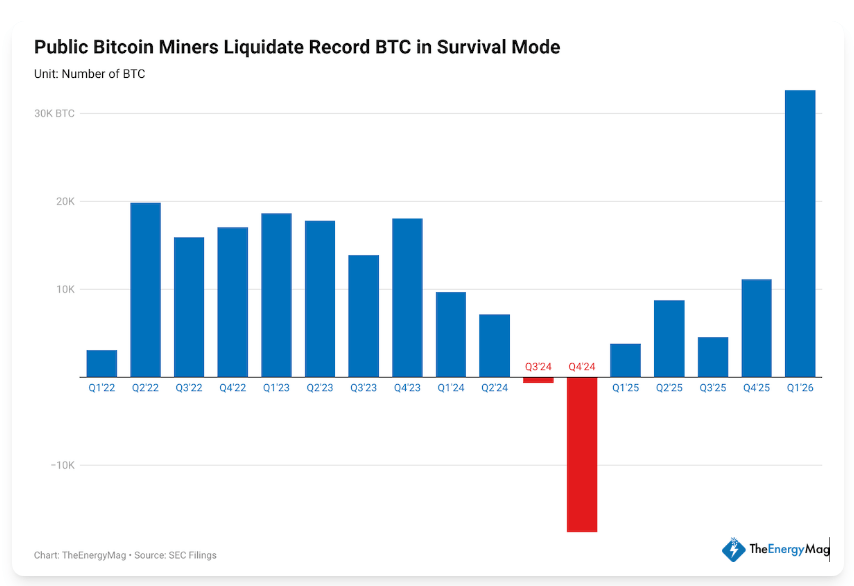
The scale of the exodus from Bitcoin holdings is historic. According to reporting by TheEnergyMag, major publicly traded miners collectively dumped more than 32,000 BTC during the first three months of 2026 alone. To put this figure into perspective:

- Surpassing 2025: The Q1 2026 sell-off eclipsed the total volume of Bitcoin sold by these same companies across the entirety of 2025.
- An Unwanted Record: The figure smashed the previous quarterly record of 20,000 BTC, which was established during the Q2 2022 market chaos following the collapse of the Terra-Luna ecosystem.
This massive influx of supply onto the open market has created a "supply-side shock" that has contributed to the persistent downward pressure on Bitcoin’s price throughout the first quarter.
Chronology of a Crisis: How We Got Here
The current plight of the miners is not a sudden accident, but the result of three compounding macroeconomic and technical forces that have converged over the last twelve months.
1. The Hashrate Arms Race
The Bitcoin network hashrate—the total computational power securing the blockchain—has continued to climb. While this is objectively good for network security, it is brutal for individual miners. As the hashrate increases, the difficulty of mining a block rises proportionally. For miners, this means that even if they maintain the same amount of hardware, their share of the total "pie" (block rewards) is shrinking.
2. The Post-Halving Reality
The most recent halving event, which slashed the block reward for miners by 50%, acted as a permanent reduction in revenue. In the past, miners could offset these revenue cuts through transaction fees or by waiting for price appreciation. In 2026, however, the combination of lower rewards and a stagnant Bitcoin price has stripped away the cushion that historically protected miners during market downturns.
3. Economic Headwinds
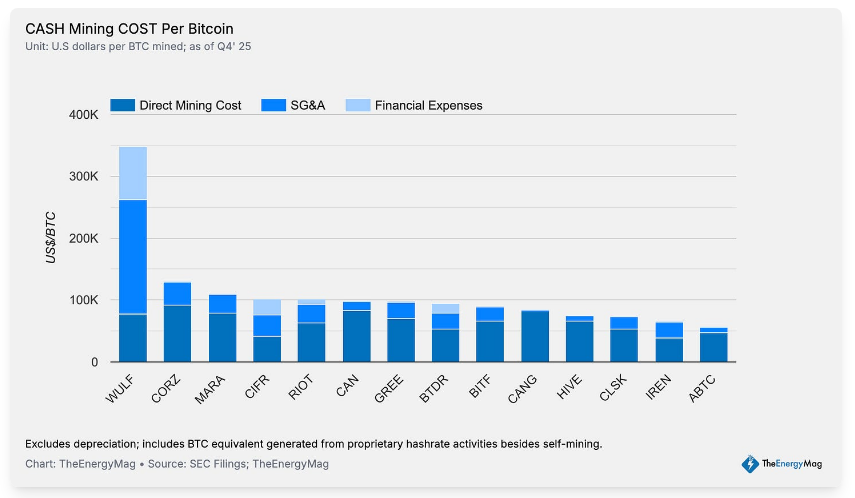
Broader economic factors, including fluctuating energy costs and the high cost of capital, have made it difficult for miners to upgrade their fleets. Companies that relied on debt to finance massive data center expansions in 2024 are now finding that the interest payments are consuming the very revenue meant to sustain their operations.
Supporting Data: The Draining of Miner Reserves
The selling pressure observed in Q1 2026 is merely the latest chapter in a long-term trend of reserve depletion. According to long-term monitoring by CryptoQuant, the aggregate Bitcoin holdings held by miners have been in a state of consistent decline since 2023.
At the end of 2023, miners collectively held approximately 1.86 million BTC. As of April 2026, that figure has dipped to roughly 1.8 million BTC. While the decline appears incremental on a month-to-month basis, the trendline is unmistakable. Miners are no longer the "strong hands" they were once perceived to be; they are now forced sellers, feeding the market supply to fund electricity costs, hardware procurement, and administrative overhead.
The Analyst Perspective
CoinShares, in its comprehensive Q1 2026 Bitcoin Mining Report, issued a stark warning: the "capitulation phase" is likely far from over. The firm noted that high-cost operators, particularly those tethered to expensive power purchase agreements (PPAs) or outdated infrastructure, should prepare for further financial distress. Unless there is a significant, sustained rally in the price of Bitcoin, the industry will likely see a wave of bankruptcies, mergers, or forced acquisitions throughout the remainder of the year.
The Divergence: Corporate Treasuries vs. The Miners
As the mining industry exits its positions, a counter-narrative is forming in the corporate sector. While miners are liquidating to survive, institutional treasury buyers are treating the current market suppression as a generational buying opportunity.
The most notable figure in this landscape remains Michael Saylor’s firm, Strategy. As the largest corporate holder of Bitcoin, Strategy has remained defiant in the face of the miners’ sell-off. Saylor’s public communication strategy—often cryptic but highly anticipated—has signaled that the firm is preparing for another massive acquisition. By sharing charts depicting the company’s relentless accumulation, Saylor is reinforcing the "digital gold" narrative, effectively positioning his firm to absorb the supply being cast off by the distressed mining sector.
Implications: A New Era for Bitcoin Infrastructure
The current state of the mining industry has profound implications for the future of the Bitcoin network.
Consolidation of Power
The primary outcome of the 2026 crisis will be massive consolidation. Small-to-mid-sized mining operations that lack the balance sheet to weather the current hashprice slump are being pushed out. Their market share is being absorbed by larger, more efficient players who can afford to operate at a lower cost per kilowatt-hour. In the long run, this may lead to a more professionalized, albeit more centralized, mining landscape.
A Shift in Market Sentiment
For years, the "Miner Reserve" metric was used as a barometer for market sentiment—if miners held, the price was expected to rise. The decoupling of this metric from price performance suggests that the market is maturing. Bitcoin is increasingly moving into the hands of permanent capital (corporate treasuries and ETFs) and away from entities that are inherently tied to operational overhead.
The Resilience Test
Ultimately, this period serves as a stress test for the Bitcoin network’s incentive structure. The protocol is designed to ensure that mining remains profitable for those who are the most efficient. The current "capitulation" is, in many ways, the system working exactly as intended: flushing out inefficient participants and recalibrating the network to a new, more sustainable equilibrium.
As 2026 progresses, the industry will be watching two key indicators: the Bitcoin price trajectory and the mining difficulty adjustment. Should the price fail to recover, we may witness a permanent change in the geography and ownership of Bitcoin mining power. For now, the narrative is clear: the miners are selling, the corporations are buying, and the market is undergoing a painful but necessary structural transformation.