Institutional Appetite for Crypto Surges: A Mid-Year Analysis of Global Fund Flows
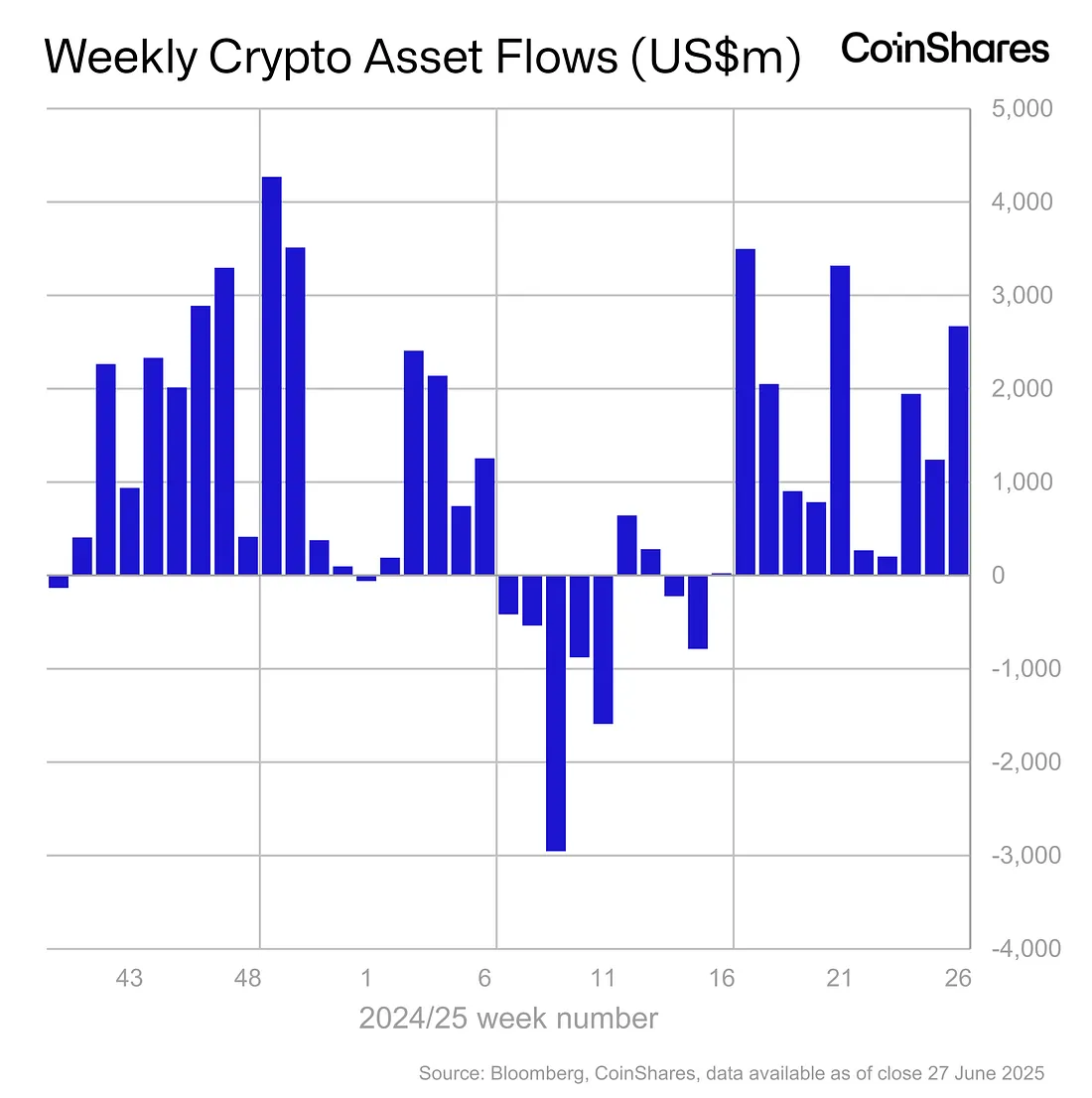
The landscape of institutional finance is undergoing a profound transformation as digital assets increasingly transition from the periphery of speculative trading into the core of mainstream investment portfolios. According to the latest "Digital Asset Fund Flows Weekly" report from CoinShares, institutional investment vehicles have witnessed an extraordinary surge, recording over $16 billion in inflows over the past eleven weeks alone. This influx of capital serves as a definitive indicator of shifting sentiment, suggesting that institutional players are positioning themselves for a future where cryptocurrencies act as a foundational asset class.
As we reach the midpoint of 2025, the data indicates that the first six months of the year have seen performance levels rivaling the historic highs of 2024. Despite macroeconomic headwinds, regulatory ambiguity, and the inherent volatility of the crypto markets, the appetite for institutional-grade digital asset exposure remains robust, resilient, and remarkably consistent.
The State of Institutional Inflows: A Half-Year Overview
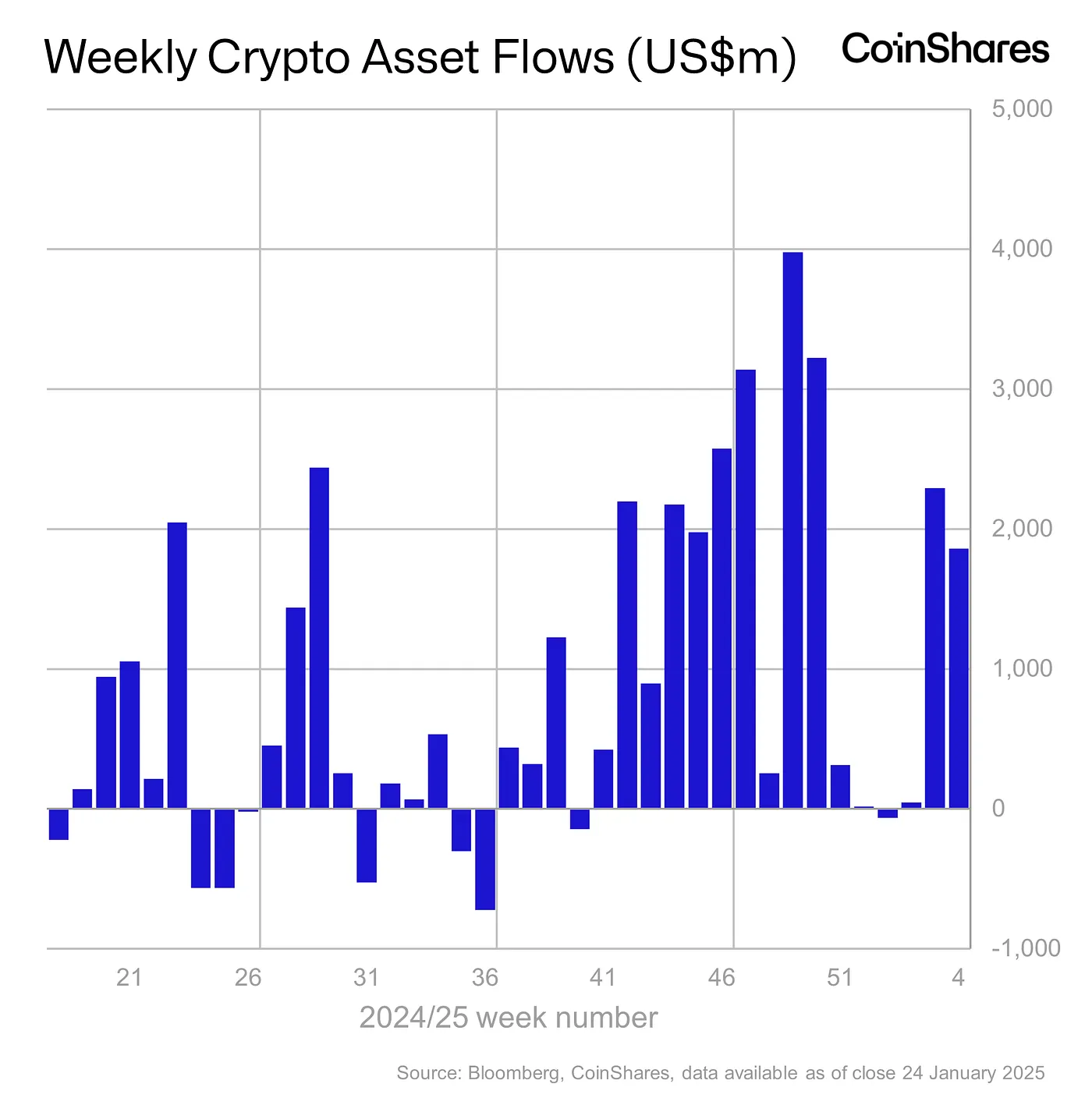
The momentum observed in the first half of 2025 is not merely a transient spike but part of a sustained trend that has characterized the year thus far. CoinShares reports that total inflows for the first six months of the year stand at a level just shy of the $18.3 billion recorded during the same period in 2024.
Last week specifically served as a microcosm of this trend, with $2.7 billion flowing into digital asset investment products. This figure marks the eleventh consecutive week of positive net inflows, culminating in a cumulative $16.9 billion added to these vehicles since mid-April. This sustained buying pressure suggests that institutional investors—ranging from hedge funds to pension managers and family offices—are viewing current price levels as an attractive entry point, or at the very least, are committed to long-term exposure regardless of short-term price fluctuations.
Chronology of the 2025 Surge
To understand the scale of this institutional shift, one must look at the timeline of the year’s activity. The first quarter of 2025 set the stage, with early institutional enthusiasm bolstered by expectations surrounding monetary policy shifts. As the second quarter progressed, the narrative shifted toward the role of digital assets as a hedge against global uncertainty.
- Q1 2025 Foundations: Initial months saw a steady accumulation as institutional desks began rebalancing portfolios to include Bitcoin-focused vehicles.
- The Q2 Acceleration: Throughout April and May, the frequency of "inflow weeks" increased, with the $16 billion cumulative figure over the last eleven weeks representing the most concentrated period of capital deployment in the firm’s recent history.
- June Performance: The month of June acted as a capstone, with strong inflows offsetting minor regional outflows in jurisdictions like Hong Kong, where market participants moved capital to capture better liquidity in Western or neutral jurisdictions.
Supporting Data: Regional Disparities and Asset Preferences
The geography of capital flow provides a critical lens through which to view institutional confidence. The United States remains the undisputed engine of this growth, accounting for $2.65 billion in net inflows last week. This dominance is largely attributed to the maturity of the U.S. ETF market, which provides a seamless, regulated, and tax-efficient vehicle for institutional capital.
Global Regional Analysis:
- The U.S. Dominance: With $2.65 billion in inflows, the U.S. continues to attract the lion’s share of global institutional liquidity.
- European Stability: Switzerland and Germany posted respectable figures of $23 million and $19.8 million, respectively, highlighting that despite the fragmentation of European regulatory frameworks, institutional interest remains stable.
- Outflow Trends: Conversely, markets such as Canada, Hong Kong, and Brazil experienced net outflows. Notably, Hong Kong recorded $132 million in outflows throughout June, a figure likely tied to local market corrections and a rotation of assets toward the deeper, more liquid U.S.-based markets.
Asset Class Breakdown:
Bitcoin continues to command the loyalty of institutional investors, accounting for 83% of all inflows last week, totaling $2.2 billion. This overwhelming preference suggests that for many institutions, Bitcoin is the "digital gold" equivalent—a core holding meant for long-term storage of value rather than speculative day trading.
Furthermore, the data regarding "Short-Bitcoin" products is telling. These products saw an additional $2.9 million in outflows, bringing year-to-date outflows to $12 million. This consistent exit from short positions provides empirical evidence that institutional sentiment toward the premier cryptocurrency is overwhelmingly bullish.
Ethereum, too, is enjoying a significant resurgence in interest. Recording $429 million in inflows last week, Ethereum continues to benefit from its utility-driven narrative and its position as the bedrock of decentralized finance (DeFi) and institutional smart-contract applications.
Official Perspectives and Expert Commentary
CoinShares, in their analysis, attributes this "resilient investor demand" to two primary macro-level drivers: heightened geopolitical volatility and the prevailing uncertainty surrounding global monetary policy.

As central banks navigate the delicate balance of inflation control and economic growth, investors are increasingly skeptical of fiat currency stability. When geopolitical tensions flare—be it through regional conflicts or trade disputes—the traditional "flight to safety" into gold is now increasingly being mirrored by a "flight to digital scarcity" via Bitcoin.
Industry analysts emphasize that this is a "structural shift." The presence of institutional-grade custody solutions, combined with the integration of digital assets into traditional brokerage interfaces, has removed the friction that previously prevented conservative institutions from entering the space.
Implications for the Future of Finance
The implications of $16.9 billion in institutional capital flowing into digital assets within a single eleven-week window are profound.
1. Market Maturity and Volatility
As institutional capital becomes a larger percentage of the total market capitalization, the nature of crypto-asset volatility is likely to change. While institutional investors are not immune to market panic, their investment horizons are generally longer than those of retail day traders. This shift could lead to a more stable, albeit still dynamic, price discovery process.
2. Regulatory Normalization
The scale of these inflows forces the hand of regulators. Governments can no longer treat digital assets as an "experimental" class when institutional giants are allocating billions of dollars to them. This will likely accelerate the development of comprehensive regulatory frameworks, which in turn will invite even more capital into the space.
3. The Institutionalization of Bitcoin and Ethereum
Bitcoin is increasingly being categorized by institutional risk committees as a standard component of a balanced portfolio. The decline in short-interest indicates that the "Bitcoin is a bubble" narrative has lost its hold in the boardroom. Similarly, the interest in Ethereum signals that institutions are looking beyond simple store-of-value assets and are ready to back infrastructure-level blockchain technologies.
4. A Multi-Asset Future
While Bitcoin and Ethereum currently lead, the institutional path is being paved for a broader multi-asset approach. As institutional familiarity with the underlying blockchain technology grows, we can expect to see increased interest in secondary assets that offer smart-contract utility, decentralized storage, and tokenized real-world assets (RWAs).
Conclusion: The Path Ahead
The data provided by CoinShares is a clear snapshot of a market in transition. We are witnessing the maturation of digital assets as they move from the fringes of "alternative" investing to the heart of global finance. With $16.9 billion in fresh capital deployed in less than three months, it is evident that the institutional sector is no longer just observing; it is actively participating.
As the second half of 2025 unfolds, the trajectory of these inflows will be the primary barometer for the health of the broader crypto ecosystem. Investors, analysts, and stakeholders alike should remain vigilant, tracking these institutional movements as they continue to dictate the pace and direction of the digital asset economy. While volatility remains an inherent trait of the market, the sustained, high-volume commitment from institutional players suggests that the foundation of the digital asset market has never been stronger.
Disclaimer: This report is for informational purposes only and does not constitute financial, investment, or legal advice. The digital asset market is highly volatile and involves significant risk. Investors are urged to conduct their own due diligence and consult with qualified financial advisors before making any investment decisions. The Daily Hodl is not responsible for any financial losses incurred based on the content of this article.