Market Psychology vs. Reality: Decoding the Crypto "Extreme Fear" Sentiment and the Path Forward
In the high-stakes arena of digital assets, few voices carry as much weight—or controversy—as that of Binance founder Changpeng Zhao (CZ). Amid a period of heightened market volatility and dwindling investor confidence, a simple, age-old mantra from the former CEO has sparked a firestorm of debate across the crypto landscape. As Bitcoin struggles to reclaim its lost momentum, CZ’s recent social media intervention serves as a stark reminder of the psychological chasm that separates successful market participants from those who succumb to the industry’s characteristic boom-and-bust cycles.
The CZ Doctrine: A Timely Reminder of Contrarian Logic
On November 29, 2025, CZ took to social media to offer what he termed an "unpopular opinion," though it is one steeped in the foundational principles of value investing: "It’s better to sell when there is maximum greed, and buy when there is maximum fear."
This blunt directive arrived at a pivotal juncture for the market. Bitcoin, which had captivated the world by reaching an all-time high of $126,000 in October, found itself reeling, trading at approximately $91,780. The sentiment shift was palpable; the euphoria of the previous month had evaporated, replaced by a cold, grinding uncertainty. By weighing in, CZ was not merely offering financial advice; he was challenging the emotional impulses that drive retail and institutional traders alike to make the most destructive errors: buying at the peak of FOMO (Fear Of Missing Out) and panic-selling at the absolute nadir of a cycle.
Chronology of the "Extreme Fear" Cycle
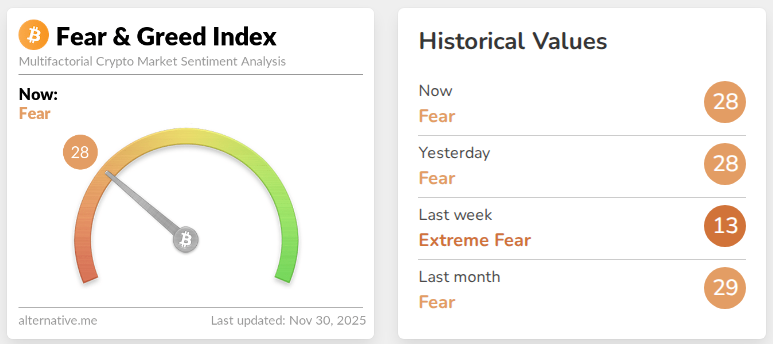
To understand the weight of CZ’s words, one must look at the data characterizing the preceding weeks. The market has been trapped in a state of paralysis, dictated by the Crypto Fear & Greed Index, a barometer that quantifies investor sentiment.

- Mid-November: The market began a downward slide, with the index consistently flashing "Extreme Fear."
- November 22: The situation reached a nadir as the index hit a yearly low of 10. For eighteen consecutive days, the market remained gripped by this state of extreme fear—a duration that many seasoned analysts described as unusually deep.
- Late November: The index finally clawed its way up to 20, technically moving out of the "Extreme Fear" threshold, yet the underlying sentiment remained fragile.
- Present Day: Market participants are now debating whether this move signifies a genuine trend reversal or merely a brief pause in a larger, more bearish structural shift.
The psychological toll of this period has been profound. Analyst Matthew Hyland characterized this stretch as the "most extreme fear level" of the current market cycle. His assessment resonated with many, as traders argued that the label "extreme" was, in fact, an understatement for the level of capitulation witnessed during the mid-November slump.
Supporting Data: Sentiment and Liquidity Metrics
While market psychology provides the narrative, quantitative data provides the structure. The current state of the market is best illustrated by a confluence of indicators that suggest a tug-of-war between retail trepidation and institutional accumulation.
The Coinbase Premium Shift
A significant development occurred on November 30, when the Bitcoin Coinbase Premium Index finally turned positive after 29 consecutive days of being in the red. The Coinbase premium—which tracks the price difference between Bitcoin on Coinbase and the global average—is a vital metric for gauging institutional demand in the United States.
For nearly a month, the negative premium signaled that heavy selling pressure was dominating the US markets, with investors prioritizing liquidity and risk mitigation. The shift to a positive reading (0.0255%) suggests that the tide may be turning. A positive premium historically correlates with increased institutional involvement, a recovery in dollar liquidity, and a tentative return of confidence among professional investors.
Altcoin Season and Market Focus
Data from Santiment tracking social media chatter indicates that the broader conversation has shifted away from the "hype" surrounding altcoins. The Altcoin Season Index currently sits at 22/100, reflecting a market that is overwhelmingly favoring the relative safety of Bitcoin over speculative smaller-cap projects. Discussions are dominated by macro-volatility and institutional movements rather than the exuberance typically associated with bull markets.
Official Responses and Expert Analysis
The reaction to CZ’s statement was immediate, highlighting the disconnect between the theory of contrarian trading and the reality of human behavior.
The Psychology Gap
Many traders took to social media to acknowledge that while they understand the "buy low, sell high" logic, the emotional reality of executing such trades is drastically different. One observer noted that "emotion often beats logic in real trading," highlighting that even the most technically proficient traders often find themselves paralyzed when prices fall, fearing that a "dip" will turn into a "collapse."
Expert Warnings: History vs. Macro-Headwinds
Nicola Duke, a respected market analyst, pointed out a recurring historical pattern: over the past five years, every instance of extreme fear has been followed by a local bottom within a few weeks. This offers a glimmer of hope for bulls.
However, Bitwise researcher André Dragosch provided a sobering counter-perspective. He warned that the current pricing is not happening in a vacuum. It is being heavily influenced by a global growth outlook that reflects "recession-level" conditions—the most bearish macro setting since 2020 and 2022. According to Dragosch, while the "extreme fear" indicator is a powerful tool, it must be weighed against these fundamental macroeconomic risks that could exert downward pressure on risk assets for the foreseeable future.
Implications for the Future of the Market
The current market environment presents a dichotomy between historical patterns and present-day realities.
- The Accumulation Phase: For long-term investors, the current "fear" environment serves as a classic accumulation zone. Those who follow the logic of institutional players—who often buy in bulk when prices are depressed and sentiment is at its lowest—view the current $91,000 range as a potential bargain compared to the October highs.
- The Risk of Protracted Stagnation: Conversely, the warnings from researchers like Dragosch cannot be ignored. If the global economy enters a sustained recession, even the most oversold assets can stay suppressed for longer than investors can maintain their solvency.
- Institutional Maturity: The recent shift in the Coinbase Premium is a critical signal. If US institutions continue to accumulate, it may provide the floor necessary for Bitcoin to decouple from the current climate of fear and begin a new leg upward.
Conclusion
Changpeng Zhao’s message, while simple, serves as a litmus test for the maturity of the crypto market. As Bitcoin hovers in a fragile state, the divide between those who trade on emotion and those who trade on historical cycles has never been wider.
The data—from the 29-day negative Coinbase premium finally flipping, to the extended stretch of extreme fear—suggests that the market is currently in a transition phase. While the "fear" has subsided slightly, the path forward is paved with both the opportunity of a recovery and the danger of macroeconomic instability. Ultimately, the market will continue to follow the path of least resistance, and as history suggests, that path is often paved by the very emotions that CZ urged traders to master. Whether this is a local bottom or a precursor to further decline remains to be seen, but the current data suggests that the market is, at the very least, ready to move beyond the depths of its recent despair.