
Beyond the Block Reward: How Bitcoin Miners are Pivoting to AI in a Post-Halving Landscape
The cryptocurrency mining industry is currently navigating its most significant paradigm shift since the inception of Bitcoin. Following the highly anticipated—and arguably disruptive—halving event in April 2024, the fundamental economics of the sector have undergone a radical transformation. With block rewards slashed by 50%, miners are confronting a harsh reality: their traditional business model, predicated solely on the extraction of digital gold, is no longer sufficient to guarantee profitability.
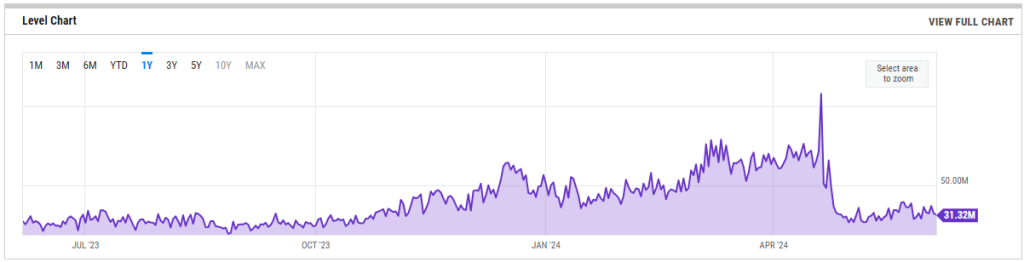
As daily revenues plummeted by over 70% in the immediate aftermath of the halving, the industry has been forced to innovate or perish. The solution, increasingly, lies in the convergence of blockchain infrastructure and artificial intelligence (AI). This transition represents not just a pivot, but a fundamental metamorphosis of the mining sector into high-performance computing (HPC) providers.
The Chronology of a Crisis: Why the April 2024 Halving Was Different
To understand the current state of the mining industry, one must first look at the mechanics of the April 2024 halving. Historically, halvings—the programmed reduction of Bitcoin issuance—have served as catalysts for price appreciation. However, the 2024 event occurred during a period of unique macroeconomic complexity.
In the months leading up to April, miners aggressively expanded their operations, buoyed by the rising price of Bitcoin and the promise of Ordinals and Runes protocol activity. However, when the block subsidy dropped from 6.25 BTC to 3.125 BTC, the "buffer" that many companies relied upon evaporated overnight.

By May 2024, the sector began to show signs of extreme stress. Hashrate—the total computational power securing the Bitcoin network—began to stagnate and, in some regions, decline. Smaller, less efficient operators, particularly those running older-generation ASIC rigs, found themselves operating at a loss. This necessitated an urgent industry-wide pivot. Mining firms, which had spent years optimizing for a singular purpose, realized their massive data centers, high-voltage power contracts, and cooling infrastructure were perfectly suited for the burgeoning AI compute market.
The AI Pivot: A New Beacon of Hope
The explosive growth of artificial intelligence, spearheaded by the success of OpenAI’s ChatGPT and the massive compute requirements of Large Language Models (LLMs), has created a "demand explosion" for high-performance data centers. For Bitcoin miners, this is a fortuitous alignment of needs.
AI requires massive amounts of power and specialized hardware—infrastructure that Bitcoin miners already possess in abundance. Companies like Bit Digital have been at the forefront of this shift, reporting that over 30% of their revenue is now derived from AI-related services. Other industry heavyweights, including Hut 8 and Hive Digital Technologies, are aggressively retooling their facilities to accommodate the power-hungry demands of AI training and inference.
This transition is not merely a side hustle; it is a strategic hedge against the volatility of the crypto market. By diversifying into AI, miners can transform their business models from pure-play crypto exposure to infrastructure-as-a-service (IaaS), providing a more stable, predictable cash flow that is less tethered to the whims of the Bitcoin price.

Supporting Data: The "Hash Ribbon" and Miner Capitulation
The current market environment is characterized by what analysts call "miner capitulation." This is best illustrated by the Hash Ribbons indicator, a metric that tracks the health of the mining ecosystem by comparing short-term and long-term moving averages of the network’s hashrate.
When the short-term average falls below the long-term average, it signals that miners are disconnecting their machines—a phenomenon known as capitulation. Recent spikes in this indicator confirm that the post-halving environment has flushed out weaker, less efficient operators. While this is painful for the individual firms involved, historical data suggests it is a necessary cleansing of the network.
According to research from crypto hedge firm Capriole Investments, these periods of intense miner selling pressure often serve as a "tempting Bitcoin buy signal." The logic is sound: when miners capitulate, the "mining pressure"—the constant selling of freshly minted BTC to cover electricity and hardware costs—begins to subside. As this supply-side pressure eases, the market is often primed for a recovery, provided there is corresponding institutional demand.
Official Responses and Strategic Diversification
Industry leaders have been vocal about the necessity of this pivot. Adam Sullivan, CEO of Core Scientific, has emphasized that the shift toward AI is a structural evolution, not a temporary trend. "The shift to AI allows us to create a diversified business model with more predictable cash flows," Sullivan stated. This sentiment is echoed across the C-suites of major mining firms, many of which are now positioning themselves as "digital infrastructure" companies rather than simple crypto miners.
The implications for these firms are profound. By integrating AI, they are effectively unlocking the "option value" of their physical assets. A data center that was once limited to the binary outcome of Bitcoin mining can now serve multiple sectors, including cloud rendering, scientific simulation, and AI model training. This versatility is becoming the primary metric by which investors judge the longevity of a mining firm.
Implications for the Broader Crypto Ecosystem
What does this mean for the future of Bitcoin? Firstly, it suggests that the "mining" of the future will be a hybrid industry. While the network will always rely on Proof-of-Work, the miners themselves will likely become the backbone of the AI era.
Secondly, the "Mass Exodus" of inefficient miners is actually a bullish indicator for the remaining, more sophisticated players. With fewer, more efficient competitors, the remaining entities can command a larger share of the network’s remaining block rewards, potentially stabilizing their crypto-denominated revenue while their AI revenue continues to scale.
Furthermore, the re-engagement of institutional investors—who are increasingly viewing Bitcoin through a "risk-on" lens—suggests that the long-term outlook for the asset remains robust. As these institutions look for ways to gain exposure to both the digital asset class and the AI revolution, mining stocks that have successfully diversified become highly attractive investment vehicles.
Conclusion: A Metamorphosis, Not an End
The narrative that the Bitcoin mining sector is dying post-halving is a superficial reading of a much deeper, more complex transformation. While the era of easy profits from simple mining operations has effectively closed, the era of industrial-scale compute has begun.
The industry is currently in a state of flux, balancing the immediate pressure of reduced rewards against the long-term potential of the AI revolution. As miners evolve, the network itself becomes more resilient, powered by companies that are no longer just custodians of the blockchain, but architects of the next generation of digital infrastructure.
For the long-term bull, this period of transition is not a reason for alarm. It is a sign of maturity. The Bitcoin mining industry is shedding its inefficiencies and integrating into the global tech economy in a way that ensures its relevance for decades to come. The "Miner Metamorphosis" is not just about survival; it is about establishing a new foundation for the digital age.
Disclaimer: The information provided in this article is for educational purposes only and does not constitute financial, investment, or trading advice. Cryptocurrency investments are subject to high volatility and significant risk. Readers are encouraged to conduct their own thorough research and consult with a professional financial advisor before making any investment decisions.