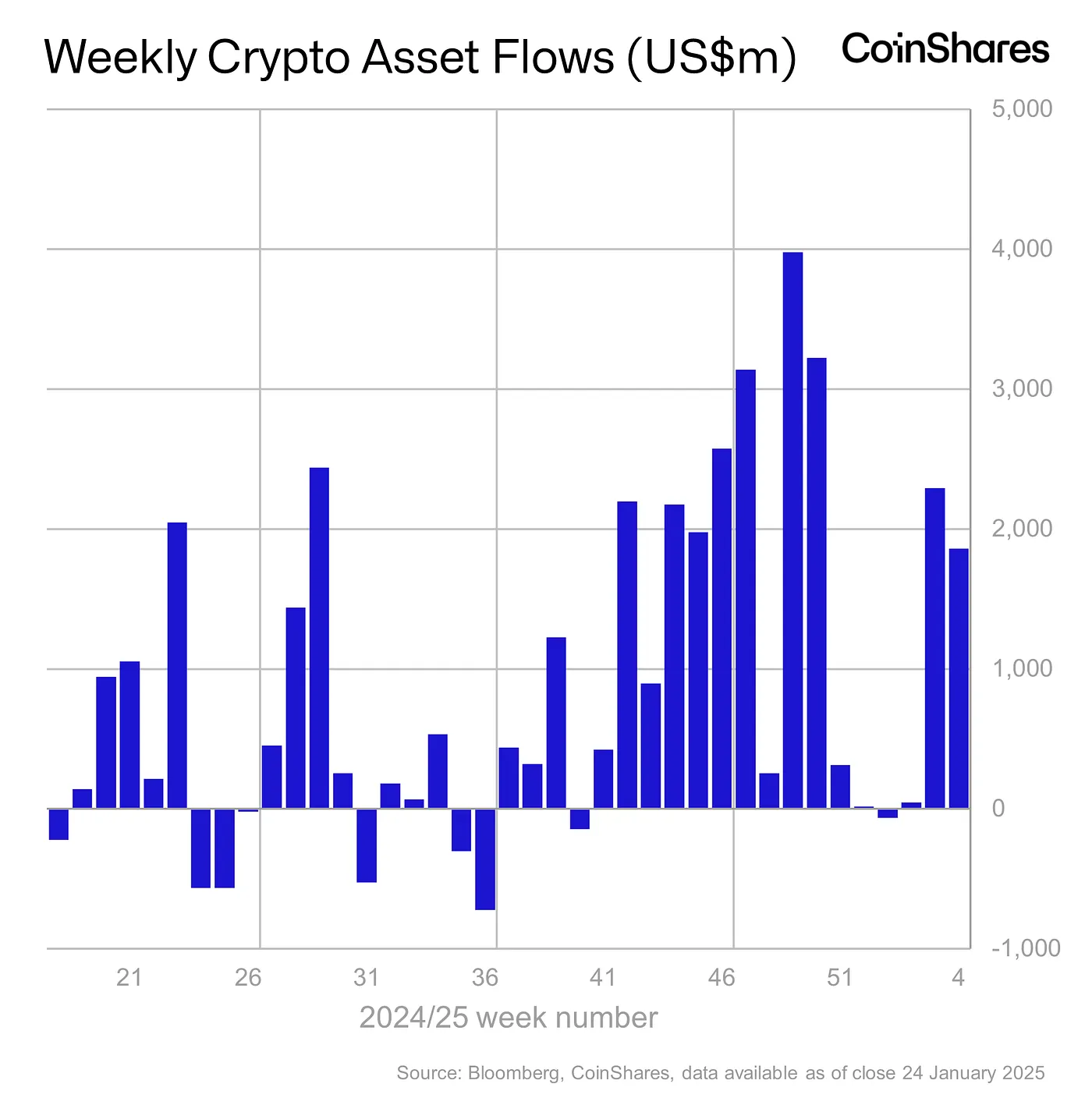
Institutional Exodus: Crypto Markets Face $414 Million Weekly Outflow Amid Rising Geopolitical Tensions
The global cryptocurrency market, which has spent the better part of the year riding a wave of institutional optimism and ETF-driven inflows, has hit a significant speed bump. According to the latest "Digital Asset Fund Flows" report from CoinShares, institutional investors have executed a sharp pivot, withdrawing a net total of $414 million from digital asset investment products over the past week.
This retreat marks the first significant selloff in five weeks, signaling a shift in sentiment as macro-economic pressures and geopolitical anxieties begin to weigh heavily on professional portfolio managers. As investors recalibrate their risk exposure, the market is grappling with the dual realities of persistent inflation and the deepening conflict in the Middle East.
The Main Facts: A Global Shift in Sentiment
The $414 million outflow serves as a stark reminder of the sensitivity institutional capital holds toward global stability. The data, compiled by CoinShares, tracks the movement of capital into and out of investment vehicles such as ETPs (Exchange Traded Products) and institutional-grade crypto funds.
The primary driver behind this sudden reversal appears to be a "risk-off" environment. Investors, traditionally quick to allocate to Bitcoin and Ethereum during periods of market exuberance, are now liquidating positions to preserve capital. The United States, which has been the primary engine of the recent bull run—largely due to the successful launch of Spot Bitcoin ETFs—has now become the primary source of the selling pressure, accounting for $445 million in outflows.
Conversely, the market is showing signs of regional divergence. While US-based funds saw heavy liquidations, investors in Europe—specifically Germany and Canada—demonstrated a "buy the dip" mentality, injecting $21.2 million and $15.9 million respectively into digital asset products.
Chronology: From Euphoria to Caution
To understand the current state of the market, one must look at the trajectory of the last two months.
- Early Q1: The crypto market enjoyed a sustained rally as institutional adoption solidified, driven by the approval and rapid growth of US-based Spot Bitcoin ETFs. Inflows were consistent, pushing total Assets Under Management (AUM) to record highs.
- Mid-March: As inflationary data in the US began to show "stickiness," the Federal Reserve signaled that interest rate cuts might be delayed. This led to a cooling of speculative assets.
- Late March/Early April: The sudden escalation of the Iran-Israel conflict introduced a new, unpredictable variable into the equation. The uncertainty surrounding regional stability triggered a flight to safety, with many institutional desks choosing to exit volatile assets in favor of cash or traditional hedges like gold.
- The Current Week: The $414 million outflow represents the culmination of these stressors, forcing a broad-based liquidation across major cryptocurrencies, most notably Ethereum and Bitcoin.
Supporting Data: Dissecting the Asset Breakdown
The damage was not evenly distributed across the crypto landscape. A deep dive into the CoinShares report reveals clear trends in how different assets are being treated by institutional portfolios.
The Ethereum Slump
Ethereum faced the brunt of the institutional exodus, recording $222 million in outflows. This significant figure has pushed its year-to-date (YTD) net flows into the negative, standing at a deficit of $273 million. Market analysts suggest that this underperformance may be linked to ongoing uncertainty regarding the approval of a Spot Ethereum ETF in the United States, as well as concerns over the network’s scalability transition.
The Bitcoin Resilience
Despite a $194 million outflow for the week, Bitcoin remains in a relatively strong position. With $964 million in year-to-date inflows, the flagship cryptocurrency continues to be the bedrock of institutional portfolios. Furthermore, the $4 million inflow into "Short-Bitcoin" products suggests that while some investors are exiting their long positions, others are actively hedging against further downside risk, creating a more sophisticated, two-sided market.
The Altcoin Landscape
The performance of altcoins was mixed. Solana, which had enjoyed a period of significant growth, saw $12.3 million in outflows, reflecting a cooling in interest for the "Ethereum-killer" narrative. In a surprising turn of events, XRP managed to buck the trend, attracting $15.8 million in inflows. This suggests that certain pockets of the institutional market are betting on specific regulatory outcomes or project-specific developments rather than following the broader market trend.
Official Responses and Market Analysis
While major financial institutions rarely comment on their specific trading activities, the consensus among market analysts at firms like CoinShares is that this is a defensive move rather than a systemic rejection of the asset class.
"The macro environment is currently acting as a gravitational pull on digital assets," says a senior analyst at a leading digital asset firm. "When inflation data comes in hotter than expected and geopolitical risks spike, institutional algorithms are programmed to reduce leverage and exit high-beta assets. This is not necessarily a reflection of the long-term potential of blockchain technology, but rather a reflection of current liquidity requirements in the face of global uncertainty."
The total Assets Under Management (AUM) across the digital asset sector now sits at $129 billion. While this represents a decrease from the previous week’s highs, it is important to note that this is still a massive ecosystem compared to historical standards. The institutionalization of crypto is a process, not a destination, and temporary fluctuations are part of the market’s maturation.
Implications: What Comes Next?
The $414 million selloff has several long-term implications for the digital asset space:
1. Increased Correlation with Macro-Economics
The current selloff confirms that Bitcoin and Ethereum are increasingly trading in lockstep with traditional risk assets like tech stocks. As institutions become the dominant force in crypto, the industry must accept that it is no longer an "uncorrelated" asset class. It is now deeply integrated into the global financial plumbing, meaning global events—from Federal Reserve meetings to regional conflicts—will have an immediate impact on price action.
2. The "Buy the Dip" Opportunity
The fact that Germany and Canada saw net inflows suggests that the "smart money" is not universally exiting. There remains a significant cohort of investors who view price volatility as a discount. If the geopolitical situation stabilizes, we may see these institutional players re-enter the market, potentially creating a rapid V-shaped recovery.
3. Regulatory and Geopolitical Sensitivity
The conflict in the Middle East has proven that crypto is not immune to geopolitical shocks. Investors are looking for stability, and until the outlook on inflation and conflict becomes clearer, institutional desks are likely to maintain a defensive posture. This could lead to a period of "sideways" consolidation for Bitcoin as it searches for a new price floor.
4. The ETF Effect
The US ETF market has turned from a "buy-side" engine into a "sell-side" pressure point. For the first time, the massive flows in and out of ETFs are dictating market volatility. This is a double-edged sword: while it provides massive liquidity and legitimacy, it also introduces the risk of coordinated institutional selling.
Conclusion: The Maturation of the Market
While a $414 million outflow is significant, it is vital to keep this figure in perspective. In a market with $129 billion in AUM, these outflows represent a minor percentage of total holdings. The current selloff is a natural reaction to a high-pressure environment characterized by geopolitical instability and macroeconomic uncertainty.
For the retail investor, the message is clear: institutional capital is currently in a defensive crouch. As we move through the coming weeks, the market will likely be looking for signs of de-escalation in global conflicts and a cooling of inflationary pressure. Until then, investors should prepare for continued volatility, as the institutional "whale" activity continues to drive the price action of the entire digital asset space.
Disclaimer: The information provided in this article is for informational purposes only and does not constitute financial, investment, or legal advice. Cryptocurrency investments carry a high level of risk, and you should conduct your own thorough research before making any decisions. The Daily Hodl does not endorse the purchase or sale of any specific assets mentioned in this report. Your trades are your responsibility.