Winter Storms Expose the Fragility and Flexibility of the Bitcoin Mining Infrastructure
A powerful winter storm that swept across the United States this past weekend served as a high-stakes stress test for the American Bitcoin mining industry. As temperatures plummeted and power grids struggled to meet the surge in heating demand, major mining operations were forced to throttle or completely shutter their massive data centers. This tactical retreat triggered a significant, albeit temporary, contraction in the Bitcoin network’s global hashrate, highlighting both the vulnerability of mining infrastructure to extreme weather and the industry’s newfound role as a "flexible load" participant in national energy markets.
Main Facts: The Great Hashrate Contraction
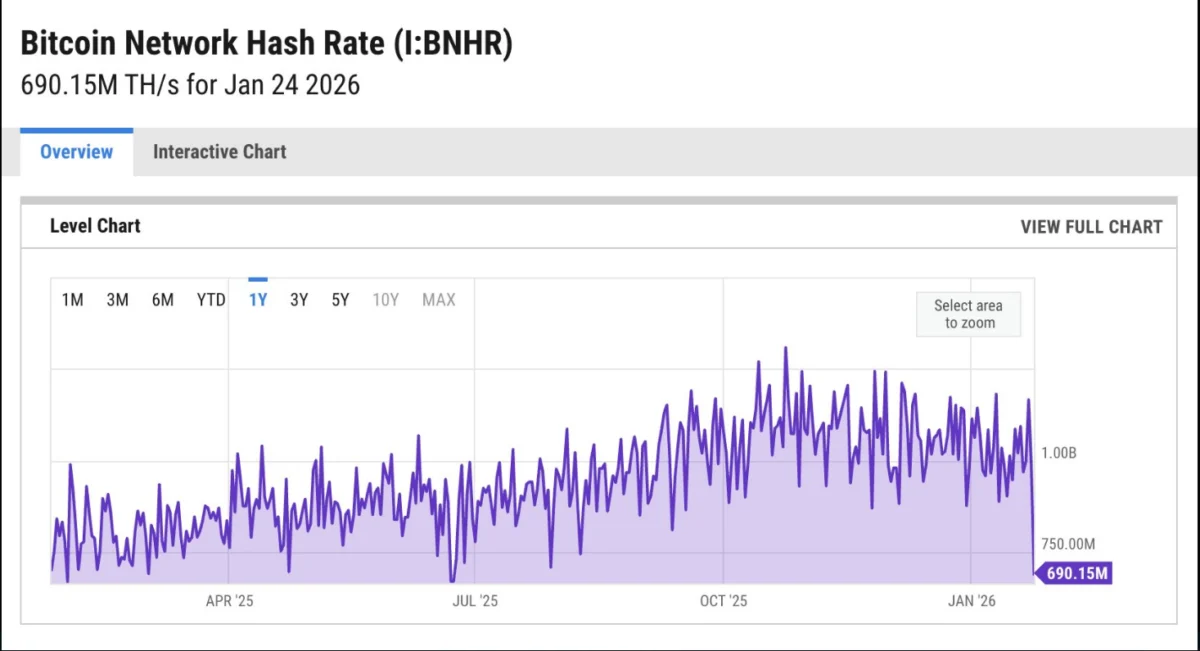
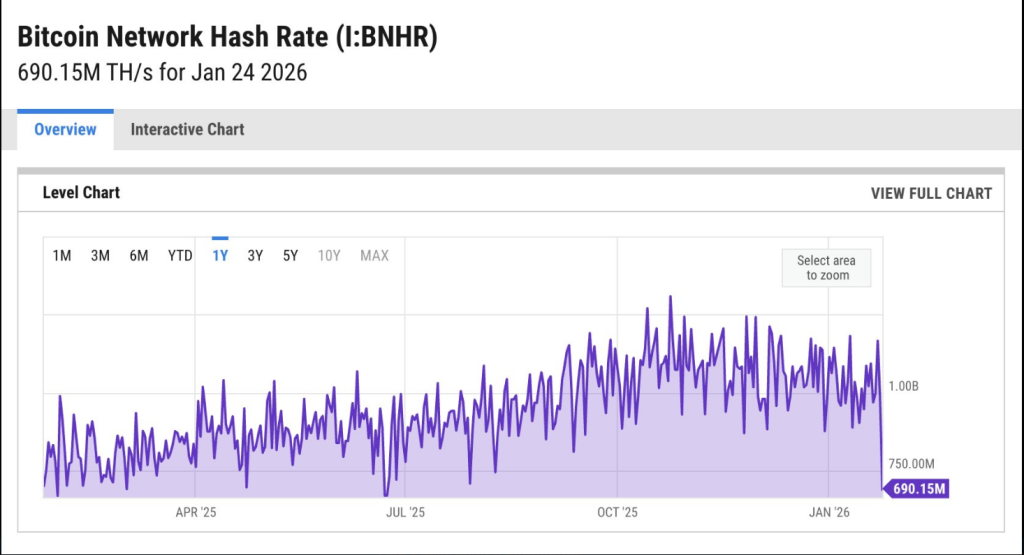
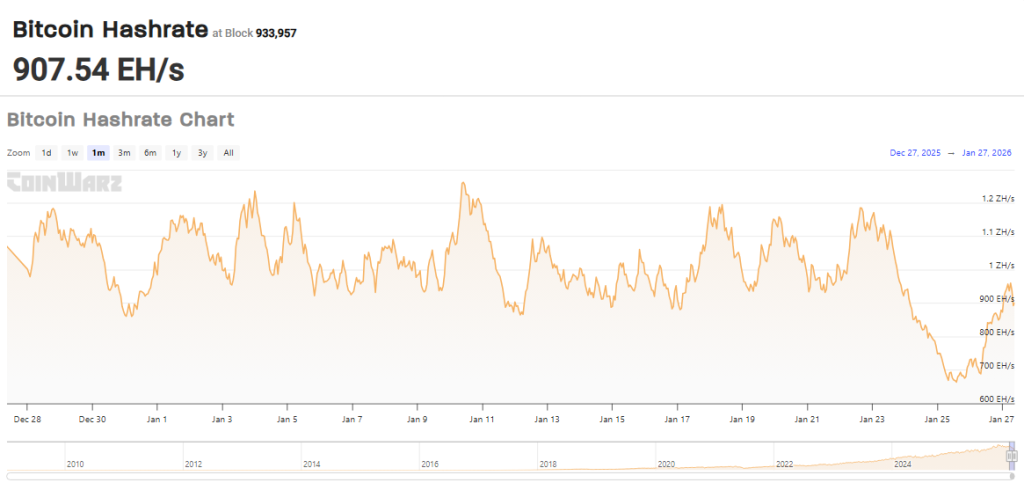
The weekend’s meteorological volatility, which gripped much of the central and southeastern United States, saw Bitcoin’s total network power drop to levels not witnessed in seven months. According to industry trackers, the network’s total hash power, which provides the computational security for the entire blockchain, plunged from its pre-storm highs to approximately 663 EH/s (exahashes per second) by Sunday.
The United States currently accounts for an estimated 38% of the global Bitcoin mining capacity, according to data from Hashrate Index. Because of this high level of centralization, any widespread disruption in the U.S. power market is immediately reflected in the global statistics. The sudden drop was not merely a technical glitch but an intentional, coordinated, or mandated reduction in power consumption by major mining firms to ensure that residential and industrial heat requirements were prioritized by regional power grids.
Chronology of the Crisis
The event unfolded over a high-pressure 72-hour window, beginning on Friday, January 23, 2026.
- Friday, Jan 23: As the front moved across Texas and the Southeast, local grid operators began issuing warnings. Mining firms, which maintain close relationships with regional utility providers, began initiating curtailment protocols. The hashrate began a perceptible, sharp decline as the first wave of rigs went offline.
- Saturday, Jan 24: The storm intensified. By mid-day, the full impact of the load shedding was felt. Mining rigs across the "Bitcoin belt"—a region spanning from Texas to the Appalachian states—were largely silent. The network experienced a significant drop in block production efficiency.
- Sunday, Jan 25: The nadir of the event. Hashrate hit a floor of 663 EH/s. In a social media post, mining firm Abundant Mines noted that roughly 40% of global capacity had been pulled offline within a 24-hour window, marking one of the most significant voluntary drops in the history of the asset class.
- Monday, Jan 26: As weather conditions improved and the electrical load on residential grids stabilized, miners began the process of ramping back up. By Tuesday, the network had largely recovered, with hashrate climbing back toward the 854 EH/s range.
Supporting Data: The Cost of Curtailment
The financial impact on mining operators was immediate and quantifiable. Analytics provided by market intelligence firms such as CryptoQuant and independent analysts like Julio Moreno illustrated a stark decline in daily Bitcoin production for some of the industry’s largest publicly traded entities.

Data shows that Marathon Digital (MARA), one of the industry’s largest players, saw its daily production plummet from 45 BTC to just 7 BTC at the height of the storm. Similarly, Riot Platforms (RIOT) saw its daily output fall from 16 coins to a mere three. Other operators experienced similar, if not more severe, contractions.
These figures demonstrate that while mining firms possess the agility to "flip a switch" to assist the grid, the economic trade-off is significant. By sacrificing production, these companies avoided massive electricity bills during peak demand pricing and, in many cases, satisfied contractual agreements with grid operators to provide "demand response" services—essentially being paid to turn off their machines when the grid needs the power most.
Official Responses and Operational Strategy
The "curtailment" strategy employed by miners is no longer an emergency measure; it is a fundamental component of the business model. The Federal Energy Information Administration (EIA) has noted the existence of over 130 dedicated large-scale crypto mining sites in the United States. These facilities act as massive, flexible electrical loads that can be trimmed or disconnected with near-instantaneous speed.
Mining operators have defended these actions as a matter of both corporate responsibility and economic pragmatism. In regions like Texas, where grid stability is a frequent political and social talking point, miners argue that they are the "ideal customer." Because they do not require constant power and can pause operations during price spikes or supply shortages, they argue they actually stabilize the grid by providing revenue to utility companies during low-demand periods and vacating the grid during emergencies.
"We operate as a dynamic load," said a representative from a major Texas-based mining facility. "When the grid is in trouble, we are the first to go. We don’t want to be the reason a hospital or a school loses power. We have the technology to pause in seconds, and we use it."
Implications for the Bitcoin Ecosystem
The events of this weekend have triggered a broader discussion regarding the future of Bitcoin mining and its integration into the national energy infrastructure.
1. Network Security Concerns
While a temporary drop in hashrate does not inherently make the Bitcoin network "insecure" in the sense of being hackable, it does slow down the rate at which blocks are produced. During this event, the network experienced longer-than-average block intervals. However, the Bitcoin protocol is designed to automatically adjust its "difficulty" to compensate for these shifts, ensuring the network remains robust even when significant percentages of the fleet go offline.
2. The Price-Hashrate Correlation
Market watchers noted that Bitcoin’s price remained relatively stable, hovering around $88,300 throughout the duration of the storm. Despite the volatility in production, the market did not panic. This suggests that investors are becoming increasingly sophisticated, recognizing that short-term production dips caused by weather are operational realities rather than indicators of a systemic failure.
3. Regulatory and Political Scrutiny
The reliance of the Bitcoin mining industry on grid-scale energy has made it a target for regulators. Critics often argue that miners consume too much power and threaten grid reliability. However, this weekend’s events provide a counter-narrative: miners acted as a shock absorber. By voluntarily cutting power, they likely prevented more widespread brownouts in areas where the infrastructure was already under heavy load. The industry is now leveraging this narrative to advocate for more favorable regulatory environments, arguing that they are a net benefit to grid operators.
4. Economic Resilience
The ability of companies like Marathon, Riot, and IREN to absorb a multi-day hit to their production highlights the evolution of the mining sector. A few years ago, such a disruption might have been catastrophic for smaller, less capitalized miners. Today, the industry is dominated by professionalized, publicly traded companies that have better balance sheets and more sophisticated risk management strategies, including hedging programs that protect them from the revenue volatility caused by temporary shutdowns.
Conclusion
The winter storm of late January 2026 was a vivid reminder that, despite its digital nature, Bitcoin is deeply tethered to the physical world—specifically, the global energy grid. The rapid, intentional drop in hashrate was not a sign of failure, but rather a demonstration of the industry’s operational maturity. By integrating themselves as flexible, responsive components of the U.S. power grid, Bitcoin miners have carved out a position that makes them essential to the energy transition, even while they remain vulnerable to the unpredictable whims of the climate.
As the network continues to scale and energy demand grows, the role of miners as a "load-balancing" resource will likely become a permanent, if controversial, fixture of the American energy landscape. The events of this weekend confirmed that the industry can withstand the pressure, but it also highlighted that for the Bitcoin network, power is not just a cost—it is the very foundation of its existence.