Institutional Capital Flight: How Trade Policy Volatility is Rewriting the Crypto Investment Landscape
In a period of unprecedented market sensitivity, the digital asset sector has found itself at the epicenter of a macroeconomic tug-of-war. According to the latest Digital Asset Fund Flows Weekly Report published by leading research firm and asset manager CoinShares, institutional investors have engaged in a massive deleveraging event, pulling hundreds of millions of dollars from crypto-linked investment products. The primary catalyst for this exodus? The administration’s aggressive tariff policies, which market analysts have labeled as economically "calamitous."
The current climate highlights the growing convergence between traditional geopolitical trade strategy and the nascent, high-beta world of cryptocurrency. As the U.S. government shifts its stance on global commerce, institutional capital—often characterized by its risk-averse nature—has opted for the sidelines, leading to a profound impact on the year-to-date performance of the entire asset class.
The Chronology of the Capital Exodus
The recent market turbulence did not occur in a vacuum. It is the culmination of weeks of escalating trade tensions that have fundamentally altered investor behavior.
Early February: The Onset of Sentiment Shift
The volatility began in early February, following the announcement of sweeping tariff proposals. As news of the trade war hit the wires, the initial enthusiasm that had buoyed crypto markets throughout the beginning of 2024 began to evaporate. Institutional investors, wary of the inflationary pressures and market instability typically associated with protectionist trade policies, began to unwind their positions.
Mid-March: The Acceleration of Outflows
By mid-March, the "selling pressure" had moved from a whisper to a roar. The sustained period of negative sentiment resulted in an unprecedented wave of withdrawals. Investors, fearing a broader economic downturn triggered by retaliatory tariffs from global trade partners, shifted capital into cash equivalents and traditional "safe-haven" assets.
April: Reaching the Inflection Point
The situation reached a critical juncture on April 8, when assets under management (AuM) hit their lowest point since early November 2024. However, the narrative shifted abruptly late in the week. Following President Trump’s surprise announcement of a temporary reversal of the most controversial tariffs, markets breathed a collective sigh of relief. This sudden policy pivot acted as a floor for the market, allowing total assets under management to recover to approximately $130 billion—a notable 8% increase from the April 8 trough.
Supporting Data: Dissecting the Capital Flow
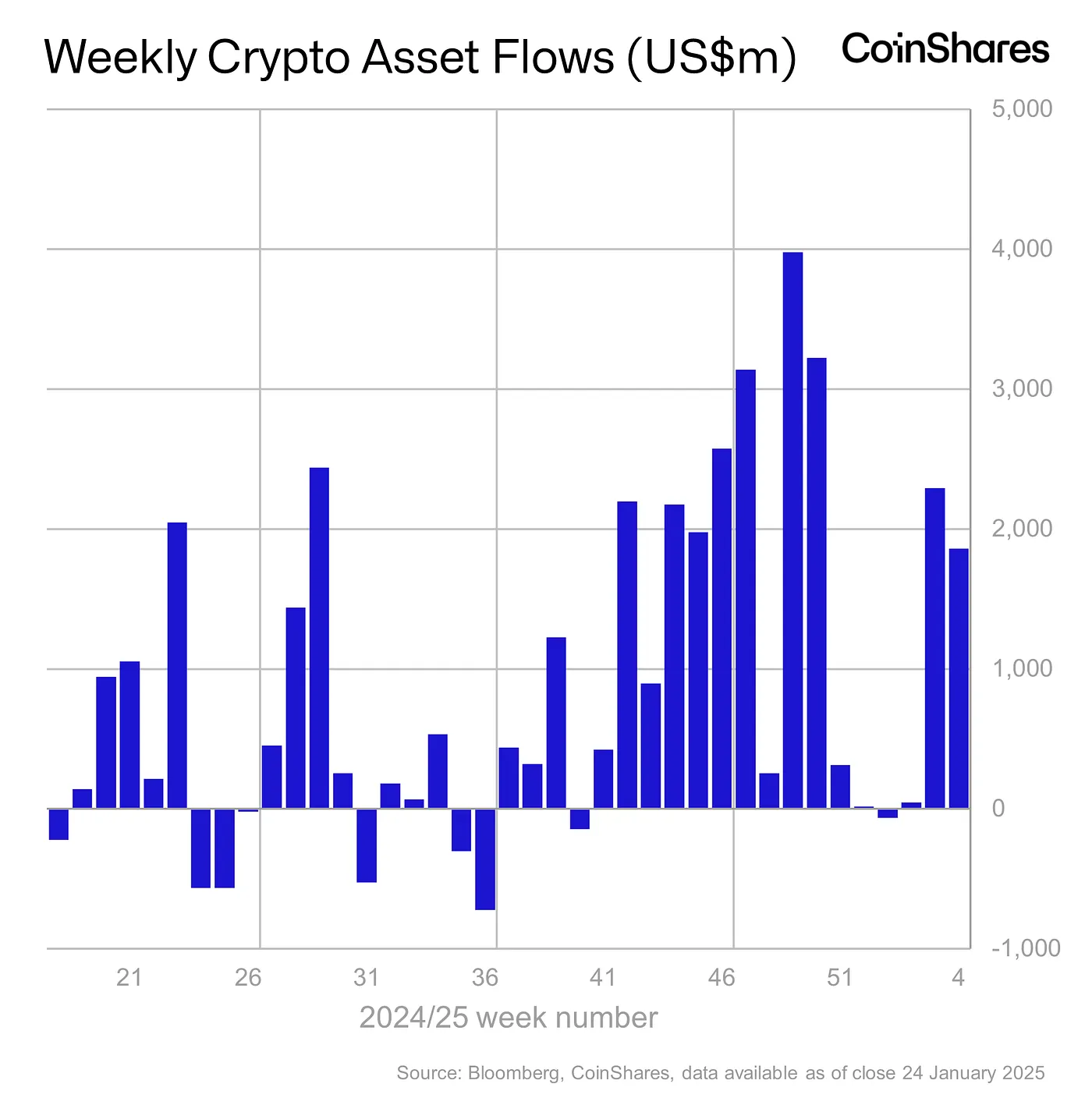
The data provided by CoinShares paints a stark picture of institutional sentiment. The last three weeks have seen a consistent, unyielding drain on digital asset investment products, totaling a staggering $795 million in net outflows.
The Erosion of Year-to-Date Gains
The sheer scale of this recent activity has had a devastating effect on the industry’s 2024 performance metrics. What began as a banner year for crypto inflows—driven by ETF approvals and institutional adoption—has been effectively wiped clean. Year-to-date inflows, which once signaled a bullish super-cycle, have been slashed to a mere $165 million. This reflects a total loss of roughly $7.2 billion in capital since the height of the sentiment peak in early February.
Asset-Specific Performance
While the market-wide trend was downward, the distribution of losses was heavily skewed toward the "blue-chip" digital assets:
- Bitcoin (BTC): As the primary vehicle for institutional exposure, Bitcoin bore the brunt of the liquidation. It saw a staggering $751 million in outflows in a single week.
- Ethereum (ETH): The second-largest asset by market capitalization saw outflows totaling $37.6 million.
- Altcoins (SOL, AAVE, SUI): Smaller, high-beta projects were not spared, with Solana ($5.1M), Aave ($0.78M), and Sui ($0.58M) seeing significant divestment.
Interestingly, there were pockets of resistance. Smaller altcoins bucked the trend, demonstrating a flight to niche assets that may be perceived as less correlated to macro trade policy. XRP led the pack with $3.5 million in inflows, while Algorand, Avalanche, and Ondo each saw moderate capital entries, suggesting that specific project fundamentals can occasionally override broader macro sentiment.
The "Calamitous" Tariff Factor: Economic Implications
The term "calamitous," as used by market observers, refers to the disruptive nature of the current tariff regime. By imposing heavy duties on imported goods, the administration has inadvertently introduced a level of unpredictability that is anathema to institutional capital allocation.

Why Tariffs Scare Institutional Crypto Investors
Institutional investors, such as pension funds, hedge funds, and family offices, rely on predictive modeling to allocate capital. Tariff wars introduce two primary risks that are detrimental to digital assets:
- Inflationary Volatility: Tariffs generally increase the cost of goods, potentially forcing the Federal Reserve to maintain higher interest rates for longer. High interest rates typically drain liquidity from risk-on assets like crypto.
- Global Trade Fragmentation: Cryptocurrency markets are global by nature. When trade barriers are erected, the seamless flow of capital across borders is impeded, creating regulatory and logistical hurdles that discourage large-scale investment.
The temporary reversal of these tariffs on April 8 served as a controlled experiment: the moment the policy threat was removed, the market responded with an immediate 8% rebound in AuM. This suggests that the crypto market is not fundamentally broken, but rather, it is being held hostage by current trade policy rhetoric.
Official Responses and Market Analysis
While the White House has framed the tariffs as a necessary tool to protect domestic industry, the financial sector has been vocal about the collateral damage. Financial analysts argue that while the intent of the tariffs may be nationalistic, the practical result is a "tax on the consumer" and a "deterrent to innovation."
CoinShares’ report serves as a formal documentation of this reality. By quantifying the $7.2 billion outflow, the report provides empirical evidence that institutional investors are not just "waiting and seeing"—they are actively repositioning their portfolios to account for the heightened risk environment.
The prevailing consensus among analysts is that until there is a clear, long-term resolution to the trade dispute, crypto markets will likely remain trapped in a range-bound cycle, characterized by sudden drops in response to "tariff talk" and fragile, policy-driven rebounds.
Looking Ahead: What Should Investors Expect?
The current state of the market presents a dichotomy. On one hand, the institutional "smart money" is clearly risk-off, fleeing the volatility created by trade policy. On the other, the quick recovery in AuM once the tariff reversal was announced suggests that there is still significant pent-up demand for digital assets.
Risk Management in a Volatile Era
For the average investor, this period serves as a masterclass in the importance of macroeconomic awareness. The days of treating cryptocurrency as a "decoupled" asset class are effectively over. Investors must now monitor:
- Trade Policy Updates: Any news regarding international tariff negotiations will likely have an immediate impact on asset prices.
- Liquidity Trends: Monitoring CoinShares’ weekly reports and other flow indicators is essential for understanding whether the current outflow is a temporary correction or the beginning of a prolonged bear trend.
- The "Hedge" Thesis: As trade wars threaten fiat currency stability and global supply chains, the argument for Bitcoin as a "digital gold" or hedge against geopolitical instability remains a core thesis for many institutional holders, even if it is currently being overshadowed by short-term trade volatility.
Conclusion
The "calamitous" tariff war has undeniably left its mark on the crypto industry, transforming what promised to be a breakout year into a defensive battle for liquidity. The record $7.2 billion in outflows is not just a statistic; it is a clear signal from the institutional sector that policy stability is a prerequisite for long-term growth.
As the market continues to grapple with the tension between domestic protectionism and the globalized nature of digital assets, volatility will remain the dominant theme. Investors who are able to parse through the noise of trade-war rhetoric and focus on the fundamental utility of the underlying blockchain technology may find opportunities, but they must be prepared for a rocky road ahead. The rapid recovery in early April offers a glimmer of hope, proving that while sentiment is fragile, the market’s resilience remains a defining, if tested, characteristic of the digital asset landscape.
Disclaimer: Opinions expressed in this report are for informational purposes only and do not constitute financial, investment, or legal advice. Digital assets, including Bitcoin and cryptocurrencies, are highly speculative and involve a significant risk of loss. Investors are encouraged to conduct their own due diligence and consult with a certified financial advisor before making any investment decisions. The Daily Hodl is not responsible for any losses incurred through trading or investment activities.