Institutional Capitulation: A Deep Dive into the $414 Million Crypto Selloff
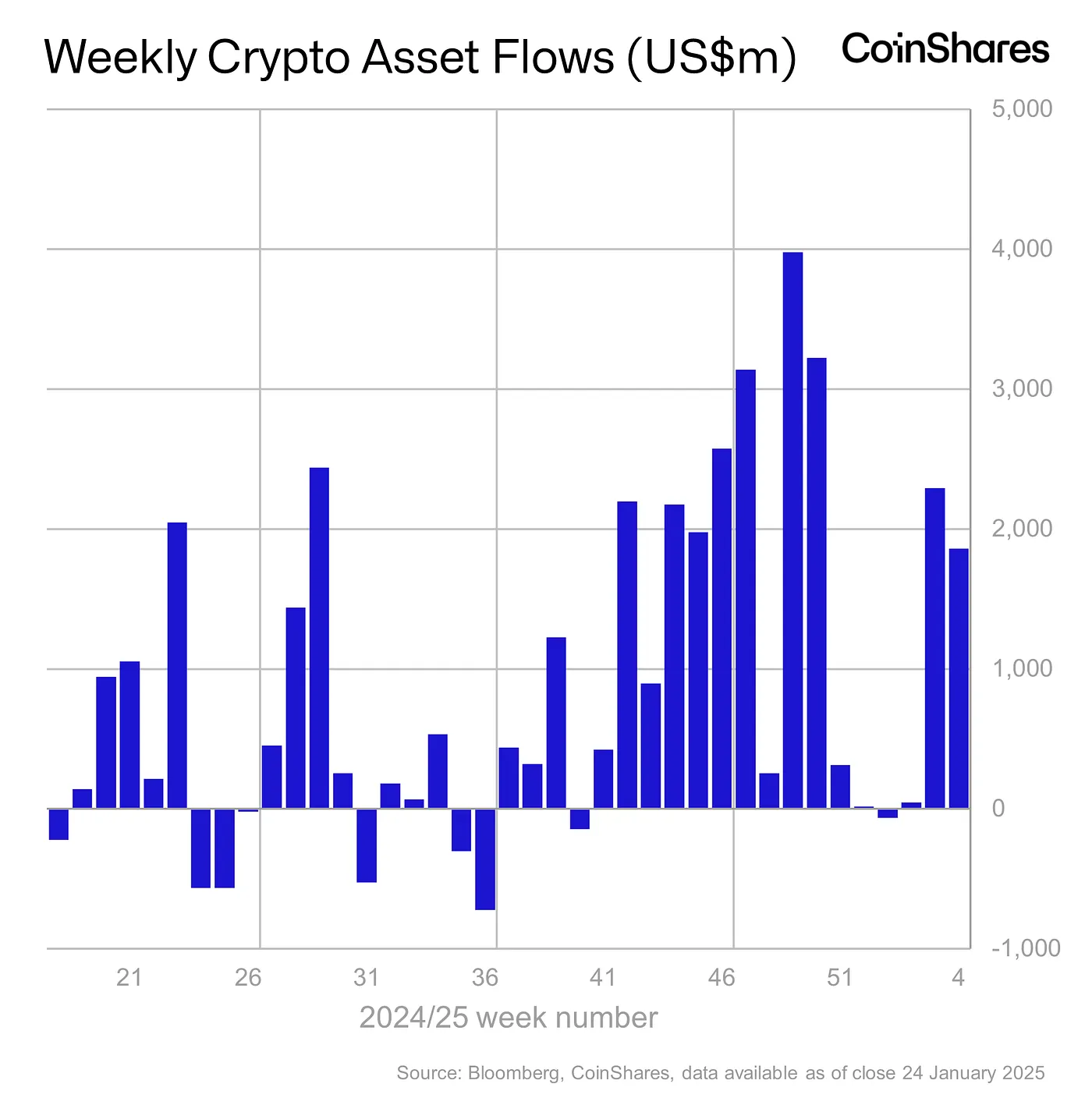
The global cryptocurrency market, long characterized by its inherent volatility, has faced a sharp cooling period as institutional sentiment shifts. According to the latest data from CoinShares, a leading asset management firm specializing in digital assets, institutional investors have executed a significant withdrawal from the crypto space, offloading a combined $414 million in a single week.
This move, which breaks a five-week streak of consecutive inflows, signals a pivot in risk appetite among the world’s largest financial players. As geopolitical tensions escalate and macroeconomic indicators signal lingering inflation, the appetite for high-risk assets is being recalibrated across global trading desks.
The Main Facts: A Sudden Reversal of Sentiment
The recent report from CoinShares highlights that the $414 million exodus represents a meaningful shift in institutional strategy. After weeks of optimistic accumulation, market participants have pivoted toward liquidity and risk aversion.
The primary catalysts for this movement appear to be twofold: the escalating conflict in Iran, which has injected a renewed sense of uncertainty into global markets, and the persistent specter of high inflation, which continues to challenge the "risk-on" environment that fueled crypto gains earlier this year.
Despite the broad-based selloff, the reaction was geographically uneven. The United States, often the engine of global institutional crypto flows, led the charge in exiting positions, recording $445 million in outflows. In contrast, other jurisdictions displayed a counter-cyclical approach, choosing to view the price correction as a "buying the dip" opportunity.
Chronology: How the Week Unfolded
The week was defined by a rapid transition from market optimism to defensive positioning.
- Early Week: The market opened with lingering sensitivity to Federal Reserve commentary regarding interest rates. Institutional desks remained cautiously optimistic, but internal risk models began flagging geopolitical stressors.
- Mid-Week: As headlines regarding the Iran conflict gained traction, institutional sell orders began to outweigh buy orders on major exchanges and via digital asset investment products. The selling pressure was consistent, preventing any significant price recovery.
- Late Week: The final tally from CoinShares confirmed the $414 million outflow. While the headline figure was negative, the data revealed a bifurcated market: while US investors were liquidating, European and Canadian counterparts were deploying capital, suggesting that institutional conviction is not uniform across global markets.
Supporting Data: Regional Divergence and Asset Performance
The breakdown of the data provides a granular look at where the institutional money is flowing—and, more importantly, where it is fleeing.
Geographic Disparities
The divergence in regional activity is perhaps the most striking element of the recent report.
- The United States: The epicenter of the selloff, with $445 million in net outflows.
- Switzerland: Recorded a relatively minor outflow of $4 million, suggesting that European sentiment remains more stable than the American market.
- Germany and Canada: These two nations served as the primary counter-balance. Germany recorded $21.2 million in inflows, while Canada added $15.9 million. This suggests that while American institutions were exiting to de-risk, investors in these regions were actively accumulating at lower price points.
Performance by Asset Class
Not all digital assets were treated equally during the recent liquidity crunch.
- Ethereum (ETH): The second-largest cryptocurrency suffered the most significant damage, recording $222 million in outflows. This heavy exodus has effectively pushed Ethereum’s year-to-date flows into a net negative position of $273 million, reflecting growing investor concern over its current market trajectory.
- Bitcoin (BTC): The flagship cryptocurrency saw $194 million in outflows. However, it is essential to contextualize this figure: despite the weekly loss, Bitcoin maintains a robust year-to-date inflow of $964 million. This indicates that while the current week was negative, the long-term institutional thesis for Bitcoin remains largely intact.
- Short-Bitcoin Products: Demonstrating that some institutional players are hedging their bets, short-Bitcoin products saw an additional $4 million in inflows, suggesting that certain investors are betting on further downside volatility.
- Solana (SOL): Faced $12.3 million in outflows, indicating a temporary retreat from high-beta altcoins.
- XRP: Bucking the broader trend, XRP emerged as a notable gainer, attracting $15.8 million in inflows. This suggests that specific project-based developments or regulatory optimism regarding Ripple may be decoupling the asset from broader market sentiment.
Official Perspectives and Analytical Context
Financial analysts note that this shift is characteristic of the "cautious institutionalization" of the cryptocurrency market. Institutions do not move with the same speculative fervor as retail traders; they are bound by mandates, risk-management protocols, and geopolitical exposure limits.
"The $414 million figure is not necessarily a signal of a total abandonment of the asset class," says a market analyst familiar with CoinShares’ data. "Rather, it is a reflection of institutional risk-off behavior. When the threat of conflict arises and inflation data suggests that interest rates may remain ‘higher for longer,’ institutional desks are required to trim their exposure to the most volatile assets in their portfolios."
The total Assets Under Management (AUM) for the industry now sits at $129 billion. While this represents a significant figure, the recent outflows highlight how quickly liquidity can evaporate when market sentiment turns sour.
Implications for the Future of Crypto Markets
The implications of this institutional rotation are far-reaching for the broader crypto ecosystem.
1. The "Risk-On" Correlation
The recent selloff reinforces the reality that, at least in the short term, Bitcoin and Ethereum remain highly correlated with traditional risk assets. When institutional capital feels threatened by macro headwinds, crypto is often the first "non-essential" asset class to be liquidated to shore up cash reserves.
2. The Resilience of the "Dip-Buyers"
The fact that Germany and Canada recorded inflows during a period of intense global selling is a bullish indicator for market maturity. It suggests that institutional adoption is globalizing and that the "conviction gap" is widening. While US-based funds may be reactive to domestic news cycles, European and North American institutional players appear to be taking a longer-term view.
3. Regulatory and Geopolitical Sensitivity
The conflict in Iran has served as a wake-up call for crypto investors who believed that digital assets were inherently decoupled from geopolitical strife. This event has proven that digital assets are deeply integrated into the global financial fabric. Moving forward, market participants should expect crypto volatility to remain inextricably linked to the global security climate.
4. The Institutional Playbook
The rise in short-Bitcoin product inflows alongside the increase in XRP investments suggests that institutional portfolios are becoming more sophisticated. They are no longer simply "long-only" investors in the space. We are seeing a transition toward a more nuanced approach, where institutions use derivatives to hedge against downturns while selectively increasing exposure to assets they perceive as undervalued or fundamentally strong.
Conclusion: A Temporary Correction or a New Trend?
The $414 million withdrawal serves as a stark reminder that institutional participation brings both liquidity and volatility. While the year-to-date inflows for Bitcoin remain positive, the recent shift in momentum cannot be ignored.
The market is currently in a state of "wait and see." If geopolitical tensions in the Middle East subside and inflation data provides a clearer path for central bank policy, we may see this capital return to the market as quickly as it left. However, if macroeconomic uncertainty persists, the institutional retreat could deepen, leading to further price pressure across the crypto landscape.
Investors are advised to remain vigilant, keep a close watch on macroeconomic indicators, and maintain a diversified strategy. The crypto market has proven its resilience time and time again, but for now, the institutions have made their stance clear: in times of uncertainty, capital preservation takes precedence over the potential for high-risk returns.
Disclaimer: The information provided in this article is for educational and informational purposes only and does not constitute financial, investment, or legal advice. Cryptocurrency investments involve a high degree of risk, and you should perform your own due diligence before making any financial decisions. The Daily Hodl and its contributors are not responsible for any losses incurred through trading or investment activities.