Institutional Capital Floods Crypto Markets: $16.9 Billion Inflow Streak Signals Resilient Market Sentiment
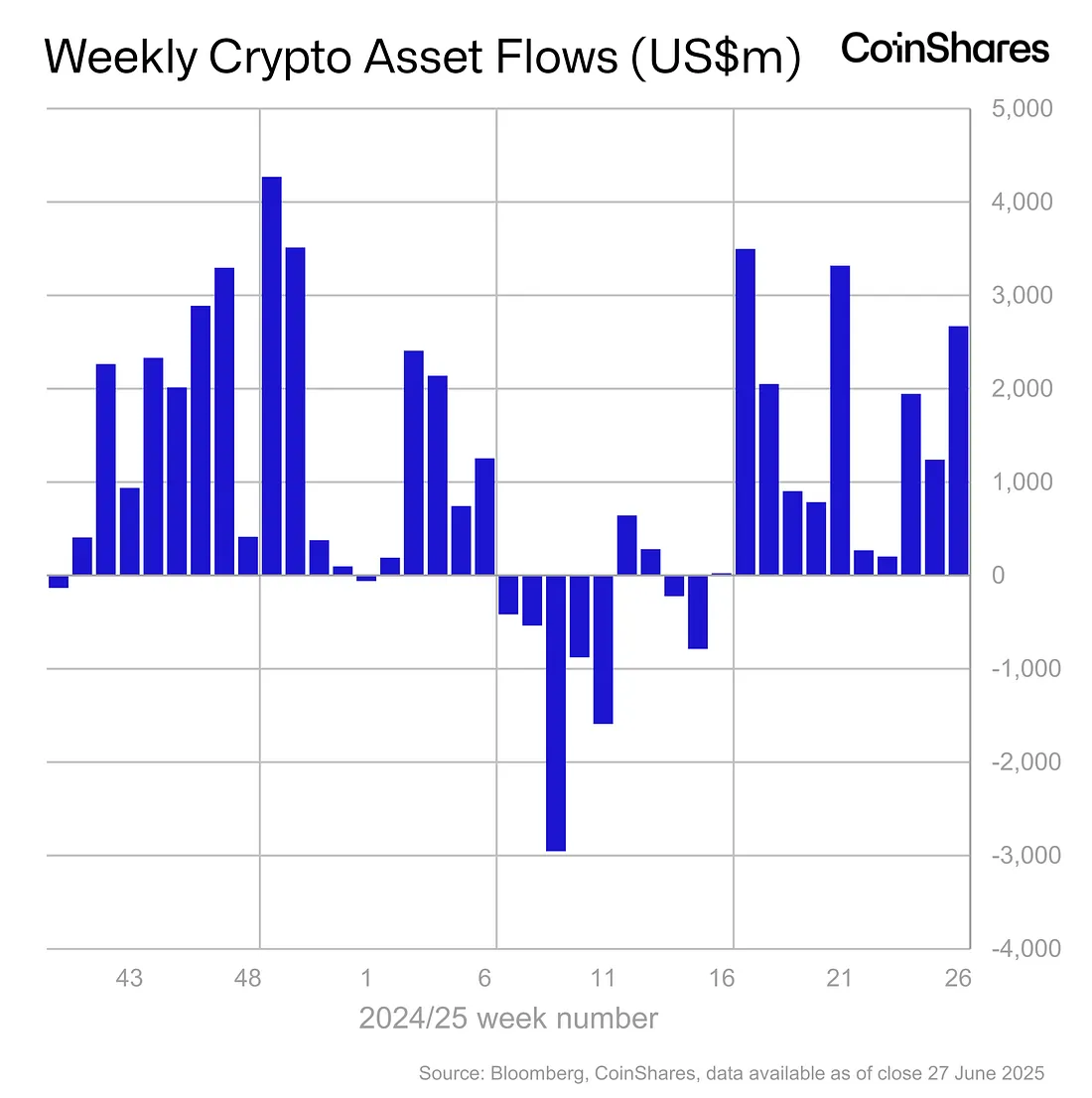
The digital asset landscape is currently witnessing a massive resurgence in institutional participation, with data from leading crypto asset management firm CoinShares confirming an eleven-week streak of sustained inflows. As of the first half of 2025, institutional-grade investment vehicles have attracted a staggering $16.9 billion, a figure that underscores a robust appetite for crypto-exposure despite broader macroeconomic uncertainty.
The State of Institutional Investment: A Mid-Year Assessment
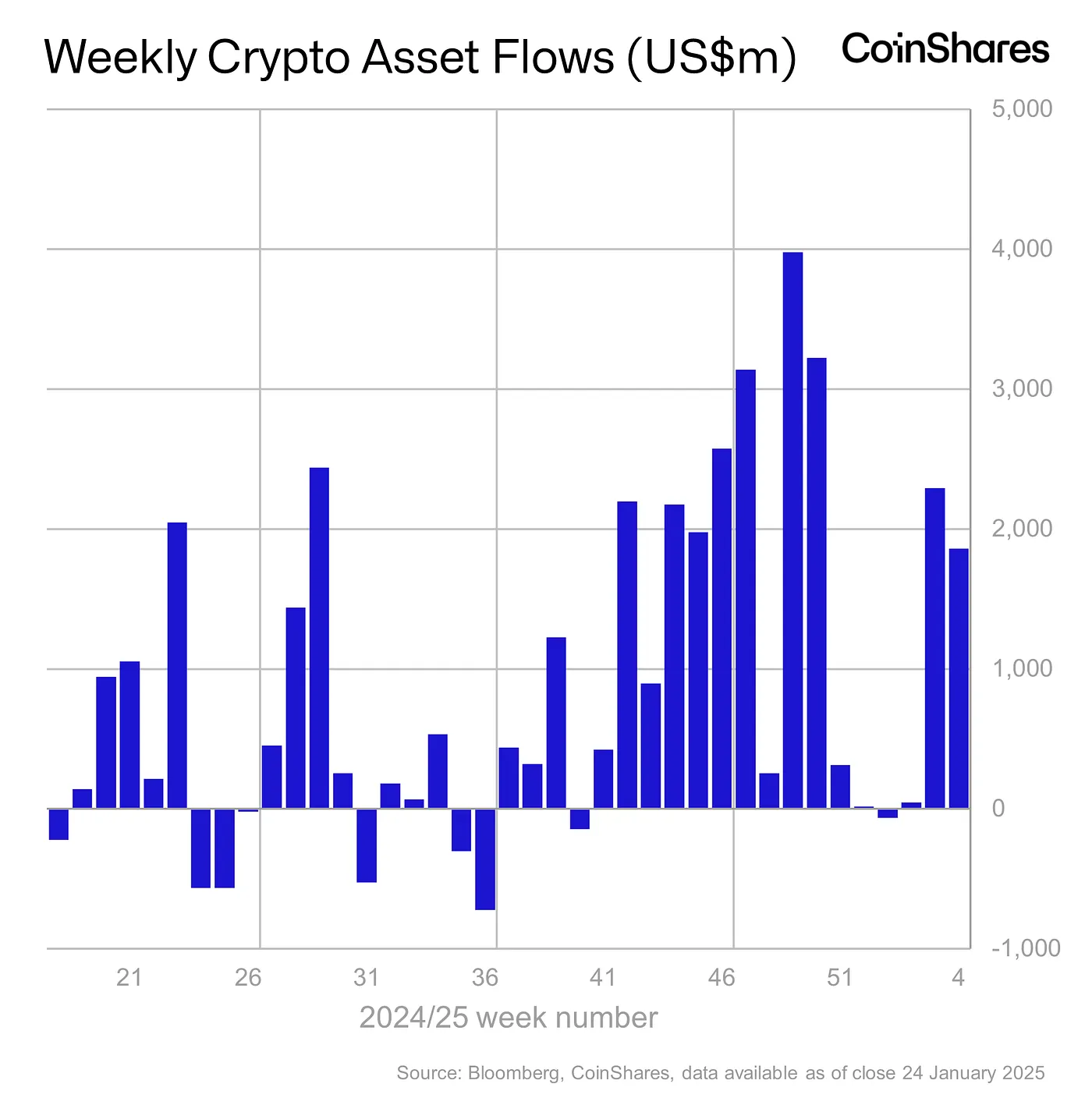
According to the latest Digital Asset Fund Flows Weekly Report from CoinShares, the global financial sector is rapidly pivoting toward digital assets as a legitimate asset class. In the most recent reporting period, digital asset investment products recorded a substantial $2.7 billion in inflows, contributing to a cumulative $16.9 billion over the past eleven weeks.
When contextualizing these numbers against the performance of the previous year, the data reveals a remarkably consistent trajectory. In the first six months of 2024, total inflows reached $18.3 billion. The current year-to-date performance, falling only slightly short of this record, suggests that institutional interest has not merely been a flash in the pan, but a structural shift in portfolio allocation strategies.
Market analysts suggest that this "resilient investor demand" is being fueled by a "perfect storm" of global economic factors. Primary among these are the heightened levels of geopolitical volatility and the persistent ambiguity surrounding the future direction of global monetary policy. As traditional equity and bond markets grapple with inflation and interest rate fluctuations, institutional players are increasingly viewing Bitcoin and Ethereum as "digital gold"—a hedge against the devaluation of fiat currencies and a sanctuary during times of global instability.
Chronology of the 2025 Inflow Surge
To understand the scale of the current movement, it is essential to view the timeline of capital accumulation over the last quarter.
- Early Q2 2025: Following a period of market consolidation in the first quarter, institutional sentiment began to shift in early spring. Hedge funds and family offices began aggressively increasing their exposure to spot-based crypto products.
- Late May 2025: The momentum accelerated as major financial institutions began integrating digital asset products into their standard wealth management portfolios, leading to consistent weekly inflows exceeding the $1 billion threshold.
- June 2025: The final month of the half-year saw a crescendo of activity. Despite localized outflows in certain Asian markets, the global aggregate remained overwhelmingly positive, culminating in the $2.7 billion surge reported in the final week of the half-year.
This chronology highlights a clear transition from speculative retail-driven interest to a more calculated, long-term institutional accumulation phase.
Regional Disparities: The U.S. Dominance and Global Shifts
While the global appetite for crypto-backed investment vehicles is strong, the geographical distribution of this capital is highly concentrated. The United States continues to act as the primary engine for this growth, accounting for a massive $2.65 billion in inflows during the most recent reporting cycle. This dominance is largely attributed to the maturity of the U.S. regulatory framework and the proliferation of accessible, regulated exchange-traded products.
Conversely, other regions have presented a more fragmented narrative.
European Performance
Switzerland and Germany recorded modest but positive inflows of $23 million and $19.8 million, respectively. These nations continue to serve as the European hub for institutional digital asset management, maintaining stable environments for crypto-custody and investment operations.
Outflow Trends in Key Markets
In contrast to the North American success story, several jurisdictions saw capital flight. Canada, Hong Kong, and Brazil recorded outflows of $13.6 million, $2.3 million, and $2.4 million, respectively. Notably, Hong Kong experienced a more pronounced contraction throughout June, witnessing $132 million in total outflows for the month. Analysts attribute this to shifting local regulatory sentiment and the broader economic cooling within the region, which has led some institutional investors to rebalance their portfolios away from higher-risk jurisdictions.
Asset-Specific Breakdown: Bitcoin vs. Ethereum
The allocation of capital within these institutional vehicles reveals a clear hierarchy of investor confidence.

Bitcoin: The Institutional Anchor
Bitcoin (BTC) remains the undisputed king of the asset class, accounting for approximately 83% of total inflows in the most recent week, totaling $2.2 billion. This trend is further confirmed by the performance of "Short-Bitcoin" products. Year-to-date, these short-exposure vehicles have seen $12 million in outflows, including a $2.9 million exodus in the last week alone. This data serves as a clear indicator of market sentiment: the "smart money" is overwhelmingly betting on long-term appreciation, effectively closing out bets against the world’s largest cryptocurrency.
Ethereum: The Secondary Powerhouse
Ethereum (ETH) has successfully solidified its position as the preferred secondary asset for institutional investors. Last week, it captured $429 million in inflows. This continued streak of interest suggests that institutions are not just looking for a store of value, but are actively investing in the infrastructure of decentralized finance (DeFi) and smart contract ecosystems that Ethereum powers.
Implications for the Future of Finance
The data provided by CoinShares carries significant implications for both the crypto industry and the traditional banking sector.
1. Market Maturation
The scale of these inflows suggests that digital assets are no longer a fringe element of institutional finance. With billions of dollars flowing into regulated products, the infrastructure for custody, auditing, and compliance has reached a level of maturity that satisfies the stringent requirements of institutional risk committees.
2. Geopolitical Hedging
The correlation between "geopolitical volatility" and "crypto inflows" cannot be overstated. As central banks struggle to manage debt-to-GDP ratios and navigate the complexities of digital transformation, investors are increasingly turning to assets with capped supplies and decentralized verification processes. This shift suggests that crypto is increasingly being utilized as a "risk-off" asset, a role historically reserved for precious metals.
3. Regulatory Pressure and Opportunity
The divergence in regional flows—specifically the massive inflows in the U.S. versus the outflows in Hong Kong—highlights the impact of regulatory clarity. Countries that provide transparent, robust, and supportive regulatory frameworks are successfully attracting the bulk of global capital. Those that fail to offer this clarity risk becoming irrelevant in the global competition for the digital economy.
Expert Analysis: A Turning Point?
Financial analysts note that the current environment is unique. Unlike the retail-driven "bull runs" of the past, the current activity is characterized by lower volatility in asset prices relative to the volume of inflow. This suggests that the capital being deployed is "sticky"—it is being held by institutions that are less likely to panic-sell during minor market corrections.
Furthermore, the integration of Bitcoin and Ethereum into retirement accounts, insurance funds, and pension-linked products is beginning to move from theory to practice. As these institutional vehicles become more deeply embedded in the traditional financial stack, the barrier to entry for the average retail investor continues to lower, creating a compounding effect of liquidity.
Conclusion: The Road Ahead
As we move into the second half of 2025, the trajectory of institutional inflows suggests a robust outlook for the crypto market. While macroeconomic headwinds remain—particularly concerning interest rate policy and global conflict—the data from CoinShares confirms that institutional sentiment is fundamentally optimistic.
The consistent preference for Bitcoin and the sustained interest in Ethereum demonstrate a high level of conviction in the long-term utility and scarcity of these assets. As long as geopolitical and monetary uncertainties persist, it is highly probable that the trend of institutional migration into digital assets will continue to accelerate, potentially setting the stage for a record-breaking end to the year.
Disclaimer: This report is for informational purposes only and does not constitute investment advice. The Daily Hodl is not a financial advisor. All cryptocurrency investments carry inherent risks. Investors should conduct their own thorough due diligence before making any financial decisions. The Daily Hodl participates in affiliate marketing programs, which may result in compensation for links provided.