The Illusion of Liquidity: Why Wash Trading Remains Crypto’s Persistent Shadow
In the volatile world of digital assets, volume is often perceived as the heartbeat of market health. It signals liquidity, interest, and institutional confidence. However, beneath the surface of many cryptocurrency exchanges lies a deceptive practice that threatens to undermine the integrity of the entire ecosystem: wash trading.
Bobby Ong, co-founder of the prominent market data aggregator CoinGecko, recently sounded the alarm, suggesting that despite years of industry maturation, the prevalence of wash trading is not only persisting but, in some sectors, appears to be worsening. As retail and institutional investors alike rely on price trackers to navigate the market, the distinction between organic trading activity and synthetic volume has become the most critical challenge for data transparency in the blockchain space.
Main Facts: Deconstructing the Wash Trading Phenomenon
At its core, wash trading is a form of market manipulation where an entity simultaneously buys and sells the same financial instrument. By creating the illusion of high trading volume, bad actors aim to trick other market participants into believing that a specific asset or exchange has significant demand and liquidity.
The mechanics are simple yet destructive. An automated bot or a colluding group of traders executes rapid-fire orders to move an asset back and forth between controlled accounts. Because no actual transfer of beneficial ownership occurs, the "trader" incurs minimal risk while generating a high-profile footprint. For an exchange, facilitating or turning a blind eye to this practice is a tool for "pumping up" their rankings on global aggregators, effectively tricking traders into choosing their platform over legitimate competitors.
According to Ong, the result of this widespread manipulation is that the standard, aggregate trading volume figures often touted by mainstream media have become largely untrustworthy.
Chronology: A History of Synthetic Volume
The history of wash trading in crypto is deeply tied to the rise of unregulated exchanges.
- 2017–2018: The Wild West Era. Following the ICO boom, hundreds of new exchanges emerged to meet surging demand. With little oversight, many of these platforms began inflating their volumes to compete with established giants like Binance and Kraken.
- 2019: The Wake-Up Call. Industry analysts, including those at Bitwise Asset Management, published landmark reports revealing that up to 95% of reported Bitcoin trading volume on unregulated exchanges was likely non-existent or manipulated. This period marked the beginning of a push for better data integrity.
- Late 2019: The Shift Toward Transparency. Platforms like CoinGecko moved away from "volume-only" rankings. Recognizing that volume could be easily gamed, aggregators began integrating qualitative metrics such as order book depth, security audits, and web traffic analysis to verify exchange legitimacy.
- 2020–Present: The Regulatory Squeeze. As global regulators—from the SEC in the United States to the FSA in Japan—began tightening their grip on Virtual Asset Service Providers (VASPs), the gap between regulated, transparent exchanges and the "dark pool" of unregulated platforms widened.
Supporting Data: Why "Reported Volume" is Often a Lie
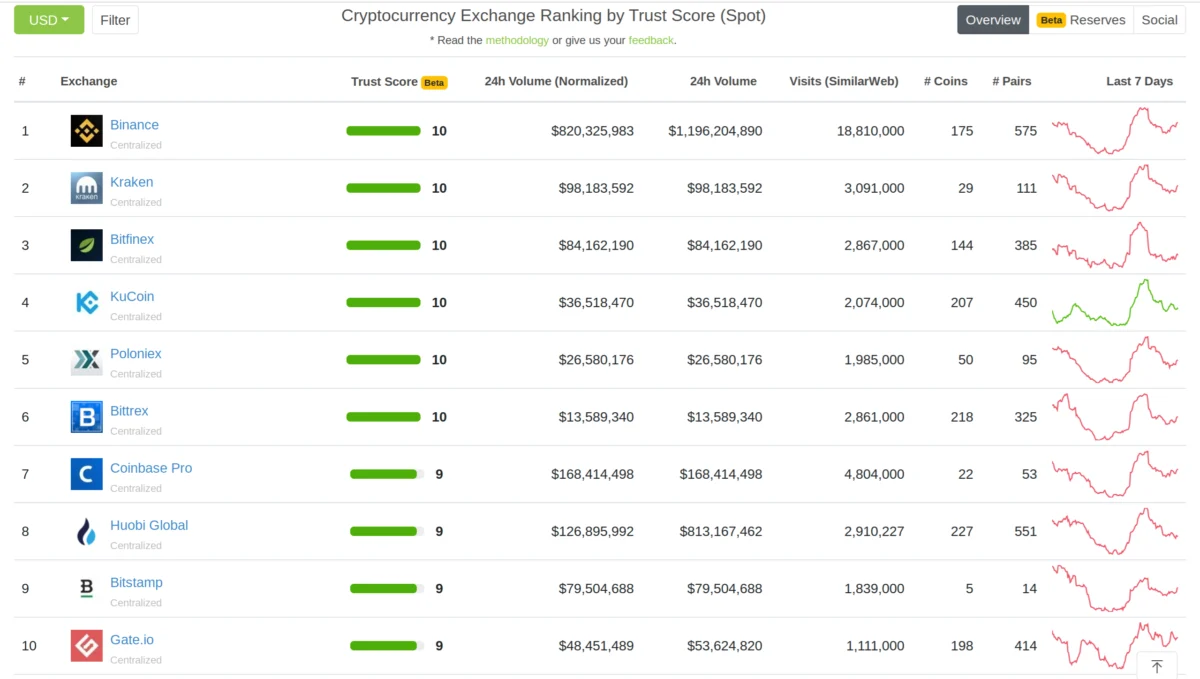
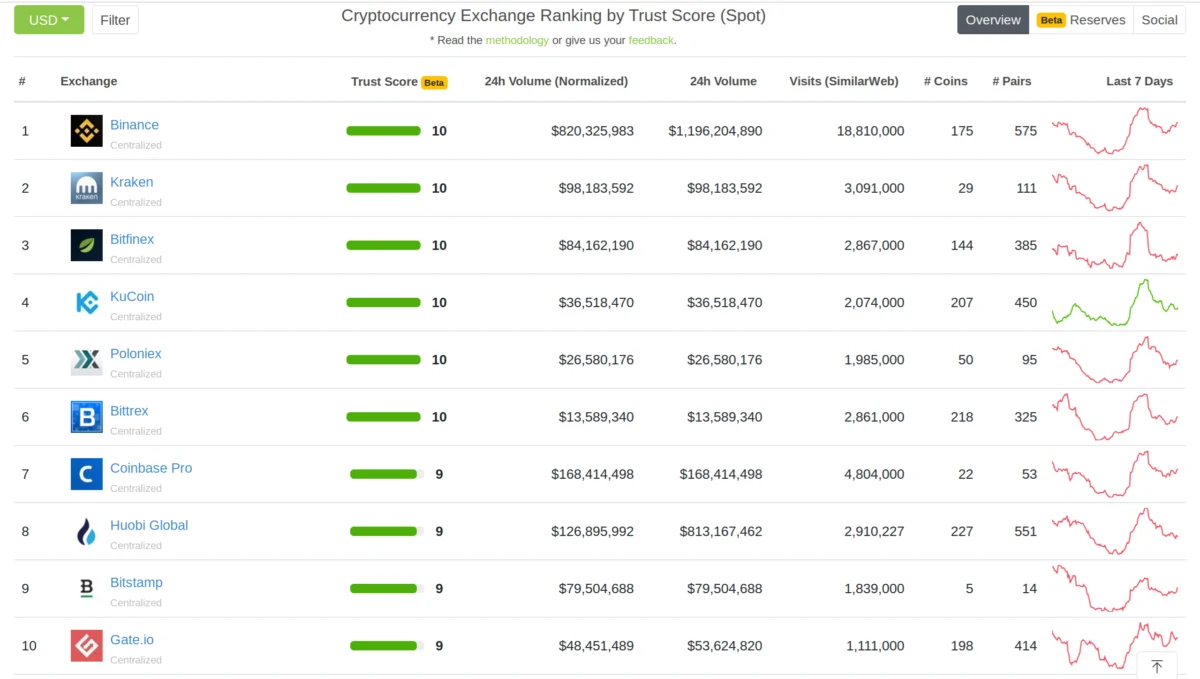
The danger of wash trading is that it targets the primary heuristic used by investors: the 24-hour trading volume. If a trader sees an exchange reporting $500 million in daily volume, they assume the platform has high liquidity and lower slippage.

The Problem with Unregulated Data
Bobby Ong points out that in the non-regulated space, it is nearly impossible for an outsider to distinguish between a legitimate high-volume exchange and one that is simply "painting the tape." The lack of mandatory reporting standards allows these exchanges to report whatever numbers they deem beneficial for their marketing efforts.
The "Trust Score" Methodology
In response to this crisis, CoinGecko introduced the "Trust Score." This algorithm represents a shift in philosophy:
- Reported Volume: The base layer of data.
- Order Book Depth: Analyzing the "spread" and the amount of buy/sell orders at various price points. A high-volume exchange with a thin order book is a massive red flag.
- Web Traffic: Cross-referencing trading volume with actual visitor data. If an exchange claims to have more volume than a top-tier global stock exchange but has negligible web traffic, it is statistically impossible.
- Exchange Health: An assessment of cybersecurity practices and regulatory compliance status.
By weighing these factors, CoinGecko and other data providers are forcing a shift where exchanges can no longer rely on volume inflation to maintain their status.
Official Responses and Expert Perspectives
The industry consensus on wash trading is one of cautious skepticism. During his interview with BlockTV, Ong was blunt: "I would say that the situation is actually getting worse… The trading volume for the spot market is almost close to not being used as a trusted source anymore."
Ong’s advice to the average investor is to gravitate toward jurisdictions where oversight is mandatory. "If you really want to get real 24-hour trading volume, I think the only real way is to look at volume from regulated exchanges such as those in the US, in Japan—those licensed exchanges. Coinbase, Gemini, and Japanese regulated exchanges."
While the industry waits for a global standard of crypto-asset regulation, many experts argue that the responsibility currently lies with the user. Using decentralized exchanges (DEXs) is often cited as an alternative, as the transparent, on-chain nature of these protocols makes traditional wash trading significantly harder—though not impossible—to conceal.
The Broader Implications: A Barrier to Institutional Adoption
The persistence of wash trading acts as a "glass ceiling" for the cryptocurrency market.
1. The Institutional Hesitation
Large-scale institutional investors—such as pension funds, family offices, and hedge funds—require high-fidelity data to perform risk assessments. When an asset class is rife with manipulated data, the cost of auditing that data becomes prohibitive. Wash trading keeps the market fragmented, preventing the kind of "clean" liquidity necessary for the approval of sophisticated financial products like ETFs and institutional-grade derivatives.
2. Market Sentiment Distortion
When news outlets report on "surging interest" based on fake volume, it can create a false sense of market momentum (FOMO). This leads retail investors to buy into assets that have no genuine market depth, resulting in "liquidity traps" where investors find they cannot exit their positions at the reported price because the liquidity was never there to begin with.
3. The Regulatory Burden
Persistent manipulation provides fuel for critics and regulators to argue that the entire crypto market is a "scam" or a "bubble." This often leads to over-regulation, where legitimate projects are caught in the crossfire of legislative attempts to curb the bad actors.
Conclusion: The Path Toward a Clean Market
The fight against wash trading is, in many ways, the fight for the soul of the cryptocurrency industry. While the technology is decentralized and permissionless, the marketplaces where these assets are exchanged must eventually adopt higher standards of accountability.
As Bobby Ong and the team at CoinGecko have demonstrated, the solution is not to stop measuring volume, but to start measuring it honestly. By looking beyond raw numbers and focusing on verified order books, regulatory compliance, and transparent operations, investors can protect themselves from the mirage of synthetic liquidity.
For the industry to reach the next stage of maturity, the "wash trade" must be relegated to the history books—a relic of a nascent market that grew up, learned the value of data integrity, and prioritized the trust of its users over the hollow prestige of inflated numbers. Investors are advised to remain vigilant, perform their own due diligence, and remember that in the world of crypto, if a volume figure looks too good to be true, it almost certainly is.
Disclaimer: The information provided in this article is for educational purposes only and does not constitute financial, investment, or legal advice. Cryptocurrency investments involve significant risk. Always conduct your own research and consult with a professional financial advisor before making any investment decisions.