Institutional Investors Retreat: A Deep Dive into the $414 Million Crypto Selloff
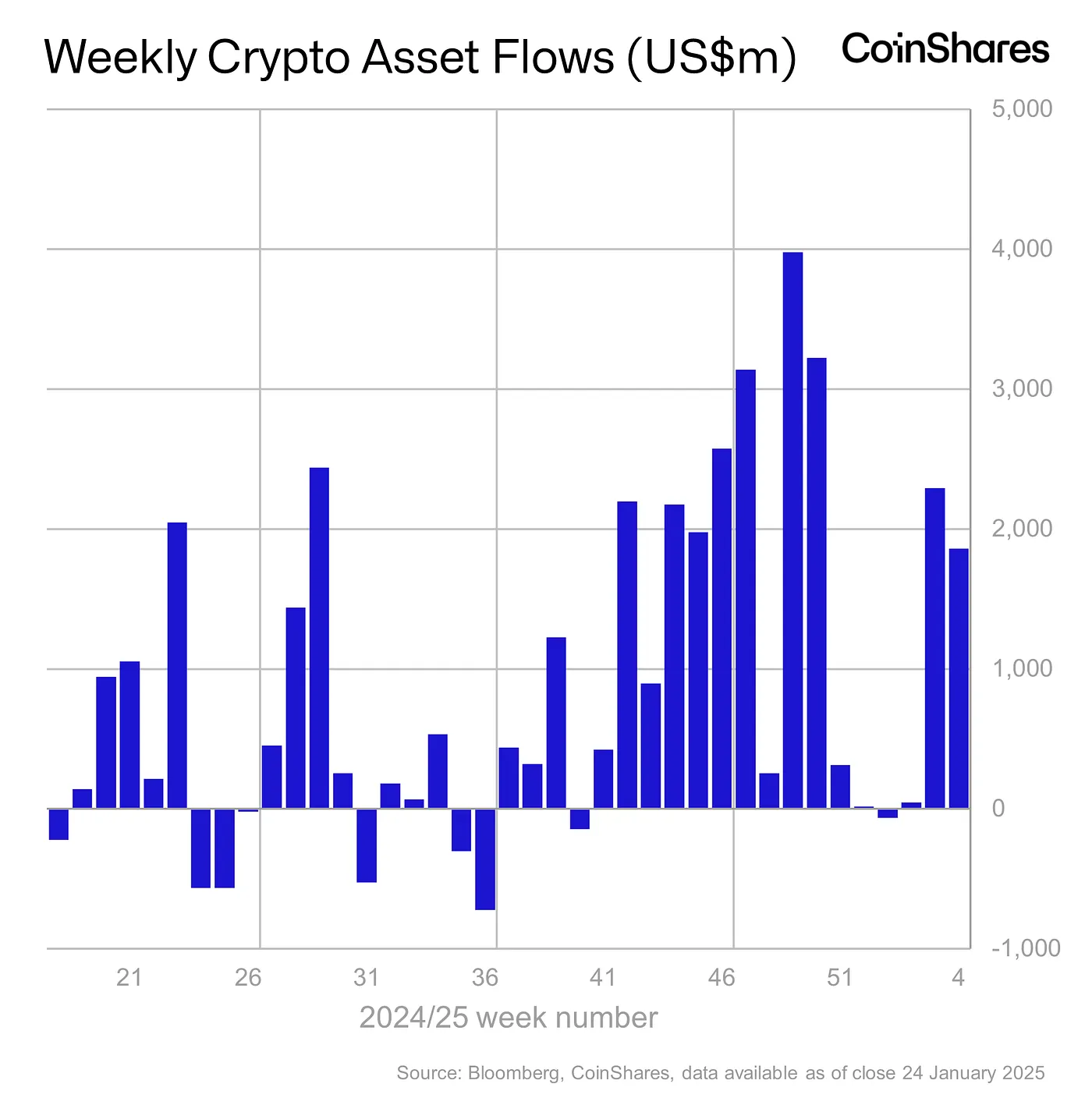
The global cryptocurrency market, often characterized by its inherent volatility and speculative fervor, has encountered a significant wave of institutional skepticism. According to the latest weekly report from CoinShares, a leading digital asset management firm, institutional investors have offloaded a combined $414 million in Bitcoin and broader crypto assets. This abrupt shift in sentiment marks the first major selloff in five weeks, signaling a potential cooling period for the digital asset sector as macroeconomic headwinds intensify.
The report, which tracks capital flows across exchange-traded products (ETPs) and institutional funds, highlights that the current divestment is largely a reactionary measure driven by escalating geopolitical tensions in the Middle East and a persistent, sticky inflation environment that continues to challenge global central banks.
The Chronology of the Shift: From Optimism to Caution
For the preceding month, the crypto market had enjoyed a robust period of sustained inflows, fueled by institutional optimism surrounding the adoption of spot Bitcoin ETFs and a generally risk-on environment. However, the sentiment began to fracture as the reality of a "higher-for-longer" interest rate environment in the United States coincided with the heightened volatility stemming from the Iran-Israel conflict.
The retreat did not happen in a vacuum. Throughout the week, market participants observed a rapid repricing of risk assets. By mid-week, the pressure on major cryptocurrencies began to mount, culminating in a sharp exit of capital that hit the sector’s total assets under management (AUM), which now sits at approximately $129 billion. This liquidity contraction represents a stark departure from the bullish trajectory observed in the first quarter of the year.
Geographical Divergence: A Global Snapshot
The data provided by CoinShares reveals a striking disparity in how different regions reacted to the market turbulence.
The United States: Leading the Exit
The United States, which currently hosts the world’s most significant concentration of crypto-focused institutional capital, led the exodus. A massive $445 million flowed out of US-based investment vehicles. This trend suggests that American institutional investors are perhaps more sensitive to Federal Reserve interest rate policy and geopolitical instability than their international counterparts.
Switzerland: Minor Adjustments
Switzerland, historically a hub for crypto-financial stability, recorded minor outflows totaling $4 million. While this figure is negligible compared to the US numbers, it nonetheless signals a cautious sentiment permeating the European banking sector.
Germany and Canada: Buying the Dip
In a show of defiance against the broader trend, Germany and Canada emerged as contrarian buyers. German investors added $21.2 million in inflows, while Canadian funds recorded $15.9 million. These figures indicate that, while institutional capital is shifting, there remains a contingent of sophisticated investors who view the current price corrections as an opportunity to accumulate assets at a discount—a strategy commonly referred to as "buying the dip."
Asset-Specific Breakdown: Ethereum and Bitcoin Under Pressure
The composition of the outflows provides insight into which digital assets are currently viewed as the most vulnerable to macroeconomic pressure.
Ethereum’s Significant Contraction
Ethereum (ETH) bore the brunt of the bearish sentiment, suffering $222 million in outflows. This heavy selloff has pushed Ethereum’s year-to-date net flows into negative territory, reaching a deficit of $273 million. Market analysts attribute this to a lack of clear regulatory catalysts for Ethereum and a general rotation out of "smart contract" platforms into more defensive positions or cash equivalents.
Bitcoin: The Benchmark’s Resilience
Bitcoin, the market’s primary bellwether, saw $194 million in outflows. Despite this weekly decline, Bitcoin remains the strongest performer on a year-to-date basis, holding onto $964 million in net inflows. This suggests that while institutional sentiment is currently cautious, the long-term conviction in Bitcoin’s role as a "digital gold" remains largely intact. Interestingly, short-Bitcoin products—vehicles designed to profit from a decline in the asset’s price—attracted an additional $4 million, confirming that a portion of the institutional market is actively hedging against further downside.
The Outliers: Solana and XRP
The smaller-cap space also saw divergent trends. Solana (SOL), which has been a darling of recent market cycles, recorded $12.3 million in outflows, suggesting a profit-taking exercise by institutional holders. Conversely, XRP proved to be a standout performer, bucking the trend with $15.8 million in inflows. This resilience in XRP may be linked to ongoing legal developments and a growing perception of regulatory clarity that is attracting institutional capital despite the broader market volatility.
Macroeconomic Implications: Why Investors are Fleeing
The primary catalyst for this week’s massive outflow is the intersection of geopolitical risk and inflationary pressure. Institutional investors, who manage portfolios under strict risk-management mandates, are notoriously sensitive to instability.
The Geopolitical Factor
The heightened conflict involving Iran has introduced a layer of uncertainty that the crypto markets have struggled to price in. In times of geopolitical crisis, traditional investors typically rotate toward "safe-haven" assets such as the US Dollar, Treasury bonds, or physical gold. Cryptocurrencies, which have occasionally been touted as "digital gold," have yet to prove their status as a reliable hedge during active kinetic warfare, leading to a temporary exit toward more traditional, established safe havens.
The Inflation Dilemma
Inflation data in the United States remains stubborn. With the Consumer Price Index (CPI) showing little sign of cooling to the Federal Reserve’s 2% target, the prospect of interest rate cuts has been pushed further into the future. High interest rates typically drain liquidity from risk-on assets like Bitcoin and Ethereum. When the cost of borrowing increases, the opportunity cost of holding non-yielding digital assets rises, compelling institutions to divest.
The Future Outlook: What Lies Ahead?
While a $414 million outflow is a significant sum, it is important to contextualize this within the broader $129 billion AUM of the crypto investment sector. This is not necessarily a "mass exodus" but rather a strategic reallocation of capital.
Institutional Resilience
The fact that Germany and Canada recorded inflows suggests that institutional interest is not dead; it is merely becoming more selective. The market is shifting from a period of "irrational exuberance" to one of "measured participation." Institutional investors are likely waiting for clearer signals from the Federal Reserve regarding monetary policy before re-entering the market in force.
Regulatory and Market Maturation
The volatility observed this week also underscores the need for continued market maturation. As more institutional products, such as spot ETFs, become integrated into the traditional financial system, these assets will increasingly correlate with broader macroeconomic trends. Investors must prepare for a future where digital assets act less like speculative tokens and more like traditional financial instruments, subject to the same pressures of interest rate hikes, global conflict, and economic cycles.
Conclusion
The latest report from CoinShares serves as a reminder that the cryptocurrency market is not insulated from the global economy. The $414 million outflow reflects a prudent, risk-averse stance by institutional players facing a world of heightened geopolitical uncertainty and persistent inflation.
While the immediate outlook may be characterized by caution, the underlying year-to-date figures for Bitcoin and the contrarian inflows in Europe suggest that the institutional appetite for digital assets remains. For investors, the takeaway is clear: as crypto becomes a fixture of institutional portfolios, its performance will continue to be inextricably linked to the pulse of the global economy. Those looking to navigate this landscape must prioritize rigorous due diligence, understanding that in the institutional era of crypto, market sentiment is as much about macroeconomic data as it is about blockchain innovation.
Disclaimer: The information provided in this article is for informational purposes only and does not constitute financial, investment, or legal advice. Cryptocurrency investments are inherently volatile and carry a high risk of capital loss. Investors should conduct their own independent research and consult with a professional financial advisor before making any investment decisions. The Daily Hodl does not endorse or recommend the purchase or sale of any specific assets, and any losses incurred are the sole responsibility of the individual investor.