Venture Capital Heavyweights Pour Over $400 Million into Toncoin (TON) as Telegram Integration Deepens
Main Facts
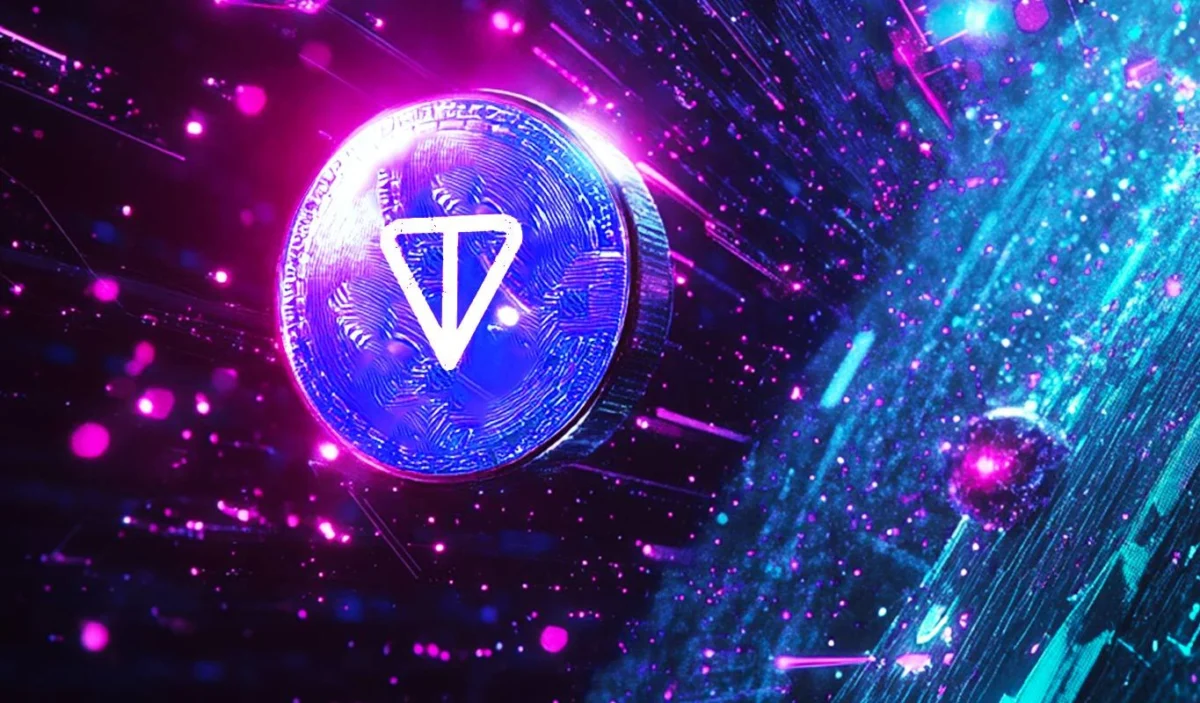
In a massive show of confidence for the broader Web3 and decentralized application ecosystem, leading global venture capital firms have collectively poured more than $400 million into Toncoin (TON), the native layer-1 asset of The Open Network. According to an official announcement from the TON Foundation, the funding round and strategic capital commitments feature an elite roster of institutional investors, including Sequoia Capital, Ribbit Capital, Benchmark, Kingsway Capital, Vy Capital, Draper Associates, Libertus Capital, CoinFund, Hypersphere, SkyBridge Capital, and Karatage.
This capital injection arrives at a pivotal juncture for Toncoin, which has transitioned from a community-driven open-source project into a foundational infrastructure layer deeply integrated with one of the world’s largest messaging applications: Telegram. Boasting over 1 billion monthly active users, Telegram provides Toncoin with an unmatched distribution funnel that few, if any, competing blockchain projects can replicate.
Despite the bullish long-term sentiment driving hundreds of millions of dollars from top-tier Silicon Valley and global funds into the ecosystem, Toncoin’s market performance reflects broader macroeconomic and crypto-market fluctuations. At the time of writing, TON is trading at $3.61, marking a minor dip of over 2% over a 24-hour trading window. Currently ranked as the 14th-largest cryptocurrency by total market capitalization, the asset continues to capture the attention of institutional portfolios seeking direct exposure to consumer-facing crypto adoption.
Chronology of a Blockchain: From Telegram Origins to Decentralized Independence
To understand the magnitude of the current $400 million investment, it is essential to trace Toncoin’s complex and turbulent developmental history—a journey marked by regulatory battles, visionary pivots, and ultimate community resilience.
Phase 1: Inception and the Telegram Vision (2018–2020)
The asset’s origins trace back to 2018 when the encrypted messaging platform Telegram, spearheaded by founders Pavel and Nikolai Durov, conceptualized the Telegram Open Network (TON). The goal was ambitious: to build a high-speed, scalable layer-1 blockchain capable of processing millions of transactions per second through advanced sharding technology, natively integrated into Telegram’s burgeoning user base.
During its initial private token sale in 2018, Telegram raised an unprecedented $1.7 billion from global investors, establishing the project as one of the most anticipated technological rollouts in cryptocurrency history.
Phase 2: Regulatory Roadblocks and the SEC Battle (2019–2020)
However, the project’s rapid ascent hit a catastrophic wall when the U.S. Securities and Exchange Commission (SEC) stepped in. In October 2019, the regulatory body filed an emergency action halting the token distribution, arguing that the initial sale of Gram tokens (the original name of the asset) constituted an unregistered securities offering under U.S. federal law.
After months of protracted legal battles and mounting regulatory pressure, Telegram officially abandoned the project in May 2020. Pavel Durov publicly announced that Telegram was severing its ties with the network, leaving the codebase and community infrastructure stranded.
Phase 3: Community Resurrection and Decentralization (2020–2023)
Rather than letting the advanced technology fade into obscurity, an independent, open-source community of developers, cryptographers, and validators—initially known as Free TON and later evolving into the TON Foundation—resurrected the network. They redeployed the codebase, preserved the original token economics under the newly minted "Toncoin" moniker, and steadily built out the ecosystem without direct corporate backing from Telegram.
Phase 4: The Telegram Reunion and Institutional Validation (2024–Present)
By late 2023 and into 2024, the relationship between Telegram and the decentralized TON ecosystem began to mend organically. Telegram realized that Toncoin was the ideal monetization and utility layer for its platform.
The turning point occurred in January 2025, when TON was officially designated as the "exclusive blockchain" for Telegram’s rapidly expanding Mini Apps Ecosystem. This formal alignment transformed TON from an independent altcoin into the primary economic engine of a global social media giant, culminating in the massive $400 million institutional funding wave announced by the TON Foundation.
Supporting Data and Ecosystem Metrics
The influx of $400 million is not merely speculative capital; it represents a strategic bet on structural network growth, user acquisition metrics, and infrastructural maturity.
Key Ecosystem Indicators:
- Total Institutional Commitment: Over $400 million secured from tier-one VC funds.
- Telegram User Base Access: Direct exposure to more than 1 billion monthly active users.
- Frictionless Onboarding: Integration allowing users to transfer TON directly within the Telegram interface without needing to copy or paste complex hexadecimal wallet addresses.
- Market Standing: Positioned as the 14th-largest digital asset globally by market capitalization, trading around $3.61.
- Ecosystem Utility: Powering Telegram’s Mini Apps Ecosystem, which hosts games, financial services, e-commerce applications, and decentralized tools directly inside the chat interface.
The unique architectural advantage of Toncoin lies in its ability to abstract away the traditional complexities of Web3. By leveraging Telegram’s native chat environment, users can send value, interact with decentralized applications (dApps), and participate in tokenized economies with the same ease as sending a text message or a digital sticker.
Official Responses and Stakeholder Perspectives
The convergence of traditional venture capital giants and a natively integrated social-media blockchain has elicited strong commentary from key industry leaders.
Shaun Maguire, a partner at Sequoia Capital—one of the world’s most prestigious venture capital firms, known for early bets on Apple, Google, and WhatsApp—highlighted the unique synergy between consumer technology and decentralized infrastructure that TON represents:
"The TON team is the best in the world at the intersection of consumer product thinking and crypto infrastructure," Maguire stated, emphasizing Sequoia’s profound optimism regarding the blockchain’s technological prowess and its unprecedented distribution capabilities.
Representatives from the TON Foundation echoed these sentiments, noting that the participation of diverse financial powerhouses—ranging from consumer-focused funds like Ribbit Capital to crypto-native institutional giants like CoinFund and Hypersphere—demonstrates a unified belief that messaging apps will serve as the primary gateway for the next billion users entering the Web3 space.
Broader Implications for the Crypto Industry
The successful capitalization and scaling of Toncoin carry profound structural implications for the entire digital asset landscape.
1. The Rise of "Super-App" Blockchains
For years, the holy grail of crypto adoption has been finding a viable onboarding funnel that bridges mainstream consumers with self-custodial financial tools. Traditional onboarding required downloading specialized wallets, managing seed phrases, purchasing gas tokens on centralized exchanges, and navigating confusing user interfaces. By embedding Toncoin directly into Telegram’s architecture, the TON ecosystem has effectively solved the distribution bottleneck. The implications are clear: future blockchain adoption will likely bypass standalone consumer apps in favor of integration within existing social ecosystems like WhatsApp, WeChat, and X.
2. Validation of Open-Source Resilience
The resurrection of TON following Telegram’s legal forced exit in 2020 stands as one of the most remarkable case studies in decentralized governance and open-source resilience. It proves that robust underlying technology, when backed by a passionate developer community, can survive regulatory hostility and corporate abandonment to eventually attract elite institutional backing.
3. Shift in Venture Capital Focus
The deployment of $400 million into a consumer-facing layer-1 asset signals a strategic pivot for venture capital firms. While infrastructure plays (such as cross-chain bridges, zero-knowledge rollups, and data availability layers) dominated VC portfolios during previous cycles, investors are now actively seeking applications and platforms that possess guaranteed user distribution channels and clear paths to mass-market monetization.
As Toncoin continues to scale within the Telegram Mini Apps Ecosystem, all eyes will remain on how the network handles surging transaction volumes, regulatory scrutiny across international jurisdictions, and the challenge of converting casual chat users into active participants in the decentralized economy.
Disclaimer: The information provided in this article is for informational purposes only and does not constitute financial or investment advice. Cryptocurrencies and digital assets carry high levels of volatility and risk. Readers should perform their own thorough due diligence and consult with a qualified financial advisor before engaging in any digital asset investments.