The Illusion of Liquidity: Why Wash Trading Remains Crypto’s Persistent Shadow
In the fast-paced, 24/7 world of digital asset trading, "volume is king." It is the primary metric investors use to gauge market health, interest, and liquidity. However, beneath the surface of record-breaking daily totals lies a darker reality: a pervasive, sophisticated form of market manipulation known as "wash trading."
According to Bobby Ong, co-founder of the prominent market data aggregator CoinGecko, the issue of wash trading is not merely a historical footnote but a worsening systemic crisis. As unregulated exchanges continue to proliferate, the integrity of reported spot market data has become increasingly difficult to verify, leaving retail investors vulnerable to inflated numbers and deceptive market trends.
The Mechanics of Deception: Understanding Wash Trading
At its core, wash trading is a classic form of market manipulation where an entity simultaneously acts as both the buyer and the seller of a financial instrument. By executing these "trades" with themselves—or through a network of controlled accounts—the bad actor creates a false impression of high volume and liquidity.
For a novice investor looking at a crypto exchange, a high trading volume often acts as a proxy for trust. If a token appears to have millions of dollars in volume, it suggests that the asset is liquid and widely traded. Wash traders exploit this psychological trigger, luring unsuspecting participants into "pumping" assets that have little to no organic market interest. Once legitimate capital flows into the asset, the manipulators exit their positions, leaving the new buyers holding the bag.
In the current ecosystem, this practice is not just a nuisance; it is an endemic feature of many smaller, unregulated platforms that use inflated numbers to climb the ranks of data aggregators, thereby securing more users and higher fees.
A Chronology of Market Distortion
The history of crypto market manipulation is as old as the exchanges themselves, but the scale has evolved significantly over the last decade.
- The Early Days (2013–2016): As Bitcoin gained global traction, exchanges began to emerge in jurisdictions with little to no regulatory oversight. During this period, "zero-fee trading" became the standard marketing tactic, which inadvertently provided a perfect environment for high-frequency wash trading, as the cost of executing fake trades was effectively zero.
- The 2017 Bull Run: The explosion of the Initial Coin Offering (ICO) craze saw a massive influx of retail capital. As dozens of new exchanges opened to capture this market, the incentive to report high volume became extreme. Wash trading moved from an occasional occurrence to a primary business model for many platforms.
- The Post-Crash Reckoning (2018–2019): Following the market correction in 2018, researchers and data providers began to publish reports highlighting the massive discrepancy between reported volume and actual web traffic. It became clear that a vast majority of the "volume" reported by smaller exchanges was entirely synthetic.
- The Current Era (2020–Present): Despite increased regulatory scrutiny, the problem has persisted. As Bobby Ong noted in his recent commentary, the sheer number of exchanges engaging in these practices makes it nearly impossible for traditional aggregators to maintain an accurate pulse on the global crypto market.
The CoinGecko Perspective: A Call for Transparency
Bobby Ong’s recent assessment of the market is stark: "The trading volume for the spot market is almost close to not being used as a trusted source anymore."

For data aggregators like CoinGecko, the challenge is existential. If their data is fed by dishonest exchanges, their entire value proposition is compromised. Ong argues that the only reliable way to gauge true market activity is to shift focus away from raw, self-reported numbers and toward regulated environments.
"If you really want to get real 24-hour trading volume, I think the only real way is to look at volume from regulated exchanges such as those in the US, in Japan—those licensed exchanges," Ong stated. He points to platforms like Coinbase and Gemini, as well as those operating under the strict oversight of the Japanese Financial Services Agency (FSA), as the gold standard for honest data.
In these jurisdictions, the threat of legal action and the requirements of strict audit trails act as significant deterrents against the kind of blatant wash trading seen on less regulated platforms.
Supporting Data: Moving Beyond Raw Volume
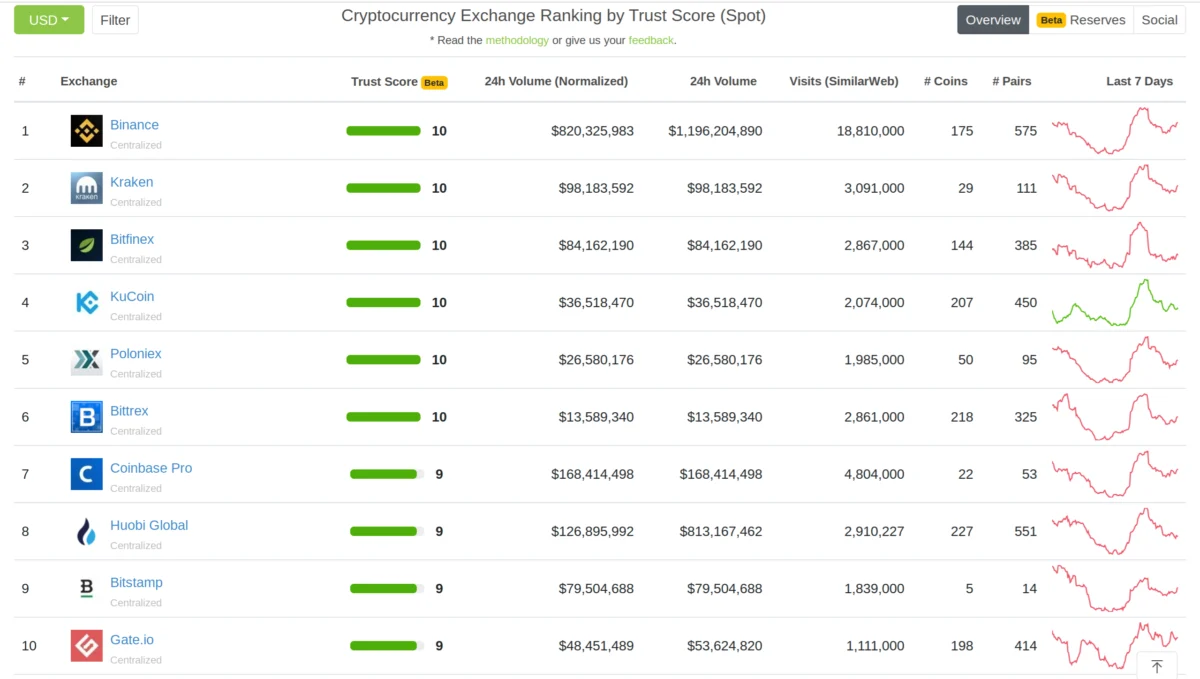
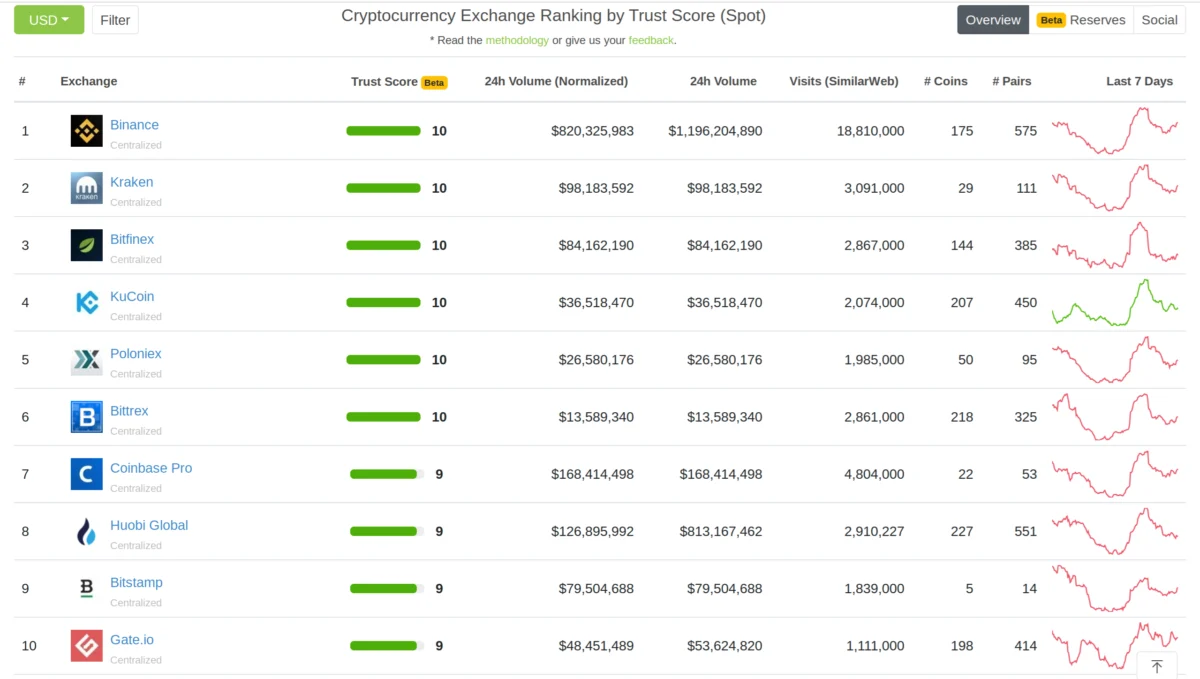
To combat the "illusion of liquidity," CoinGecko has introduced a "Trust Score" metric. This algorithm attempts to move the industry away from the singular, easily manipulated metric of 24-hour volume. Instead, the Trust Score incorporates:
- Web Traffic Analysis: By comparing reported volume against the actual number of unique visitors and their behavior on the exchange’s website, analysts can identify outliers. If an exchange claims to trade $500 million a day but has only a few hundred daily visitors, the data is almost certainly fraudulent.
- Order Book Depth: A truly liquid market should have "depth"—the ability to absorb large buy or sell orders without significant price slippage. Exchanges that wash trade often have high volume but very thin order books, making them easy to spot upon closer inspection.
- API Performance and Latency: High-quality, professional-grade exchanges generally maintain stable APIs and transparent data reporting.
By weighing these factors, CoinGecko aims to provide a more nuanced ranking of exchanges. Currently, major industry players like Binance and Kraken consistently rank highly under these stricter metrics, while many of the obscure exchanges that populate the lower tiers of volume rankings are stripped of their perceived importance.
Official Responses and Regulatory Implications
Regulators worldwide have begun to take note of the manipulative practices within the crypto space. The U.S. Securities and Exchange Commission (SEC) and the Commodity Futures Trading Commission (CFTC) have increasingly focused on market integrity.
However, the global, decentralized nature of crypto remains a hurdle. When an exchange is based in a "jurisdictional loophole"—a country with lax enforcement—it is difficult for international regulators to intervene. This has led to a two-tier system: the "regulated" space, which is increasingly transparent and expensive to operate in, and the "non-regulated" space, which remains a "wild west" of inflated numbers and hidden risks.
The implications for the industry are profound. As long as retail investors cannot distinguish between real and fake volume, the crypto market will continue to struggle with institutional adoption. Institutional investors, such as hedge funds and pension funds, require verifiable, clean data to manage risk. Without a standardized, honest reporting mechanism, the market remains perceived as "too volatile" or "too manipulated" for mainstream financial participation.
The Future: A Push Toward Institutional Integrity
The ongoing effort to clean up crypto data is a microcosm of the industry’s maturation. As the market evolves, the "wash trading" problem may eventually be solved not just by better algorithms, but by market pressure. As investors become more sophisticated, they are naturally gravitating toward exchanges that provide verified proof of reserves and transparent, audit-ready data.
Bobby Ong’s warning serves as a crucial reminder for all market participants: skepticism is a virtue. In an industry where numbers can be generated at the press of a button, the burden of due diligence falls squarely on the individual.
While CoinGecko and other data providers continue to innovate with metrics like the Trust Score, the reality remains that the "real" volume is often much smaller than the headlines suggest. For the average investor, this means prioritizing platforms that operate under clear regulatory frameworks and avoiding the temptation of "high volume" sites that lack the fundamental transparency expected of modern financial institutions.
Ultimately, the goal of the cryptocurrency industry should be to move toward a future where "volume" is no longer a vanity metric, but a reflection of real, value-driven economic activity. Until that day, the shadows of wash trading will continue to loom, serving as a reminder that in the world of digital finance, not all that glitters—or trades—is gold.
Disclaimer: The information provided in this article is for educational and informational purposes only and does not constitute financial, investment, or legal advice. Investing in cryptocurrencies involves significant risk, including the potential loss of principal. Readers are encouraged to perform their own due diligence and consult with a professional financial advisor before making any investment decisions.