
Cryptocurrency Market Liquidity Dries Up: A Deep Dive into the June 2021 Trading Volume Slump
The cryptocurrency market, often characterized by its frenetic energy and parabolic price action, hit a distinct period of consolidation in mid-2021. Following a series of turbulent events that reshaped the global digital asset landscape, June 2021 emerged as a month of significant cooling. New data reveals that trading volumes across major centralized exchanges—including Binance, Coinbase, Kraken, and Bitstamp—plummeted by over 40%, signaling a broader shift in investor sentiment as the market navigated a two-month correction phase.
While the sheer scale of the decline was stark, market analysts caution against viewing these figures in isolation. To understand the cooling of the crypto economy, one must look at the confluence of geopolitical pressure, regulatory shifts, and the natural exhaustion that follows record-breaking volatility.
The Core Facts: A Market in Contraction
According to the latest exchange review from London-based data provider CryptoCompare, the month of June served as a sobering correction for the crypto sector. Spot trading volumes across major exchanges fell by an immense 42.7%, while derivative markets saw a similarly sharp decline of 40.7%.
This contraction was not merely a reduction in retail interest; it was reflected in the broader institutional appetite for risk. Futures open interest—a key metric for measuring the level of leverage and commitment in the market—for both Bitcoin (BTC) and Ethereum (ETH) dropped by 31.8% and 29.3%, respectively.
Bitcoin itself struggled to maintain momentum, hitting a monthly low of $28,908 and concluding the month down 6.0%. This price action reflected a market that had lost its primary engine: high-frequency speculative participation. As volatility subsided, so did the urge for traders to move assets in and out of cold storage, resulting in the "sideways" movement that dominated the month.
Chronology: The Road to the June Slump
To understand why the markets experienced such a sudden evaporation of volume, it is necessary to examine the events that preceded the June slump.
May: The Turning Point
The roots of the June decline were firmly planted in May 2021. The month began with high expectations but was quickly derailed by a series of cascading events. Most notably, the Chinese government—which had long been a center for global Bitcoin mining—signified its intent to move toward a total ban on mining operations.
This announcement triggered a mass exodus of mining infrastructure. As hash rates plummeted and miners scrambled to relocate, the resulting uncertainty sent shockwaves through the market. Panic selling ensued, leading to unprecedented liquidation events. May saw some of the highest volumes in crypto history, not due to a bull run, but due to the sheer volume of forced selling and margin calls.
June: The Aftermath and Integration
By June, the initial panic had given way to exhaustion. The market was faced with a complex landscape:
- The China Factor: The crackdown continued to dominate headlines, forcing major mining firms to liquidate holdings to cover operational and relocation costs.
- The El Salvador Pivot: On a more positive note, El Salvador made history by becoming the first sovereign nation to adopt Bitcoin as legal tender. While this was a monumental milestone for the asset class, it was not enough to offset the immediate selling pressure and the bearish sentiment triggered by the regulatory crackdowns in Asia.
- The "Wait and See" Approach: Investors transitioned into a defensive posture. Having been "shaken out" of the market during the May volatility, many retail investors opted to sit on the sidelines, waiting for a clearer trend to emerge.
Supporting Data: Examining the Exchange Landscape
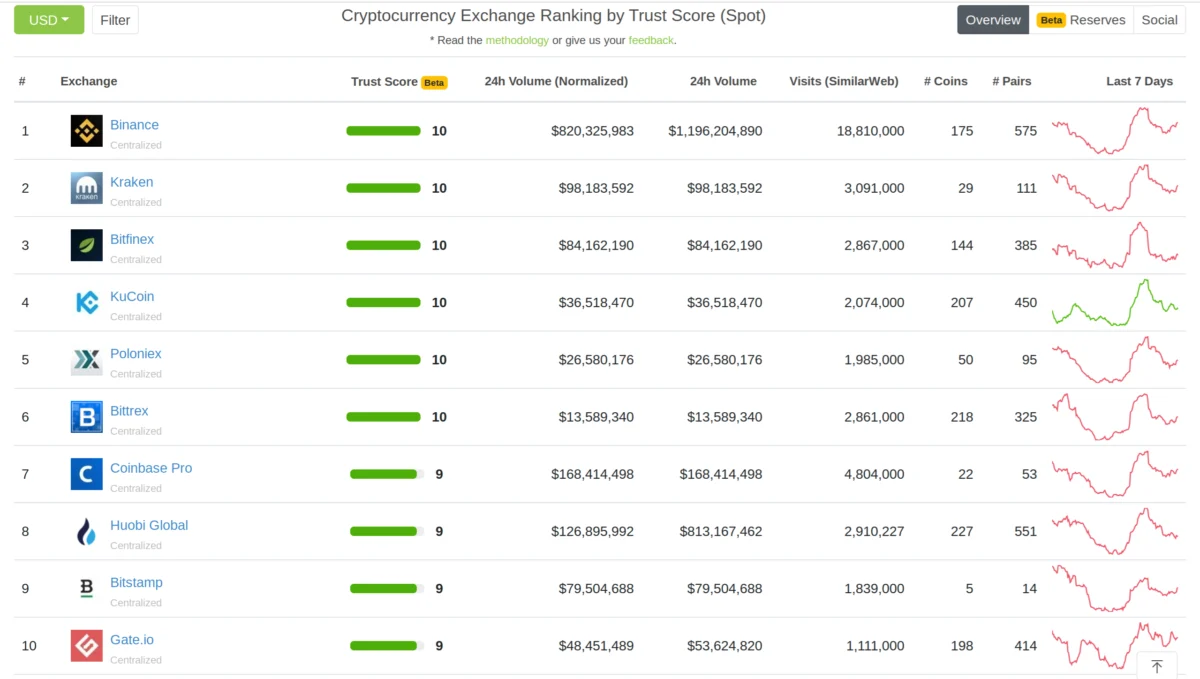
Despite the across-the-board drop in activity, the hierarchy of power within the exchange landscape remained largely unchanged. Binance, the world’s largest exchange by volume, saw its trading volume fall by 56% to $668 billion. Despite this staggering nominal drop, Binance maintained its dominant position as the primary hub for crypto liquidity.
The drop in volume was uniform across the industry. Whether dealing with legacy exchanges like Coinbase or the more derivative-heavy platforms like Kraken and Bitstamp, the narrative was the same: the velocity of money in the crypto ecosystem had slowed significantly.
However, the "steepness" of the decline requires context. Data scientists argue that comparing June to May is an exercise in "unfair comparison." May was an anomaly—a month defined by historic volatility and forced liquidations. When compared to the early months of 2021, the June figures appear less like a "crash" and more like a "normalization."

Official Responses and Expert Analysis
Clara Medalie, the research lead at Kaiko, a leading provider of cryptocurrency market data, provided crucial perspective during the fallout. In an interview with CNBC, Medalie highlighted that while the headline figures look alarming, they lack the necessary historical context.
"Volumes plunged in June on pretty much every exchange, however, overall volumes are still magnitudes greater than they were one year ago today," Medalie noted.
She emphasized that June’s figures still ranked within the top five months of trading volume in the history of the asset class. This suggests that the "crypto winter" narrative may have been premature. Instead, the market is simply reverting to a baseline after the unsustainable, frenzied activity of the first quarter of 2021. The current volume levels are still "massive" when viewed against the 2020 calendar year, indicating that while the market is cooler, it remains structurally larger and more liquid than it was just twelve months prior.
Implications: What Does This Mean for the Future?
The contraction in volume has several deep-seated implications for the future of digital asset markets:
1. Market Maturation
Periods of low volume and sideways price action are often considered necessary for market maturation. They allow for the "cleansing" of speculative leverage. When derivative open interest is high, the market is prone to "flash crashes" caused by liquidations. A period of lower volume allows the market to build a more stable foundation, shaking out short-term speculators in favor of long-term holders.
2. The Shift in Mining Dynamics
The migration of Bitcoin miners from China to North America and other jurisdictions is a long-term bullish event for the network’s decentralization. However, in the short term, this redistribution creates volatility. The June volume drop reflects the market’s internal processing of this geographic transition.
3. Regulatory Uncertainty as a Constant
The events of June 2021 underscored the sensitivity of the market to regulatory news. The contrast between China’s crackdown and El Salvador’s adoption highlights a bifurcated global landscape. Future volumes will likely remain tethered to regulatory announcements, as institutional investors await clearer legal frameworks before committing fresh capital.
4. The "Institutional" Holding Pattern
Institutional investors, who entered the space in early 2021, are notoriously sensitive to liquidity. A drop in volume often forces these players to pause their accumulation strategies, as they require deep order books to execute large trades without impacting price. As such, the return of "institutional-grade" volume will likely be the primary indicator that the market has entered its next phase of growth.
Conclusion: A New Normal?
The 40% decline in trading volume observed in June 2021 should be viewed as a cooling-off period rather than a structural failure. By shedding the extreme, volatility-driven volume of May, the market moved toward a more sustainable, if quieter, environment.
While the headlines of "plunging volumes" may have unsettled short-term traders, the underlying data suggests a resilient market that is simply catching its breath. With overall volumes remaining significantly higher than in previous years, the crypto ecosystem continues to exhibit the characteristics of a growing, albeit volatile, asset class. As miners settle into their new homes and sovereign nations begin to experiment with Bitcoin, the stage is set for the next chapter of the digital asset journey—one that will likely be defined by stability rather than the reckless exuberance of the past.
Disclaimer: The analysis provided in this report is for informational purposes only and does not constitute financial or investment advice. Cryptocurrency investments involve significant risk, including the potential loss of principal. Investors are encouraged to conduct their own due diligence and consult with qualified financial advisors before making any high-risk investments in digital assets. The Daily Hodl does not endorse or recommend the purchase or sale of any specific cryptocurrency.