Institutional Exodus: Crypto Markets Reel Under Pressure of Geopolitical Tariff Uncertainty
In a period defined by heightened macroeconomic sensitivity, the digital asset sector is currently navigating one of its most turbulent phases in recent memory. According to the latest Digital Asset Fund Flows Weekly Report released by institutional asset manager and research firm CoinShares, the global crypto market is experiencing a significant liquidity drain. Institutional investors, spooked by the ripple effects of aggressive trade policies—specifically the recent tariff initiatives led by the Trump administration—have pulled hundreds of millions of dollars from investment products in a rapid move toward risk-off positioning.
The Scale of the Institutional Retreat
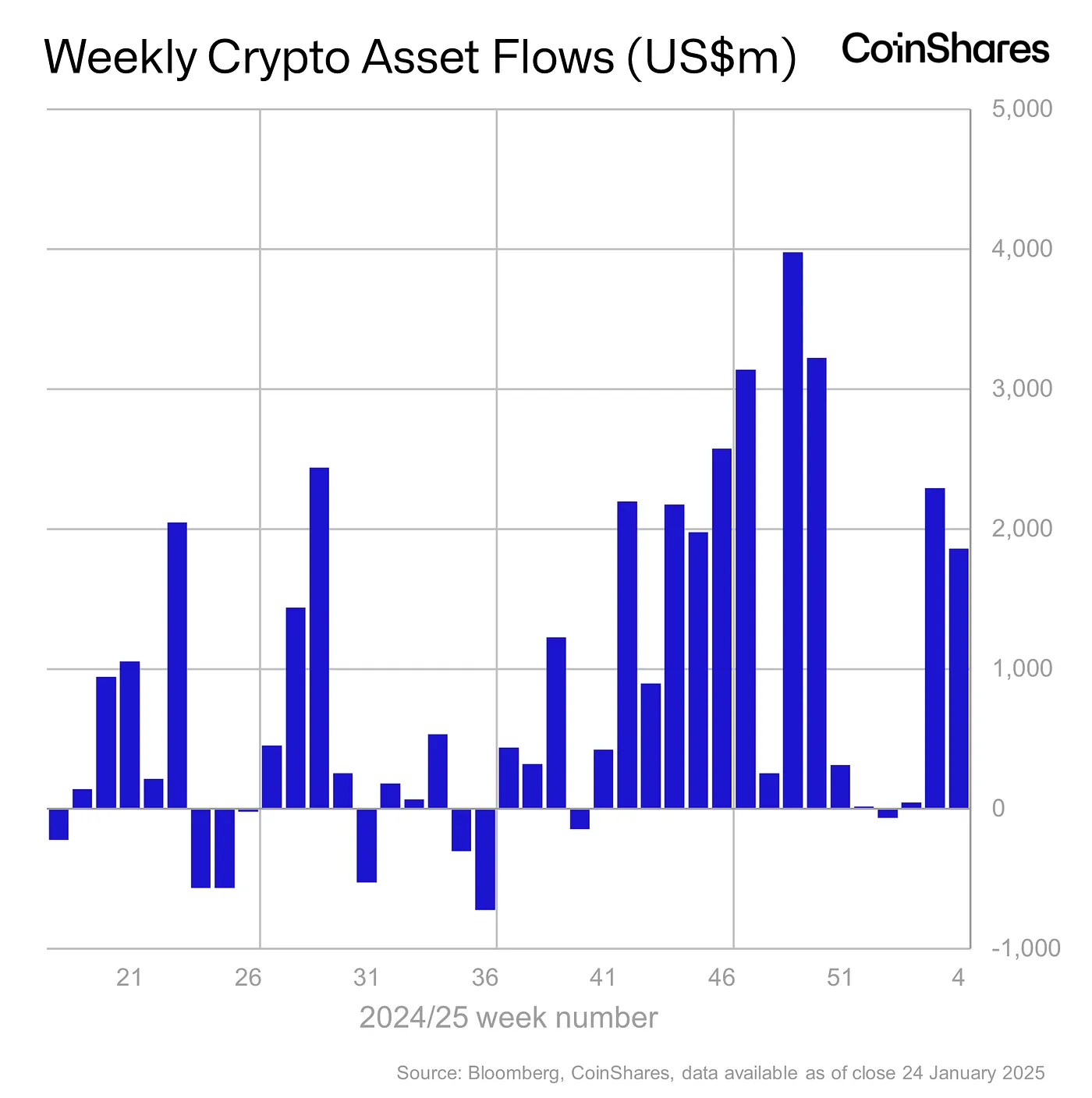
The data provided by CoinShares paints a stark picture of the current investment landscape. For the third consecutive week, digital asset investment products have faced substantial outflows, totaling approximately $795 million. This trend represents a dramatic shift in sentiment, effectively undoing months of bullish momentum that had characterized the early part of the year.
The cumulative effect of this "wave of negative sentiment," which took hold in early February, has resulted in a staggering $7.2 billion in total outflows. To put this in perspective, these outflows have almost entirely eradicated the year-to-date (YTD) inflows, which have now been pared back to a marginal $165 million. This near-total erasure of annual gains highlights the fragility of institutional confidence when faced with exogenous shocks such as large-scale trade protectionism.
A Breakdown of the Liquidity Bleed
The outflow is not distributed evenly across the asset class; it is heavily concentrated in the market’s primary heavyweights. Bitcoin (BTC), the perennial bellwether for the crypto industry, bore the brunt of the institutional liquidation, suffering $751 million in outflows last week alone.
Ethereum (ETH), the second-largest digital asset, also saw significant pressure, shedding $37.6 million in assets under management (AuM). Smaller-cap projects, which are traditionally more volatile, also saw capital flight, albeit on a smaller scale:
- Solana (SOL): $5.1 million in outflows.
- Aave (AAVE): $0.78 million in outflows.
- Sui (SUI): $0.58 million in outflows.
Chronology of a Market Correction
The timeline of this downturn is intrinsically linked to the escalation of trade rhetoric. In early February, as rumors and subsequent announcements regarding new tariffs began to circulate, the market experienced its initial shock. The "calamitous" nature of these tariffs, as described by analysts, created an environment of uncertainty that is antithetical to speculative investment.
The Low Point: April 8
The downward trajectory reached its nadir on April 8. By this date, total assets under management for the sector had plummeted to their lowest levels since early November 2024. The correlation between the tariff announcements and the drop in AuM suggests that institutional players—ranging from hedge funds to large-scale crypto ETP providers—were hedging against the threat of a global trade war by liquidating their crypto exposure.
The Temporary Rebound
However, the market demonstrated a degree of resilience toward the end of the reporting period. Following a temporary reversal of the tariff measures by President Trump, the market saw a late-week price rebound. This relief rally served as a vital support for the sector, lifting total AuM to $130 billion—a notable 8% increase from the April 8 lows. This volatility underscores the market’s acute sensitivity to policy pivots, proving that in the current climate, political news cycles are currently the primary drivers of price action.
Counter-Trends: Pockets of Resilience
Despite the overarching bearish sentiment, the crypto ecosystem is not monolithic. While the major assets suffered, a niche group of altcoins managed to defy the broader trend, attracting modest institutional capital.
XRP led this minor inflow, attracting $3.5 million, suggesting that some investors may be seeking value or utility-focused assets in the face of macro uncertainty. Other tokens, including Ondo (US$0.46m), Algorand (US$0.25m), and Avalanche (US$0.25m), also saw minor inflows. These figures, while small in the context of the total $795 million outflow, indicate that institutional interest in specific blockchain ecosystems remains present, even if the overall appetite for risk is currently suppressed.

Economic Implications of the Tariff War
The primary driver of this turmoil, as identified by CoinShares, is the "calamitous" tariff policy. For institutional investors, tariffs represent more than just a political headline; they represent a fundamental shift in economic stability.
The Impact on Institutional Sentiment
Institutional investors operate on a foundation of long-term risk assessment. When trade wars are initiated, the immediate implications include:
- Inflationary Pressure: Tariffs often increase the cost of goods, which can lead to higher interest rates as central banks struggle to contain inflation.
- Currency Volatility: Trade wars disrupt foreign exchange markets, often strengthening the US Dollar at the expense of other currencies, which can dampen interest in speculative "risk-on" assets like Bitcoin.
- Supply Chain Disruption: Businesses face uncertainty regarding the cost of raw materials and the viability of international markets, leading to reduced corporate spending and, by extension, reduced investment in high-risk asset classes.
The "Risk-Off" Paradigm
The recent trend is a classic example of a "risk-off" environment. When the global economic horizon appears cloudy, institutions shift capital into "safe-haven" assets like government bonds or cash. Because digital assets are still categorized as high-beta, speculative instruments, they are often the first to be sold off when portfolio managers are tasked with reducing risk exposure.
Future Outlook: What Lies Ahead?
The volatility of the past few weeks leaves the crypto market in a precarious state. The question for investors is whether the temporary reversal of tariffs will lead to a sustained recovery or if it is merely a "dead cat bounce" in a longer-term downtrend.
The Role of Regulatory Clarity
Beyond tariffs, the industry continues to wait for further regulatory guidance. While policy decisions in Washington regarding trade have had an immediate impact, the underlying regulatory environment for crypto—specifically regarding taxation and asset classification—remains a persistent background factor.
The Institutional Perspective
Professional asset managers are watching the correlation between crypto assets and traditional equities closely. If the broader stock market continues to struggle under the weight of protectionist policies, it is unlikely that digital assets will decouple enough to sustain a bull run. The recovery of the $130 billion AuM mark is a positive sign, but it remains significantly lower than the highs observed earlier this year.
Conclusion: A Market at a Crossroads
The CoinShares report serves as a timely reminder that the digital asset industry, despite its decentralized nature, remains deeply interconnected with the traditional financial system. When the White House speaks, the crypto markets listen. The rapid withdrawal of $795 million in a single week is a clear signal that the "institutionalization" of crypto comes with a cost: higher susceptibility to the whims of geopolitical strategy.
As we move forward, the market will likely remain in a "wait-and-see" mode. Until there is greater certainty regarding the permanence of trade policies and the stability of the global economic order, institutional investors are likely to remain cautious. For the retail investor, this period of volatility highlights the necessity of rigorous due diligence and a clear understanding of how macro events ripple through the digital asset ecosystem.
Disclaimer: The analysis provided in this report is for informational purposes only and does not constitute financial, investment, or legal advice. Digital assets are inherently high-risk, and investors should conduct their own independent research before engaging in any trading activities. The Daily Hodl is not an investment advisor, and losses incurred through market participation are the sole responsibility of the individual investor. This article contains affiliate marketing links.