Institutional Exodus: How Geopolitical Tariff Turmoil Decimated Crypto Inflows
The digital asset landscape, often characterized by its high-octane volatility and speculative fervor, has found itself navigating a precarious macroeconomic environment. According to the latest Digital Asset Fund Flows Weekly Report from CoinShares, a leading crypto asset manager and research firm, institutional confidence has taken a severe hit. The culprit, according to analysts, is a series of "calamitous" tariff policies introduced by the Trump administration, which have triggered a massive capital flight from crypto investment products.
The State of Play: A Record-Breaking Contraction
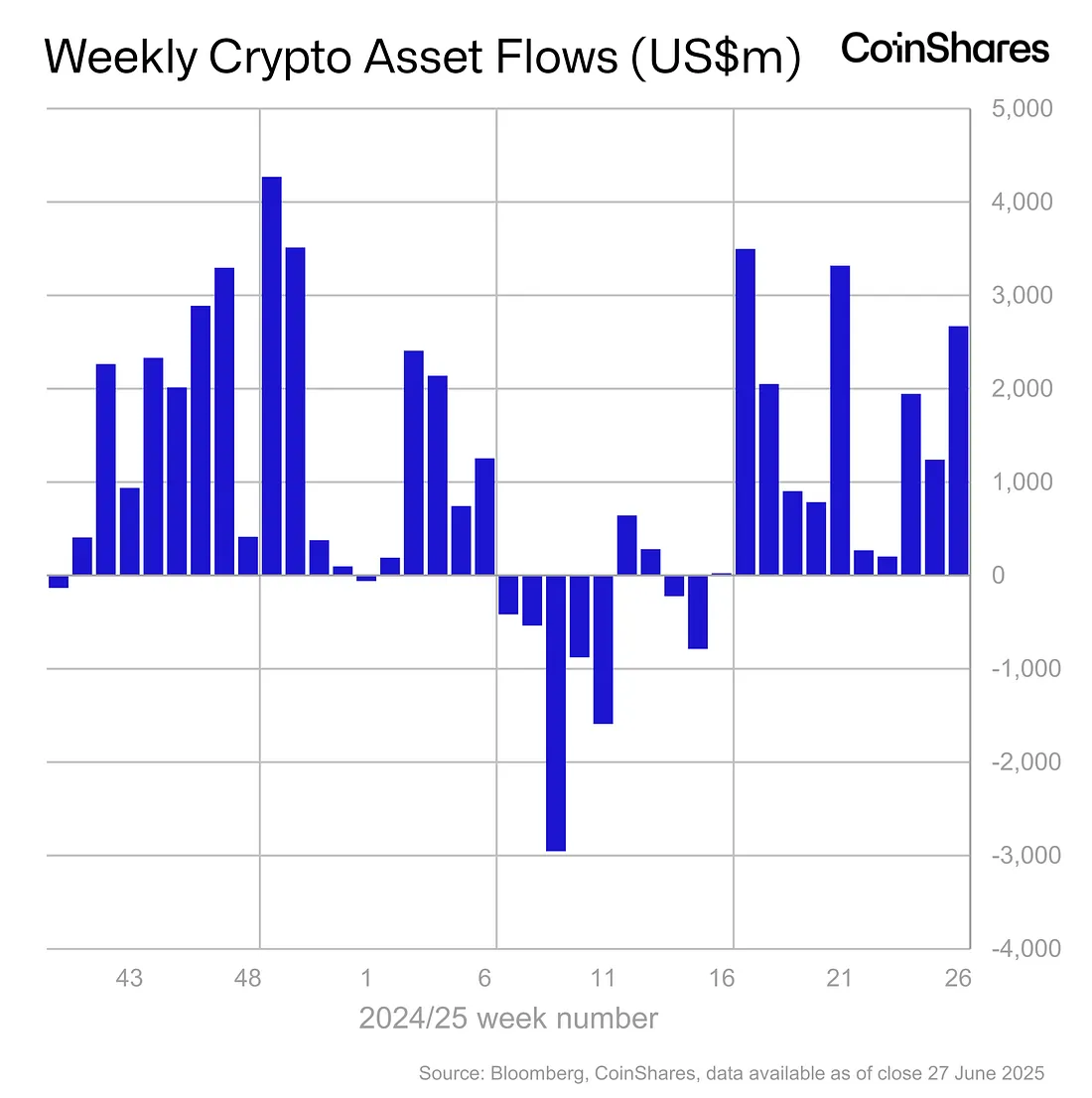
For the third consecutive week, digital asset investment products have faced significant outflows, totaling a staggering $795 million. This trend is not merely a temporary blip; it represents a fundamental shift in institutional sentiment that has effectively erased the gains of the entire year.
At the beginning of 2025, the sector was riding a wave of optimism, with strong year-to-date (YTD) inflows suggesting a robust institutional appetite for crypto-exposure. However, the tide turned abruptly in early February. Since then, the sector has bled roughly $7.2 billion in assets. As of the latest report, total year-to-date inflows have been reduced to a mere $165 million—a figure that underscores the severity of the market’s reversal.
While the aggregate numbers paint a bleak picture, there is a glimmer of resilience. A late-week price rebound in the broader market helped lift total assets under management (AuM) from their nadir of April 8—the lowest point for the sector since early November 2024—to approximately $130 billion. This 8% recovery coincided with the administration’s temporary reversal of the contentious tariffs, suggesting that market liquidity is highly sensitive to policy shifts in Washington.
Chronology of the Market Slide
To understand the current state of the market, one must look at the timeline of events that catalyzed this capital flight:
- Early February: The onset of the negative sentiment began as trade rhetoric intensified. Institutional investors, wary of the potential inflationary impact and economic instability caused by a looming tariff war, began reallocating capital away from "risk-on" assets like Bitcoin and into safer havens.
- March – Mid-April: The tariff war intensified, leading to a sustained period of selling pressure. During this time, weekly reports from CoinShares consistently showed net outflows, reflecting a broader de-risking strategy among institutional desks.
- April 8: This date marked the cyclical bottom for institutional AuM. With trade tensions at a fever pitch, sentiment toward the asset class reached a point of extreme pessimism.
- Mid-April (The Pivot): Following the announcement of a temporary suspension of certain tariffs, a sudden, albeit cautious, price rebound occurred. This triggered a technical recovery in AuM, though it did not fully reverse the damage done to the cumulative inflow tally.
The Bleeding: A Breakdown of Asset Performance
The exodus of capital was not uniform across the crypto ecosystem. Larger, established assets bore the brunt of the institutional liquidation, while smaller tokens saw sporadic, albeit minor, interest.
The Heavy Hitters: Bitcoin and Ethereum
Bitcoin (BTC), the undisputed bellwether of the industry, served as the primary vehicle for liquidation. Last week alone, Bitcoin-based investment products saw a staggering $751 million in outflows. This indicates that institutional players—ranging from hedge funds to asset managers—were utilizing Bitcoin as a liquidity source to manage risk in their broader portfolios.
Ethereum (ETH), the second-largest digital asset, was not spared the carnage. Products tracking ETH saw outflows of $37.6 million. The lack of institutional conviction in Ethereum during this period suggests that the broader macroeconomic headwinds are overshadowing the specific utility or technological developments within the Ethereum network.
The Altcoin Landscape
Smaller-cap assets also faced pressure, though the volumes were significantly lower, reflecting a more cautious approach to riskier assets. Solana (SOL), AAVE, and SUI products saw outflows of $5.1 million, $0.78 million, and $0.58 million, respectively.
Conversely, a select few assets managed to buck the trend. XRP led the pack with $3.5 million in inflows, potentially driven by speculative developments regarding its ongoing regulatory status. Other niche assets, including Ondo, Algorand, and Avalanche, saw minor inflows of $0.46 million, $0.25 million, and $0.25 million, respectively. These figures, while modest, highlight a diversification trend where some investors are betting on specific narratives despite the overarching gloom.

Supporting Data: Understanding the Institutional Perspective
Institutional investors typically approach digital assets through the lens of macro-correlation. When trade wars are initiated, the primary fear is the disruption of supply chains and the potential for "stagflation"—a toxic mix of slow growth and rising prices.
Data from the CoinShares report reveals a clear correlation between the administration’s tariff announcements and the pace of outflows. When tariffs were at their most aggressive, the outflow velocity peaked. Conversely, the "temporary reversal" of these policies acted as a floor for the market, preventing a total collapse of AuM.
This volatility highlights the changing nature of the crypto market. Institutional participation, while providing liquidity and legitimacy, has also made the market more sensitive to global political events. Unlike the retail-driven cycles of the past, the current market reacts to fiscal policy in much the same way that traditional commodities or equity markets do.
Implications for the Future of Digital Assets
The current situation raises several critical questions regarding the future of the industry.
The Regulatory and Policy Risk
The primary implication of this cycle is that the crypto market is no longer decoupled from traditional macroeconomic policy. As long as digital assets are viewed as high-risk speculative vehicles, they will remain the first to be sold off when trade wars or geopolitical crises loom. The "calamitous" nature of these tariffs has served as a stress test for the asset class, and the results have been sobering.
The Institutional "Hold" Pattern
Institutional investors are currently in a "wait and see" mode. The rapid erasure of year-to-date inflows suggests that institutions are not yet ready to treat Bitcoin as a reliable "digital gold" hedge against geopolitical instability. Instead, they are treating it as a high-beta asset that is highly sensitive to the economic climate. For the industry to mature, it must demonstrate a decoupling from such policy-induced shocks.
Resilience Amidst Volatility
Despite the massive outflows, the sector has demonstrated an ability to recover. The 8% increase in AuM following the tariff reversal indicates that the underlying demand for crypto-exposure remains. If the economic climate stabilizes, there is a strong potential for a return of capital. However, this will likely require more than just a temporary reversal of policies; it will require a sustained period of economic clarity and a reduction in trade-related friction.
Conclusion: A Turning Point for Crypto
The findings from CoinShares serve as a stark reminder of the complexities involved in integrating digital assets into the global financial system. The massive $795 million weekly outflow is a reflection of a nervous institutional class grappling with the unpredictability of modern trade policy.
As the industry moves forward, the focus will likely shift toward how these assets perform during periods of policy stagnation. The "calamitous" tariff war has served as a defining event for 2025, proving that for all the talk of decentralization and independence, the crypto market remains firmly tethered to the pulse of the global economy. Investors, analysts, and stakeholders must now prepare for a period where policy outcomes carry as much weight as technological advancements, ensuring that their portfolios are positioned to weather the storms of political volatility.
Disclaimer: The analysis provided above is based on industry reports and market data. It does not constitute financial advice. Investors are urged to conduct their own due diligence before engaging in any high-risk investments. Digital assets remain highly volatile, and participants should be aware that all trading involves the risk of capital loss.