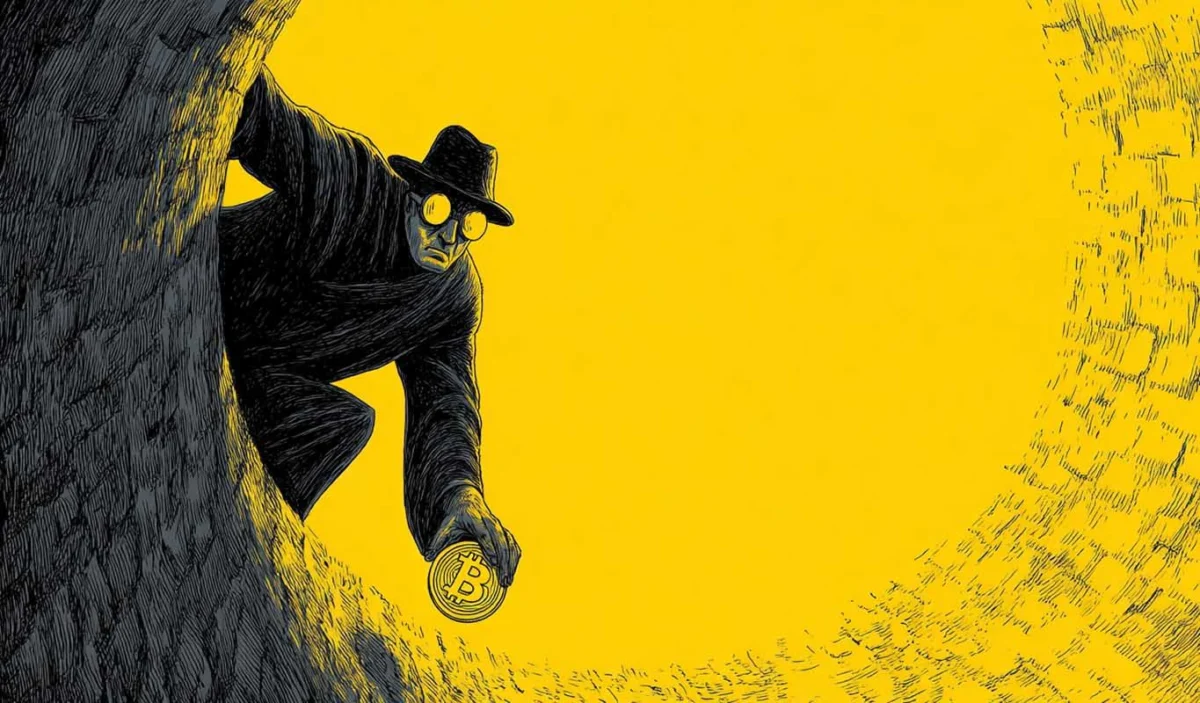
Beyond the "Wild West": Why Maturity, Regulation, and Operational Trust Will Define Crypto’s Next Era
By Financial Markets Desk
Insights adapted from a HodlX Guest Contribution by Valentina Drofa, Founder and CEO of Drofa Comms
Main Facts
The cryptocurrency market stands at a critical historical crossroads. Entering a multi-billion-dollar valuation phase with projections pointing toward exponential growth over the next four to five years, the industry is no longer an eccentric financial subculture. Mainstream institutional players are actively deploying capital, retail adoption is broadening, and global regulatory bodies are stepping up to formulate formal frameworks.
Yet, despite its rapid maturation, the digital asset ecosystem remains plagued by a fragile public image. Frequent hacks, exploits, and high-profile project collapses continually drag the sector back to an old, familiar narrative: that crypto remains the "Wild West" of finance.
According to industry veterans, the central challenge facing digital assets is no longer a lack of technological innovation or capital inflow. Instead, it is an acute deficit of operational trust. While traditional finance (TradFi) treats corporate reputation as core infrastructure—slow to build, costly to maintain, and devastating to lose—the crypto industry has historically treated reputation as a flexible marketing asset that can be easily reinvented after a crisis. As the market scales toward long-term institutional integration, industry leaders argue that transitioning from transient hype to predictable, accountable governance is no longer optional; it is a structural prerequisite for survival.
Chronology: The Evolution of Crypto’s Trust Deficit
To understand how the digital asset market arrived at its current juncture, it is helpful to examine the historical trajectory of trust and governance within the sector:
- The Genesis and Anonymity Era (Late 2000s–Mid 2010s): Born in the wake of the 2008 global financial crisis, Bitcoin and early altcoins introduced decentralized, trustless systems. In this phase, anonymity and a complete rejection of traditional financial oversight were viewed as features rather than bugs. Trust was placed entirely in cryptographic code rather than human institutions.
- The ICO Boom and Speculative Excess (2017–2018): The Initial Coin Offering (ICO) craze lowered the barriers to entry for capital formation. While it sparked immense innovation, it also allowed rogue actors, poorly vetted projects, and outright scams to flourish. The market experienced its first major wave of mainstream disillusionment.
- DeFi Summer and the Infrastructure Scaling Phase (2020–2021): Decentralized Finance (DeFi) introduced complex financial primitives on-chain, followed closely by the proliferation of centralized crypto lenders and exchanges. Yield chasing and low regulatory oversight created systemic vulnerabilities, setting the stage for massive structural failures.
- The Great Contagion and Institutional Reckoning (2022–2023): The collapse of major centralized entities, algorithmic stablecoins, and lending desks exposed deep structural flaws in risk management and corporate governance. The "Wild West" narrative reached a fever pitch, forcing institutional investors and regulators to demand sweeping overhauls.
- The Compliance and Maturation Era (2024–2026 and Beyond): As the market targets multi-billion-dollar valuations, the industry is entering a phase defined by rigorous compliance. Emerging regulatory frameworks like Europe’s Markets in Crypto-Assets (MiCA) and DAC8 are forcing digital asset firms to adopt traditional financial standards of disclosure, security, and accountability.
Supporting Data and Market Realities
The argument for operational reform is underscored by hard economic and market data. Research firms project that the global cryptocurrency market will double in size over the next four to five years, cementing its status as a permanent fixture of global finance. However, this growth occurs against a backdrop of persistent vulnerability to emotional and psychological market shifts.
Unlike traditional equity or debt markets, where historical data, audited balance sheets, and decades of regulatory precedent anchor valuations, crypto remains young enough to be swayed by sudden emotional leaps of judgment.
- Barrier to Entry vs. Governance Gaps: The low barrier to entry that democratized financial access in crypto also created an environment where governance structures lagged years behind technological capability.
- The Cost of Inaction: Historical data shows that while code exploits and smart contract vulnerabilities account for a significant portion of capital loss, the perception of a project is far more frequently damaged by poor crisis communication, evasive leadership, and a lack of verifiable transparency.
- Regulatory Convergence: Regulatory compliance is shifting from a peripheral concern to a primary market driver. Frameworks such as MiCA are establishing standardized baselines for transparency, consumer protection, and reserve auditing across borders.
Official Responses and Industry Perspectives
Market leaders, regulatory architects, and communications experts are increasingly vocal about the need to redefine how digital asset companies interact with the public and their users.

Valentina Drofa, founder and CEO of Drofa Comms—a global financial communications agency representing prominent fintech and blockchain brands—emphasizes that reputation must evolve from a tactical marketing tool into a fundamental component of a company’s business model.
"In TradFi, reputation functions akin to infrastructure—it’s slow to build, expensive to maintain and losing it is a loud and devastating process. In crypto, reputation has often behaved in a more flexible manner—like something that can be redesigned, polished and re-launched," Drofa notes.
According to industry analysts, transparency has unfortunately become a hollow buzzword. Many companies claim transparency while offering fragmented, selectively presented, or unverifiable data. True operational credibility, experts argue, relies on a triad of core pillars:
- Consistent and Verifiable Information: Public statements must match operational reality, supported by regular audits, verifiable proof-of-reserves, and clear communication channels.
- Crisis Response Accountability: When exploits or market downturns occur, the speed and clarity of a company’s response dictate its survival. Silence, obfuscation, or defensive posturing inflict far more damage than the technical vulnerability itself.
- Visible Leadership and Governance: While decentralized ideology underpins the crypto ethos, mainstream users and institutional partners ultimately place their confidence in identifiable, accountable human leadership. Knowing that a responsible team stands ready to rectify errors provides crucial psychological reassurance.
Implications for the Future of Digital Assets
The ongoing shift toward institutional-grade trust carries profound structural implications for the trajectory of the cryptocurrency market.
1. Predictability Over Pure Innovation
The next phase of crypto evolution will likely be defined less by hyper-experimental, high-risk financial products and more by operational predictability. As governance models mature and regulatory guardrails take root, the overall systemic fragility of the market will decline. Lower fragility directly correlates with higher, more sustainable institutional participation.
2. The Normalization of Compliance
Compliance is no longer viewed merely as a bureaucratic hurdle designed to stifle crypto’s ethos. Instead, it is increasingly recognized as a competitive advantage. Companies that embrace rigorous regulatory frameworks will enjoy preferential access to institutional capital, banking partnerships, and mainstream consumer trust.
3. Survival Through Institutional-Grade Standards
In financial ecosystems, trust and survival are inextricably linked. Projects that fail to adapt to traditional standards of disclosure, accountability, and risk management will find themselves marginalized. Conversely, those that successfully bridge the gap between cryptographic innovation and traditional institutional governance will anchor the next generation of global finance.
As the crypto market steps further into its multi-billion-dollar future, shedding the "Wild West" tag will require a conscious, deliberate industry-wide commitment. By embedding trust directly into daily operations, the digital asset sector can finally build a foundation durable enough to support the weight of the global economy.