Bridging Middleware to Market: Chainlink Transitions BUILD Program to Commercial Fee-Based Models
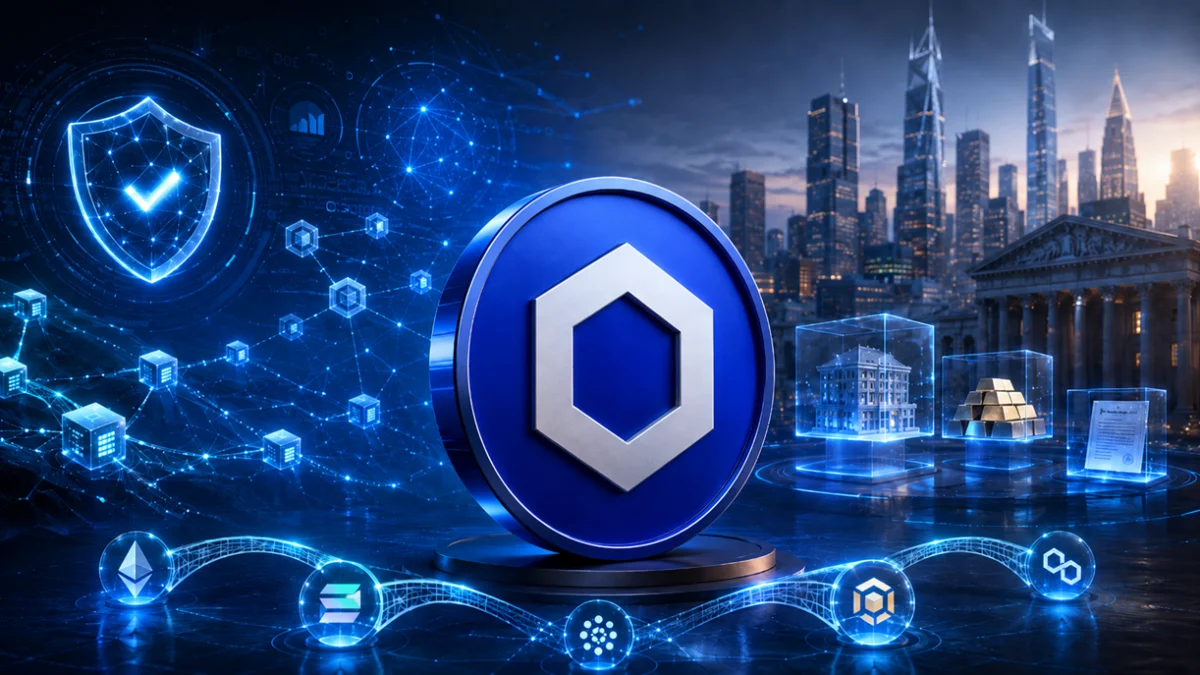
Chainlink, the decentralized computing platform and industry-standard oracle network, is embarking on a significant transition in its economic design. The network is systematically shifting the structural framework of its Chainlink BUILD program away from early-stage token-alignment models and toward direct, commercial fee agreements. This strategic pivot is designed to bind the utility of the native LINK token more closely to the real-world consumption of its oracle, data, and cross-chain infrastructure services.
This shift marks a major milestone in the evolution of Web3 middleware. It signals a transition from the speculative, bootstrapping phase of decentralized network growth to a mature, revenue-driven operational model. For years, the broader crypto market has debated how Chainlink’s near-monopoly on decentralized data delivery translates into tangible value accrual for the LINK token. This latest economic restructuring represents Chainlink’s most explicit attempt yet to address that question by establishing clear, commercial payment rails.
Main Facts: The Transition to Commercial Fee Structures
The core of the announcement lies in the structured wind-down of the initial incentive phase of the Chainlink BUILD program. The transition is governed by several key operational parameters:
- Sunset of BUILD Rewards: The final day for participating projects to claim rewards under the legacy BUILD framework is set for July 7, 2026.
- The Shift to Commercial Agreements: Under the newly established guidelines, projects currently enrolled in or entering the BUILD program will gradually migrate toward formalized commercial fee agreements.
- Diversified Settlement Options: Instead of dedicating a fixed percentage of their native project token supply to the Chainlink ecosystem—as was common under the initial BUILD architecture—participating protocols will transition to paying service fees directly. These fees will be settled in LINK or other highly liquid tokens.
- Focus on Economic Sustainability: The move is designed to transition Chainlink’s relationship with its client protocols from one of mutual ecosystem support to a traditional client-vendor infrastructure relationship.
While this change represents a fundamental shift in how Chainlink monetizes its services, market analysts emphasize that the transition will not trigger an immediate, short-term impact on the spot price of LINK. Rather, it establishes a long-term framework for sustainable, demand-driven utility.
Chronology of Chainlink’s Economic Evolution
To understand the significance of this transition, it is necessary to examine how Chainlink’s monetization strategies and ecosystem programs have evolved over the last several years.
[2017–2021: Bootstrapping Phase]
   │  • Chainlink establishes oracle dominance.
   │  • Services subsidized by native treasury; clients pay ad-hoc fees.
   ▼
[September 2022: Launch of Chainlink Economics 2.0 & BUILD]
   │  • BUILD program debuts to align early-stage projects.
   │  • Startups commit 3%–10% of token supply in exchange for priority support.
   ▼
[December 2022: Launch of Chainlink Staking v0.1]
   │  • First step toward securing the network with locked LINK.
   │  • Establishes initial staking pools for node operators and community.
   ▼
[Late 2023: Staking v0.2 & CCIP Mainnet Rollout]
   │  • Expanded staking capacity and modular reward structures.
   │  • Cross-Chain Interoperability Protocol (CCIP) introduces fee-generation rails.
   ▼
[Early 2025: Announcement of Commercial Fee Transition]
   │  • Shift from equity-like token commitments to liquid fee agreements.
   │  • Clear runway established for existing BUILD participants.
   ▼
[July 7, 2026: Final Deadline for Legacy BUILD Rewards]
      • Full transition to commercial, liquid fee-based infrastructure agreements.
1. The Bootstrapping Era (2017–2021)
In its early years, Chainlink focused entirely on network security, node operator reliability, and rapid market penetration. During this phase, node operators were compensated primarily through LINK tokens allocated from Chainlink’s smart contract treasury, supplemented by ad-hoc fees paid by early DeFi adopters. While adoption soared, critics pointed out that the economic feedback loop between dApp usage and token demand remained loose.
2. The Introduction of Economics 2.0 and BUILD (September 2022)
Recognizing the need for a more structured ecosystem, Chainlink launched "Chainlink Economics 2.0." The cornerstone of this initiative was the Chainlink BUILD program. Designed to foster early-stage Web3 projects, BUILD allowed startups to access Chainlink’s premium services and technical support without paying hefty upfront fees. In return, these projects committed a portion of their native token supply (typically 3% to 10%) to the Chainlink network, aligning the financial success of the projects with the health of the oracle infrastructure.
3. The Implementation of Staking (December 2022 – 2023)
Chainlink introduced Staking v0.1 in late 2022, followed by a highly anticipated upgrade to Staking v0.2 in late 2023. Staking allowed community members and node operators to lock up LINK to secure the network, paving the way for a system where fee revenues could eventually supplement base staking yields. Simultaneously, the Cross-Chain Interoperability Protocol (CCIP) was launched, introducing a standard framework for cross-chain data and value transfer, complete with its own fee-generation mechanisms.
4. The Shift to Commercial Maturity (Present – July 2026)
With hundreds of protocols now integrated and a robust network of institutional partners, Chainlink is moving past the startup-alignment phase. The transition announced today sets a clear multi-year runway, culminating on July 7, 2026, to convert ecosystem alignments into sustainable commercial contracts.
Supporting Data: The Scale of Chainlink’s Footprint
The decision to transition to commercial fee agreements is backed by Chainlink’s dominant position in the decentralized oracle market. The sheer volume of activity secured by the network highlights why a transition to formal commercial pricing is viable.
| Metric / Parameter | Value / Status |
|---|---|
| Total Transaction Value Enabled (TVE) | Trillions of USD cumulative |
| Total Integrations | Over 2,400+ distinct projects and protocols |
| Supported Blockchains | 20+ distinct Layer-1 and Layer-2 networks |
| Primary Services | Price Feeds, CCIP, Proof of Reserve, VRF, Functions |
| Staking v0.2 Pool Capacity | 45 Million LINK (fully capped during launch phases) |
| Legacy BUILD Reward End Date | July 7, 2026 |
Historically, the BUILD program’s reliance on native project tokens created a highly diversified but illiquid treasury of startup assets. While valuable during a bull market, holding a basket of volatile, early-stage utility tokens is capital-inefficient for a global infrastructure provider.
By shifting payment terms to LINK or other highly liquid tokens (such as stablecoins or major layer-1 assets), Chainlink ensures that its incoming revenue streams are immediately usable, easily valued, and directly applicable to offsetting operational costs, compensating node operators, or driving value back to the token ecosystem.
Official Context: Why the Infrastructure Model is Changing
According to official documentation and blog updates from Chainlink, this transition is a natural progression of the network’s life cycle.
In its initial design, the BUILD program was an incubation tool. It lowered the barrier to entry for early-stage builders who lacked the liquid capital to pay for enterprise-grade oracle services. For Chainlink, accepting native project tokens was a way to secure a stake in the upside of the next generation of DeFi, gaming, and real-world asset (RWA) protocols.
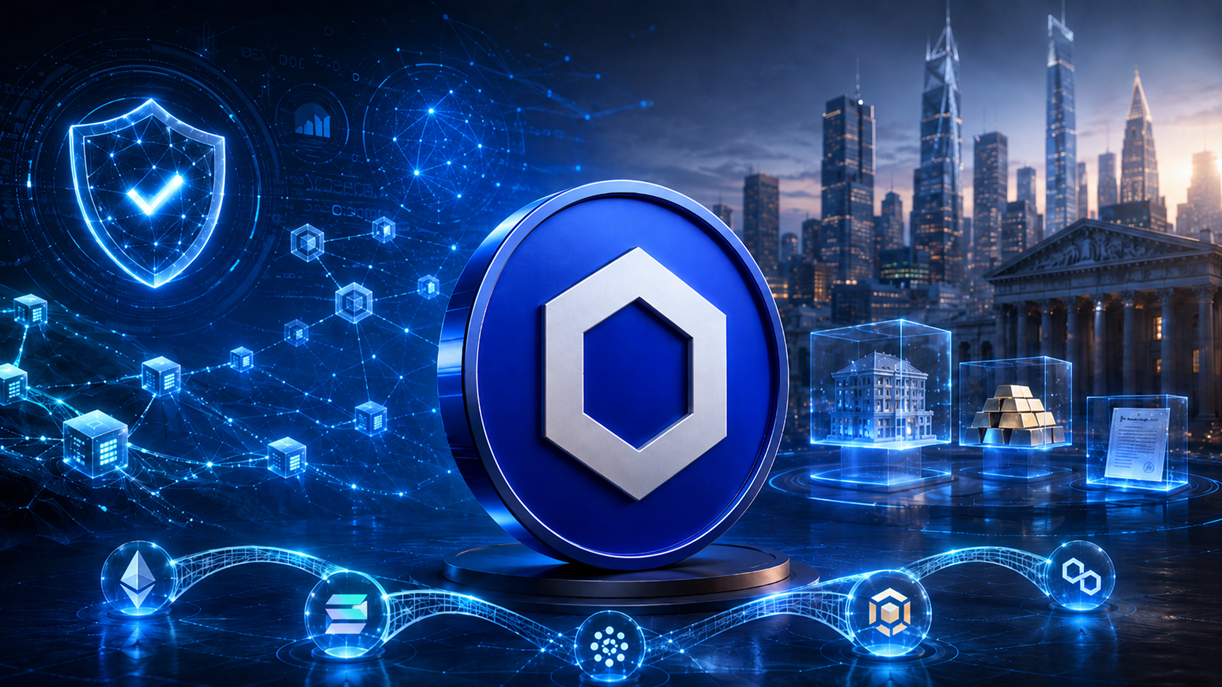
However, as the Web3 industry matures, both Chainlink and its client base are shifting toward more standardized business models. Mature decentralized applications (dApps) that have achieved product-market fit no longer require incubation support; they require reliable, predictable, and compliant service-level agreements (SLAs).
Furthermore, Chainlink’s aggressive expansion into institutional finance—evidenced by collaborations with Swift, the DTCC, ANZ Bank, and Euroclear—demands a traditional commercial approach. Institutional clients cannot operate within speculative token-swapping frameworks. They require clear pricing, transparent service fees, and standardized payment rails. Transitioning the BUILD program to commercial agreements aligns Chainlink’s crypto-native business with the expectations of legacy financial institutions.
Implications for the Crypto Ecosystem and LINK Holders
The transition from ecosystem alignment to commercial monetization has broad implications for several key stakeholders in the Chainlink ecosystem.
                      ┌────────────────────────────────────────┐
                      │    Transition to Commercial Fees       │
                      └───────────────────┬────────────────────┘
                                          │
                  ┌───────────────────────┴───────────────────────┐
                  ▼                                               ▼
┌──────────────────────────────────┐            ┌──────────────────────────────────┐
│     For the LINK Token Economy   │            │   For Web3 Protocols & Clients   │
└────────────────┬─────────────────┘            └────────────────┬─────────────────┘
                 │                                               │
  • Shifts utility to direct demand               • Standardizes infrastructure costs
  • Creates predictable on-chain flows            • Eliminates dilution from token reserves
  • Aligns with Staking v0.2 mechanisms           • Demands clear ROI on oracle usage
1. The Token Utility and Value Accrual Debate
For long-term LINK holders, the primary critique of Chainlink has been the disconnect between its massive market share and the direct utility of its token. Under the legacy model, a project could secure billions of dollars in smart contracts while paying nominal fees, or paying in highly volatile project tokens.
By standardizing fees in LINK or liquid tokens, Chainlink is building a direct bridge between network usage and token demand. If a protocol must continuously acquire LINK to pay for its daily oracle updates or cross-chain messages, a constant source of buy pressure is introduced to the market.
2. Impact on Staking and Node Operator Rewards
Node operators are the backbone of the Chainlink network, running the secure hardware that retrieves and validates off-chain data. Currently, node operators are heavily compensated via token emissions.
A transition to a commercial, fee-based model provides a sustainable path toward organic, non-inflationary compensation. If commercial agreements generate a steady stream of liquid fees, a portion of these revenues can be routed to node operators and community stakers. This shift is essential for the long-term viability of Chainlink Staking v0.2, as it transitions the staking yield from protocol inflation to real economic yield generated by network usage.
3. Navigating the Liquid Token Clause
The update notes that fees may be paid in "LINK or other liquid tokens." This clause introduces an element of nuance that investors must watch closely:
- If fees are paid in LINK: The demand loop is direct and easily measurable.
- If fees are paid in other liquid tokens (e.g., USDC, USDT, ETH): Chainlink or its node operators will receive highly stable assets. However, the market impact on LINK will depend on whether these alternative tokens are programmatically converted into LINK on the open market, or distributed directly as yield.
The exact routing of non-LINK liquid fees will be a critical metric for the community to monitor as these commercial agreements are executed.
4. The Maturation of Web3 Middleware
More broadly, Chainlink’s pivot sets a precedent for the entire Web3 middleware sector. For years, decentralized infrastructure networks (DePIN) and oracle protocols have relied on token inflation and speculative swap programs to subsidize their operations.
Chainlink’s transition demonstrates that for a decentralized network to achieve long-term viability, it must eventually adopt the revenue logic of traditional software-as-a-service (SaaS) and platform-as-a-service (PaaS) businesses.
The Next Metrics to Watch
As the industry moves toward the July 7, 2026 deadline, market participants, developers, and investors should monitor several key performance indicators (KPIs) to evaluate the success of this transition:
- Conversion Rate of BUILD Projects: How many current BUILD participants successfully transition to paid commercial agreements versus those that migrate to alternative, lower-cost oracle solutions?
- On-Chain Fee Volume: Will there be a visible, sustained increase in on-chain fee generation directly attributable to these new commercial contracts?
- Integration into Staking Pools: How and when will these commercial fees begin to supplement the reward pools for Chainlink Staking v0.2?
- Institutional Adoption of CCIP: To what extent will traditional financial institutions utilize these commercial fee structures for cross-chain settlement and asset tokenization?
By moving away from early-stage ecosystem rewards and establishing direct, commercial payment rails, Chainlink is positioning itself as a mature, revenue-generating utility network. While this transition is a gradual process that will unfold over the next year and a half, it represents a fundamental step forward in proving the economic sustainability of decentralized oracle infrastructure.