

Centralized Crypto Exchanges Suffer Record-Breaking 43.8% Volume Plunge in April, Ending Six-Month Bullish Streak
Introduction and Main Facts
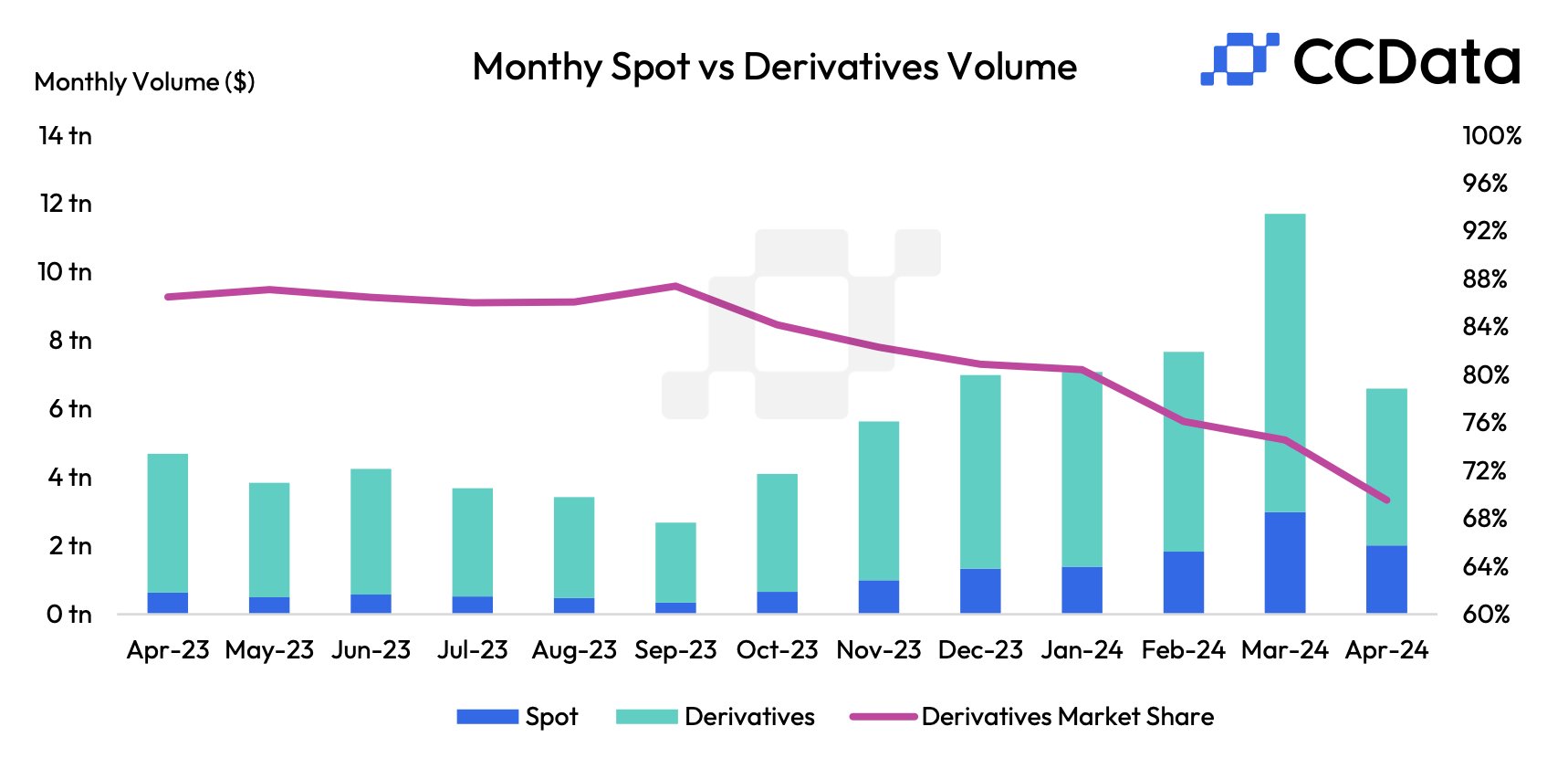
The red-hot momentum that characterized the cryptocurrency markets through the late winter and early spring of 2024 has hit a formidable speed bump. Fresh blockchain data released by digital asset tracking firm CCData reveals that the combined spot and derivatives trading volume across centralized cryptocurrency exchanges (CEXs) plummeted by a staggering 43.8% in April, bringing an abrupt halt to a six-consecutive-month winning streak.
According to the comprehensive report, the total trading volume across major centralized platforms fell to $6.58 trillion during the month of April. This sharp contraction marks a profound shift in market dynamics following a blistering first quarter of the year. The downturn affected nearly every major centralized platform, with industry titans such as Binance, Bybit, and OKX absorbing the heaviest blows in terms of absolute volume loss.
Despite the dramatic month-over-month decline, broader market context reveals that April’s figures are not entirely catastrophic. While down significantly from the record highs seen earlier in the year, the $6.58 trillion volume still outpaces nearly every month recorded throughout 2023, save for an exceptionally volatile December. Nevertheless, the contraction highlights a cooling-off period for retail and institutional traders alike, as macroeconomic headwinds, regulatory pressures, and shifting market narratives took center stage.
Concurrently, CCData’s sectoral performance metrics point to a fascinating rotation of capital within the digital asset ecosystem. While major exchange volumes withered, specific niche sectors—namely metaverse gaming, artificial intelligence (AI), and meme tokens—defied the broader market slowdown, registering strong double-digit gains on a month-to-date basis. Conversely, Layer-2 scaling solutions struggled, slipping firmly into negative territory.
Chronology of the Downturn: From Q1 Euphoria to April Correction
To understand the scale of April’s correction, one must examine the meteoric ascent that preceded it. The cryptocurrency market entered 2024 riding a wave of unprecedented optimism, largely catalyzed by the historic approval and subsequent inflows into spot Bitcoin Exchange-Traded Funds (ETFs) in the United States, alongside mounting anticipation for the fourth Bitcoin halving event, which took place in April.

The Q1 Boom
- January 2024: Markets stabilized following the ETF approvals, setting a solid foundation for heightened trading activity.
- February 2024: Centralized exchange volumes experienced a massive surge, climbing to approximately $8 trillion as retail participation re-entered the market en masse.
- March 2024: The market reached a fever pitch. Fueled by Bitcoin’s surge to new all-time highs prior to the halving, combined spot and derivatives volumes on CEXs skyrocketed to an astronomical $11 trillion. Leverage usage spiked, and liquidity poured into both major and alternative digital assets.
The April Reversal
As April dawned, the market dynamic shifted dramatically. The initial euphoria surrounding the Bitcoin halving was largely priced in, leading to a classic "buy the rumor, sell the news" phenomenon. Macroeconomic pressures—including persistent inflation data in the United States and tempered expectations regarding Federal Reserve interest rate cuts—further dampened risk appetite across global financial markets.
By the time the monthly ledgers were tallied, the $11 trillion market of March had contracted by nearly 44%, wiping out trillions of dollars in monthly transactional throughput and signaling a necessary, albeit painful, consolidation phase for the centralized exchange landscape.
Supporting Data: Breakdown of Exchange Volumes and Sector Performance
The granular data provided by CCData paints a vivid picture of how individual platforms and distinct crypto sectors fared during this transitional period.
Centralized Exchange Hard Hitters
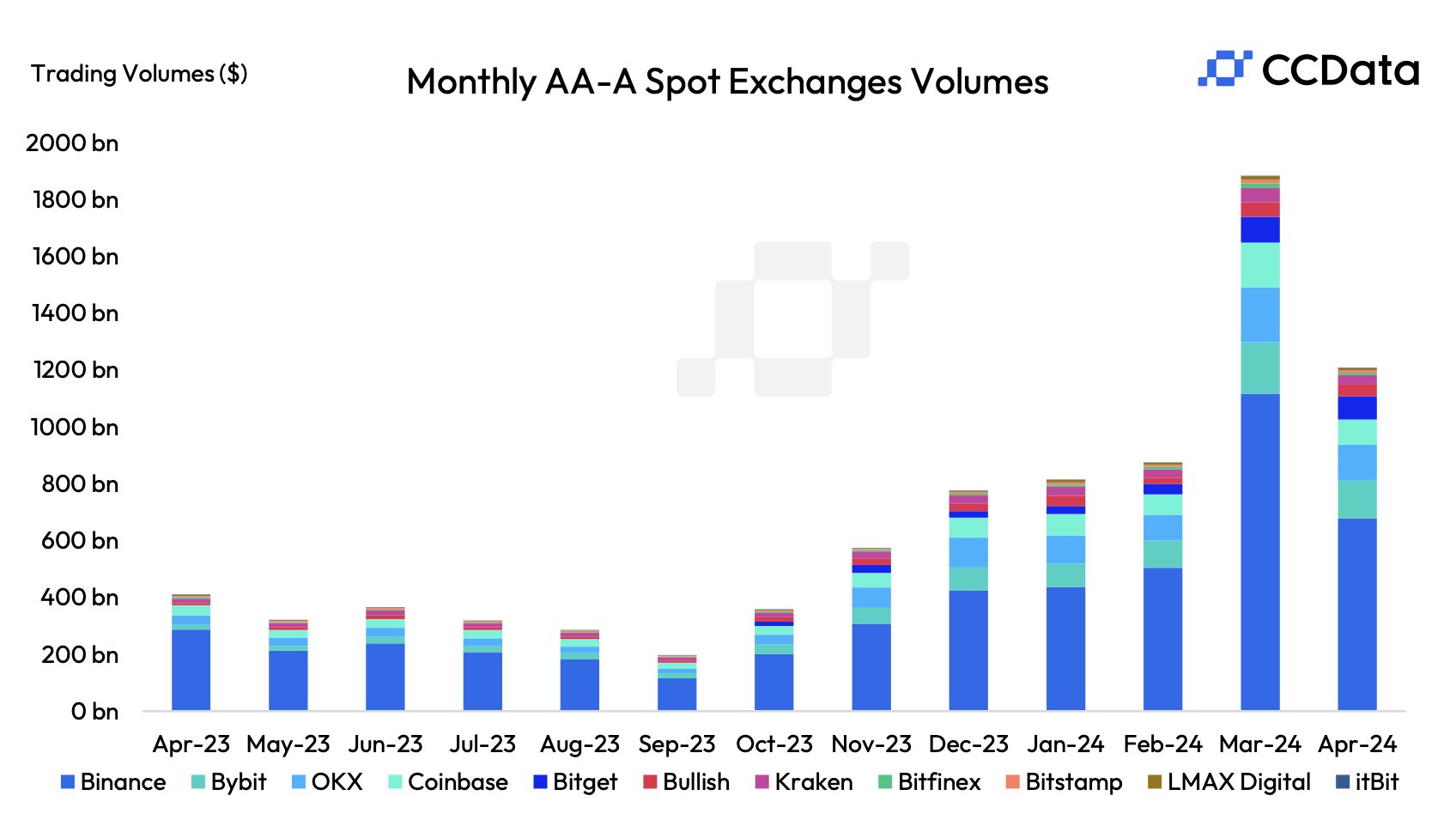
While the contraction was felt across the board, the industry’s top-tier platforms bore the brunt of the volume reduction. CCData categorizes exchanges based on rigorous qualitative metrics; among the elite "AA-A" graded platforms, the contraction was severe:
- Binance: As the undisputed global leader in crypto trading volume, Binance remained the largest Top-Tier spot exchange in April. However, its transactional throughput slumped significantly, processing $679 billion—representing a sharp 39.2% decrease compared to March.
- Bybit: Holding a coveted Grade AA rating, Bybit secured the second spot among top-tier platforms. The exchange recorded $133 billion in volume, marking a 26.9% decline.
- OKX: Rounding out the top three, Grade A-rated OKX handled $126 billion in volume, translating to a 34.8% drop month-over-month.
Sectoral Rotation: Winners and Losers
While overall exchange volumes withered, capital did not leave the ecosystem entirely; instead, it rotated aggressively into specific narrative-driven sectors. CCData’s basket performance returns tracking utility and speculative sectors as of mid-May highlighted stark divergences:
- Metaverse/Gaming: +32.4% (The clear leader, capitalizing on renewed interest in Web3 gaming infrastructure).
- Artificial Intelligence (AI): +17.4% (Continuing to capture speculative capital tied to broader tech trends).
- Meme Tokens: +16.2% (Demonstrating enduring retail appetite for high-risk, high-reward speculative assets).
- Layer-1 Blockchains: +7.1%
- Decentralized Finance (DeFi): +6.7%
- Staking: +4.0%
- Exchange Tokens: +3.5%
- Infrastructure: +1.6%
- Layer-2 Scaling Solutions: -4.2% (Underperforming as liquidity temporarily bypassed scaling networks in favor of high-beta narratives).
Official Responses and Market Reactions
Executives and market analysts have largely interpreted the April figures as a natural market cleansing rather than a structural bear market signal.
Representatives from leading analytics firms have pointed out that after six straight months of exponential expansion, a severe correction in leverage and trading frequency is a healthy mechanism for the market. Over-leveraged long positions were systematically flushed out during the April consolidation, reducing systemic risk within derivatives markets.
Meanwhile, representatives from major centralized exchanges have emphasized that despite the month-over-month drop, user retention and foundational infrastructure usage remain robust. Compliance-focused platforms view the cooling period as an opportunity to recalibrate product offerings, enhance regulatory alignment, and prepare for the next wave of institutional adoption. Furthermore, the pivot toward niche sectors like AI and gaming indicates that retail traders are actively seeking out high-alpha opportunities outside of major large-cap assets, keeping community engagement high despite the lower aggregate volume figures.
Implications for the Broader Crypto Ecosystem
The dramatic 43.8% contraction in centralized exchange volume carries several profound implications for the future trajectory of the digital asset industry:
1. Maturation of Market Cycles
The sharp drop from $11 trillion to $6.58 trillion underscores the cyclical nature of crypto trading. It serves as a reminder that markets cannot maintain parabolic growth indefinitely without encountering liquidity vacuums and consolidation phases. Traders and institutional funds are increasingly adopting tactical, narrative-driven approaches rather than blindly buying rising tides.
2. Shifts in Liquidity and Decentralization Narratives
While centralized exchanges still dominate the lion’s share of global crypto trading, periods of lower CEX volume often prompt market participants to explore alternative venues, including decentralized exchanges (DEXs) and emerging cross-chain protocols. However, the uniform nature of the April slowdown suggests that the reduced liquidity was a macro-level sentiment shift rather than a migration of volume to decentralized alternatives.
3. Regulatory Scrutiny and Compliance Costs
As top-tier exchanges like Binance, Bybit, and OKX navigate fluctuating volumes, the overhead costs associated with global regulatory compliance remain fixed or increasing. Exchanges are being forced to optimize their operational efficiencies while continuing to invest heavily in Know-Your-Customer (KYC), Anti-Money Laundering (AML), and security infrastructure.
4. Outlook for Q3 and Beyond
Looking forward, market participants will closely monitor macroeconomic indicators—specifically Federal Reserve policy decisions, inflation prints, and regulatory developments surrounding digital assets in major global jurisdictions. If macroeconomic conditions ease and institutional inflows into spot crypto products stabilize, centralized exchange volumes could experience a resurgence in the latter half of the year. Until then, the market remains locked in a phase of strategic consolidation, where sector-specific innovation—such as AI integrations and Web3 gaming advancements—will likely dictate where the next wave of capital flows.